Complete Guide to Kirihata-ji Temple | History, Highlights, and Visiting Information for the 10th Temple of the Shikoku 88 Temple Pilgrimage
Kirihata-ji Temple is a Shingon Buddhist temple of the Koyasan sect located in Kirihata, Ichiba-cho, Awa City, Tokushima Prefecture. Its formal name is Tokudozan Kanjoin, and its principal image is the Thousand-Armed Kannon Bodhisattva. As the 10th temple of the Shikoku 88 Temple Pilgrimage, and known for the legend of a woman achieving Buddhahood in this lifetime, it attracts many pilgrims.
History and Origin of Kirihata-ji Temple
Founding of the Temple and its Connection to Kukai
Kirihata-ji Temple is believed to have been founded during the Konin era (810-824). The temple’s history began when Kobo Daishi Kukai visited this area during his pilgrimage through Shikoku.
When Kukai visited Kirihata, his monk’s robe was torn, so he requested cloth from a girl who was weaving. It is said that the girl generously cut off the cloth she was weaving and offered it to Kukai. The temple’s name, “Kirihata,” originates from this legend.
The Legend of a Woman Attaining Buddhahood in This Lifetime
The most distinctive feature of Kirihata Temple is the legend of a woman attaining Buddhahood in this life. The weaver girl who offered the cloth to Kukai was, in fact, a woman of deep faith.
Kukai was deeply impressed by the girl’s devoutness and asked her if she had any wishes. She replied that she wished to enter the Buddhist priesthood. It is said that after Kukai performed the Gumonji ritual, the girl transformed into the Thousand-Armed Kannon Bodhisattva and achieved Buddhahood in this life.
Due to this legend, Kirihata Temple became a sacred site attracting female followers and is affectionately known as “Hatakiri Kannon” (Cutting Kannon). The principal image, a statue of the Thousand-Armed Kannon Bodhisattva, is depicted in an unusual pose, holding scissors and cloth.
Origin of the Name of Tokudo-zan
The mountain name “Tokudo-zan” originates from the fact that this girl achieved “Tokudo,” the Buddhist ordination. The temple name “Kanjo-in” indicates its character as a training ground for Kanjo, the most important ritual in esoteric Buddhism.
Highlights of the Temple Grounds
333 Stone Steps
Visiting Kirihata-ji Temple begins with climbing the 333 stone steps leading from the foot of the mountain to the main hall. These steps are known as one of the most impressive approaches among the Shikoku Pilgrimage sites.
The temple grounds are located on the mountainside of Kirihata-yama, at an altitude of 155 meters. Upon reaching the top of the steps, the main hall and the Great Pagoda come into view. There are rest areas along the steps, allowing visitors to worship at their own pace. A road is also available for the elderly and those with limited physical strength, allowing access by car to the top.
National Important Cultural Property: Kirihata-ji Temple’s Great Pagoda
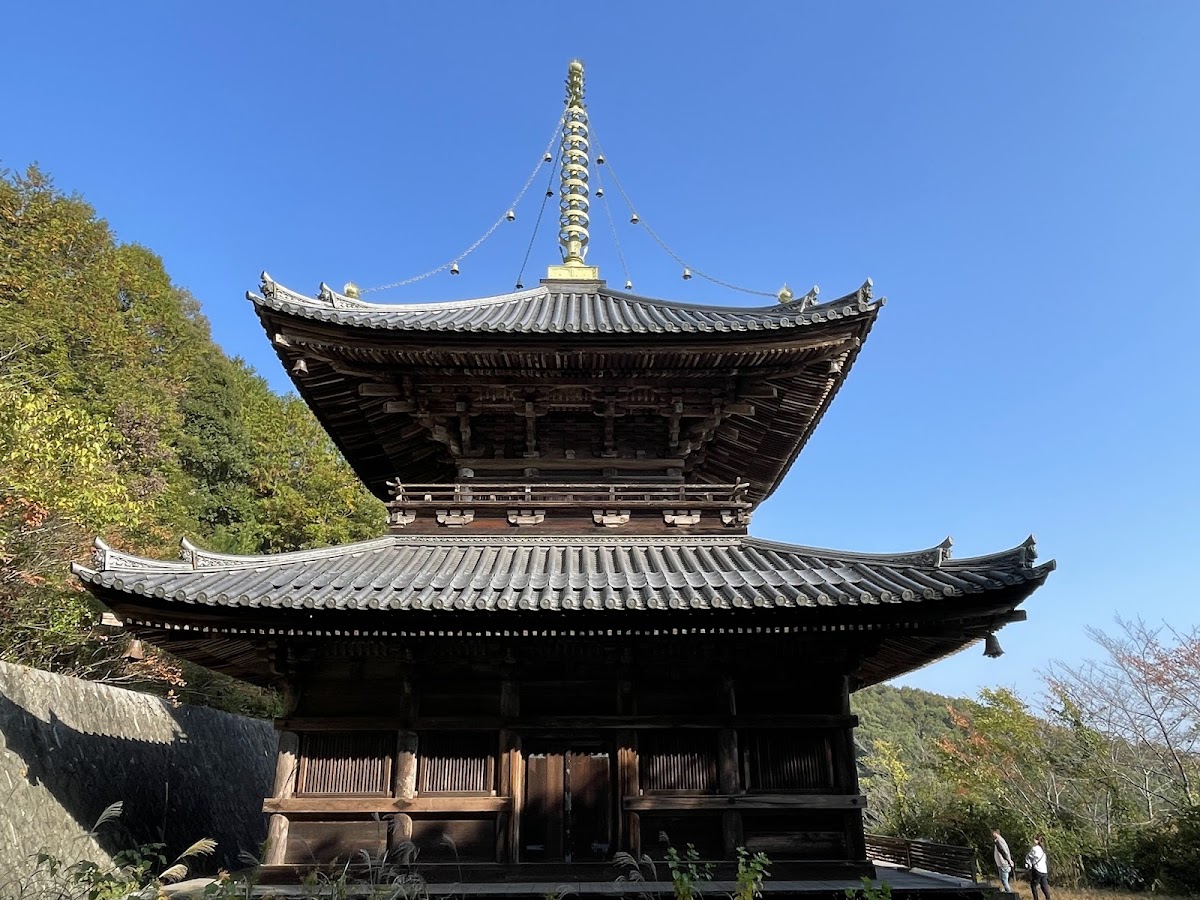
The greatest highlight of Kirihata-ji Temple is the Great Pagoda, a nationally designated Important Cultural Property. This pagoda is known for its extremely unique structure.
Features of the Great Pagoda
The Great Pagoda is a two-story pagoda with five bays on the first floor and three bays on the second floor, making it a valuable structure with a unique form found nowhere else in Japan. Originally built as the west pagoda of Sumiyoshi Taisha Jinguji Temple in Osaka, it was relocated to this site due to the separation of Shinto and Buddhism in the early Meiji period.
It is a unique structure in both its plan and form, and holds extremely important value in architectural history. The view from the pagoda is magnificent, offering a panoramic view of Awa city and the surrounding mountains.
Main Hall and Thousand-Armed Kannon Statue
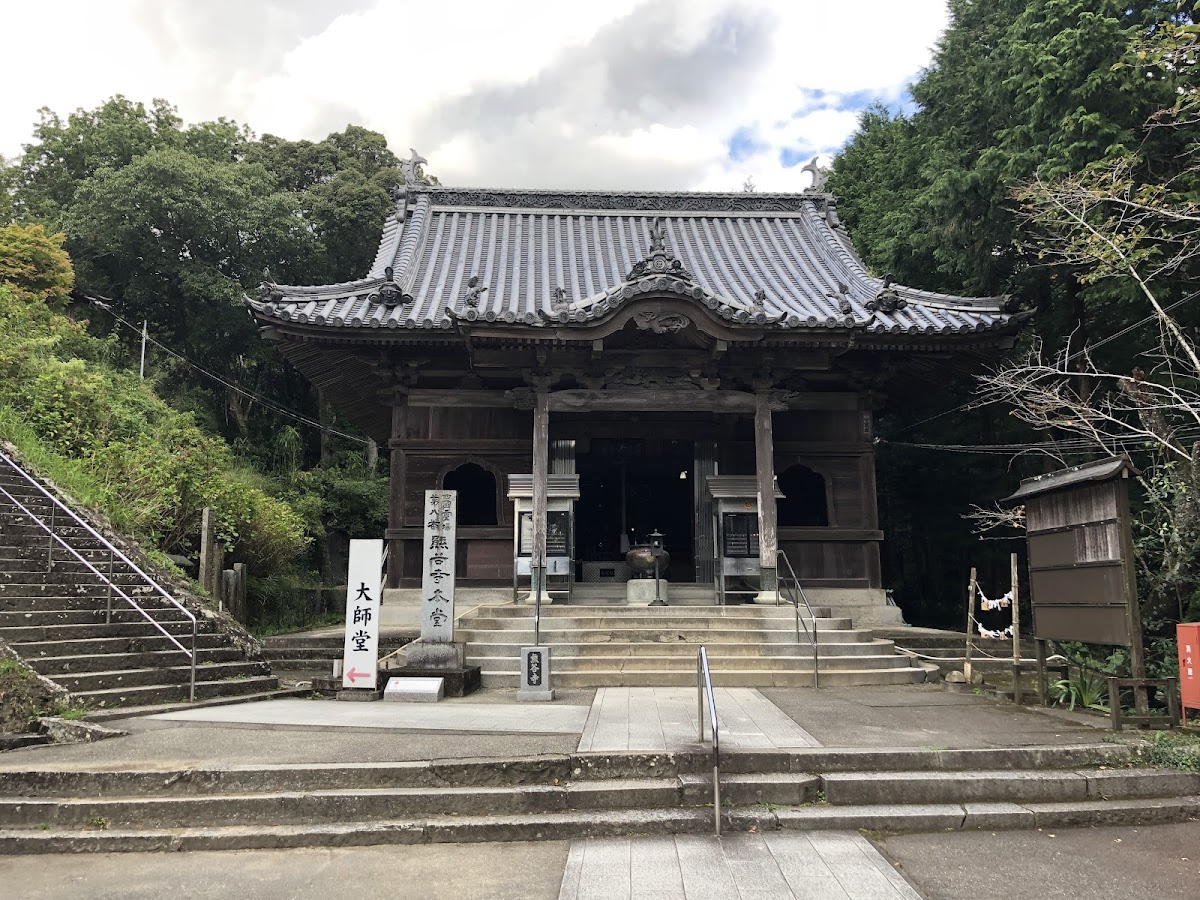
The main hall houses the principal image, the Thousand-Armed Kannon Bodhisattva. This Kannon statue is revered as “Hatakiri Kannon” (Cutting Kannon) and is characterized by its unique appearance, holding scissors and cloth.
The main hall retains the architectural style of the Edo period, and the interior is enveloped in a solemn atmosphere. Visitors chant sutras and offer their sutras in the main hall.
Daishi Hall
The Daishi Hall, dedicated to Kobo Daishi Kukai, is also an important place of worship. In the Shikoku 88 Temple Pilgrimage, it is considered proper etiquette to visit both the main hall and the Daishi Hall.
In the Daishi Hall, you can see votive tablets depicting the encounter between Kukai and the weaving maiden.
Other Temple Grounds Facilities
The temple grounds also include a bell tower, a sutra offering office, and a water basin. The entire grounds spread across the mountainside, creating a tranquil space in harmony with nature.
Cultural Properties of Kirihata-ji Temple
Nationally Designated Important Cultural Property
- Kirihata-ji Great Pagoda: As mentioned above, this is a two-story pagoda with a unique form in Japan.
Prefectural and Municipal Designated Cultural Property
Kirihata-ji Temple possesses many other cultural properties and is positioned as a temple of high historical value. The temple houses numerous treasures, including the principal image of the Thousand-Armed Kannon Bodhisattva, as well as many other Buddhist statues and ancient documents carefully preserved as temple treasures.
Annual Events and Prayers/Memorial Services
Main Annual Events
Kirihata-ji Temple holds various events throughout the year.
- First Three Days of the New Year: First shrine visit of the year, New Year’s prayers
- Spring and Autumn Equinox Services: Ancestor memorial services
- Obon Memorial Service: Memorial services for spirits
- Kobo Daishi Memorial Service: A memorial service held on the 21st of each month to commemorate Kobo Daishi
In particular, many worshippers visit events organized by the Shikoku 88 Temple Pilgrimage Association.
Information on Prayers and Memorial Services
Kirihata-ji Temple accepts various prayers and memorial services.
- Prayers for the Fulfillment of All Wishes: Family safety, business prosperity, academic success, etc.
- Prayers for Protection from Misfortune: Protection from misfortune for those in their unlucky years
- Ancestral Memorial Services: Memorial services for ancestors, memorial services for stillborn babies, etc.
- Prayers for Vehicle Safety: Prayers for traffic safety
Even in the Reiwa era, traditional forms of prayer and memorial services are preserved. Individual prayers are also possible by contacting the temple office or sutra hall in advance.
Etiquette and Manners for Visiting Temples
Etiquette for Visiting the Shikoku Pilgrimage
The basic etiquette for visiting the 88 temples of Shikoku is as follows:
- Bow at the temple gate: Bow with hands clasped together before entering the temple grounds.
- Purify yourself at the water basin: Cleanse your hands and mouth.
- Ring the bell at the bell tower: Ring it once before praying (do not ring it on your way back).
- Pray at the main hall: Place your votive slip, offer a monetary donation, bow with hands clasped together, and chant sutras.
- Pray at the Daishi Hall: Follow the same procedure as the main hall.
- Receive your sutra at the sutra office: Receive your temple stamp.
Unique points of worship at Kirihata-ji Temple
When climbing the 333 stone steps, it is recommended to calm your mind as you take each step. This itself is considered part of the spiritual practice.
As a sacred site for women attaining Buddhahood in this lifetime, female worshippers in particular should reflect on the faith of the weaving maidens as they pray.
Access Information
Location
129 Kannon, Kirihata, Ichiba-cho, Awa City, Tokushima Prefecture 771-1623
Access by Car
- From Tokushima Expressway, Donari IC: Approximately 15 minutes
- From Takamatsu area: Approximately 40 minutes via National Route 318
- From Tokushima City: Approximately 30 minutes via National Route 318
There is a parking lot for visitors on the temple grounds (free of charge). It is also possible to drive close to the main hall without climbing the stone steps.
Access by Public Transportation
- From JR Tokushima Line, Kamojima Station: Approximately 10 minutes by taxi
- From JR Tokushima Line, Awa-Yamakawa Station: Approximately 15 minutes by taxi
Since bus routes are limited, using a taxi is convenient when using public transportation.
Distance to Previous and Next Temples
- From Temple No. 9, Horinji: Approximately 4km (about 10 minutes by car)
- To Temple No. 11, Fujiidera: Approximately 13km (about 25 minutes by car)
For those walking the pilgrimage, the journey from Temple No. 9 to Kirihataji takes about 1 hour, and from Kirihataji to Temple No. 11 takes about 3-4 hours.
About Temple Seals and Stamping
Temple Seal Hours
7:00 AM to 5:00 PM (may vary depending on the season)
Temple Seal Fee
- Temple Seal Book: 300 yen
- Hanging Scroll: 500 yen
- White Robe: 200 yen
Features of the Temple Seal
The temple seal of Kirihataji features the calligraphy of “Senju Kannon Bodhisattva” and the red stamp of “Temple No. 10.” Befitting a sacred site for women attaining Buddhahood in this lifetime, it is characterized by its soft and elegant calligraphy.
Attractions Around Kirihata-ji Temple
Tourist Spots in Awa City
Awa City, where Kirihata-ji Temple is located, also boasts other attractive tourist spots.
- Earth Pillars: A natural formation considered one of the world’s three greatest natural wonders.
- Awa Washi Traditional Industry Hall: Experience the history and production of Awa washi paper.
- Around the Yoshino River: A magnificent river landscape known as Shikoku Saburo.
Awa Saigoku Thirty-Three Kannon Pilgrimage
Kirihata-ji Temple is not only part of the Shikoku Eighty-Eight Temple Pilgrimage, but also the 28th temple of the Awa Saigoku Thirty-Three Kannon Pilgrimage (Eastern Region). It is a temple with multifaceted significance as a sacred site of Kannon worship.
Pilgrim Accommodations and Rest Facilities
Nearby Accommodations
There are pilgrim accommodations, guesthouses, and business hotels around Kirihata-ji Temple. Accommodation options are abundant around Kamojima Station and in Awa City.
Rest and Dining
There is a rest area on the temple grounds that visitors can use freely. There are also restaurants nearby serving Sanuki udon noodles and local Awa cuisine.
Guidelines for Visiting Kirihata-ji Temple
The Teaching of Women Attaining Buddhahood in This Lifetime
The legend of Kirihata-ji Temple symbolizes the Mahayana Buddhist teaching that anyone, regardless of gender, can become a Buddha. The story, which combines the pure faith of a weaving girl with the compassion of Kukai, offers profound insights for us living in modern times.
The Meaning of the 333 Stone Steps
The number “333” is not a coincidence; it is said to have symbolic meaning in Buddhism. Each step represents the purification of worldly desires and the calming of the mind.
Relationship with the Shikoku 88 Temple Pilgrimage Association
Kirihata-ji Temple belongs to the Shikoku 88 Temple Pilgrimage Association and contributes to the operation of the pilgrimage sites and the preservation of pilgrimage culture. The temple is also described in detail in the official guidebooks and informational materials published by the Sacred Sites Association.
Even in the Reiwa era, it continues to fulfill its role as a traditional sacred site while also being operated in a way that meets the needs of modern visitors.
The Four Seasons of Kirihata-ji Temple
Spring
During cherry blossom season, cherry blossoms bloom profusely throughout the temple grounds and along the stone steps, offering a beautiful view. The spring equinox service is also held.
Summer
The temple grounds, nestled in lush green mountains, remain relatively cool even in summer, making for a pleasant visit. The number of visitors increases during the Obon period for memorial services.
Autumn
During the autumn foliage season, the temple grounds are dyed in red and yellow, creating a magnificent harmony with the Great Pagoda. The autumn equinox service is also an important event.
Winter
The quiet temple grounds in winter are enveloped in an even more solemn atmosphere. The temple is bustling with many visitors during the first shrine visit of the year and the first three days of the New Year.
Summary
Kirihata-ji Temple, as the tenth temple on the Shikoku 88 Temple Pilgrimage and a sacred site with a legend of a woman achieving Buddhahood in this lifetime, continues to welcome many pilgrims.
It boasts numerous attractions, including 333 stone steps, a nationally important cultural property (the Great Pagoda), and the Thousand-Armed Kannon Bodhisattva (Hatakiri Kannon). Its location on the mountainside of Tokudo-yama also gives special significance to visitors.
Despite being conveniently located in Awa City, Kirihata-ji Temple maintains a tranquil mountain environment and remains an important place of worship even today. Those planning a Shikoku pilgrimage or considering visiting temples in Tokushima Prefecture should definitely visit Kirihata-ji Temple.
At this place where the pure faith of a weaving girl met the compassionate heart of Kobo Daishi Kukai, you can have time to reflect on your own heart.