
Complete Guide to Kumagaya-ji Temple | History, Highlights, and Access Information for the 8th Temple of the Shikoku 88 Temple Pilgrimage
Kumagaya-ji Temple is the 8th temple of the Shikoku 88 Temple Pilgrimage, located in Donari-cho, Awa City, Tokushima Prefecture. Its official name is “Fumyozan Shinkoin Kumagaya-ji,” and as an ancient temple belonging to the Koyasan Shingon sect, it attracts many pilgrims and tourists. This article comprehensively introduces information you should know before visiting Kumagaya-ji Temple, including its history, highlights within the temple grounds, information on temple stamps (Goshuin), and access methods.
What is Kumagaya-ji Temple? Overview of the 8th Temple of the Shikoku 88 Temple Pilgrimage
Kumagaya-ji Temple is particularly old among the Shikoku 88 Temple Pilgrimage, and is a venerable temple said to have been founded by Kobo Daishi Kukai. Its mountain name is Fumyozan, its temple name is Shinkoin, and its principal image is the Thousand-Armed Kannon Bodhisattva.
There are several theories regarding the origin of the temple’s name, “Kumagai,” but the most famous is a legend related to Kumagai Naozane, a samurai from the late Heian period. Legend says that Kumagai Naozane, who distinguished himself in the Genpei War, visited Shikoku after becoming a monk and trained in this area.
The temple grounds cover approximately 30,000 square meters, making it one of the largest pilgrimage sites in Tokushima Prefecture. Located in a quiet mountain setting, it is a beloved sacred site where visitors can enjoy the beauty of nature throughout the seasons.
History of Kumagai-ji Temple | The Legend of Kobo Daishi Kukai and Kumagai Naozane
History of the Temple’s Founding
Kumagai-ji Temple is said to have been founded in 815 AD (Kōnin 6). It is believed that Kobo Daishi Kukai, during his pilgrimage through Shikoku, trained in this area and carved a statue of the Thousand-Armed Kannon Bodhisattva, which he enshrined as the principal image.
A legend remains that when Kukai visited this area, he perceived a golden statue of Kannon that had flown in from Kumano in Kishu, and, deeply moved by its miraculous power, built a temple here. Because of this legend, it is said that the temple was originally called “Kumano-yama” (Kumano Mountain).
Connection to Kumagai Naozane
At the end of the Heian period, Kumagai Naozane, who killed Taira no Atsumori at the Battle of Ichinotani during the Genpei War, later became a monk, feeling the impermanence of life for a samurai, and took the name Hōrikibō Renshō.
According to legend, Naozane stayed at this temple during a pilgrimage to Shikoku and diligently practiced asceticism to pray for the repose of Atsumori’s soul. It is said that the temple’s name was changed to “Kumagai-ji” (Kumagai Temple) because of this connection. Artifacts and legends related to Kumagai Naozane still remain on the temple grounds.
From the Edo Period to the Present
During the Edo period, the temple received patronage from the Hachisuka family, the lords of the Awa Domain, and expanded its influence. Many temple buildings were constructed, and the Niomon Gate and Tahoto Pagoda, which can be seen today, were built during this period.
Despite being affected by the anti-Buddhist movement of the Meiji era, the temple survived, supported by the faith of the local people, and the temple grounds were renovated from the Showa to the Heisei period. Currently, it is an important temple on the Shikoku Pilgrimage, welcoming many visitors throughout the year.
Highlights of Kumagaya-ji Temple | Temple Buildings and Cultural Properties
Niomon Gate (Nio-mon)
The first thing that catches the eye upon visiting Kumagaya-ji Temple is the imposing Niomon Gate. This gate was built in the mid-Edo period and is known as one of the most magnificent temple gates among the temples on the Shikoku Pilgrimage in Tokushima Prefecture.
On either side of the gate are enshrined the Agyo and Ungyo Kongo Rikishi statues, and their powerful presence overwhelms visitors. The Nio statues are approximately 3 meters tall and are highly regarded as excellent Edo-period Buddhist sculptures, meticulously carved down to the smallest detail.
The path from the Nio Gate to the main hall consists of a long flight of stone steps, requiring climbers to ascend approximately 200 steps. These steps are also known as the “Exorcism Slope,” and it is believed that stepping on them one by one can ward off evil.
Main Hall
The main hall is a magnificent building with a hipped roof, housing the principal image, the Thousand-Armed Kannon Bodhisattva. While the current main hall was rebuilt during the Showa era, it is a beautiful building that faithfully adheres to the traditional style of temple architecture.
Inside the main hall is a hidden statue of the Thousand-Armed Kannon, said to have been carved by Kobo Daishi. It is not usually open to the public, but is sometimes unveiled during special religious ceremonies. The decorations of the inner sanctuary are also magnificent, creating a solemn space adorned with gold leaf and vibrant colors.
When visiting the temple, you should place your votive slip in front of the main hall, offer a lamp and incense, make a monetary offering, and then clasp your hands together in prayer. While chanting the Heart Sutra is the formal procedure, simply joining your hands with sincerity is also acceptable.
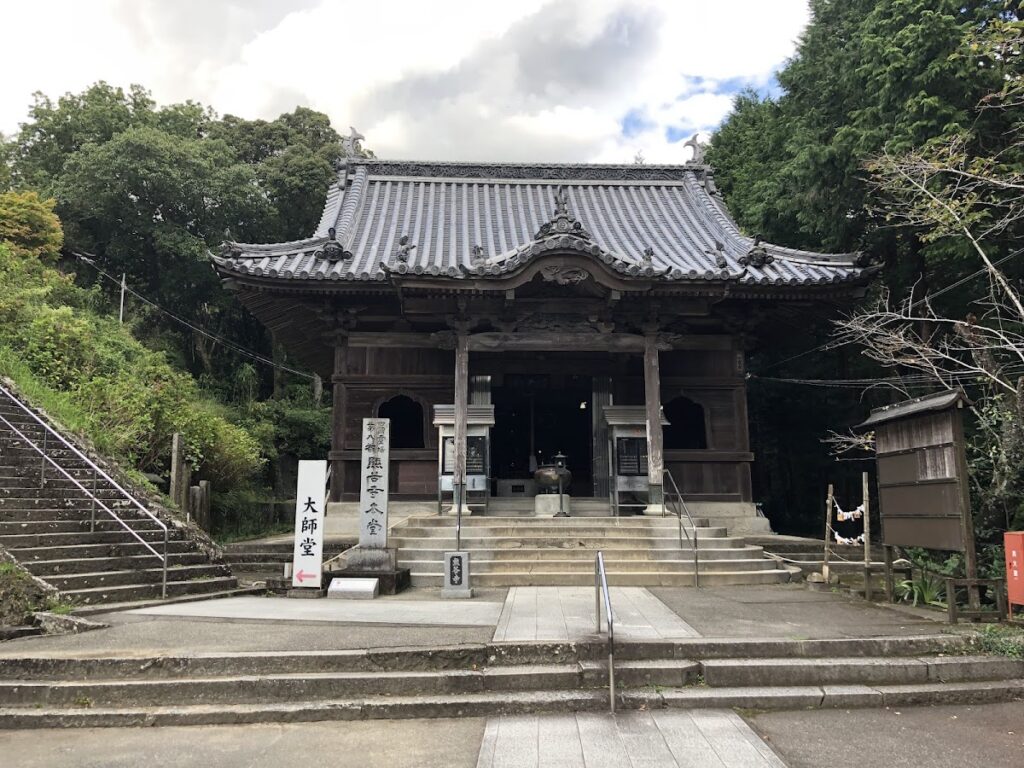
Daishido Hall
Located next to the main hall, the Daishido Hall houses a statue of Kobo Daishi Kukai. In the Shikoku Pilgrimage, the spirit of “Dōgyō Ninin” (two traveling together) is highly valued, and there is a belief that pilgrims are always walking alongside Kobo Daishi.
At the Daishido Hall, you should pray in the same way as at the main hall, offering your gratitude to the Daishi. Many offerings and votive tablets hang inside the hall, reflecting the deep faith of the people.
Tahōtō Pagoda
The Tahōtō pagoda, standing on a hill within the temple grounds, is a symbolic presence at Kumagaya-ji Temple. Built in the late Edo period, its beautiful vermilion paint stands out against the surrounding greenery. The two-tiered pagoda is approximately 13 meters tall and houses a statue of Dainichi Nyorai (Vairocana Buddha).
The pagoda beautifully exemplifies the characteristics of esoteric Buddhist architecture, and its detailed carvings and decorations are truly impressive. In autumn, the surrounding autumn foliage creates a particularly beautiful scene, making it a popular spot for photography enthusiasts.
Other Highlights
The temple grounds also contain other structures such as a bell tower, a goma hall, and a Benten hall. Furthermore, several hundred-year-old trees are scattered throughout the grounds, with the large ginkgo tree in front of the main hall being particularly magnificent. In autumn, its leaves turn golden, adding vibrant color to the temple grounds.
Stone Buddhas and monuments are placed throughout the grounds, creating a historical atmosphere. It is recommended to take your time strolling through the grounds and visiting each of the highlights.
Goshuin (Temple Seal) and Sutra Copying Information
About Goshuin
At Kumagaya-ji Temple, you can receive goshuin (temple seals) for both the main hall and the Daishi Hall. The stamp office is located within the temple grounds. Visit after your prayers and leave your stamp book there.
The stamp will have the calligraphy of “Senju Kannon Bodhisattva” and the red stamp of “Temple No. 8,” along with the date. While there may be slight variations depending on the calligrapher, all stamps are carefully written.
The stamp fee is generally 300 yen (as of 2024). Payment is by cash only, so have some change ready.
Stamp Book and Offering Slips
Those undertaking the pilgrimage collect stamps in a stamp book. Stamp books are also sold at Kumagaya-ji Temple, so those starting their pilgrimage can purchase one here.
Offering slips are placed in the offering slip boxes in the main hall and the Daishi Hall. The proper procedure is to offer a slip with your address, name, and wish written on it. There is also a custom of indicating the number of pilgrimages by color (White: 1-4 times, Green: 5-7 times, Red: 8-24 times, Silver: 25-49 times, Gold: 50 times or more).
Reception Hours
The reception hours for the temple office are usually 7:00 AM to 5:00 PM. However, these may vary depending on the season and day of the week, so if you want to be sure to get a temple stamp, we recommend visiting in the morning or early afternoon.
Reception hours may also change during special periods such as the New Year holidays, so it is best to check in advance.
Benefits and Faith of Worship
Benefits of the Thousand-Armed Kannon
The principal image of Kumagaya-ji Temple, the Thousand-Armed Kannon Bodhisattva, is a compassionate Buddha said to save all sentient beings with a thousand arms. It is believed that the various ritual implements held in each hand grant various wishes and relieve suffering.
In particular, it is believed to offer blessings for recovery from illness, family safety, traffic safety, and academic success, and many worshippers visit with various wishes. The Thousand-Armed Kannon is considered “the most compassionate of all Kannon Bodhisattvas,” and it is said that she will listen to any wish.
A Sacred Site for Warding Off Evil
Kumagaya-ji Temple has long been known as a sacred site for warding off evil. The long stone staircase leading from the Niomon Gate to the main hall is called “Yakuyoke-zaka” (Evil-Warding Slope), and it has been believed that climbing this slope will ward off evil.
Those in their unlucky years or those reaching a milestone in their lives tend to visit particularly devoutly. If you wish to pray for protection from evil, you can contact the temple in advance and request a prayer.
Pilgrimage Culture and Faith
The Shikoku Pilgrimage is a pilgrimage culture with a history of over 1200 years, and Kumagaya-ji Temple plays an important role in it. As the 8th temple on the pilgrimage route, it is a place where many pilgrims visit to purify their minds and bodies during their spiritual journey.
The belief in walking alongside Kobo Daishi, based on the spirit of “two traveling together,” is still passed down today, and visiting Kumagaya-ji Temple allows you to experience its profound spirituality.
How to Access Kumagaya-ji Temple
Access by Car
Using the Expressway:
- Approximately 5 minutes (approx. 2km) from the Tokushima Expressway “Donari IC”
- Easily accessible from both Takamatsu and Tokushima
Using General Roads:
- There are signs along National Route 318
- Approximately 30 minutes from Tokushima City, and approximately 50 minutes from Takamatsu City
Parking:
There is a free parking lot on the temple grounds, accommodating approximately 50 regular cars. There is also space for large buses. However, it can get crowded during peak seasons such as New Year’s and long holidays, so it is recommended to visit with plenty of time to spare.
Access by Public Transportation
By Train:
- The nearest station is JR Kotoku Line “Kamojima Station”.
- Approximately 15 minutes by taxi from the station (approx. 7km).
- Buses are also available from the station, but the number of services is limited, so it is recommended to check the timetable in advance.
By Bus:
- Tokushima Bus operates a route, but the number of services is limited, so taking a taxi is more convenient.
- Get off at the “Kumagai-ji-mae” bus stop and walk for approximately 5 minutes.
For Pilgrims on Foot
Distance to Previous and Next Temples:
- Approximately 2.5km (approx. 40 minutes on foot) from Temple No. 7 “Juraku-ji”.
- Approximately 2.8km (approx. 45 minutes on foot) to Temple No. 9 “Horin-ji”.
For pilgrims on foot, it is relatively easy to access. However, there are approximately 200 stone steps from the Niomon Gate to the main hall, so those who are not confident in their physical strength are advised to climb slowly and take breaks.
Nearby Accommodations
There are several guesthouses and inns near Kumagaya-ji Temple that cater to pilgrims. Business hotels are also available in Tokushima City and around Kamojima Island. If your pilgrimage involves overnight stays, it’s advisable to book in advance.
Some accommodations offer special plans and shuttle services for pilgrims.
Notes and Manners for Visiting the Temple
Clothing
While there are no strict dress code regulations, it’s best to dress appropriately for a sacred place. Traditionally, pilgrims wear white robes, straw hats, and walking sticks, but general tourists can wear everyday clothes.
However, avoid overly revealing clothing or sandals. Wear comfortable, clean clothing. Since you’ll be climbing stone steps, comfortable walking shoes are essential.
Temple Visiting Etiquette
- Bow at the Temple Gate: Bow before passing through the Niomon Gate.
- Purify at the Water Basin: Upon entering the temple grounds, first purify your hands and mouth at the water basin.
- Worship at the Main Hall: Place your votive slip, offer a lamp and incense, make an offering, and then clasp your hands together in prayer.
- Worship at the Daishi Hall: Worship in the same way as at the Main Hall.
- Receive a Goshuin (Temple Stamp): After worshipping, receive a Goshuin at the Goshuin office.
Photography
Photography is generally permitted on the temple grounds, but there are areas where photography is prohibited, such as the inner sanctuary of the Main Hall. Please be considerate of other visitors.
In particular, please be considerate of those who are quietly worshipping or offering prayers; avoid making noise and using flash.
Prohibited Activities
- Smoking on the temple grounds (except in designated areas)
- Loud conversations or excessive noise
- Bringing pets (excluding guide dogs and service dogs)
- Removing plants, stones, or other items from the temple grounds
Please observe these rules and strive to create a pleasant environment for all visitors.
Annual Events at Kumagaya-ji Temple
Main Annual Events
New Year’s Day (January 1st-3rd):
Many visitors come for their first shrine visit of the new year. Special Goshuin (temple stamps) may be offered.
Spring Equinox Service (around the Spring Equinox in March):
A memorial service for ancestors is held.
Flower Festival (around April 8th):
A memorial service celebrating the birth of Buddha is held.
Autumn Equinox Service (around the Autumn Equinox in September):
Similar to the spring service, a memorial service for ancestors is held.
New Year’s Eve Bell Ringing (December 31st):
You can ring the New Year’s Eve bell (there may be a limit on the number of people allowed).
Special Opening
Once every few years, the temple’s principal image, the Thousand-Armed Kannon statue, which is usually a hidden Buddha, is specially unveiled. The timing of these unveilings is irregular, so please check the temple’s website or inquire for details.
Nearby Tourist Attractions
Other Pilgrimage Sites
Visiting the temples before and after Kumagaya-ji Temple will make for a more fulfilling pilgrimage experience.
- Temple No. 7, Jurakuji: Approximately 2.5km, a temple with Amida Buddha as its principal image.
- Temple No. 9, Horinji: Approximately 2.8km, a temple with Nirvana Shakyamuni Buddha as its principal image.
Tourist Attractions in Awa City
- Donari History Museum: A facility where you can learn about the history and culture of the region.
- Awa Earth Pillars: A group of strangely shaped rocks designated as a national natural monument.
- Yoshino River: A magnificent river known as Shikoku Saburo, where you can enjoy a drive along the river.
Gourmet Information
Tokushima Prefecture is also known for its delicious cuisine, such as “Tokushima Ramen” and “Naruto Sea Bream.” Around Kumagaya-ji Temple, there are restaurants using local ingredients and establishments offering set meals for pilgrims.
Enjoying local cuisine after visiting the temples is one of the great pleasures of traveling.
Summary of Basic Information about Kumadani-ji Temple
Temple Name: Kumadani-ji Temple
Official Name: Fumyozan Shinkoin Kumadani-ji Temple
Sect: Koyasan Shingon Buddhism
Principal Image: Thousand-Armed Kannon Bodhisattva
Founder: Kobo Daishi Kukai
Founded: Konin 6 (815)
Pilgrimage Site: Shikoku 88 Temple Pilgrimage, No. 8
Address: 185 Maeda, Tsuchinari-cho, Awa City, Tokushima Prefecture 771-1506
Phone: 088-695-2065
Visiting Hours: Grounds are freely accessible (Temple office: 7:00 AM – 5:00 PM)
Admission Fee: Free
Parking: Free (Approximately 50 regular cars)
Official Website: (Availability varies by temple)
Summary: The Charm of Visiting Kumagaya-ji Temple
Kumagaya-ji Temple is a venerable temple with a history of over 1200 years, serving as the 8th temple on the Shikoku 88 Temple Pilgrimage. It is richly steeped in history and legend, including the legend of its founding by Kobo Daishi Kukai and its connection to Kumagaya Naozane.
With its imposing Niomon Gate, main hall, Daishi Hall, and beautiful pagoda, there are plenty of sights to see, and simply strolling through the grounds is a refreshing experience. In particular, the “Exorcism Slope,” with its 200 stone steps, is physically challenging, but each step evokes a sense of purification of mind and body.
Whether you’re visiting as part of the Shikoku pilgrimage or as a tourist, Kumagaya-ji Temple offers a quiet and solemn atmosphere where you can experience traditional Japanese Buddhist culture. It’s easily accessible from the Tokushima Expressway, making it convenient to visit by car.
We highly recommend visiting Kumagaya-ji Temple to experience its history, spiritual significance, and the beautiful atmosphere of its grounds. It will surely be a memorable pilgrimage experience.

