Complete Guide to Kanjizaiji Temple | History, Highlights, and Visiting Information for the 40th Temple of the Shikoku 88 Temple Pilgrimage
About Kanjizaiji Temple
Kanjizaiji Temple is a Shingon sect Daikakuji school temple located in Ainan-cho, Minamiuwa-gun, Ehime Prefecture. Its mountain name is Heijozan, its temple name is Yakushiin, and its principal image is Yakushi Nyorai (Medicine Buddha). As the 40th temple of the Shikoku 88 Temple Pilgrimage, it is an important sacred site visited by many pilgrims.
Because it is located furthest from the first temple, Ryozenji Temple, it has the nickname “the back checkpoint of the Shikoku pilgrimage”. Ehime Prefecture is called the “Dojo of Enlightenment,” and Kanjizaiji Temple holds special significance as its first sacred site.
Ainan-cho, facing the Uwa Sea known for its beautiful ria coast, is located at the southernmost tip of Ehime Prefecture and is blessed with a mild climate and abundant nature. Standing in this tranquil setting surrounded by the sea and mountains, Kanjizai-ji Temple has a history spanning over a thousand years.
History and Origin of Kanjizai-ji Temple
Circumstances of Founding
Kanjizai-ji Temple was founded in April of the second year of the Daido era (807 AD) by Kobo Daishi (Kukai) as a temple commissioned by Emperor Heizei, the 51st emperor. The reign of Emperor Heizei coincided with the early Heian period, a time when Buddhist culture flourished. The fact that the temple was built by imperial decree speaks to the importance of this place as a sacred site.
It is said that when Kobo Daishi visited this area, he discovered a sacred tree and personally carved three statues from it: the principal image of Yakushi Nyorai (Medicine Buddha), the flanking Amida Nyorai (Amitabha Buddha), and the Eleven-faced Kannon Bodhisattva. The act of carving three Buddha statues from a single tree is interpreted as symbolizing the Buddhist teaching of the Trinity (three bodies as one).
Origin of the Temple Name
The name “Kanjizai” originates from “Kanjizai Bosatsu,” another name for Kannon Bodhisattva. This name, which also appears in the opening lines of the Heart Sutra, “When Kanjizai Bosatsu practiced the profound Prajnaparamita,” represents the compassion of the Bodhisattva who freely observes all sentient beings and relieves their suffering.
While the temple’s principal deity is Yakushi Nyorai (Medicine Buddha), the inclusion of the name Kanjizai indicates its character as a temple encompassing both the Yakushi faith, which heals illness and suffering, and the Kannon faith, which preaches salvation through compassion.
Historical Changes
Kanjizai-ji Temple has experienced several trials throughout its long history. Damage from fires has been particularly severe, with major fires in the past resulting in the destruction of many of its main buildings.
In the fire of 1910 (Meiji 43), the main hall and many other buildings were destroyed. However, thanks to the enthusiasm of the local people and believers, reconstruction progressed, and in 1964 (Showa 39), the main hall was rebuilt to recreate its appearance at the time of Kobo Daishi’s founding. This reconstruction involved careful research of ancient documents and traditions, and efforts were made to faithfully reproduce the original style as much as possible.
Highlights of Kanjizaiji Temple
Main Hall
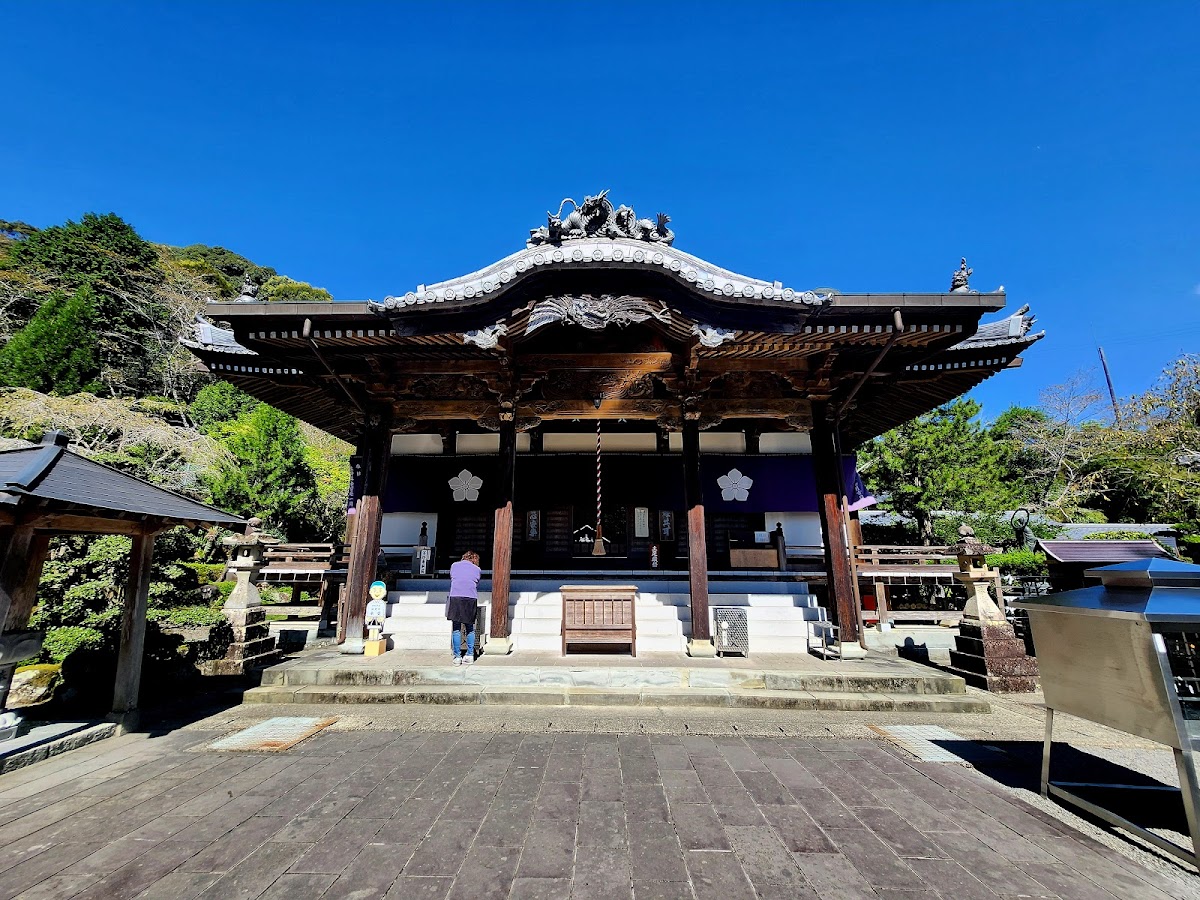
The current main hall, rebuilt in 1964 (Showa 39), is a valuable building that restores the appearance at the time of Kobo Daishi’s founding. Its imposing hip-and-gable roof style conveys the characteristics of Heian period temple architecture.
Inside the main hall, the principal image, Yakushi Nyorai (Medicine Buddha), is enshrined, flanked by Amida Nyorai (Amitabha Buddha) and Eleven-faced Kannon Bodhisattva. These three statues are said to be secret Buddha images created by Kobo Daishi and are only unveiled during special religious ceremonies.
Many people visit the main hall to pray to Yakushi Nyorai for healing from illness and for good health and longevity. Yakushi Nyorai (Medicine Buddha) is the principal deity of the Eastern Pure Land of Lapis Lazuli, and is said to have made twelve great vows to relieve the suffering of all sentient beings.
Temple Gate (Sanmon)
The temple gate of Kanjizaiji Temple is a valuable structure designated as a cultural property of Ainan Town. After a fire in 1910 (Meiji 43), it was rebuilt in 1911 (Meiji 44) by Yamashita Matara, a carpenter from the Mase village. It is said that Yamashita Matara commissioned the construction of this gate as a token of gratitude for his full recovery from a serious illness.
It is a luxurious structure made entirely of zelkova wood, employing traditional architectural techniques from approximately 200 years ago. The beautiful grain of the zelkova wood and its solid structure have gained dignity with time.
The compass rose painted on the ceiling of the temple gate is particularly famous. The compass rose represents the order of the universe and the Buddhist worldview, allowing visitors to feel the vastness of Buddhist teachings by gazing up at this ceiling painting.
The Nio statues are said to be the work of a carpenter from Shimokyuya, characterized by their powerful expressions and muscular physiques. As Kongo Rikishi statues guarding the temple gate, they play a role in preventing the intrusion of evil.
The plaque currently displayed was written by the 401st head priest of Koyasan, and its dignified calligraphy further enhances the majesty of the temple gate.
Daishido Hall
The Daishido Hall houses a statue of Kobo Daishi and is a place of particularly fervent worship for pilgrims. In the Shikoku pilgrimage, the spirit of “two traveling together” is highly valued, reflecting the belief that one is always walking alongside Kobo Daishi. Therefore, worshipping at the Daishido Hall holds the same significance as worshipping at the main hall.
At the Daishido Hall, pilgrims chant the Heart Sutra and the sacred name “Namu Daishi Henjo Kongo” to pray for safe travels and the fulfillment of their wishes. Many pilgrims can be seen quietly meditating here, contemplating the teachings of Kobo Daishi.
Atmosphere of the Temple Grounds
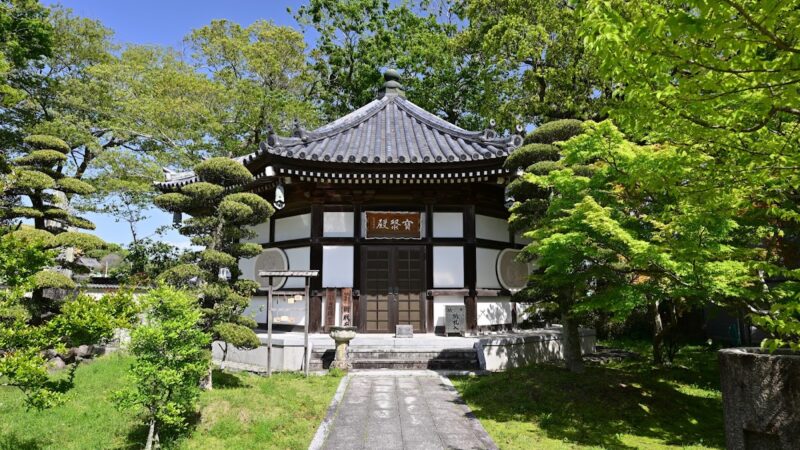
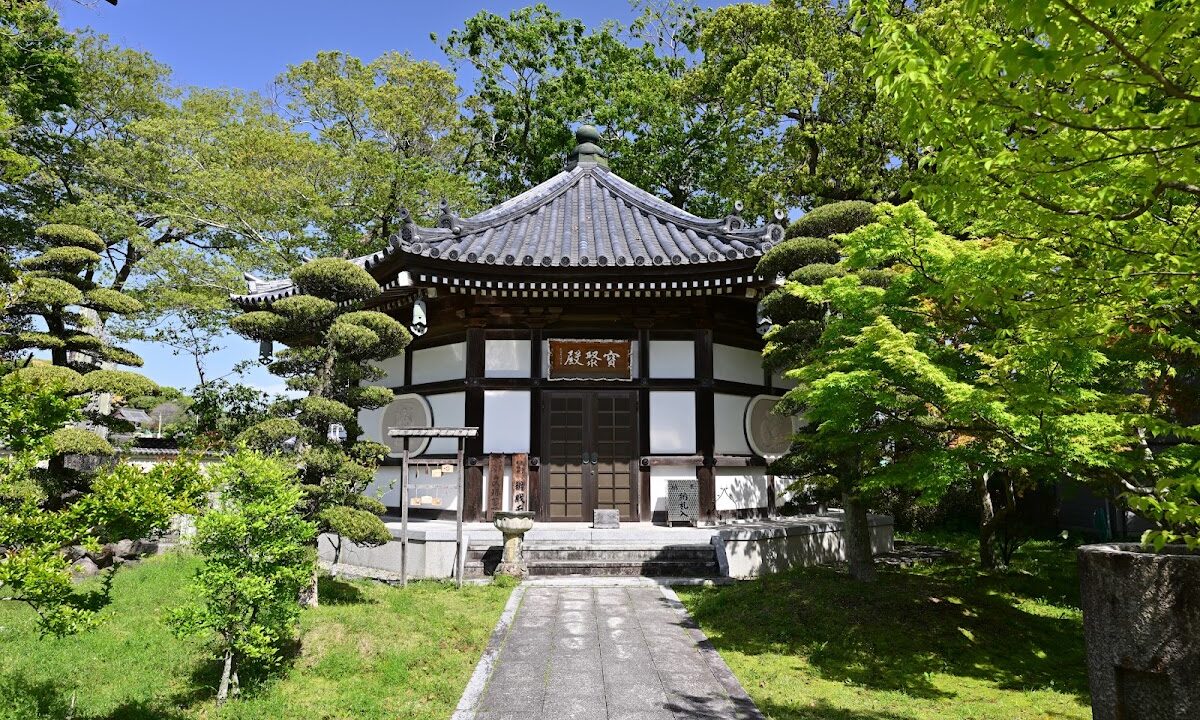
The grounds of Kanjizaiji Temple are enveloped in a tranquil and peaceful atmosphere. Hundreds of years old trees cover the grounds, and sunlight filtering through the leaves casts gentle shadows on the stone pavement.
In spring, cherry blossoms adorn the grounds, displaying a special beauty during the flowering season, as expressed in the temple’s hymn, “My wish has come true; the flowers have bloomed, Kanjizaiji, how joyful it is to meet in the spring of benevolent lives.” This hymn expresses how a heart burned by worldly desires is purified by the Buddha’s compassion, and new hope sprouts.
Significance as the “Back Checkpoint” of the Shikoku Pilgrimage
The reason Kanjizaiji Temple is called the “Back Checkpoint of the Shikoku Pilgrimage” lies in its geographical location. Located over 200 kilometers in a straight line from the first temple, Ryōzenji (Tokushima Prefecture), Kanjizaiji Temple is the furthest of the 88 temples on the Shikoku Pilgrimage.
During the Edo period, the Shikoku Pilgrimage was undertaken on foot, and the “jun-uchi” (sequential pilgrimage), visiting the temples in order from the first, was common. However, reaching Kanjizaiji Temple required a long journey and numerous mountain passes, posing a significant challenge for pilgrims.
Conversely, in the “gyaku-uchi” (reverse pilgrimage), starting from the 88th temple, Ōkuboji, Kanjizaiji Temple is the first temple in Ehime Prefecture. While the gyaku-uchi is said to bring three times the merit of the jun-uchi, it is also considerably more difficult, and Kanjizaiji Temple held a crucial position as the entrance to this challenging section.
The name “Ura-Sekisho” (back checkpoint) reflects the significance of this place as a crucial gateway to pilgrimage training, signifying that overcoming it qualifies one as a true practitioner. It was recognized not only as a physically distant location but also as a place of spiritual trial.
Annual Events and Temple Festivals
Major Events
Kanjizaiji Temple holds various Buddhist services and events throughout the year.
New Year’s Visit (January 1st-3rd)
Many worshippers visit the temple for their first shrine visit of the new year, praying for health and happiness throughout the year. A special service is held on New Year’s Day, creating a solemn atmosphere to welcome the new year.
Spring Grand Festival (April)
In April, the month of Kobo Daishi’s founding, the Spring Grand Festival is held. The main image of Buddha is sometimes specially unveiled, offering a rare opportunity to see the hidden Buddha that is not usually on public display.
Yakushi Nyorai Festival (8th of every month)
On the festival day of the main image of Yakushi Nyorai, special sutra chanting is performed, and the temple is bustling with worshippers praying for recovery from illness. It is also an important day of faith for the local community.
Kobo Daishi Memorial Service (21st of each month)
On the 21st of each month, the anniversary of Kobo Daishi’s death, a memorial service (Miekku) is held. Chanting of sutras and a Dharma talk take place in the Daishi Hall, providing an opportunity to learn about the teachings of the Great Master.
Autumn Grand Festival (October-November)
As autumn deepens, the Autumn Grand Festival is held to express gratitude for the harvest and pray for a bountiful harvest in the coming year. Coinciding with the beautiful autumn foliage season, many worshippers visit.
The Lively Atmosphere of the Temple Festival
On the temple festival days, many worshippers gather not only from the local area but also from neighboring cities and towns. Stalls line the temple grounds, selling local specialties, snacks, and amulets. The festival days, especially those dedicated to Yakushi Nyorai (Medicine Buddha), are bustling with people seeking amulets for healing and good health.
Etiquette and Manners for Visiting a Temple
Basic Visiting Procedure
- A Bow at the Temple Gate
Before passing through the temple gate, clasp your hands together and bow. This is a sign of respect upon entering the sacred area and an important action for calming the mind.
- Purifying at the Water Basin
Purify your hands and mouth at the water basin. Hold the ladle in your right hand and wash your left hand, then hold the ladle in your left hand and wash your right hand. Again, hold the ladle in your right hand, receive water in your left hand, and rinse your mouth.
- Visiting the Main Hall
Place your offering slip and coin in front of the main hall, and ring the bell. Clasp your hands together, chant the main deity’s mantra “Om Korokoro Sendari Matougi Sowaka” three times, and chant the temple hymn.
- Visiting the Daishido Hall
Similar to the main hall, offer your votive slips and coins at the Daishido Hall and chant the sacred name “Namu Daishi Henjo Kongo.”
- Receiving a Goshuin (Temple Stamp) at the Nokyosho (Temple Office)
After completing your visit, receive a Goshuin at the Nokyosho. They will inscribe your pilgrimage notebook or hanging scroll with ink and a red stamp.
Advice for Pilgrims
Kanjizaiji Temple is located at the southernmost tip of Ehime Prefecture, so access takes time. Especially for those on foot, the distances between temples are long, so plan accordingly.
There are several accommodations in Ainan Town, but pilgrim lodgings are limited, so advance reservations are recommended. Local guesthouses offer warm hospitality and fresh seafood.
Access Information
Public Transportation
Using JR
Get off at JR Yosan Line “Uwajima Station,” then take the Uwajima Bus for approximately 60 minutes. Get off at the “Misho” bus stop and walk for about 10 minutes to reach Kanjizaiji Temple. Since bus service is limited, it is recommended to check the timetable in advance.
If using the express bus: Alternatively, you can take an express bus from Matsuyama towards Uwajima and get off at Uwajima Station or Misho. The journey takes approximately 2 hours and 30 minutes.
By Car
From Matsuyama: From the Matsuyama Expressway, take the “Uwajima Kita IC” exit and head south on National Route 56. The journey takes approximately 1 hour. Enjoy a scenic drive along the beautiful coastline of the Uwa Sea.
From Kochi: Head north on National Route 56. The journey takes approximately 1 hour and 30 minutes.
Parking: There is a free parking lot on the temple grounds, accommodating approximately 30 regular cars. There is also space for large buses.
Nearby Temples
- Previous Temple: Temple No. 39, Enkoji (Sukumo City, Kochi Prefecture) Approx. 50km
- Next Temple: Temple No. 41, Ryukoji (Uwajima City, Ehime Prefecture) Approx. 30km
Due to the long distances between the preceding and succeeding temples, visiting multiple temples in one day is difficult. We recommend taking your time to visit each temple.
Tourist Attractions Around Kanjizaiji Temple
Uwajima Marine Park
Located about 20 minutes by car from Kanjizaiji Temple, this marine park offers opportunities to observe beautiful coral reefs and tropical fish. Glass-bottom boat tours are a popular activity for families.
Misato Bay, Ainan Town
Misato Bay is a beautiful inlet known for pearl cultivation. Restaurants and direct sales outlets offering fresh seafood are scattered along the bay, allowing you to enjoy local flavors.
Minami-Rec Castle Park
This comprehensive park allows you to fully enjoy the nature of Ainan Town, and from the observation deck, you can enjoy a spectacular view of the Uwa Sea. Cherry blossoms are beautiful in spring, and autumn leaves are stunning, allowing you to enjoy the scenery of each season.
Cultural Properties of Kanjizaiji Temple
Town-Designated Cultural Property
The main gate of Kanjizaiji Temple is designated as a tangible cultural property of Ainan Town. Its architectural technique using zelkova wood, the compass on the ceiling, and the Nio statues are highly regarded, and it is protected as an important cultural heritage of the region.
Buddhist Art
The group of Buddhist statues, including the principal image of Yakushi Nyorai (Medicine Buddha), are valuable Buddhist art pieces said to have been created by Kobo Daishi. These statues, created using the single-block carving technique, are important historical materials that convey the sculptural style of the early Heian period.
Connection with the Community
For over a thousand years, Kanjizaiji Temple has played an important role as a center of faith in the region. Local people cooperate in the maintenance and management of the temple, and many residents participate in festivals and memorial services. Especially during the recovery from the fire, the dedicated support of local residents was a great help. As seen in the example of Yamashita Matara, who built the temple gate, individual faith has shaped the temple’s history.
Even today, Kanjizaiji Temple functions as a core of the local community. Annual events are integrated with local annual events, maintaining a deep connection between the temple and the community.
Pilgrimage Culture and Kanjizaiji Temple
The Shikoku Pilgrimage, a journey following in the footsteps of Kobo Daishi, has a history of over 1200 years. In 2015, the “Shikoku Pilgrimage” was designated a Japan Heritage site, and its cultural value was re-evaluated.
Kanjizaiji Temple occupies a special place in this pilgrimage culture. Its role as a “back checkpoint” has made it an important training ground that encourages pilgrims to deepen their patience and faith.
Many pilgrims gain a sense of accomplishment and renewed determination at this temple. As the first temple on the pilgrimage route in Ehime Prefecture, the awareness that this is where the “training ground for enlightenment” begins gives renewed vitality to the hearts of pilgrims.
Practical Pilgrimage Information
Visiting Hours
- Temple Stamping Hours: 7:00 AM – 5:00 PM (Open year-round)
- Temple Grounds Visit: 24 hours (However, lighting is limited at night)
Temple Stamping Fees
- Temple Stamp Book: 300 yen
- Hanging Scroll: 500 yen
- White Robe: 200 yen
Temple Lodging/Accommodation
Kanjizaiji Temple does not have its own temple lodging, but there are pilgrim lodgings, guesthouses, and business hotels in the surrounding area. Advance reservations are recommended.
Clothing and Items to Bring
While pilgrim attire is ideal, regular clothing is also acceptable. However, please avoid revealing clothing and dress respectfully.
Basic items to bring include a pilgrimage notebook, prayer beads, votive slips, candles, and incense. For those walking the pilgrimage, pilgrimage supplies such as a walking stick, straw hat, and white robe are also necessary.
Spiritual Lessons Gained at Kanjizaiji Temple
A visit to Kanjizaiji Temple is not merely sightseeing or a formal pilgrimage, but a profound spiritual experience.
By visiting the challenging “Ura-Sekisho” (back checkpoint), pilgrims confront their own limits and gain the strength to overcome them. The sense of accomplishment upon reaching this place after a long journey builds confidence in overcoming difficulties in daily life.
The vow of Yakushi Nyorai (Medicine Buddha) to “heal suffering” is believed to have the power to heal not only physical illnesses but also mental illnesses and worldly desires. For people burdened by the stresses and worries of modern society, the quiet time spent in prayer at Kanjizaiji Temple will be a precious opportunity to regain inner peace.
Summary
Kanjizaiji Temple, the 40th temple on the Shikoku 88 Temple Pilgrimage, is a sacred site with over a thousand years of history and deep faith. Its special position as the “back entrance to the Shikoku pilgrimage” indicates its important role as a crucial checkpoint in the pilgrimage.
The spirit of the temple, founded by Kobo Daishi, has been passed down to the present day, overcoming trials such as fires, and continues to be a spiritual haven for many pilgrims and local residents. The temple gate, constructed entirely of zelkova wood, the restored main hall, and the tranquil atmosphere of the grounds leave a profound impression on visitors.
Nearby surrounded by the beautiful nature of the southernmost tip of Ehime Prefecture, this temple is not merely a tourist destination, but a place for true spiritual training, and will continue to welcome many people for years to come. Whether you aspire to undertake the Shikoku pilgrimage or simply seek peace of mind, time spent at Kanjizaiji Temple will undoubtedly be a valuable experience in your life.