Mizusawa-dera Temple (Mizusawa Kannon) Complete Guide | History, Highlights, and Visiting Information for the 16th Temple of the Bando Thirty-Three Kannon Pilgrimage
Located in Mizusawa, Ikaho-machi, Shibukawa City, Gunma Prefecture, Mizusawa-dera Temple, affectionately known as “Mizusawa Kannon” or “Mizusawa Kannon,” is an ancient Tendai sect temple. As the 16th temple of the Bando Thirty-Three Kannon Pilgrimage, it has welcomed countless visitors for over 1,300 years. This article provides a detailed introduction to Mizusawa-dera Temple, from its history to its highlights and visiting information.
Basic Information about Mizusawa-dera Temple
Official Name: Gotokusan Muryojuin Mizusawa-dera
- Mountain Name: Gotokusan
- Temple Name: Muryojuin
- Temple Name: Mizusawa-dera
- Sect: Tendai Buddhism
- Principal Image: Eleven-faced Thousand-armed Kannon Bodhisattva
- Pilgrimage Site: 16th of the Bando Thirty-Three Kannon Pilgrimage
- Location: 214 Mizusawa, Ikaho-machi, Shibukawa City, Gunma Prefecture
Mizusawa-dera Temple is located about 10 minutes by car from Ikaho Onsen and has long flourished as a place of “hot spring therapy and pilgrimage,” combining hot spring visits and Kannon worship.
History and Origins of Mizusawa-dera Temple
Founding and Founder
The founding of Mizusawa-dera Temple dates back to the Asuka period. According to tradition, the temple was founded by the high-ranking Korean monk Ekan Sojo at the behest of Empress Suiko and Empress Jito. This was over 1300 years ago, making it one of the oldest temples in the history of Japanese Buddhism.
From its founding, it was known as a sacred site for Kannon worship, and many records show that nobles and samurai visited it during the Heian period. In particular, from the late Heian period to the Kamakura period, when the Bando Thirty-Three Kannon Pilgrimage was established, it became widely known as the 16th temple on the pilgrimage route.
Transition from the Medieval to the Early Modern Period
During the Kamakura period, it received the patronage of the Hojo clan, and during the Muromachi period, it flourished with the support of the Uesugi clan, the Kanto Kanrei (governor of the Kanto region). Although it declined temporarily during the turbulent Sengoku period, it was revived under the protection of the Tokugawa Shogunate during the Edo period.
The current Kannon Hall (main hall) was rebuilt in 1787 and is designated as an important cultural property of Shibukawa City. This is a valuable building that preserves the architectural style of the late Edo period.
Development since the Modern Era
Despite being affected by the anti-Buddhist movement of the Meiji era, it was preserved through the deep faith of the local people. Since the Showa era, the number of visitors has increased with the development of Ikaho Onsen, and it has become a representative temple of Gunma Prefecture, attracting many pilgrims and tourists throughout the year.
Highlights and Cultural Assets on the Temple Grounds
The grounds of Mizusawa-ji Temple contain many buildings and cultural assets of high historical value.
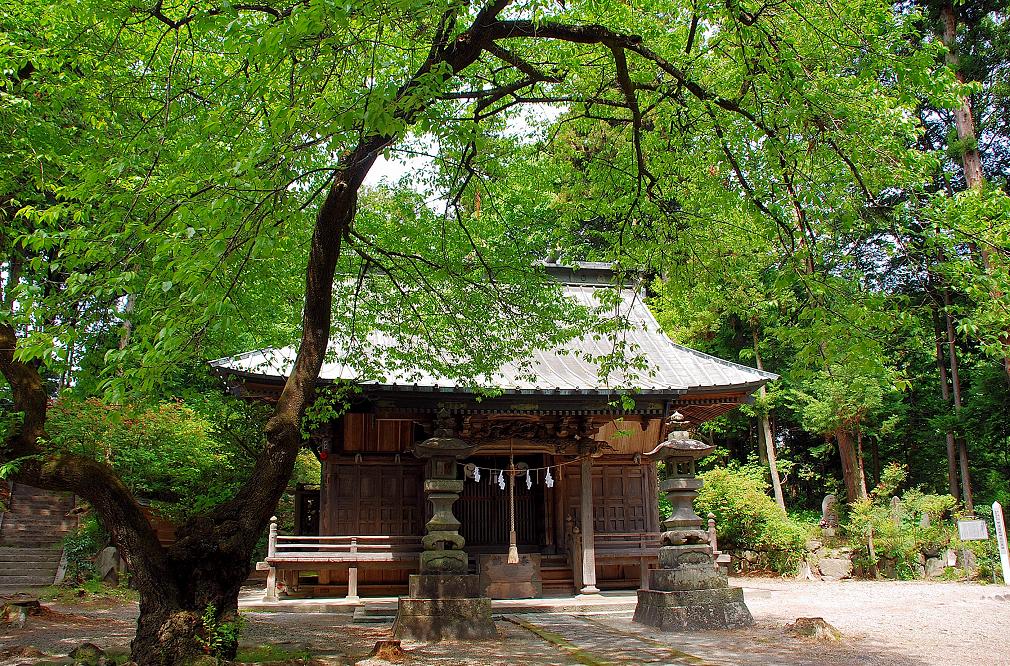
Main Hall (Kannon Hall)
The main hall, rebuilt in 1787 (Tenmei 7), is a designated important cultural property of Shibukawa City. The principal image, the Eleven-Faced Thousand-Armed Kannon Bodhisattva, is enshrined here and can be viewed as a substitute. A plaque bearing the inscription “Senju Daihikaku” hangs inside the hall, creating a solemn atmosphere.
The architectural style strongly retains the characteristics of the late Edo period, and the carvings and coloring are magnificent. The carvings on the transoms, in particular, speak to the high level of craftsmanship of the time.
Hexagonal Two-Story Pagoda (Hexagonal Hall)
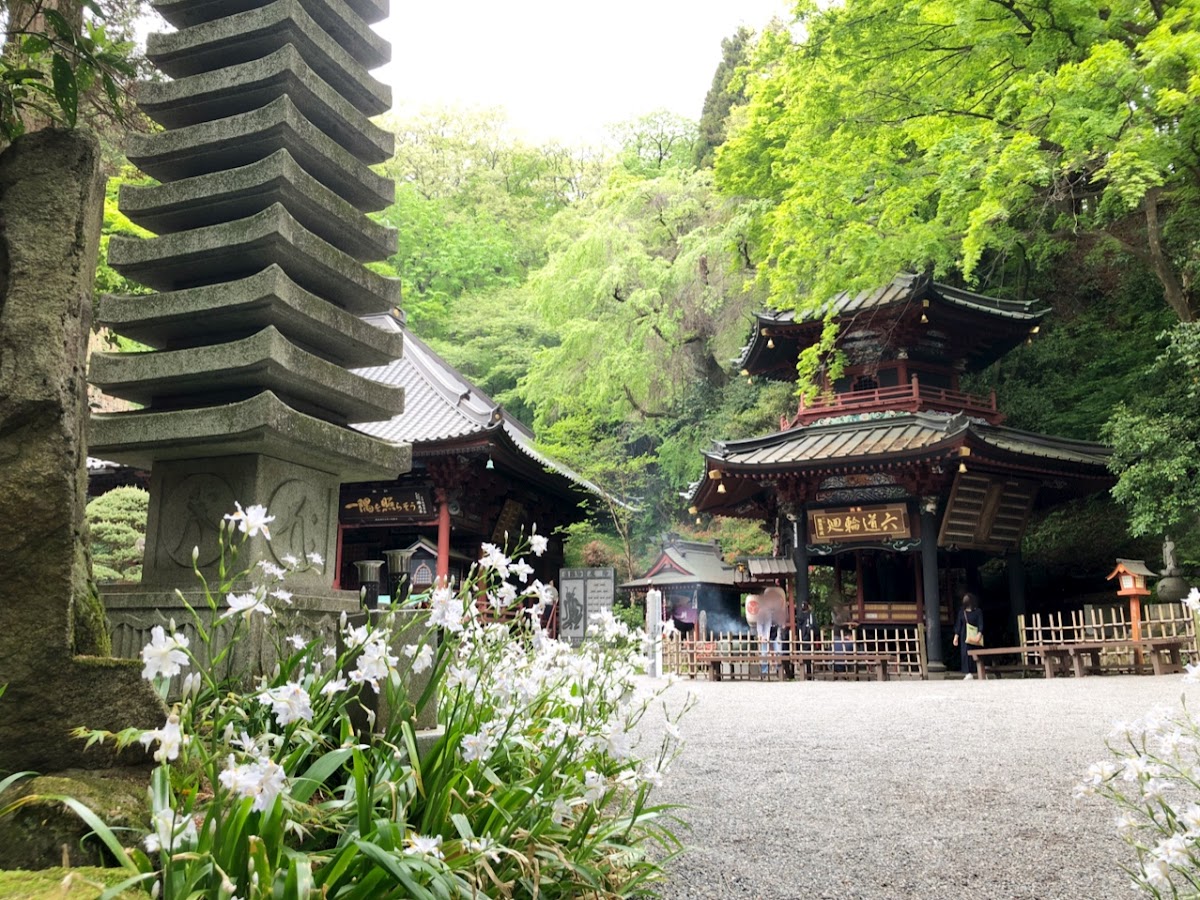
The hexagonal two-story pagoda, standing in the center of the temple grounds, is a symbolic structure of Mizusawa-dera Temple. This pagoda has a very unusual structure; the first floor is an open-air corridor, and a hexagonal revolving sutra repository (Rinzō) is installed inside.
It is believed that worshippers can offer sincere prayers to Jizo Bodhisattva by turning this revolving sutra repository three times to the left. Jizo Bodhisattva statues are enshrined on each side of the hexagonal hall, attracting worshippers as the “Six Jizo.” This unique architectural style is rare nationwide, making it a must-see spot when visiting Mizusawa-dera Temple.
Niomon Gate
The Niomon Gate, located at the entrance to the temple grounds, is a magnificent structure that first greets worshippers. The Kongo Rikishi statues (Nio statues) on either side watch over worshippers with their imposing presence as guardian deities protecting the temple.
Passing through the Niomon Gate, stone lanterns line both sides of the approach, creating a sacred space leading to the main hall.
Shakado Hall
The Shakado Hall houses a statue of Shakyamuni Buddha and is usually open for worship from 9:00 AM to 4:00 PM. You can pray in peace and tranquility within the hall. Opening hours for the Shakado Hall may change depending on the season and events, so it is recommended to check in advance.
Nofuda-do Hall
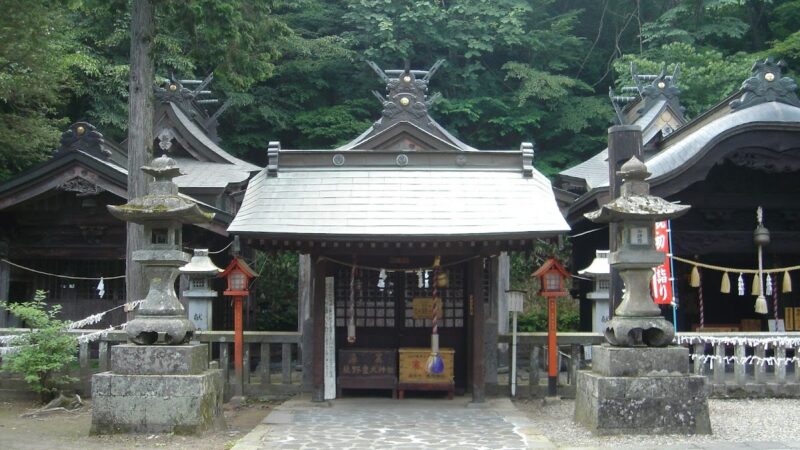
The Nofuda-do Hall, where pilgrims deposit their votive slips, is also located on the temple grounds. It plays an important role as a place where those on the Bando Thirty-Three Kannon Pilgrimage dedicate their prayer slips.
Important Notice: From April 1st, 2026, it will no longer be possible to deposit dolls (including Hina dolls and May dolls) in the Nofuda-do Hall. This change is due to the temple’s management policy, so please be aware of this.
Kannon Cedar
Within the temple grounds stands the magnificent Kannon Cedar, estimated to be approximately 700 years old. This sacred tree is designated a natural monument of Gunma Prefecture and, as a living witness to a long history, it deeply moves visitors.
Its trunk circumference is several meters, and its majestic presence is awe-inspiring. It is also known as a power spot where one can feel the vitality and sacred atmosphere of this ancient tree.
Enku Buddha
Mizusawa Temple houses a seated Amida Buddha statue carved by Enku, a wandering monk from the Edo period. Enku Buddhas are known for their unique, simple style, and approximately 120,000 of them remain throughout Japan. The Enku Buddha at Mizusawa Temple is also carefully preserved as a valuable cultural asset.
16th Temple of the Bando Thirty-Three Kannon Pilgrimage
What is the Bando Thirty-Three Kannon Pilgrimage?
The Bando Thirty-Three Kannon Pilgrimage is a pilgrimage route that visits 33 Kannon temples scattered throughout the Kanto region (Bando). It is believed to have been established from the late Heian period to the Kamakura period, and together with the Saigoku Thirty-Three and Chichibu Thirty-Four Kannon Pilgrimages, it constitutes the “One Hundred Kannon Pilgrimages of Japan.”
Starting from the 1st temple, Sugimoto-dera (Kamakura City, Kanagawa Prefecture), and ending at the 33rd temple, Nago-ji (Tateyama City, Chiba Prefecture), it is a magnificent pilgrimage route that traverses the entire Kanto region.
Mizusawa-dera Temple as the 16th Temple
Mizusawa-dera Temple welcomes many pilgrims as the 16th temple of the Bando Thirty-Three Kannon Pilgrimage. The temple’s hymn is as follows:
“My heart, pure with reliance, at Mizusawa, my deepest wish is granted—how joyful!”
This hymn expresses the joy of having one’s deepest wish fulfilled in this place where pure water flows. The “water” in Mizusawa Temple symbolizes how Kannon’s compassion, like clear spring water, purifies the hearts of worshippers.
Sutra Copying and Goshuin (Temple Seal)
The sutra copying office offers Goshuin for the Bando Thirty-Three Kannon pilgrimage.
Sutra Copying Hours: 9:00 AM – 4:00 PM (Normal Hours)
*From January 1st to January 3rd, only paper Goshuin will be issued.
*In 2026 (Reiwa 8), a special pilgrimage for the Year of the Horse is planned, and there is a possibility that special Goshuin will be issued.
The Goshuin features the calligraphy “Senju Daihikaku,” a Sanskrit character (representing Senju Kannon) in the center, and the stamp “Bando No. 16” in the upper right corner.
Annual Events at Mizusawa Temple
Mizusawa Temple holds various events throughout the year.
New Year’s Visit
The New Year’s visit is one of the busiest times at Mizusawa Temple. Many worshippers visit to offer prayers for the new year, and the temple grounds are enveloped in a solemn atmosphere. Since crowds are expected during the New Year’s visit period, it is recommended to allow ample time for your visit.
Regarding the New Year’s visit in 2026, important announcements will be made by the temple, so please check the official website for the latest information.
Grand Goma Ritual
Mizusawa Temple regularly holds a Grand Goma ritual. Goma is a ritual of Esoteric Buddhism in which sacred wood is burned on a goma altar to burn away worldly desires and fulfill wishes.
The schedule for the Grand Goma ritual in 2026 will be published on the temple’s official website. Those wishing to participate in the Grand Goma ritual are advised to check the schedule in advance.
National Pottery Fair
Every year, the “National Pottery Fair” is held on the temple grounds. Pottery from all over Japan gathers here, attracting many shoppers. Please check the temple’s announcements for the dates of the 2026 fair.
Special Pilgrimage
At the Bandō Thirty-Three Kannon Temples, a special pilgrimage is held every 12 years in the Year of the Horse. 2026 (Reiwa 8) is the Year of the Horse, and special pilgrimage events are planned. Many people will likely take this opportunity to visit the Bandō Thirty-Three Kannon Temples, including Mizusawa-dera Temple.
Prayers and Memorial Services
Mizusawa-dera Temple accepts various prayers and memorial services.
Available Prayers and Memorial Services
- Family Safety
- Traffic Safety
- Business Prosperity
- Academic Success
- Recovery from Illness
- Protection from Evil
- Ancestor Memorial Service
- Memorial Service for Stillborn Children
- Other Various Prayers
Reception Hours and Notes
Normal reception hours are 8:00 AM to 5:00 PM, but these may change due to events or memorial services.
Important: Prayers and memorial services will not be accepted on December 24th and 25th. Those planning to visit during this period should adjust their schedule.
Mizusawa Udon – A Local Specialty of the Temple Town
The approach to Mizusawa Temple is lined with shops selling Mizusawa Udon, a representative local dish of Gunma Prefecture.
Characteristics of Mizusawa Udon
Mizusawa Udon is considered one of the “Three Great Udon Noodles of Japan,” alongside Sanuki Udon and Inaniwa Udon (though there are various theories). Its characteristics are as follows:
- Beautiful, translucent noodles: Made with high-quality wheat flour and pure water from the Haruna mountain range.
- Strong texture and smooth mouthfeel: Made using traditional hand-kneading and hand-stretching methods.
- Cold zaru udon is the standard: Two types of dipping sauces are available: soy sauce-based and sesame-based.
Enjoying a Visit and a Meal
After visiting Mizusawa Temple, a classic course is to enjoy lunch at a Mizusawa Udon restaurant near the temple gate. Each restaurant preserves its traditional flavor while also showcasing its own unique characteristics, making it enjoyable to compare them.
There are over a dozen Mizusawa Udon restaurants along the approach to the temple, each boasting a long history and tradition. Long lines can form on weekends and during tourist seasons, so it’s recommended to visit with plenty of time to spare. ## Access Information
Access by Train
Nearest Station: JR Joetsu Line/Agatsuma Line “Shibukawa Station”
From Shibukawa Station, you can use the following methods:
- Local Bus: Take the Gunma Bus bound for “Ikaho Onsen” and get off at “Mizusawa Kannon-mae” (approx. 25 minutes)
- Taxi: Approx. 20 minutes (approx. 12 km)
Access by Car
Nearest Interchange: Kan-Etsu Expressway “Shibukawa Ikaho IC”
Approx. 30 minutes (approx. 12 km) from Shibukawa Ikaho IC
- Via National Route 17 and Prefectural Road 33
- Head towards Ikaho Onsen and follow the signs
Parking
There is free parking on the temple grounds and in the surrounding area. There is ample space, but it can get crowded during New Year’s and tourist seasons.
Seasonal Scenery
Mizusawa Temple displays beautiful scenery in each of the four seasons. ### Spring
Cherry blossoms adorn the temple grounds, and new greenery sprouts. Enjoy your visit in the gentle spring sunshine.
Summer
The temple grounds, enveloped in deep green, are cool and refreshing, making it an ideal summer retreat. You can cool off in the shade of the Kannon Cedar.
Autumn
Known as a famous spot for autumn foliage, the temple grounds are dyed in red and yellow. The best time to visit is especially from early to mid-November.
Winter
The snow-covered temple grounds are enveloped in silence, creating a solemn atmosphere. The sacred atmosphere is particularly strong during the New Year’s visit period.
Nearby Tourist Attractions
Ikaho Onsen
A representative hot spring resort in Gunma Prefecture, located about 10 minutes by car. Famous for its stone steps, it boasts numerous day-trip bathing facilities. Combining a visit to Mizusawa-dera Temple with a hot spring bath is a popular sightseeing option.
Ikaho Green Ranch
A popular tourist ranch for families. You can enjoy interacting with animals and seasonal flowers.
Mount Haruna and Lake Haruna
Mount Haruna is one of the three famous mountains of Joshu (present-day Gunma Prefecture), and Lake Haruna spreads out at its summit. You can enjoy driving, hiking, and boating.
Manners and Precautions for Visiting the Temple
Basic Manners for Visiting the Temple
- Bow at the Niomon Gate: Bow before entering the temple grounds.
- Purify yourself at the water basin: Purify your hands and mouth before praying.
- Pray at the main hall: Place your offering in the offering box and pray quietly with your hands clasped together.
- Circle the hexagonal hall: Circle it three times counterclockwise.
- Receive your temple stamp at the sutra hall: Receive your temple stamp after praying.
Photography
Photography is generally permitted on the temple grounds, but please be considerate of those inside the hall and other visitors. Please refrain from using flash photography and tripods.
Attire
There is no specific dress code, but modest attire that reflects the sacred nature of the place is preferred.
Visiting Hours and Fees
Visiting Hours
- Worship: Free (Temple grounds are always open)
- Sutra Copying Reception: 9:00 AM – 4:00 PM
- Shakado Hall Visit: 9:00 AM – 4:00 PM
*Hours may change depending on the season and events.
Admission Fee
Worship within the temple grounds is free.
Summary
Mizusawa-dera Temple (Mizusawa Kannon) has a history of over 1,300 years and has been cherished by many worshippers as the 16th temple of the Bando Thirty-Three Kannon Pilgrimage. Located in Mizusawa, Ikaho-machi, Shibukawa City, Gunma Prefecture, it is a renowned Tendai sect temple with Mount Gotoku as its mountain name.
The temple grounds offer numerous sights to see, including the main hall enshrining the Eleven-Faced Thousand-Armed Kannon Bodhisattva, a uniquely structured hexagonal two-story pagoda, and a 700-year-old Kannon cedar tree. Furthermore, Mizusawa Udon, a representative local dish of Gunma Prefecture, is enjoyed in conjunction with a visit to the temple.
Located near Ikaho Onsen and easily accessible from the Shibukawa-Ikaho Interchange, it’s ideal for a trip combining sightseeing and pilgrimage. The beautiful scenery throughout the seasons is also a major draw, offering new discoveries with every visit.
Mizusawa-dera Temple is highly recommended for those planning a pilgrimage of the 33 Kannon temples of Bando, those wishing to visit a historical temple in Gunma Prefecture, and those wanting to combine a visit with sightseeing in Ikaho Onsen.
When visiting, please check the latest opening hours and event information on the official website and spend a peaceful time contemplating the compassion of Kannon.