Complete Guide to Himeji Gokoku Shrine, Hyogo Prefecture | History, Benefits, Access, and Goshuin Information
Himeji Gokoku Shrine, Hyogo Prefecture, is a Gokoku Shrine located very close to the World Heritage Site, Himeji Castle. It enshrines 56,988 war dead from the western Hyogo Prefecture region (12 cities and 15 counties in the Banshu and Tajima areas), and is cherished as a sacred place where prayers are offered for the peace and security of the nation and its people, as well as a peaceful guardian shrine for the local community.
This article provides detailed information useful for visitors, from the history of Himeji Gokoku Shrine to its highlights, benefits, access methods, and Goshuin information.
What is Himeji Gokoku Shrine, Hyogo Prefecture?
Himeji Gokoku Shrine, Hyogo Prefecture, is one of the 52 Gokoku Shrines located throughout Japan. Located within Himeji Park, which lies within the grounds of Himeji Castle’s inner bailey, this shrine stands on the site of former samurai residences.
It is also known as the only shrine in Himeji to which the Emperor and Empress always offer offerings when they visit Hyogo Prefecture, demonstrating its high status.
About the Deities
Hyogo Prefecture Himeji Gokoku Shrine enshrines 56,988 war dead from the western region of Hyogo Prefecture who sacrificed their lives for their country during Japan’s modernization after the Meiji Restoration. These heroic spirits sacrificed their precious lives for the peace and development of the nation, forming the foundation of our peaceful lives.
From a wide area encompassing twelve cities and fifteen counties in the Banshu and Tajima regions, war dead from various eras are enshrined, including those from the Boshin War, the Satsuma Rebellion, the First Sino-Japanese War, the Russo-Japanese War, World War I, the Manchurian Incident, the Second Sino-Japanese War, and the Greater East Asia War (World War II). ## History
Founding History
The founding of Himeji Gokoku Shrine in Hyogo Prefecture is deeply intertwined with Japan’s modernization after the Meiji Restoration. Gokoku Shrines were established throughout Japan to honor the spirits of those who sacrificed their lives for the country and to pass on their achievements to future generations.
In Himeji, a shrine was founded to enshrine those who died in the war from the Harima and Tajima regions, and since then, it has been preserved as a spiritual anchor for the local people.
Post-War History
After World War II, the Gokoku Shrine was temporarily forced to become an independent religious corporation, but it was maintained through the enthusiasm of the local people and continues to this day. Many worshippers, including bereaved families of the war dead and those praying for peace, visit the shrine to offer their gratitude and prayers for the war dead.
Currently, the shrine continues to pass on gratitude to the war dead and prayers for peace through annual events such as memorial services and the New Year’s Lantern Festival.
Highlights of the Shrine Grounds
Main Hall
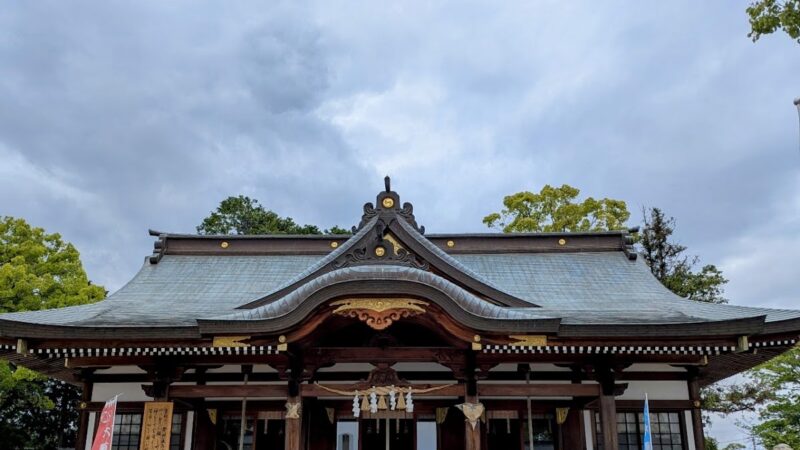
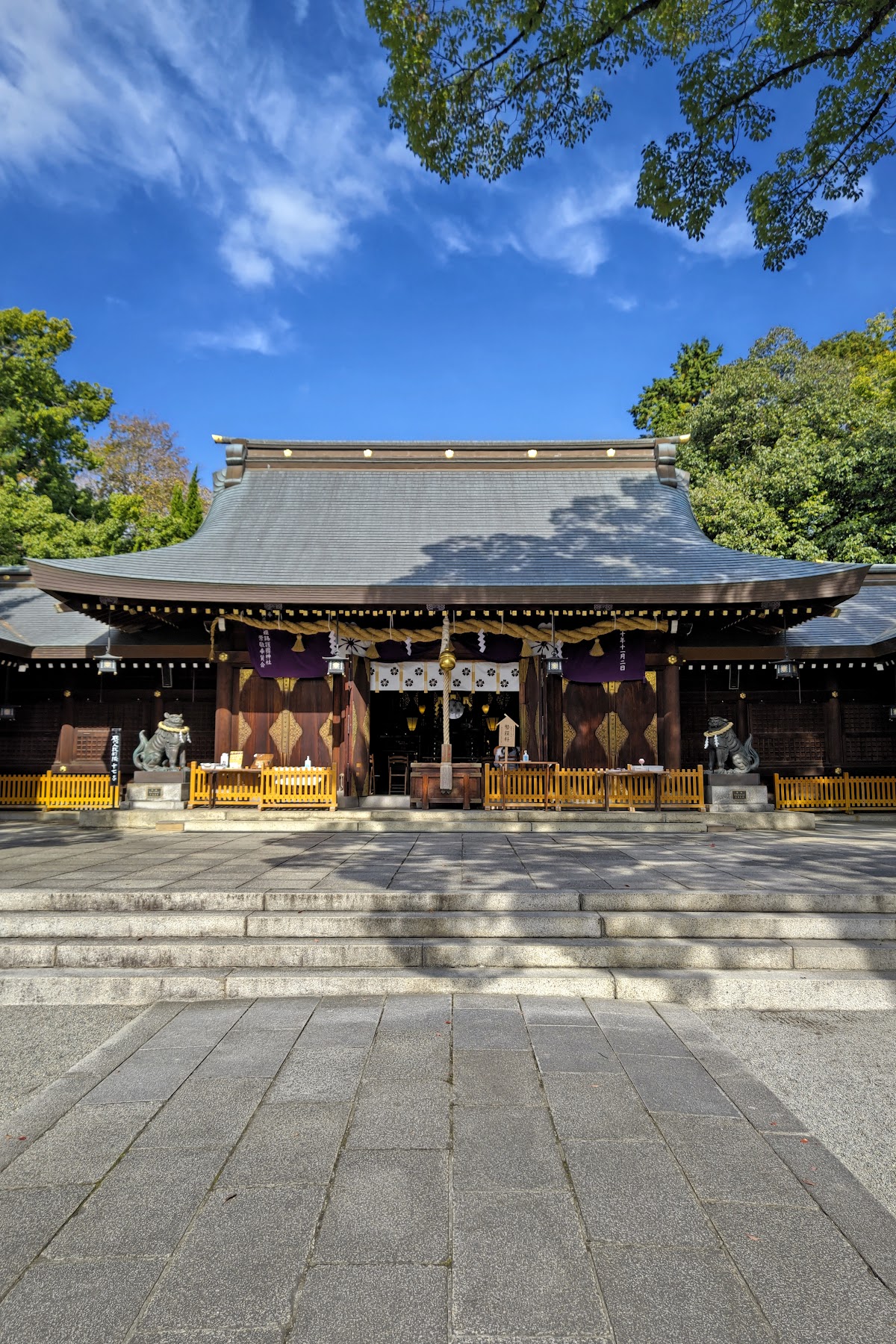
The main hall of Himeji Gokoku Shrine in Hyogo Prefecture is a majestic building. Visitors offer their sincere gratitude to the war dead and pray for the safety of their families and the peace of the nation.
A wide approach leads to the main hall, providing a tranquil space for peaceful worship.
Shirasagi-no-miya (Wedding Hall)
Within the shrine grounds is a wedding hall called “Shirasagi-no-miya.” Named after Himeji Castle’s alternative name, “Shirasagi-jo” (White Heron Castle), this facility offers traditional Shinto wedding ceremonies.
It is a popular and prestigious wedding venue where couples can celebrate their new beginnings while being watched over by the war dead.
Memorial Monuments
Several memorial monuments have been erected within the shrine grounds. These memorials were erected by bereaved families and related parties to commemorate those who died in specific battles or units, and each has its own history and story.
Standing before these memorials, one can be reminded of the tragedy of war and the preciousness of peace.
Lanterns and the New Year’s Lantern Festival
A well-known feature of Himeji Gokoku Shrine in Hyogo Prefecture is the approximately 2,000 lanterns lit during the New Year’s Lantern Festival. Many worshippers visit this traditional event, where they offer lanterns with gratitude to the war dead and welcome the new year together.
In recent years, the number of lanterns has been declining, so the shrine is calling for the cooperation of worshippers. By donating a lantern, you can express your gratitude to the war dead and contribute to the maintenance of the shrine.
Rest Area
A rest area for worshippers is also provided on the shrine grounds. It allows visitors to take a break before or after their visit, and is a particularly convenient facility for elderly worshippers and families.
Blessings and Prayer Ceremonies
At Himeji Gokoku Shrine in Hyogo Prefecture, prayer ceremonies are held regularly to express gratitude and commemorate the war dead, while also addressing the various wishes of worshippers.
Family Safety and Physical Safety
Prayers for family safety, wishing for the happiness of all family members, and prayers for physical safety, wishing for good health, are the most popular prayers. Many worshippers visit to deepen family bonds and protect their daily peaceful lives.
Exorcism of Misfortune
Exorcisms of misfortune are also performed for those entering their unlucky years. This is an important ceremony at a turning point in life to ward off misfortune and welcome a fresh start.
Prayer for Success in Exams
Prayers for success in exams are also popular. Especially during exam season, many students and their parents visit to pray for academic success and acceptance into their desired schools. Prayers are offered for the protection of the war dead and for their efforts to bear fruit.
Business Prosperity and Success
Prayers for business prosperity and success are offered to ensure the development of companies. Business owners and entrepreneurs visit to pray for the stability and growth of their businesses.
Traffic Safety
Prayers for traffic safety are also accepted at any time. Many people visit when purchasing a new car, obtaining a driver’s license, or simply to pray for safe driving.
Annual Events
New Year’s Lantern Festival
To welcome the New Year, approximately 2,000 lanterns illuminate the shrine grounds at the New Year’s Lantern Festival, a representative event of Himeji Gokoku Shrine in Hyogo Prefecture. The festival offers a fantastical spectacle to welcome the New Year and express gratitude to the war dead.
Spring and Autumn Grand Festivals
Twice a year, in spring and autumn, grand festivals are held. Solemn ceremonies of gratitude and memorial services for the war dead are held, attracting bereaved families, related parties, and general worshippers.
Mitama Festival
In summer, the Mitama Festival is held to commemorate the spirits of those who died in the war. Amidst the light of lanterns, prayers are offered for the war dead and for peace.
Goshuin (Shrine Seal) Information
Goshuin (shrine seals) are available at Himeji Gokoku Shrine in Hyogo Prefecture. Many visitors receive them as a memento of their visit or as part of a goshuin pilgrimage.
Goshuin Reception Hours
Goshuin are available at the shrine office. Opening hours are 10:00 AM to 7:00 PM, but these may change during festivals and events, so it is recommended to check in advance.
Features of the Goshuin
The goshuin at Himeji Gokoku Shrine in Hyogo Prefecture features the shrine name and date of visit written in ink, and stamped with the shrine’s seal. It is popular as a simple yet dignified goshuin.
Access Methods
Access by Train
Walking Distance from JR Himeji Station/Sanyo Electric Railway Himeji Station
- Approximately 15 minutes on foot from Himeji Station
- Walk towards Himeji Castle; the shrine is located within Himeji Park.
- It’s within walking distance of Himeji Castle, making it easy to combine a visit with sightseeing.
By Bus
- Take the Shinki Bus from Himeji Station and get off at “Himeyama Park South/Medical Center/Art Museum” bus stop.
Access by Car
Sanyo Expressway
- Approximately 15 minutes from Himeji East IC
- Approximately 20 minutes from Himeji West IC
Parking
- Dedicated parking is available for the shrine.
- Parking at Himeji Park is also available.
- During busy periods such as New Year’s Day and the annual festival, we recommend using public transportation.
Address
118 Honmachi, Himeji City, Hyogo Prefecture 670-0012
Nearby Tourist Attractions
Himeji Castle
Located within walking distance of Himeji Gokoku Shrine in Hyogo Prefecture, Himeji Castle, a World Heritage Site, is one of Japan’s most representative castles. Its beautiful keep, affectionately known as “White Heron Castle,” is a must-see. Visiting it in conjunction with a visit to the shrine is highly recommended.
Himeji City Museum of Art
The Himeji City Museum of Art, located within Himeji Park, offers a chance to appreciate art from both Japan and abroad. The beautiful red brick building is also a highlight.
Kokoen Garden
Kokoen Garden, the former site of the Himeji Castle West Residence, is a renowned spot to enjoy the beauty of Japanese gardens. Visitors can enjoy the scenery of each season.
Manners and Precautions for Visiting a Shrine
Proper Way to Visit a Shrine
- Bow Before Passing Through the Torii Gate: Before entering the shrine grounds, bow before the torii gate.
- Purify at the Water Basin: Purify your left hand, then your right hand, then your mouth.
- Pray: Pray using the two bows, two claps, and one bow method.
- Bow Upon Exit: When leaving the shrine grounds, turn around after passing through the torii gate and bow.
Attire
There are no specific dress code requirements, but it is desirable to wear clean clothing that reflects the sacred nature of the place. If you are receiving a prayer ceremony, more formal attire is preferable.
Photography
Photography is generally permitted on the shrine grounds, but photography inside the main hall or during ceremonies should be avoided. Also, please be considerate of other visitors.
The Charm of Himeji Gokoku Shrine, Hyogo Prefecture
A Place to Learn About History and Peace
Himeji Gokoku Shrine in Hyogo Prefecture is more than just a tourist spot; it’s a place to learn about Japan’s modern history and the history of war, and to truly appreciate the preciousness of peace. It offers a profound sense of the significance of the 56,988 war dead enshrined there, providing an opportunity to be grateful for the peaceful life we enjoy today.
A Guardian Shrine Rooted in the Community
Beyond its role as a Gokoku Shrine, it is a beloved local guardian shrine, a place of peace and tranquility for the community. It’s a place cherished across generations, visited at important life events such as family safety, academic success, and protection from evil.
As Part of Himeji Sightseeing
This is a must-visit spot when sightseeing at Himeji Castle. Visiting it in conjunction with the World Heritage Site of Himeji Castle allows for a deeper understanding of Himeji’s history and culture.
Summary
Hyogo Prefecture Himeji Gokoku Shrine is a prestigious shrine dedicated to the 56,988 war dead from the western region of Hyogo Prefecture. Its convenient location within Himeji Park, near Himeji Castle, makes it easily accessible for worshippers.
The shrine attracts people’s devotion in various forms, including the enchanting glow of lanterns during the New Year’s Lantern Festival, Shinto wedding ceremonies at Shirasagi-no-miya Shrine, and various prayer services. It is also noteworthy that it is the only shrine in Himeji to receive offerings from the Emperor and Empress during their visits.
Hyogo Prefecture Himeji Gokoku Shrine is a place where you can offer gratitude and sincere condolences to the war dead and truly feel the preciousness of peace. When you visit Himeji, please be sure to pay your respects. You will be able to calm your heart and offer prayers amidst the weight of history and tranquil atmosphere.
In recent years, the number of lanterns has decreased, highlighting the need for continued support from those who maintain the shrine. It is also our important role to pass on this precious sacred site to future generations through worship.