Complete Guide to Itate Hyozu Shrine | History, Deities, and the Complete Mitsuyama Grand Festival of Harima Province
Itate Hyozu Shrine is an ancient shrine known as the principal shrine of Harima Province, located in Soja Honmachi, Himeji City, Hyogo Prefecture. Affectionately known locally as “Soja-san” or “Sosha-san,” it boasts a unique location within the inner bailey of Himeji Castle. This article provides a detailed explanation of this shrine, which has a history of over 1,400 years, covering everything from its enshrined deities and festivals to its cultural assets and visiting information.
What is Itate Hyozu Shrine? | Basic Information on the Harima Province Principal Shrine
Itate Hyozu Shrine has functioned as the principal shrine of Harima Province (present-day southwestern Hyogo Prefecture), serving as a center of faith in the Harima region. A “Sōsha” refers to a shrine where the deities of all shrines within a province are enshrined together in one place. This system originated from a system established to save provincial governors the trouble of visiting each shrine individually.
Shrine Rank and Name
- Shikinaisha: An ancient shrine listed in the Engishiki Jinmyōchō (Engishiki Minor Shrine)
- Former Shrine Rank: Prefectural Shrine
- Common Name: Sōsha, Sōsha-san, Harima Province Sōsha
- Official Name: Itate Hyōzu Shrine
In the Harima region, it is pronounced “Sōsha” without the voiced consonant, making it a familiar and beloved shrine for locals.
Location and Geographical Features
Itate Hyōzu Shrine is located southeast of Himeji Castle, approximately 800 meters northeast of Himeji Station. Situated in a special location within the inner bailey of Himeji Castle, it has a history deeply intertwined with the formation of the castle town. This location dates back to the Edo period, when Ikeda Terumasa undertook a major renovation of Himeji Castle and developed the surrounding castle town, illustrating the close relationship between the shrine and the castle city.
Deities Enshrined | Origin of Itate-no-Okami and Hyōzu-no-Okami
As its name suggests, Itate Hyōzu Shrine enshrines two principal deities.
Itate-no-Okami
Itate-no-Okami is an ancient deity mentioned in the Harima Province Fudoki (ancient provincial gazetteer). The name “Itate” means a shield to deflect arrows, and the deity has the characteristics of a war god. According to the Harima Province Fudoki, it was enshrined in Idachi-no-Sato (near present-day Shikama Ward, Himeji City).
Hyozu-no-Okami
Hyozu-no-Okami is believed to be Ōnamuchi-no-Mikoto. It is said that on June 11th, 564 (the 25th year of Emperor Kinmei’s reign), the deity manifested himself and was enshrined at Mizuoyama in Iwari, Shikama District. The name “Hyozu” signifies a god of war and martial prowess, and the deity has been revered since ancient times as a god who presides over military strength and victory.
The Time of the Joint Enshrinement of the Two Deities
While there are no clear records regarding the exact date of the joint enshrinement of Itate-no-Okami and Hyozu-no-Okami, the Engishiki Jinmyōchō (a list of shrines compiled in 927) mentions “Itate-Hyozu Shrine, two deities,” confirming that the two deities were enshrined together at least by the latter half of the 9th century.
The Joint Enshrinement of Deities in Harima Province
The reason why Itate Hyōzu Shrine is called the “Grand Shrine of Harima Province” is because in 1181 (Yōwa 1), 174 deities of various sizes from the 16 districts of Harima Province were enshrined together within its grounds. This made it a special shrine where all the deities of Harima Province could be worshipped in one place. This joint enshrinement elevated Itate Hyōzu Shrine to an even more important position as the center of faith in the Harima region.
Origins and History | From Ancient Times to the Present
Ancient Times: The Era of the Harima Province Fudoki
The origins of Itate Hyōzu Shrine are very old. It is already mentioned in the Harima Province Fudoki, compiled in the early 8th century, suggesting that it existed at least before the Nara period. The Harima Province Fudoki records that it was enshrined in Indatsuri, indicating the ancient nature of faith in this region.
Its founding is said to date back over 1,400 years, possibly to the reign of Emperor Kinmei (mid-6th century). This period also coincided with the introduction of Buddhism to Japan, suggesting that it already functioned as an important shrine during a period of religious transformation in ancient Japan.
Heian Period: Establishment as an Engishiki-listed Shrine
It was listed in the Engishiki (completed in 927) as “Itate Hyōzu Shrine, two deities, Shikama District, Harima Province,” establishing its status as an Engishiki-listed shrine. Shrines listed in the Engishiki were those particularly important to the imperial court, indicating that Itate Hyōzu Shrine was recognized nationally.
Late Heian Period: Establishment of the Harima Province Grand Shrine
In the first year of Yōwa (1181), the deities of 174 shrines in 16 districts of Harima Province were enshrined together, becoming the Harima Province Grand Shrine. This period coincided with the end of the Taira clan’s rule and the turbulent Genpei War. The Soja system (a system of shrines dedicated to a single local deity) was established in various provinces from the mid-Heian period onward, but in Harima Province, this system was established in the latter half of the 12th century.
Sengoku and Azuchi-Momoyama Periods: Warfare and Changes
During the Sengoku period, Harima Province became the stage for power struggles among local powerful families such as the Akamatsu and Kodera clans. It is believed that Kuroda Kanbei (Josui) also had connections with this shrine during his time as lord of Himeji Castle, suggesting that it was revered by warlords.
In 1581 (Tensho 9), during the major renovation of Himeji Castle and the development of the castle town by Ikeda Terumasa, the shrine was relocated to its current location. This was part of the urban planning centered on Himeji Castle, indicating that the shrine was positioned as an important component of the castle town.
Edo Period: Red Seal Land and Protection by the Feudal Lord
Throughout the Edo period, Itate Hyōzu Shrine received strong protection from successive lords of the Himeji domain. Recognized as a Shuinchi (land granted by the Shogun through a Shuinjo), it was able to establish a stable economic base.
In 1652 (Keian 5), Sakakibara Tadatsugu, the lord of Himeji Domain, donated a stone torii gate to the approach to the shrine. This torii gate still remains today and is a designated cultural property of Himeji City. The fact that many Edo-period shrine buildings and offerings remain is evidence of the deep faith of the samurai class, including the domain lord.
Meiji Era and Beyond: Modern Shrine Ranking System and the Present
The Meiji-era separation of Shinto and Buddhism brought about significant changes to shrines. Under the modern shrine ranking system, it was ranked as a prefectural shrine, maintaining its status as an important shrine in the Harima region.
After the war, it became an independent religious corporation and continues to function as a center of local faith. Even today, it remains a popular shrine, attracting many worshippers, with approximately 300,000 visitors during the first three days of the New Year.
Highlights of the Shrine Grounds | Main Hall, Worship Hall, and Subsidiary Shrines
Approach and Stone Torii Gate
At the entrance to the approach to Itate Hyozu Shrine stands a large signpost inscribed with “Itate Hyozu Shrine.” As you proceed along the approach, you will come across a stone torii gate donated in 1652 by Sakakibara Tadatsugu, the lord of Himeji Domain. This torii gate is designated as a Himeji City cultural property and is a valuable cultural asset that conveys the stone carving techniques of the early Edo period.
Main Hall
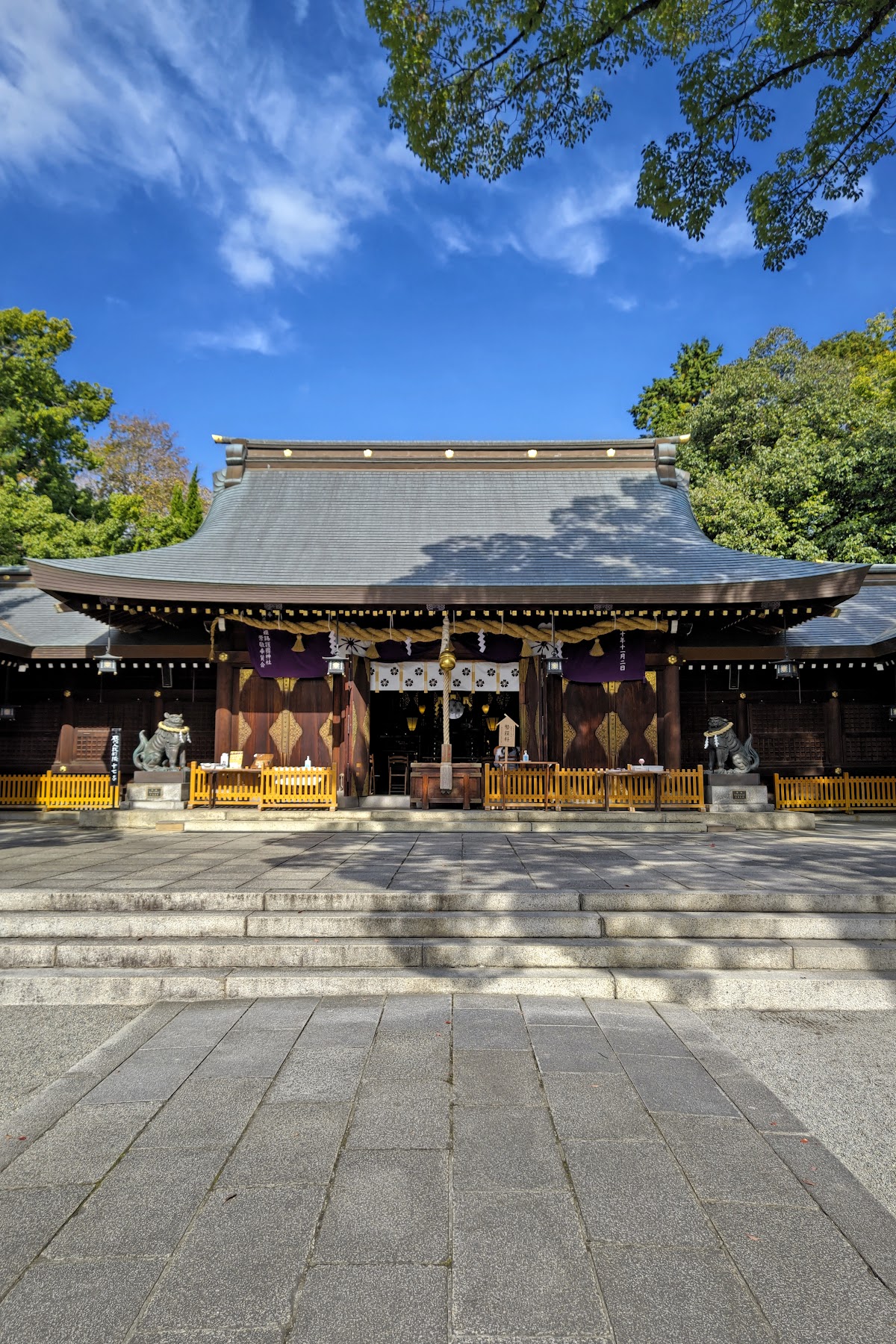
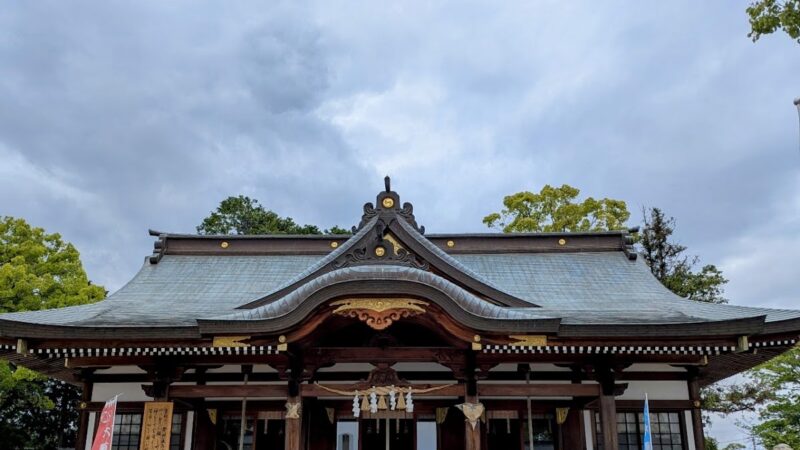
The main hall is a magnificent structure befitting the principal shrine of Harima Province. It retains the architectural style of the Edo period, and the detailed carvings and decorations showcase the finest craftsmanship of the time. The main hall enshrines the two principal deities, Itate Okami and Hyozu Okami, and also enshrines 174 other deities from Harima Province.
Worship Hall
The worship hall is located in front of the main shrine, serving as a place for worshippers to offer prayers. From the worship hall, one can worship the main shrine, and many worshippers visit daily to offer their prayers.
Subsidiary Shrines
Several subsidiary shrines are located within the grounds, each enshrining different deities. Due to its nature as a general shrine enshrining deities from Harima Province, the grounds contain diverse objects of worship, allowing worshippers to pray with a variety of wishes.
Atmosphere of the Shrine Grounds
Despite being located in the urban area within the inner bailey of Himeji Castle, the shrine grounds exude a tranquil atmosphere. Ancient trees flourish, creating a space that evokes a sense of history. Especially in the early morning and at dusk, one can feel a sacred atmosphere that makes one forget the hustle and bustle of the city.
Mitsuyama Grand Festival | A Magnificent Festival Held Once Every 60 Years
An indispensable part of discussing Itate Hyozu Shrine is the “Mitsuyama Grand Festival,” held once every 20 years. This festival is known as one of the largest festivals in the Harima region and is an important event symbolizing the region’s history and culture.
History and Significance of the Mitsuyama Grand Festival
The Mitsuyama Grand Festival began as a festival to enshrine the 174 deities enshrined at the Harima Province Grand Shrine. The name “Mitsuyama” comes from the three mountains (tsukuriyama) created during the festival. This festival is an important Shinto ritual praying for the prosperity of Harima Province, a bountiful harvest, and peace in the region.
The “Hitotsuyama Grand Festival” Held Once Every 60 Years
Every three Mitsuyama Grand Festivals, or once every 60 years, a specially grand “Hitotsuyama Grand Festival” is held. In this festival, even larger mountains are created than usual, making it a major event involving the entire Harima region.
Festival Contents
At the Mitsuyama Grand Festival, three gigantic tsukuriyama, reaching heights of over ten meters, are created. These floats are constructed using bamboo, wood, and Japanese paper, and their surfaces are adorned with vibrant decorations. During the festival, various Shinto rituals and dedication ceremonies are held around these floats, attracting many worshippers and tourists.
The creation of these floats involves the entire local community, with preparations beginning several months in advance. Through this collaborative work, the bonds of the local community deepen, and traditional culture is passed down to future generations.
Next Event Schedule
The Mitsuyama Grand Festival is held only once every 20 years, and many local residents and history enthusiasts eagerly await its next occurrence. In the years it is held, many visitors from all over Japan come, offering a valuable opportunity to experience the traditional culture of Harima.
Annual Events and Festivals | Yakujin Festival and Seasonal Festivals
In addition to the Mitsuyama Grand Festival, various other festivals are held throughout the year at Itate Hyozu Shrine.
Yakujin Festival
Held every February, the Yakujin Festival is an important festival where people entering their unlucky years pray for protection from misfortune. In the Harima region, the belief in protection from misfortune is strong, and many worshippers visit to pray for warding off evil. Prayers for protection from misfortune are performed on the shrine grounds, and amulets and talismans are given out.
New Year’s Visit
As the main shrine of Harima Province, Itate Hyōzu Shrine is one of the central places for New Year’s visits in the region. Every year during the first three days of the New Year, approximately 300,000 people visit to pray for safety and prosperity in the new year. Its proximity to Himeji Castle makes it a popular spot for tourists as well.
Other Annual Events
- Grand Festival: The most important annual event, held in autumn.
- Monthly Festival: A Shinto ritual held regularly every month.
- Summer Purification Ceremony: A Shinto ritual held at the end of June to purify oneself of the impurities accumulated over the past six months.
- Niiname-sai Festival: A harvest festival held in November to give thanks for the harvest.
These festivals are attended by local people, and traditional beliefs continue to thrive.
Benefits and Aspects as a Power Spot
Main Benefits
Itate Hyozu Shrine, as a shrine dedicated to the god of war, is believed to offer the following benefits:
- Prayer for Victory and Good Fortune: Both Itate-no-Okami and Hyozu-no-Okami possess characteristics of war gods.
- Protection from Evil and Disaster: A shrine known for its protection against evil, including the Yakujin Festival.
- Family Safety and Business Prosperity: As the main shrine of Harima Province, it protects the entire region.
- Matchmaking and Safe Childbirth: Among the 174 deities enshrined, there is also a god of matchmaking.
Attractiveness as a Power Spot
In recent years, Itate-no-Hyozu Shrine has attracted attention as a power spot. Located near Himeji Castle, a place with powerful “energy,” and boasting a history of over a thousand years, it attracts many visitors.
In particular, the tranquil atmosphere of the shrine grounds is popular as a place to escape the hustle and bustle of the city and find peace of mind, and it is also supported by people seeking spiritual refreshment.
Cultural Properties | Connection to Ise Grand Shrine
Himeji City Designated Cultural Properties
Itate Hyozu Shrine possesses several cultural properties designated as Himeji City Cultural Properties. These include the aforementioned stone torii gate donated in 1652 (Keian 5), as well as Edo period offerings and buildings, which serve as valuable historical materials that convey the region’s history to the present day.
Relationship with Ise Grand Shrine’s Sacred Treasures
Itate Hyozu Shrine has a deep connection to the Shikinen Sengu (periodic rebuilding and relocation) of Ise Grand Shrine. During the Shikinen Sengu, which takes place every 20 years, Ise Grand Shrine sometimes bestows timber and other materials from its old shrine buildings upon shrines throughout the country, and Itate Hyozu Shrine has historically benefited from this.
This relationship indicates that Itate Hyozu Shrine was recognized as a nationally important shrine, and its connection to Ise Grand Shrine speaks to the shrine’s high status.
Ancient Documents and Records
Shrines preserve ancient records and documents, which are important resources for the study of the history of the Harima region. These documents provide insights into the relationship between the shrine and the local community, its relationship with successive feudal lords, and the evolution of festivals.
Shinto Wedding Ceremony | Traditional Wedding
At Itate Hyozu Shrine, you can have a traditional Shinto wedding ceremony. A wedding at this prestigious shrine, the main shrine of Harima Province, holds special significance for the local people.
The Appeal of a Shinto Wedding Ceremony
- Wedding at a Historic Shrine: Exchange your eternal vows at a shrine with over a thousand years of history.
- Proximity to Himeji Castle: A location where you can take commemorative photos with Himeji Castle as a backdrop after the ceremony.
- Traditional Ceremony: A ceremony following the ancient and elegant customs of a Shinto wedding.
If you wish to have a Shinto wedding ceremony, you need to contact the shrine in advance to confirm the schedule and details.
Kuroda Kanbei’s Connection to Himeji Castle
The Era of Kuroda Kanbei
Kuroda Kanbei (Josui), known as a renowned military strategist of the Sengoku period, served as the lord of Himeji Castle in his youth. During Kanbei’s time at Himeji Castle, the Itate Hyozu Shrine was already a prominent shrine in Harima Province, attracting local devotion, and it is believed that Kanbei also visited it.
Kanbei demonstrated exceptional skill not only as a strategist but also in managing his territory, and various records indicate that he placed great importance on local beliefs and his relationship with shrines.
The Positional Relationship Between Himeji Castle and Shrines
The location of the Itate Hyozu Shrine within the central enclosure of Himeji Castle demonstrates the importance of shrines in castle towns. From the medieval to the early modern period, castles and shrines had a close relationship; castle lords protected shrines, and shrines served as the spiritual pillars of castle towns.
It is believed that Terumasa Ikeda’s decision to relocate the shrine to its current location during the major renovation of Himeji Castle stemmed from his recognition of the shrine’s importance in the castle town’s planning.
The Faith of Samurai
The successive lords who ruled Harima Province deeply revered the Itate Hyōzu Shrine. Many samurai who ruled Himeji, including the Akamatsu, Kodera, Kuroda, Ikeda, and Sakakibara clans, made offerings and donations to the shrine, indicating that it attracted the faith of samurai as a shrine dedicated to the god of war.
Access and Visiting Information
Location
Address: 190 Soja Honmachi, Himeji City, Hyogo Prefecture
Transportation Access
Access by Train
- Approximately 15 minutes on foot from JR Himeji Station
- Approximately 15 minutes on foot from Sanyo Electric Railway Himeji Station
- Located southeast of Himeji Castle, heading towards Himeji Castle from the north exit of Himeji Station
Access by Bus
- Approximately 5 minutes on foot from the Shinki Bus “Himeji Castle Otemon-mae” stop from Himeji Station
Access by Car
- Approximately 10 minutes from the Himeji Bypass “Nakachi Ramp”
- Approximately 15 minutes from the Sanyo Expressway “Himeji East IC”
- Parking: Visitor parking available on the temple grounds (limited spaces; public transportation is recommended during peak seasons such as New Year’s)
Visiting Hours
- Temple Grounds Visiting: Generally open all day
- Shrine Office Hours: 9:00 AM – 5:00 PM (Subject to change depending on the season)
- Goshuin (Shrine Seal) Issuance: During shrine office hours
Etiquette for Visiting the Shrine
- Bow before passing through the torii gate
- Avoid walking in the center of the path (the center is the path for the gods)
- Purify yourself at the water basin
- Bow twice, clap twice, and bow once in front of the main hall
Nearby Tourist Attractions
When visiting Itate Hyozu Shrine, we recommend also visiting the following nearby attractions.
- Himeji Castle: Approximately 10 minutes on foot, a famous World Heritage castle
- Kokoen Garden: The garden of the former Himeji Castle West Residence, where you can enjoy the beauty of a Japanese garden
- Hyogo Prefectural Museum of History: A facility where you can learn about the history and culture of Harima
- Himeji City Museum of Art: A beautiful red brick museum
The Modern Significance of Itate Hyozu Shrine
Center of the Local Community
Itate Hyozu Shrine continues to play a central role in the local community even today. The festivals held throughout the year provide opportunities for local residents to gather and interact, functioning as a place to deepen community bonds.
Cultural Property Protection and Inheritance
As a shrine with a history of over a thousand years, Itate Hyozu Shrine plays an important role in protecting local cultural properties and passing them on to future generations. Protecting and transmitting tangible and intangible cultural heritage, such as buildings, ancient documents, and festivals, is essential for maintaining the region’s identity.
Value as a Tourist Resource
Due to its proximity to Himeji Castle, Itate Hyozu Shrine is an attractive spot for tourists visiting Himeji. Visiting it in conjunction with the World Heritage Site Himeji Castle allows for a deeper understanding of Himeji’s history and culture.
Role as a Spiritual Pillar
In modern society, shrines also serve as spiritual anchors. Amidst increasing urbanization, historical shrines like Itate Hyozu Shrine are becoming increasingly important as places where people seek inner peace.
Summary: The Charm of Itate Hyozu Shrine
Itate Hyozu Shrine is an ancient shrine boasting a history of over 1,400 years as the principal shrine of Harima Province. With Itate-no-Okami and Hyozu-no-Okami, two war gods, as its main deities, and enshrining 174 gods from within Harima Province, it has attracted the faith of the local community.
The magnificent Mitsuyama Grand Festival, held once every 20 years, and the Hitotsuyama Grand Festival, held once every 60 years, are events that symbolize the culture and traditions of the Harima region and serve as important opportunities to deepen the bonds among the local people. The shrine boasts a multifaceted history, including its unique location within the inner bailey of Himeji Castle, its connections to successive warlords such as Kuroda Kanbei, and its ties to Ise Grand Shrine.
Even today, Itate Hyozu Shrine continues to play an important role as a popular shrine, attracting 300,000 visitors for Hatsumode (first shrine visit of the year), and as a center of the local community. When visiting Himeji, be sure to visit this historic shrine along with the World Heritage site of Himeji Castle. You will be able to experience firsthand the history and culture of Harima, and the depth of the faith of its people.