Complete Guide to Sanno Shrine (Nagasaki) | History and Highlights of the Single-Pillar Torii Gate and the Atomic Bomb Survivor Camphor Tree
Sanno Shrine, located in Sakamoto, Nagasaki City, Nagasaki Prefecture, is a shrine that overcame the tragedy of the atomic bomb and continues to give hope to many people as a symbol of peace and reconstruction. Despite being exposed to the atomic bomb at 11:02 AM on August 9, 1945, approximately 800 meters from the hypocenter, it still preserves the precious legacy of its single-pillar torii gate and the atomic bomb survivor camphor tree.
This article provides a detailed explanation of Sanno Shrine, including its history, enshrined deities, highlights within the grounds, cultural properties, and access methods. It is a must-see place when visiting Nagasaki and a sacred site that offers an opportunity to reconsider the preciousness of peace.
History and Origins of Sanno Shrine
Origins of the Shrine
Sanno Shrine is also formally known as “Urakami Kōtaijingu” and “Sanno Hiyoshi Shrine.” This shrine was originally founded through the merger of the village shrine Sanno Shrine (Hiyoshi Shrine) and the prefectural shrine Kōtaijingu. The Sanno Shrine was integrated into the Kōtaijingu side, resulting in its current form.
The name Sanno originates from Hiyoshi Taisha (Sanno Gongen), the guardian deity of Enryaku-ji Temple on Mount Hiei. Hiyoshi Taisha has deep ties to the Tendai sect, and Sanno worship spread throughout Japan. Nagasaki’s Sanno Shrine also follows this tradition.
Connection to the Urakami District
The Urakami district, where Sanno Shrine is located, has a history as a stage for the persecution of Christians during the Edo period. In the Meiji era, a large-scale persecution of Christians known as the “Fourth Urakami Persecution” took place, resulting in the exile of many believers. Afterward, the Urakami district developed as the central part of Nagasaki City, and by 1945, it was a densely populated area with approximately 120,000 residents.
Sanno Shrine is located along the Urakami Road and has been cherished as a center of faith for the local residents. The charming approach to the shrine, with its stone steps, served as a spiritual pillar for the community.
Deities and Benefits
Main Deities
The deities enshrined at Sanno Shrine are as follows:
- Oyamakui-no-kami: The guardian deity of Mount Hiei and a central figure in Sanno faith. Believed to offer protection against misfortune and evil.
- Tamayorihime-no-kami: The mother goddess of Emperor Jimmu, revered as the goddess of safe childbirth, fertility, and matchmaking.
- Onamuchi-no-kami: Another name for Okuninushi-no-Mikoto, known for the benefits of matchmaking, marital harmony, and business prosperity.
Divine Blessings
The following blessings are believed to be worshipped at Sanno Shrine:
- Protection from evil and misfortune
- Matchmaking and marital harmony
- Safe childbirth and fertility
- Family safety
- Business prosperity
Especially as a shrine that overcame the horrors of the atomic bombing, it also attracts worshippers as a symbol of strength to overcome difficulties, and of regeneration and reconstruction.
The Atomic Bombing on August 9, 1945
The Moment of the Atomic Bombing
At 11:02 AM on August 9, 1945, an atomic bomb exploded over Matsuyama-cho, Nagasaki City. Because Sanno Shrine was located approximately 800 meters from the hypocenter, it was struck by tremendous heat rays and blast waves.
At that time, the shrine had a path lined with three torii gates, a magnificent shrine building, and a forest within its grounds. However, the explosion of the atomic bomb brought everything to the brink of destruction in an instant.
Details of the Damage
The damage to Sanno Shrine from the atomic bomb was immense:
- Shrine Building: Completely collapsed and burned down
- First Torii Gate: Completely collapsed by the blast
- Second Torii Gate: One leg on the hypocenter side was blown off, becoming a “single-pillar torii gate”
- Third Torii Gate: Collapsed
- Trees in the Shrine Grounds: Many felled, and the trees that remained were burned by the heat rays, their leaves completely consumed
The surrounding area also suffered catastrophic damage, and many residents lost their lives. The Urakami district was one of the areas in Nagasaki City that suffered the most damage.
Single-Pillar Torii Gate: A Symbol of Peace
The Miracle of the Second Torii Gate
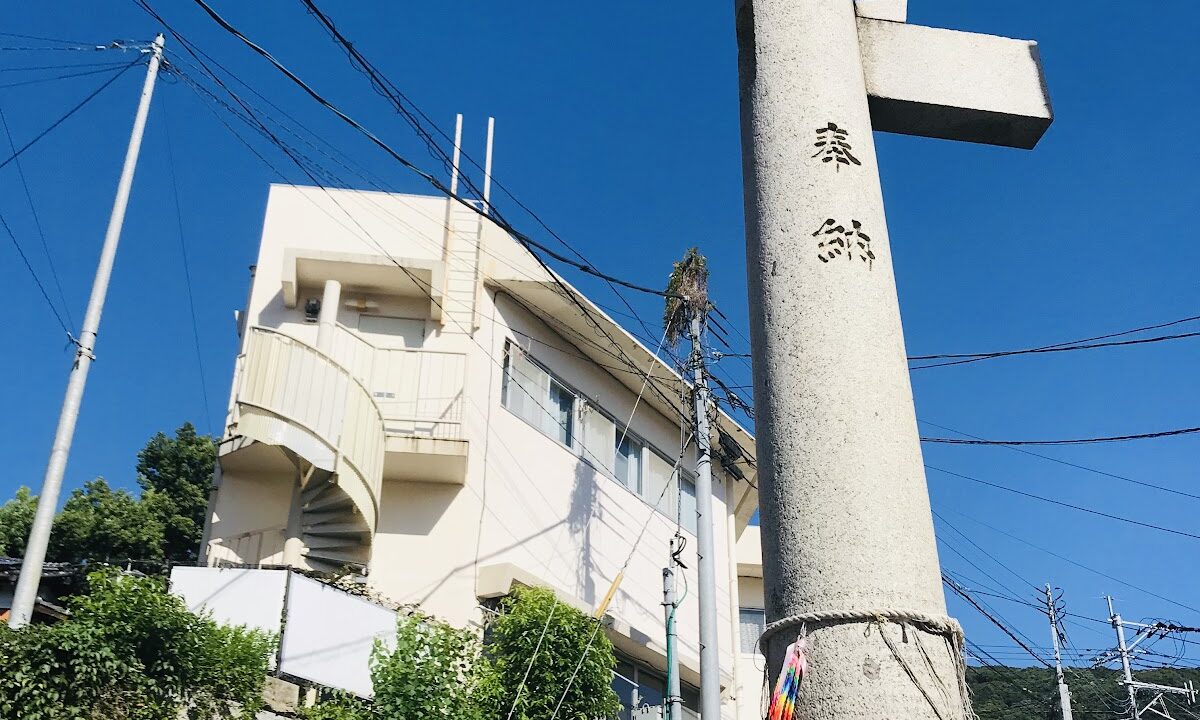
The most famous relic at Sanno Shrine is the “single-pillar torii gate.” This is the second torii gate, which was left standing with only one leg due to the blast of the atomic bomb. It is officially called the “One-Legged Torii.”
The blast, which blew from the direction of the hypocenter, broke the pillar on the hypocenter side of the torii gate at its base and blew it away. However, the pillar on the opposite side miraculously remained, and continues to support the upper part of the torii gate with a single pillar.
Structure and Preservation
The one-pillar torii gate is made of stone and stands approximately 5 meters tall. Normally, torii gates are supported by two pillars, but this gate is physically unbalanced. The fact that it continues to stand without collapsing is truly miraculous.
After the war, there was debate about whether to restore this torii gate or preserve it in its original state. Ultimately, it was decided to preserve it in its original form as a valuable legacy to convey the horrors of the atomic bomb to future generations.
Today, it serves as an important teaching material for peace education in Nagasaki City and is a popular destination for many school trip groups and tourists. The sight of the torii gate standing on a single pillar can be said to symbolize the strength of humanity that rises again even in the face of adversity.
Restrictions on Use and Protection
The single-pillar torii gate is currently protected by a fence, preventing people from passing through it. This is to protect this valuable cultural property and also for safety reasons. Visitors can view the torii gate from outside the fence and learn about its historical significance.
Even in the Reiwa era, this torii gate continues to play an important role in conveying the memory of the atomic bombing.
Atomic Bomb Survivor Camphor Trees: Symbols of Vitality
Giant Trees Over 500 Years Old
Within the grounds of Sanno Shrine, there are two large camphor trees estimated to be 400 to 600 years old. These are known as “atomic bomb survivor camphor trees” and are designated as natural monuments of Nagasaki City. One particularly large tree has a trunk circumference of approximately 8.5 meters, making it one of the largest trees in Nagasaki City.
Damage and Regeneration from the Atomic Bomb
These camphor trees suffered catastrophic damage from the heat rays and blast of the atomic bomb:
- The surface of the trunk was burned and carbonized.
- All the leaves were burned away.
- The upper branches were broken.
- At one point, they appeared to be completely dead.
Immediately after the bombing, many experts had given up on the survival of these camphor trees. The trunks were blackened and charred, and not a single leaf remained. However, the following spring, a miracle occurred. New buds sprouted from the charred trunks.
Encouragement for Citizens
The regeneration of these atomic-bombed camphor trees gave immeasurable hope to the citizens of Nagasaki at the time. For those who had lost family, homes, and everything else in the atomic bombing, the sight of new life sprouting from the charred trees symbolized a strong will to rebuild.
The thought, “If the camphor trees can come back to life, we too can rise again,” supported the hearts of many citizens. Currently, the camphor tree that survived the atomic bombing has regained its lush greenery and continues to grow vigorously despite bearing significant scars.
Protection Activities and Fundraising
To preserve the camphor tree that survived the atomic bombing for future generations, the “Sanno Shrine Great Camphor Tree Preservation Society” was established. This society conducts protection activities such as regular health checkups and treatments by arborists, and soil improvement.
Because these activities require substantial funds, fundraising activities are being conducted. Support is solicited from citizens and tourists in various forms, such as the “Tanuki Tenugui Fundraising Campaign,” and the collected donations are used for the camphor tree’s treatment.
The camphor tree that survived the atomic bombing, officially designated as a Nagasaki City Natural Monument, is not merely a tree, but a living witness that conveys the preciousness of peace and the strength of life.
Highlights of the Shrine Grounds
Shrine Building
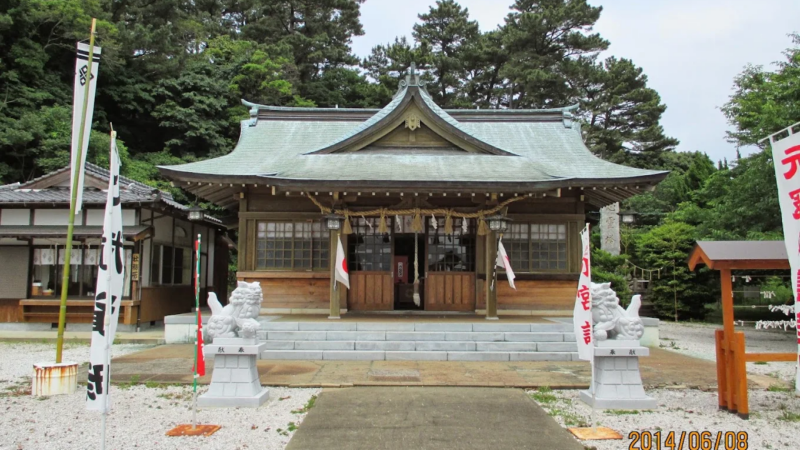
The current shrine building was rebuilt after the war. The original shrine building, which was completely destroyed by the atomic bomb, was restored through the efforts of local residents. The simple yet solemn shrine buildings offer visitors a tranquil experience.
Approach and Stone Steps
The approach leading from Urakami Street features a picturesque stone staircase. Climbing these steps, one can imagine the three torii gates that once stood here, truly appreciating the immense destructive power of the atomic bomb.
Atomic Bomb Relics
Besides the single-pillar torii gate, the shrine grounds contain other relics bearing the marks of the atomic bomb:
- Remains of a collapsed torii gate
- Stone structures deformed by heat rays
- Lanterns tilted by the blast
These are preserved as valuable evidence of the atomic bomb’s power.
Memorial Monument and Information Board
Within the shrine grounds are a memorial monument for the victims of the atomic bomb and information boards explaining the history of the bombing. Reading these allows for a deeper understanding of the situation at the time and the history of the shrine.
Designated as a Cultural Property
Designated Natural Monument by Nagasaki City
The two camphor trees that survived the atomic bombing are designated as natural monuments by Nagasaki City. This signifies that their value is recognized not only as trees, but also as historical and cultural assets.
Value as a Peace Heritage Site
The entire Sanno Shrine is positioned as an important peace heritage site in Nagasaki City. The single-pillar torii gate and the atomic bomb-surviving camphor trees are valuable legacies that convey the tragedy of the atomic bombing, and it serves as a place of peace education visited by many people from both Japan and abroad.
Rituals and Annual Events
Sanno Shrine holds various rituals throughout the year:
- New Year’s Day Festival: A festival celebrating the New Year
- Spring Grand Festival: A festival praying for a bountiful spring harvest
- Summer Purification Ceremony: A Shinto ritual to purify oneself of the impurities accumulated over the past six months
- Autumn Grand Festival: A festival expressing gratitude for the harvest
- Year-End Purification Ceremony: A Shinto ritual to purify oneself of the impurities accumulated over the past year
Also, on August 9th, a memorial service for atomic bomb victims is held, with many attendees offering prayers for peace.
Nagasaki Saruku and Sightseeing
Nagasaki Saruku Course
Sanno Shrine is included in the popular “Nagasaki Saruku” course. “Saruku” is a Nagasaki dialect word meaning “to walk” or “to stroll around,” and it is a walking tour program promoted by Nagasaki City.
The Sanno Shrine area tour includes the following sights:
- Sanno Shrine (Single-pillar torii gate, Atomic Bomb Survivor Camphor Tree)
- Urakami Cathedral
- Nagasaki Atomic Bomb Museum
- Peace Park
- Hypocenter Park
By visiting these on foot, you can experience the extent of the atomic bomb’s devastation and Nagasaki’s recovery.
Points to Note When Visiting
When visiting Sanno Shrine, please keep the following points in mind:
- Remember that this is a sacred place and pray in silence.
- The single-pillar torii gate cannot be passed through for protection.
- Avoid touching the Atomic Bomb Survivor Camphor Tree and view it from an appropriate distance.
- Photography is permitted, but please be considerate of other visitors.
- Smoking is prohibited on the shrine grounds.
Connection with Masaharu Fukuyama
Masaharu Fukuyama, a singer-songwriter and actor from Nagasaki City, has a deep connection to Sanno Shrine. In the Nagasaki episode of “Tabifukuyama,” broadcast in October 2024, Fukuyama visited the atomic bomb-surviving camphor tree at Sanno Shrine and was shown being deeply moved by its vitality.
Fukuyama continues to express his thoughts on peace in Nagasaki through his music and activities, and Sanno Shrine has become one of the “pilgrimage sites” tracing his roots.
Access
Access by Tram
Nearest Station: Nagasaki Electric Tramway “Daigaku Byoin-mae” (University Hospital) or “Urakami Shako-mae” (Urakami Depot) tram stop
- From Nagasaki Station: Take the tram bound for Akasako for approximately 10 minutes, get off at “Daigaku Byoin-mae,” and walk for approximately 5 minutes.
- Fare: 140 yen for adults (as of 2024)
From the tram stop to Sanno Shrine, follow the signs and walk along Urakami Kaido. There are many atomic bomb-related historical sites scattered around, making the walk an interesting experience.
Access by Bus
Get off at the “Sanno Shrine” bus stop on the Nagasaki Bus line. However, bus service is limited, so using the tram is more convenient.
Access by Car
- Approximately 15 minutes from the Nagasaki IC on the Nagasaki Expressway
- Parking: There is no dedicated parking lot for the shrine, but there are coin-operated parking lots nearby.
- Navigation System Setting: “2-6-56 Sakamoto, Nagasaki City, Nagasaki Prefecture”
Walking
- From the Nagasaki Atomic Bomb Museum: Approximately 10 minutes on foot
- From Peace Park: Approximately 7 minutes on foot
- From Urakami Cathedral: Approximately 8 minutes on foot
If you are visiting atomic bomb-related facilities, these are within walking distance, making it possible to visit them all together.
Nearby Tourist Attractions
Nagasaki Atomic Bomb Museum
Located approximately 10 minutes on foot from Sanno Shrine, this facility allows you to learn about the horrors of the atomic bombing and the preciousness of peace. The exhibits showcase Nagasaki before and after the atomic bombing, the power of the bomb, and testimonies from survivors.
Peace Park
This park is famous for its Peace Memorial Statue, and a peace memorial ceremony is held here every August 9th. The vast grounds are lined with peace monuments donated from around the world.
Urakami Cathedral
The largest Catholic church in East Asia, rebuilt after being destroyed by the atomic bomb. It preserves relics of the bombing, including the Virgin Mary statue that survived the bombing.
Hypocenter Park
This park marks the location where the atomic bomb exploded. A black granite monument indicates the hypocenter.
Manners and Etiquette for Visiting a Shrine
Basic Etiquette for Visiting a Shrine
- Before passing through the torii gate: Bow before entering the shrine grounds (you cannot pass through the single-pillar torii gate, but bow in your heart).
- Purifying at the water basin: Purify your left hand, right hand, and mouth in that order.
- In front of the main hall: Place your offering, bow twice, clap twice, and bow once.
- Upon leaving: Turn around and bow after leaving the torii gate.
Special Considerations
Sanno Shrine is also a heritage site related to the atomic bombing, so please pay special attention to the following points:
- Refrain from loud conversations.
- Do not approach the atomic bomb-surviving camphor tree or the single-pillar torii gate unnecessarily.
- Visit with a feeling of remembrance and respect.
- Always take your trash with you.
Goshuin (Shrine Seals) and Amulets
Sanno Shrine offers goshuin (shrine seals). You can apply at the shrine office, but it is recommended to check in advance as they may be absent.
The shrine also offers amulets and votive tablets, with the “Peace Amulet” being particularly popular among visitors.
Summary: A Prayer for Peace
Sanno Shrine is a sacred place that continues to convey the preciousness of peace, having overcome the tragedy of the atomic bomb, the worst weapon in human history. The single-pillar torii gate symbolizes the strength of humanity to stand firm even in the face of adversity, and the atomic-bombed camphor tree demonstrates the power of life to regenerate from any situation.
Visiting this shrine, located in Sakamoto, Nagasaki City, Nagasaki Prefecture, is more than just sightseeing. It is an opportunity to learn about the horrors of war, reaffirm the importance of peace, and consider our responsibility to the future.
To prevent the memory of August 9, 1945, from fading, and to ensure that the same mistake is never repeated, Sanno Shrine continues to speak to us quietly but powerfully today.
When you visit Nagasaki, please be sure to visit Sanno Shrine, stand before the single-pillar torii gate, feel the vitality of the atomic-bombed camphor tree, and offer a prayer for peace. That experience will surely leave a deep impression on your heart.
Location: 2-6-56 Sakamoto, Nagasaki City, Nagasaki Prefecture
Inquiries: Sanno Shrine Office (Please check the official website for details)
Visiting Hours: Grounds are open freely (Shrine office hours are irregular)
Admission Fee: Free