Complete Guide to Nagasaki Prefecture Gokoku Shrine: History, Access, and Visiting Information Explained in Detail
Nagasaki Prefecture Gokoku Shrine is a Gokoku Shrine located in Jōei-machi, Nagasaki City, Nagasaki Prefecture. It enshrines approximately 60,000 war dead from Nagasaki Prefecture who perished in national crises from the Meiji Restoration to the Pacific War (Greater East Asia War), and is a significant place of worship where many people visit to offer prayers for peace.
This article will provide a detailed explanation of the history of Nagasaki Prefecture Gokoku Shrine, its recovery from the atomic bombing, how to visit, access information, and the significance of Gokoku Shrines.
What is Nagasaki Prefecture Gokoku Shrine?
Nagasaki Prefecture Gokoku Shrine is a shrine established to commemorate those who died in war in Nagasaki Prefecture and to pass on their achievements to future generations. Nagasaki Prefectural Gokoku Shrine enshrines approximately 60,812 spirits (as of the Reiwa era) as guardian spirits of the nation, and is one of 52 Gokoku Shrines nationwide that have deep ties to Yasukuni Shrine.
Deities and War Dead Enshrined
Nagasaki Prefectural Gokoku Shrine enshrines war dead from the following eras:
- Meiji Restoration: Nagasaki domain samurai who died in the Boshin War
- Satsuma Rebellion: War dead from the Satsuma Rebellion
- First Sino-Japanese War and Russo-Japanese War: War dead from Nagasaki Prefecture in both wars
- World War I: War dead from the war
- Manchurian Incident and Second Sino-Japanese War: War dead on the continent
- Pacific War (Greater East Asia War): Approximately 60,000 spirits, including war dead from Nagasaki Prefecture and atomic bomb victims
Notably, it also includes those who perished in the atomic bombing of Nagasaki on August 9, 1945.
History of Nagasaki Prefecture Gokoku Shrine
From Founding to Pre-War
The origins of Nagasaki Prefecture Gokoku Shrine date back to December 1869 (Meiji 2). It began as the Umegasaki Shokonsha, a shrine dedicated to 43 Nagasaki domain samurai who died in the Boshin War, located in Umegasaki, Nagasaki City.
After the Meiji Restoration, Japan experienced many wars in the process of building a modern nation. Following the First Sino-Japanese War (1894-1895) and the Russo-Japanese War (1904-1905), the number of war dead enshrined at the shrines increased.
In 1939 (Showa 14), it became a Gokoku Shrine designated by the Minister of Home Affairs and was renamed “Nagasaki Prefecture Gokoku Shrine.” During this period, there was a movement throughout Japan to rename Shokonsha shrines to Gokoku Shrines, and Nagasaki followed this trend.
Shrine Renovation in the Showa Era
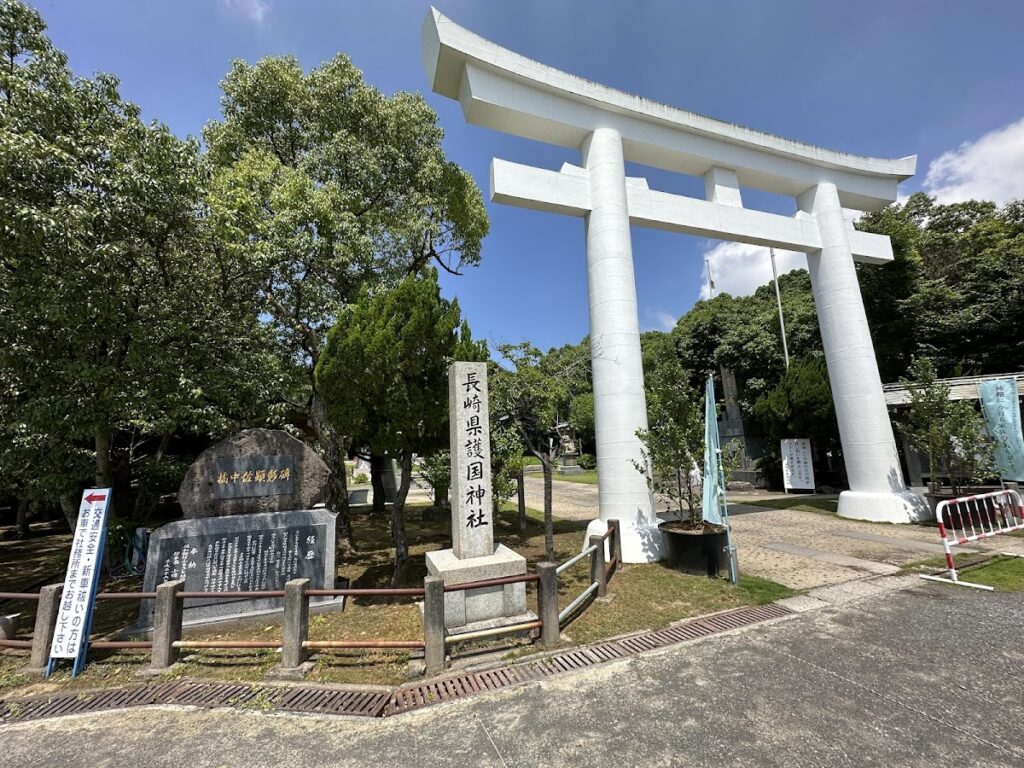
In December 1942 (Showa 17), the shrine was relocated to its current location in Jōei-machi, Nagasaki City, and a full-scale shrine building was constructed. Major structures such as the main hall, prayer hall, worship hall, offering hall, ritual implement storage, wing corridors, and large torii gate were completed, resulting in a magnificent shrine.
At that time, Nagasaki Prefectural Gokoku Shrine played an important role in wartime as a place for commemorating war dead and boosting morale.
Atomic Bombing Damage and Complete Destruction
At 11:02 AM on August 9, 1945 (Showa 20), an atomic bomb was dropped on Nagasaki City. Nagasaki Prefectural Gokoku Shrine, located approximately 800 meters northwest of the hypocenter, lost all of its buildings due to the blast and heat rays.
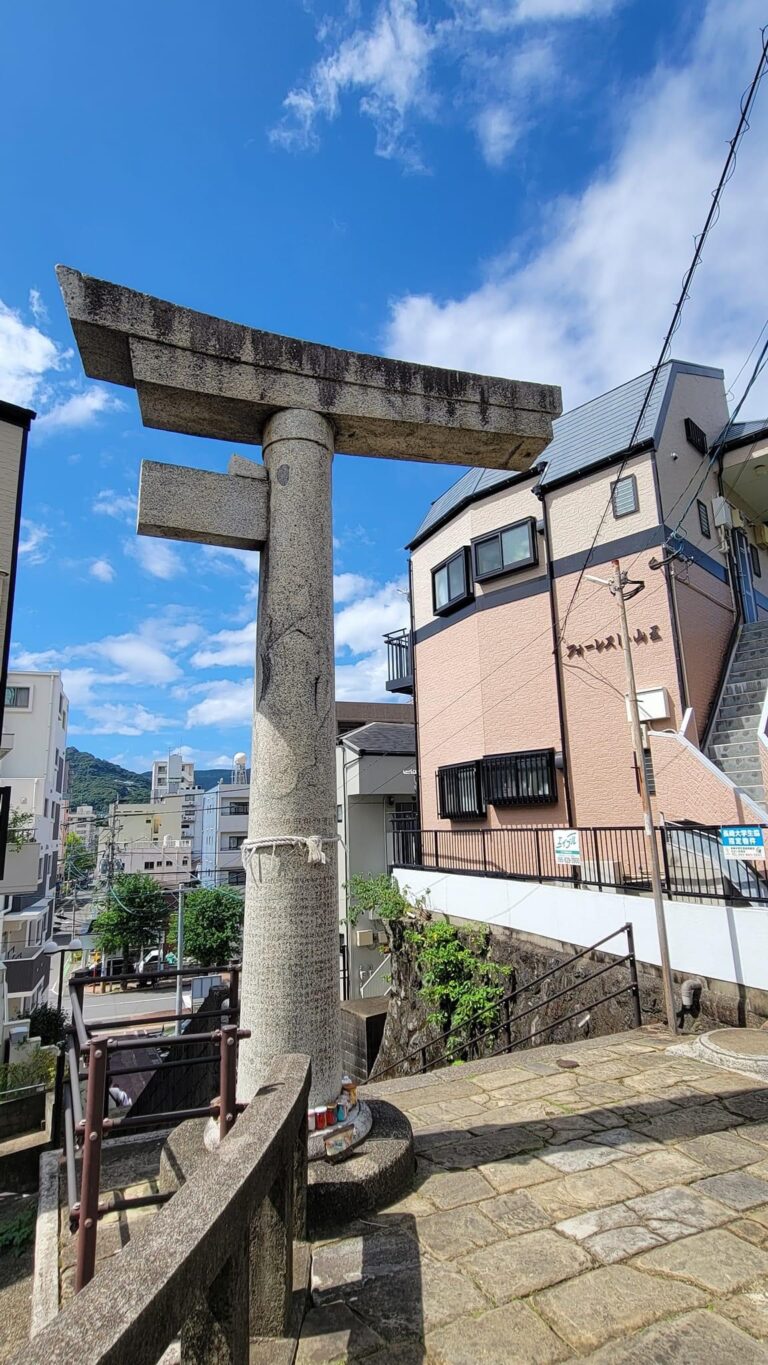
The main hall, worship hall, and large torii gate, which had only been completed in 1942, were all reduced to ashes in an instant. This tragedy was a symbolic event in which the shrine itself, dedicated to the war dead, became a victim of war.
Post-War Reconstruction
After the war, in the burnt-out ruins of Nagasaki, the reconstruction of Nagasaki Prefectural Gokoku Shrine became a long-cherished wish of the community. Overcoming many difficulties during the post-war reconstruction, the shrine building was finally rebuilt in October 1963 (Showa 38).
The rebuilt shrine took on new significance as a symbol of peace that overcame the horrors of the atomic bomb, and as a place to commemorate the war dead. The current shrine grounds, while conveying the history of the atomic bombing, maintain a tranquil and peaceful space.
Nagasaki Prefectural Gokoku Shrine in the Modern Era
More than 70 years after the war, Nagasaki Prefectural Gokoku Shrine has transcended being merely a place to commemorate the war dead and now plays an important role as a place to contemplate peace. Every year on the day of the annual festival, many bereaved families and related parties attend, offering gratitude to the war dead and prayers for peace.
Highlights of the Shrine Grounds
Main Shrine and Worship Hall
The reconstructed main shrine adopts traditional Shinto architectural styles. The worship hall quietly welcomes visitors, allowing them to offer prayers of remembrance in a solemn atmosphere.
Grand Torii Gate
The grand torii gate standing at the entrance to the shrine grounds is a symbol that guides visitors into the sacred realm. The reconstruction of the torii gate, which was lost in the atomic bombing, was also a symbol of reconstruction.
Size and Environment of the Shrine Grounds
The grounds of Nagasaki Prefectural Gokoku Shrine are located on a plateau, creating a tranquil atmosphere isolated from the surroundings. The flat and spacious grounds, including the parking lot, cover a considerable area, accommodating approximately 200 cars.
Due to its elevated location, it offers views of Nagasaki city and the direction of the atomic bomb’s hypocenter. This location enhances the feeling of prayer for peace.
Memorials and Monuments
Within the shrine grounds, various memorials and monuments commemorating those who died in the war have been erected. Each monument bears the inscription of the feelings of those who lived through the war.
Visiting Information
Visiting Hours
While the grounds of Nagasaki Prefectural Gokoku Shrine are generally open to visitors, the shrine office is only open from 8:00 AM to 5:00 PM. Those wishing to receive a Goshuin (shrine stamp) or other items are advised to visit during these hours.
How to Worship
Worship at Gokoku Shrine follows the same etiquette as general shrine visits:
- Bow before passing through the torii gate.
- Purify yourself at the water basin: Purify your left hand, right hand, and mouth in that order.
- Bow twice, clap twice, and bow once in front of the main hall.
- Quietly offer gratitude to the war dead and prayers for peace.
At Gokoku Shrine, it is important to offer gratitude to those who died in war, to commemorate them, and to pray for lasting peace.
Annual Festival Dates
The annual festivals at Nagasaki Prefecture Gokoku Shrine are held twice a year:
- Spring Grand Festival: April 22nd
- Autumn Grand Festival: October 26th
On the festival days, solemn ceremonies are held with the attendance of bereaved families and related organizations. General worshippers are also welcome to attend and offer their gratitude to the war dead.
About Goshuin (Shrine Seals)
Nagasaki Prefecture Gokoku Shrine offers Goshuin as proof of worship. Among Gokoku Shrine enthusiasts, the Goshuin notebook specifically for Yasukuni Shrine and all Gokoku Shrines nationwide is particularly popular, and many people visit all 52 Gokoku Shrines across the country.
Goshuin are available at the shrine office during business hours (8:00 AM to 5:00 PM). The offering fee is the same as for other shrines.
Prayers and Supplications
Nagasaki Prefecture Gokoku Shrine also accepts various prayers and supplications. Prayers for family safety, traffic safety, protection from evil, etc., are available, just like at other shrines. Please inquire at the shrine office for details.
Access Information
Location
41-67 Jōei-machi, Nagasaki City, Nagasaki Prefecture 852-8034
Access by Train
Using the Nagasaki Electric Tramway (streetcar):
- Get off at Ōhashi Station and walk west for approximately 7 minutes (approximately 500 meters)
- Take a tram bound for Akasako and get off at Ōhashi Station
- Walk uphill from the station
Access from major locations in Nagasaki City:
- From Nagasaki Station: Take a tram bound for Akasako for approximately 15 minutes and get off at Ōhashi Station
- From Peace Park: Within walking distance (approximately 1.5 km)
Access by Car
- Approximately 20 minutes from Nagasaki IC on the Nagasaki Expressway
- Approximately 10 minutes by car from Nagasaki Station
- Approximately 5 minutes by car from the Atomic Bomb Museum and Peace Park
Parking: Free parking available with a capacity of approximately 200 cars
Location in relation to surrounding facilities
Nagasaki Prefectural Gokoku Shrine is located close to Nagasaki’s atomic bomb-related facilities:
- Atomic Bomb Hypocenter: Approximately 800 meters northwest
- Nagasaki Atomic Bomb Museum: Approximately 1.5 km
- Peace Park: Approximately 1.5 km
- Urakami Cathedral: Approximately 1 km
Visiting these facilities together allows for a deeper understanding of Nagasaki’s history and peace.
Significance and Role of Gokoku Shrines
What are Gokoku Shrines?
Gokoku Shrines are shrines that enshrine the spirits of those who sacrificed their lives for the nation. With Yasukuni Shrine as the head shrine, there are 52 shrines nationwide (one in each prefecture, with four in Hokkaido).
Since the Meiji Restoration, Japan has experienced many wars as a modern nation. The role of Gokoku Shrines is to enshrine those who died in these wars as “guardian spirits of the nation,” to commemorate their achievements, and to comfort the bereaved families.
Relationship with Yasukuni Shrine
Nagasaki Prefecture Gokoku Shrine has a deep connection with Yasukuni Shrine in Kudan, Tokyo. While Yasukuni Shrine enshrines all war dead from across the nation, local Gokoku Shrines have a division of roles, enshrining war dead with ties to their respective regions.
Similar rituals are performed at Gokoku Shrines throughout Japan, and the spring and autumn grand festivals are often held at the same times.
As a Place of Prayer for Peace
In modern times, Gokoku Shrines have significance beyond simply being places to commemorate war dead; they serve as places to reflect on the preciousness of peace. Nagasaki Prefecture Gokoku Shrine, in particular, has a profound significance due to its unique history as a victim of the atomic bombing.
Nagasaki Prefecture Gokoku Shrine plays a crucial role in conveying the horrors of war to future generations and renewing the resolve never to repeat the same mistakes.
Peace in Nagasaki and the Gokoku Shrine
Special Significance as an Atomic Bomb-Stricken Site
Nagasaki Prefectural Gokoku Shrine is the only Gokoku Shrine in the world that was completely destroyed by the atomic bomb. This historical fact symbolically illustrates the tragedy of war and the preciousness of peace.
The fact that the shrine itself, dedicated to war dead, became a victim of war demonstrates the indiscriminate nature of the destruction brought about by war.
As Part of Peace Education
Some students on school trips and participants in peace education programs visiting Nagasaki also visit Nagasaki Prefectural Gokoku Shrine along with the Atomic Bomb Museum and Peace Park. It plays a role in conveying the importance of peace to younger generations through commemoration of war dead and prayers for peace.
As a Center of the Local Community
Nagasaki Prefectural Gokoku Shrine is also an important community space for bereaved families and local residents. Many people gather on the festival day to remember the war dead and share prayers for peace.
Points to Note and Manners When Visiting
Attire and Attitude
Remember that Gokoku Shrine is a place of remembrance, and visit with modest attire and attitude. It is advisable to refrain from flashy clothing and loud conversations.
Photography
Photography is generally permitted on the shrine grounds, but consideration must be given to avoid disturbing ceremonies or other visitors. Permission may be required to photograph inside the shrine buildings; please check with the shrine office.
Manners for Visiting
- Bow when passing through the torii gate
- Avoid walking in the center of the approach (the center is the path of the gods)
- Purify yourself at the water basin
- Offer your prayers quietly in front of the main hall
- Maintain silence on the shrine grounds
Nearby Tourist Attractions
When visiting Nagasaki Prefecture Gokoku Shrine, you can also visit the following nearby facilities:
Peace Park
Peace Park, located near the hypocenter of the atomic bombing, is famous for its Peace Memorial Statue. Located within walking distance of Nagasaki Prefecture Gokoku Shrine, visiting both together will deepen your understanding of peace.
Nagasaki Atomic Bomb Museum
A museum that conveys the reality of the atomic bombing. You can learn about the realities of the bombing and the progress of reconstruction.
Urakami Cathedral
A Catholic church with a history of being damaged by the atomic bomb. You can learn about the history of Christianity in Nagasaki.
Nyokodo (Nagai Takashi Memorial Hall)
A memorial hall for Dr. Nagai Takashi, a physician who survived the atomic bombing. You can learn about his thoughts on peace.
About Gokoku Shrines Nationwide
Nagasaki Prefecture Gokoku Shrine is one of 52 Gokoku Shrines nationwide. There are Gokoku Shrines in each prefecture (Hokkaido has 4), each enshrining the war dead of their respective regions.
Pilgrimage to Gokoku Shrines Nationwide
In recent years, the number of people making pilgrimages to Gokoku Shrines nationwide has increased. There are special stamp books available for Yasukuni Shrine and Gokoku Shrines nationwide, and some people aim to visit all 52 shrines.
Each Gokoku Shrine in Japan holds its own history and stories of war dead, offering a valuable opportunity to learn about modern Japanese history.
Inquiries
Contact Information
Nagasaki Prefecture Gokoku Shrine
- Address: 41-67 Jōei-machi, Nagasaki City, Nagasaki Prefecture 852-8034
- Phone: 095-844-3221
- Office Hours: 8:00 AM – 5:00 PM
Official Information
The latest information on Nagasaki Prefecture Gokoku Shrine is also available on the official Instagram account (@nagasaki_gokoku). You can check events and the shrine grounds there.
Summary
Nagasaki Prefecture Gokoku Shrine is an important shrine that enshrines approximately 60,000 war dead from the Meiji Restoration to the Pacific War. Since its founding in 1869, it has played a central role in commemorating the war dead of Nagasaki Prefecture.
Despite suffering the tragedy of being completely destroyed by the atomic bomb in 1945, the shrine was rebuilt in 1963 and is now a beloved place for many to commemorate the war dead and offer prayers for peace.
It is easily accessible, located a 7-minute walk from Ohashi Station on the Nagasaki Electric Tramway, and has a parking lot with a capacity of approximately 200 cars. Visiting it in conjunction with the Nagasaki Atomic Bomb Museum and Peace Park will allow you to learn deeply about Nagasaki’s history and the preciousness of peace.
When you visit Nagasaki, we highly recommend visiting Nagasaki Prefectural Gokoku Shrine to offer your gratitude to the war dead and your prayers for peace. The time spent in its tranquil grounds will surely give us much to reflect on in the modern age.