Complete Guide to Fukuju-ji Temples | History, Goshuin (Temple Seals), and Access Information for Famous Temples Nationwide
Fukuju-ji (福聚寺) is the name of a group of historical temples scattered throughout Japan. Each Fukuju-ji temple has a different sect, historical background, and cultural assets, and has played an important role as a center of local faith and culture. This article provides a comprehensive explanation of the major Fukuju-ji temples, including their history, highlights, and access information.
What is Fukuju-ji?
The name Fukuju-ji means “temple where good fortune gathers,” and has been adopted throughout Japan as an auspicious temple name. It is a name often found in Zen Buddhist temples such as the Rinzai and Obaku sects, and each has its own unique history and culture.
Currently, major Fukuju-ji temples are located in the following areas:
- Miharu-machi, Tamura-gun, Fukushima Prefecture (Rinzai Zen, Myoshin-ji school)
- Kokurakita-ku, Kitakyushu City, Fukuoka Prefecture (Obaku Zen school)
- Tojo-machi, Katori-gun, Chiba Prefecture (Obaku Zen school)
- Hodogaya-ku, Yokohama City, Kanagawa Prefecture (Rinzai Zen, Kencho-ji school)
- Kurume City, Fukuoka Prefecture
- Karatsu City, Saga Prefecture
- Usuki City, Oita Prefecture
Each Fukuju-ji temple is deeply connected to the history of its region, possessing diverse historical backgrounds, such as being the family temple of a Sengoku-era daimyo or associated with those who contributed to land reclamation projects.
Fukuju-ji Temple, Miharu Town, Fukushima Prefecture
History and Origin
Fukuju-ji Temple, located in Miharu Town, Tamura District, Fukushima Prefecture, is a temple belonging to the Myoshin-ji branch of the Rinzai school of Zen Buddhism. Its mountain name is Enichizan, and its principal image is Shakyamuni Buddha. This temple is known as the family temple of the Sengoku period daimyo Tamura clan and is an indispensable part of the history of Miharu.
It was founded in 1339 (Ryakuō 2) by Fukuan Sōki, with Tamura Terusada as the founder, and established in Fukuhara, Asaka District. Later, following the Tamura clan’s relocation of Miharu Castle, it is said to have moved from Hachichome (present-day Hiwada, Koriyama City) to its current location.
The current head priest is Gen’yū Sōkyū, also a renowned novelist, and the temple is attracting attention for its unique atmosphere where literature and Buddhism are fused.
Cultural Properties and Highlights
Fukuju-ji Temple in Miharu Town preserves numerous valuable cultural properties:
Prefecturally Designated Important Cultural Properties
- “Tamura Takaaki’s Regulations”: A historical document recording the family laws of the Tamura clan.
- “Tamura Kiyoaki’s Regulations”: An important document for understanding the legal history of the Sengoku period.
Other Cultural Properties
- “Daruma Painting” by Sesson: A valuable work by Sesson, a painter-monk of the Muromachi period.
- Wooden Eleven-Headed Kannon Statue: A Buddhist statue showcasing exquisite carving techniques.
- Burial Grounds of the Three Generations of the Tamura Clan: The graves of Tamura Terusada, Takaaki, and Kiyoaki are lined up.
Cherry Blossoms on the Temple Grounds
The temple grounds are home to a weeping cherry tree estimated to be 450 years old, and the temple is known as a famous cherry blossom viewing spot in Miharu. Its magnificent blossoms in spring attract many worshippers and tourists. Miharu Town is famous for its “Takizakura” cherry tree, but the weeping cherry tree at Fukuju-ji Temple is also cherished as a local treasure.
Access Information
Location: 194 Gomenmachi, Miharu-machi, Tamura-gun, Fukushima Prefecture
Transportation Access:
- Approximately 5 minutes by car from JR Ban’etsu East Line “Miharu Station”
- Approximately 20 minutes on foot from Miharu Station
- Approximately 15 minutes by car from Ban’etsu Expressway “Funabiki-Miharu IC”
Parking: Available (Free)
Visiting Hours: Grounds are freely accessible (prior contact required for entry into the main hall)
Koju-zan Fukuju-ji Temple, Kitakyushu City, Fukuoka Prefecture
History and Features
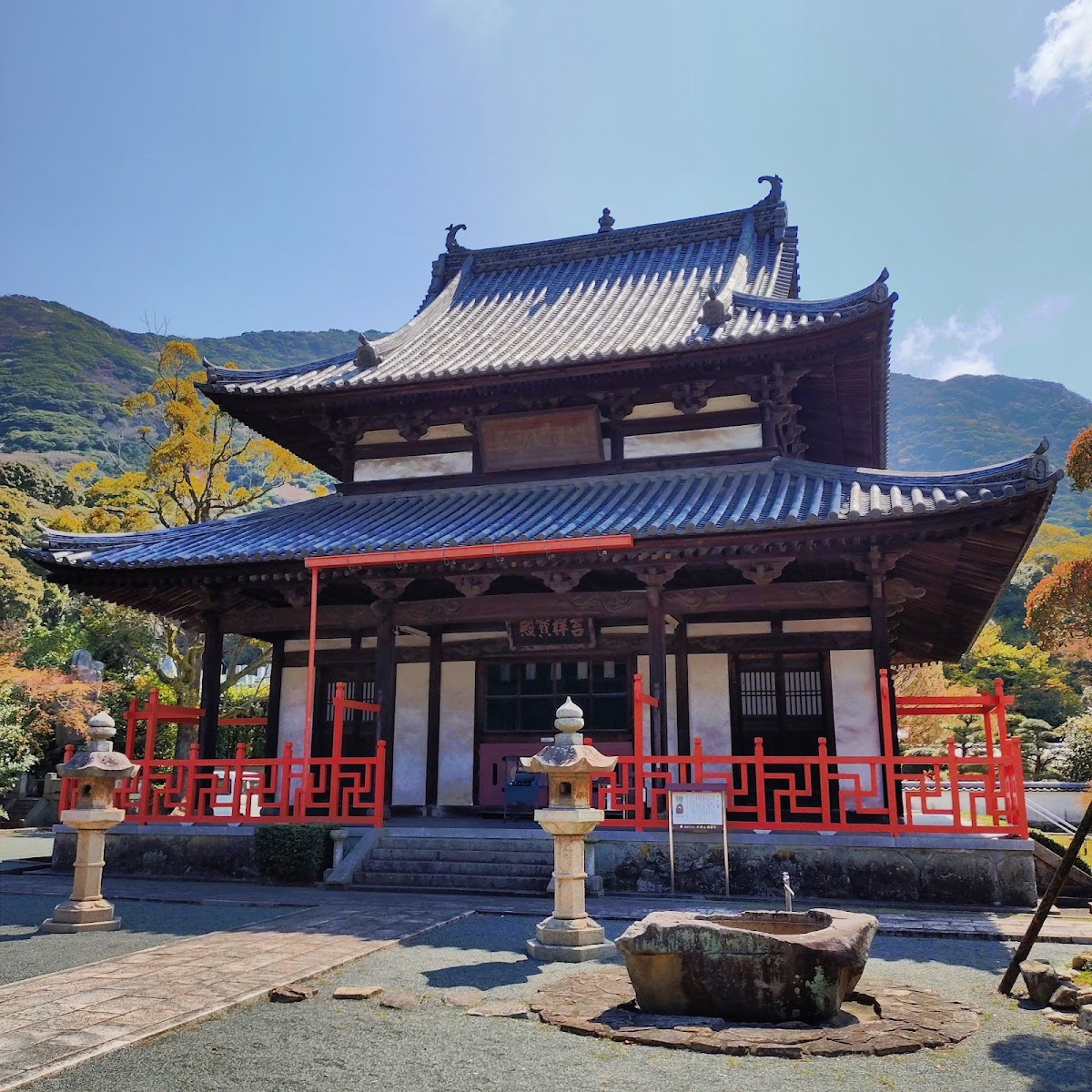
Koju-zan Fukuju-ji Temple, located in Kokurakita-ku, Kitakyushu City, is a temple belonging to the Obaku sect and is a renowned temple with a history of approximately 400 years. Founded by Lord Ogasawara Tadazane, it is also known as the 6th temple on the Kyushu Forty-Nine Yakushi Pilgrimage.
The Obaku school of Zen Buddhism is a branch of Zen Buddhism that was introduced from China in the early Edo period, and is one of the three major Zen schools in Japan, after the Rinzai and Soto schools. It is characterized by architecture and rituals that strongly reflect the style of the Ming Dynasty in China, and Fukuju-ji Temple inherits this tradition.
Temple Grounds and Gardens
The grounds of Koju-zan Fukuju-ji Temple boast a beautiful garden where visitors can enjoy the scenery of each season. The simple and refined spatial composition, typical of Zen temples, provides visitors with tranquility and peace.
The buildings and gardens on the temple grounds are designated cultural properties of Fukuoka Prefecture and are protected as valuable examples of temple architecture that have continued since the Edo period.
Role as a Yakushi Pilgrimage Site
As the 6th temple on the Kyushu Forty-Nine Yakushi Pilgrimage, it serves as a center for the worship of Yakushi Nyorai (Medicine Buddha). Yakushi Nyorai (Medicine Buddha) is worshipped as a Buddha of healing and longevity, attracting many visitors.
Access Information
Location: Kokurakita-ku, Kitakyushu City, Fukuoka Prefecture
Transportation Access:
- Approximately 10 minutes by car from JR Kokura Station
- Approximately 5 minutes from the Katsuyama IC on the Kitakyushu Urban Expressway
Parking: Available
Telephone Number: Please contact the Kyushu Forty-Nine Yakushi Pilgrimage Association Secretariat in advance.
Fukuju-ji Temple, Tono-machi, Chiba Prefecture
Abbot Tetsugyu Doki and Land Reclamation Project
Fukuju-ji Temple in Tono-machi, Katori-gun, Chiba Prefecture, is a Zen temple of the Obaku sect, founded in 1678 (Enpo 6) by Abbot Tetsugyu Doki, known for his contributions to the reclamation of the tidal flats.
Tetsugyu Osho was a renowned monk who dedicated himself to the reclamation project of a former lake called “Tsubaki-no-umi.” The reclamation of Tsubaki-no-umi developed approximately 1,200 hectares of new rice fields, significantly contributing to the agricultural development of the region. Because of this great achievement, Tetsugyu Osho was deeply respected by the local people, and his accomplishments are still recounted today.
Cultural Properties
Prefectural Designated Historic Site
- Grave of Tetsugyu Doki Osho: A historical site commemorating those who contributed to the reclamation project.
Prefectural Designated Tangible Cultural Property
- Triptych Paintings: Valuable paintings depicting Tetsugyu Osho and three other high-ranking monks.
These cultural properties are important resources for understanding the history of regional development and Buddhist culture during the Edo period.
Access Information
Location: Tono-cho, Katori-gun, Chiba Prefecture
Transportation Access:
- Approximately 10 minutes by car from Sasagawa Station on the JR Sobu Main Line
- Approximately 30 minutes from the Daiei Interchange on the Higashi-Kanto Expressway
Parking: Available
Fukuju-ji Temple, Yokohama City, Kanagawa Prefecture
A Historic Temple of the Kencho-ji School
Fukuju-ji Temple in Hodogaya-ku, Yokohama City, belongs to the Kencho-ji branch of the Rinzai school of Zen Buddhism. It was founded in 1335 (Kenmu 2), during the early Nanboku-cho period, by the 38th abbot of Kencho-ji Temple, Kosen Ingen.
Initially located in Iwama-cho, Hodogaya-shuku (present-day Kubo-cho, Nishi-ku), it moved to Renkyu-an, a retirement temple, during the Kansei era. In 1888 (Meiji 21), the main hall, living quarters, and temple gate were newly constructed.
A History of Yokohama
Hodogaya flourished as a post town on the Tokaido road, and Fukuju-ji Temple played an important role as a center of local faith. The Meiji-era architecture conveys the temple’s preservation of tradition amidst the waves of modernization.
Access Information
Location: Hodogaya-ku, Yokohama City, Kanagawa Prefecture
Transportation Access:
- Approximately 15 minutes on foot from Hodogaya Station on the JR Yokosuka Line
- Approximately 20 minutes on foot from Tennocho Station on the Sotetsu Line
Parking: Please inquire in advance regarding availability.
Fukuju-ji Temple, Usuki City, Oita Prefecture
From a Samurai’s Residence to a Temple
Fukuju-ji Temple, located in Imura, Usuki City, Oita Prefecture, has a unique history: it was originally a samurai’s residence built on the eastern edge of the Tateno Plateau during the Sengoku period, which was later converted into a temple.
It is said that the temple originated when Hikida Bizen-no-kami, a samurai and retainer of the Otomo family during the Sengoku period, built a residence on the eastern edge of the Tateno Plateau. The temple grounds, which retain the structure of a samurai’s residence, are a valuable resource for understanding Sengoku period architecture.
Access Information
Location: Imura, Usuki City, Oita Prefecture
Transportation Access:
- Approximately 15 minutes by car from Usuki Station on the JR Nippo Main Line
About Goshuin (Temple Seals)
Each Fukuju-ji temple offers its own unique goshuin. Goshuin are popular among many visitors as proof of worship and as a way to forge a connection with the temple.
Manners for Receiving a Goshuin (Temple Stamp)
- Pray First: A Goshuin is proof of your visit, so please pray at the main hall first.
- Prepare a Goshuincho (Stamp Book): This is not a stamp rally, so prepare a dedicated Goshuincho.
- Prepare a Donation: Generally, around 300-500 yen.
- Use Polite Language: Please politely ask, “May I have a Goshuin?”
- In Place of Sutra Copying or Buddha Image Copying: Originally, it was proof of offering sutra copying or similar documents, but now it is given as proof of worship.
Goshuin for Pilgrimage
Kōjusan Fukujuji Temple in Kitakyushu City is the 6th temple on the Kyushu Forty-Nine Yakushi Pilgrimage, and has a special Goshuin for pilgrimages. Those undertaking a pilgrimage should prepare a dedicated pilgrimage notebook.
Annual Events
Each Fukuju-ji temple holds various annual events throughout the year.
Main Annual Events
Spring
- Hana Matsuri (Buddha’s Birthday): Around April 8th, celebrating the birth of Buddha
- Spring Equinox Memorial Service: Centered around the spring equinox in March
Summer
- Obon Festival (Urabon-e): Mid-August, memorial service for ancestors
- Segaki Memorial Service: Memorial service for spirits suffering in the realm of hungry ghosts
Autumn
- Autumn Equinox Memorial Service: Centered around the autumn equinox in September
Winter
- New Year’s Eve Bell Ringing: On New Year’s Eve, to dispel the 108 worldly desires
- Shusho-e: New Year’s memorial service
The content and dates of events vary by temple, so please contact each Fukuju-ji temple directly for details.
Points to Note When Visiting a Temple
Clothing and Items to Bring
When visiting a temple, please pay attention to the following points:
- Clothing: Modest, modest clothing is preferable.
- Shoes: Since you may need to enter the main hall, wear shoes that are easy to take off and put on.
- Items to Bring: Prayer beads (rosary), goshuincho (stamp book), offering money, camera (if photography is permitted)
Etiquette for Visiting a Temple
- Bow at the Temple Gate: Bow before entering the temple grounds.
- Purify at the Water Basin: Purify your left hand, right hand, and mouth in that order.
- Worship at the Main Hall: Place your offering money, clasp your hands together, and pray quietly.
- Strolling the Temple Grounds: Walk quietly and avoid disturbing other visitors.
- Photography: Take photographs only in permitted areas.
Nearby Tourist Attractions
Around Miharu Town, Fukushima Prefecture
- Miharu Takizakura: One of Japan’s three greatest cherry trees, a giant cherry tree over 1000 years old
- Miharu Castle Ruins: The site of the Tamura clan’s castle, a famous cherry blossom viewing spot
- Miharu Town Historical and Folk Museum: A facility where you can learn about the history and culture of the region
- Miharu Dolls: A workshop for Miharu papier-mâché dolls, a traditional craft
Around Kitakyushu City
- Kokura Castle: A symbolic landmark of Kitakyushu City
- Mojiko Retro District: A tourist spot with buildings remaining from the Meiji and Taisho periods
- Sarakurayama: A night view spot offering a panoramic view of Kitakyushu city
Around Tonosho Town, Chiba Prefecture
- Tsubakiumi Reclamation Area: A vast farmland reclaimed by the monk Tetsugyu
- Tonosho Prefectural Forest: A forest park where you can enjoy nature walks
- Cycling Road along the Tone River: Enjoy the scenery along the water
Important Notes for Visiting Fukuju-ji Temple
Visiting Hours and Admission Fees
While most Fukuju-ji temples allow free entry to the grounds, viewing the main hall or treasures may require prior contact. If you wish to request a special viewing, it is recommended to find the phone number and contact the temple in advance.
Parking Information
Many Fukuju-ji temples have parking lots, but spaces may be limited. Especially during cherry blossom season and annual events, congestion is expected, so consider using public transportation.
Photography
Photography within the temple grounds is generally permitted, but photography inside the main hall or of cultural artifacts may be prohibited. Always check in advance and be considerate of the privacy of other visitors.
Cultural Value of Fukuju-ji Temple
Role as a Family Temple
Many Fukuju-ji temples were founded as family temples for feudal lords and influential local figures during the Sengoku period. A family temple is a temple where ancestral memorial services are performed, and is deeply connected to the history of the family. The tombs of the three generations of the Tamura clan at Fukuju-ji Temple in Miharu Town are a valuable historical site for understanding the history of the Tohoku region during the Sengoku period. The tombs hold the remains of three generations of the Tamura clan: Terusada, Takaaki, and Kiyoaki, and tell the story of the Tamura clan’s rise and fall.
Inheritance of Zen Culture
As a Zen Buddhist temple of the Rinzai and Obaku schools, Fukuju-ji Temple has inherited Zen practices such as zazen (seated meditation) and Zen dialogue. Zen Buddhism was widely accepted by the samurai class and had a significant influence on Japanese spiritual culture.
The spirit of Zen is reflected in the gardens and architectural style, creating a simple yet profoundly spiritual space.
Regional Development and Buddhism
The case of Abbot Tetsugyu Doki at Fukuju-ji Temple in Tono-cho, Chiba Prefecture, is a good example of the role that Buddhist monks have played in regional development. The achievements of the abbot who accomplished the monumental task of reclaiming land in Tsubakiumi illustrate a historical example of how religious figures were not merely spiritual leaders but also made substantial contributions to the development of local communities.
Summary
Fukuju-ji temples are scattered throughout Japan, each possessing its own unique history and cultural assets. With diverse backgrounds—including the family temples of Sengoku-era warlords, temples founded by those who contributed to land reclamation projects, and temples converted from samurai residences—Fukuju-ji temples are crucial for understanding Japanese history and culture.
When visiting, researching the historical background and cultural assets of each temple beforehand will lead to a deeper understanding and greater appreciation. Experiencing the spirituality of these long-established temples in their tranquil atmosphere will be a valuable escape from the hustle and bustle of modern life.
Please note that location, phone number, and access information may change. It is recommended to check the latest information on each Fukuju-ji temple’s official website or the tourism association’s website before visiting.
Whether you’re collecting temple stamps, visiting sacred sites, enjoying the cherry blossom season, or exploring cultural artifacts, try visiting Fukuju-ji Temple for whatever purpose you prefer. A visit to this historic temple will surely bring you peace of mind and new discoveries.