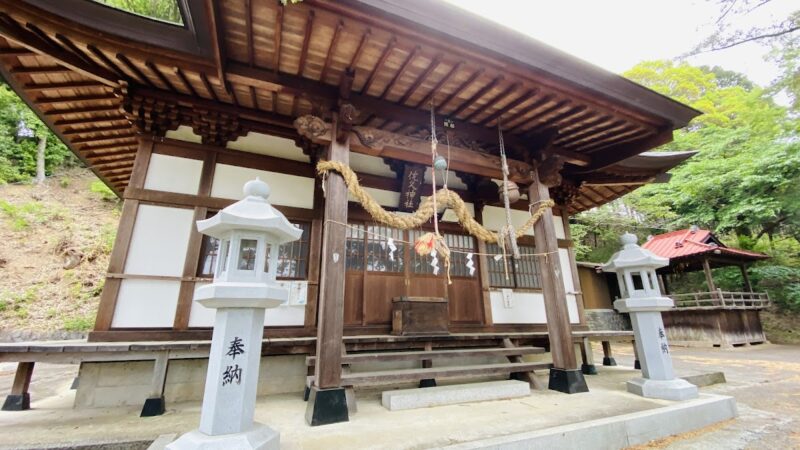
Complete Guide to Homi Shrine | A Thorough Explanation of the History, Cultural Properties, and Visiting Information of the Engishiki-Listed Shrine
What is Homi Shrine?
Homi Shrine (Homi Jinja) is a venerable shrine with several locations in Yamanashi Prefecture. It is listed in the Engishiki Jinmyocho, a compilation of shrines from the Heian period. The name “Homi” indicates its role as an agricultural deity watching over the harvest of rice, and it has long been revered by local people as a god of abundant harvests and business prosperity.
There are several Homi Shrines in Yamanashi Prefecture, including those in Takao (Minami-Alps City), Anayama (Nirasaki City), Naeshikiyama (Nirasaki City), and Showa-cho, each possessing its own unique history and cultural properties. Among them, Takao Homi Shrine in Minami-Alps City is known as a strong candidate for the Engishiki-listed shrine and is an important shrine possessing several prefecturally designated cultural properties.
History and Origins of Takao Homi Shrine
Position as an Engishiki-Listed Shrine
Takao Homi Shrine is located in Takao, a mountain village at an altitude of approximately 850 meters on the northeastern slope of Mt. Kushigata in Minami-Alps City. It is commonly known as “Takao-san Homi Shrine,” “Takao-san,” or “Yama no Takao,” and its former shrine rank was a Gosha (village shrine).
The Engishiki Jinmyocho (a list of shrines compiled in 927 AD during the Heian period) lists “Homi Shrine” as a Shikinaisha (shrine listed in the Engishiki) in Kai Province. Because there are several Homi Shrines in Yamanashi Prefecture, there are various theories as to which shrine was the original Shikinaisha, but Takao Homi Shrine is considered one of the most likely candidates.
Founding and History
The exact founding date is unclear, but the name “Homi Shrine” is inscribed on an ancient monument from Bunji 3 (1187), confirming its existence at least from the late Heian period to the early Kamakura period. The Takao settlement is located in a mountainous area at an altitude of over 800 meters, and has fostered a unique form of worship that blends mountain worship and agricultural worship since ancient times.
During the Edo period, it flourished as the center of local faith, and the current main hall was rebuilt in Kanbun 5 (1665). This main hall, an early Edo period building that strongly retains the style of the Momoyama period, is an important cultural property of Yamanashi Prefecture.
Deities and Beliefs
Main Deity: Ukemochi-no-kami
The deity enshrined at Takao Homi Shrine is Ukemochi-no-kami. Ukemochi-no-kami is a goddess of food in Japanese mythology. In the Kojiki, she is recorded as Ōgetsuhime-no-kami and is known as the goddess of the origin of the five grains.
The name of the shrine, Homi Shrine, itself indicates that it enshrines a god who watches over the harvest of rice. In mountain villages where agriculture is the livelihood, it has been deeply revered as an object of prayer for a bountiful harvest and as a source of gratitude for the harvest. Even today, it is widely worshipped not only as a god of abundant harvests but also as a god of business prosperity.
Fusion with Mountain Worship
Due to its location on the slopes of Mount Kushigata, Homi Shrine also incorporates elements of mountain worship. In particular, the Naeshikiyama Homi Shrine in Nirasaki City retains a strong form of syncretism between Shinto and Buddhism, a fusion of Shugendō (mountain asceticism) that has continued since the Heian period, preserving a unique form of worship characteristic of mountain faith.
A Treasure Trove of Cultural Assets
Main Hall (Prefectural Designated Cultural Property)
The main hall of Takao Homi Shrine is a building rebuilt in 1665 (Kanbun 5) and is designated as a Yamanashi Prefecture designated cultural property. As an early Edo period building retaining the style of the Momoyama period, it is characterized by its grand scale and rich ornamentation.
The main hall is adorned with magnificent carvings, many of which are said to be the work of Hidari Jingoro, a renowned Edo period craftsman. These carvings are valuable historical materials demonstrating the high level of woodworking technology of the time. At Homi Shrine in Nirasaki City, the beauty of the carvings on the main hall also attracts the attention of visitors.
Sacred Object (Prefectural Designated Cultural Property)
The sacred object (mishotai) owned by Takao Homi Shrine is a hanging mirror from the Kamakura period bearing an inscription from 1233 (Tenpuku 1), and is a Yamanashi Prefecture designated cultural property. A “Goshōtai” is a mirror representing the original Buddha of a deity within the context of syncretic Shinto-Buddhist thought, and is an extremely important artifact for understanding the forms of belief in the medieval period.
This hanging mirror is in excellent condition and is recognized as a valuable cultural asset that demonstrates the level of metalworking technology of the Kamakura period, and is highly valued academically.
Kagura Hall and Daidai Kagura
In the center of the grounds of Takao Homi Shrine stands a magnificent Kagura Hall. It is presumed to have been a resplendent building adorned with vibrant colors when it was built, and it still boasts an imposing presence today.
Every year during the autumn festival, the “Daidaikagura” is performed in this Kagura Hall. At its peak, it featured as many as 24 performances, and it is a traditional performing art that has been passed down by local residents for over 200 years. The Kagura, performed throughout the night, is designated as a Yamanashi Prefecture Intangible Folk Cultural Property and is widely known as the “Takao Night Festival.”
Giant Cedars and Nature
Within the shrine grounds stand giant cedar trees estimated to be several hundred years old, telling the story of the shrine’s long history. These massive trees not only create a solemn atmosphere in the sacred area but also play a role in preserving the local natural environment.
Homi Shrine Group in Nirasaki City
Homi Shrine in Anayama
Homi Shrine, located in Inakura, Anayama-cho, Nirasaki City, is a former village shrine, and its founding date is unknown. As the place name “Inakura” suggests, it is said that this area was once a miyake (imperial granary). A miyake was an ancient territory directly controlled by the imperial court, and from this history, it is thought that the original principal deity was Ukanomitama-no-kami.
During the Tenbun era (1532-1555), Suwa-no-Okami was invited to the shrine, and currently, multiple deities are enshrined there. In front of the stone torii gate is a small arched stone bridge, and the main shrine, situated behind the worship hall, is adorned with magnificent carvings.
Ne-no-Kami-ishi (Giant Sacred Stone)
A distinctive object of worship at Anayama Homi Shrine is the giant sacred stone known as “Ne-no-Kami-ishi.” Climbing the walking path beside the main shrine leads to this massive rock, which is enshrined as the deity. Megalithic worship is one of Japan’s primitive beliefs, and this is a valuable example that preserves the ancient form of belief that gods reside in natural objects.
Naeshikiyama Homi Shrine
Homi Shrine, located on Naeshikiyama in Nirasaki City, is a shrine with a particularly strong emphasis on mountain worship. It has a lower shrine and an inner shrine. The inner shrine is built in the Gongen-zukuri architectural style, where the main shrine, connecting corridor, and worship hall are integrated, and is registered as a designated cultural property of Nirasaki City.
Based on the syncretism of Shinto and Buddhism, a fusion of Shugendo (mountain asceticism) and Buddhism that has continued since the Heian period, and under the concept of Honji Suijaku (the belief that Shinto deities are manifestations of Buddhist deities), this shrine, unique to mountain worship, has attracted the faith of the general public and maintains a distinctive form of worship.
Takao-san Homi Shrine, Fuji City, Shizuoka Prefecture
In Fuji City, Shizuoka Prefecture, the Takao-san Homi Shrine is located within a cypress forest along National Route 469. This shrine was founded in November 1882 (Meiji 15) by Mr. Katsumata of Obuchi Honmura, who invited the deity from the Homi Shrine in Minami-Alps City, Yamanashi Prefecture.
The main deity is Amatsuhikohikohohodemi-no-Mikoto, which differs from the Homi Shrines in Yamanashi Prefecture, but it inherits the name “Homi” and attracts the faith of the local community.
Festivals and Annual Events
Takao Night Festival (Autumn Grand Festival)
The largest festival of Takao Homi Shrine is the Autumn Grand Festival, commonly known as the “Takao Night Festival,” held every autumn. During this festival, the Taiko Kagura dance is performed throughout the night in the Kagura Hall and is protected as a Yamanashi Prefecture-designated Intangible Folk Cultural Property.
The festival involves the participation of all local residents, making it an important opportunity to pass on the traditional Kagura dance, which has been handed down for over 200 years, to the next generation. While the repertoire has changed over time, many performances are still preserved and cherished as a core element of local culture.
Spring Festival
In spring, the Spring Festival is held to pray for a bountiful harvest. In a region where agriculture is the main industry, the spring prayer festival is an important Shinto ritual to pray for safety in agricultural work and a good harvest throughout the year.
Visiting Information and Access
Access to Takao Homi Shrine
Takao Homi Shrine is located on the mountainside of Kushigatayama at an altitude of approximately 850 meters, so access requires caution.
Location: Takao, Minami-Alps City, Yamanashi Prefecture
Altitude: Approximately 850 meters
Shrine Rank: Former Village Shrine
Due to its mountainous location, access by car is the primary method. Roads are narrow in places, so driving requires extreme caution. Especially in winter, there is a possibility of snow and ice, so it is recommended to check road conditions in advance.
Access to Homi Shrines in Nirasaki City
Anayama Homi Shrine
Location: 1856 Inakura, Anayama-cho, Nirasaki City, Yamanashi Prefecture
Naeshikiyama Homi Shrine
Location: Nirasaki City (For details, please contact the Nirasaki City Tourism Association)
Points to Note When Visiting
Since many shrines are located in mountainous areas, please pay attention to the following points when visiting.
- Wear comfortable clothing and walking shoes.
- Especially since Takao Homi Shrine is at a high altitude, take appropriate cold weather precautions depending on the season.
- When using walking paths such as the Giant Sacred Stone, non-slip shoes are recommended.
- Before taking photographs of cultural properties such as the Kagura Hall, please confirm permission in advance.
- To protect the natural environment, please be sure to take all your trash with you.
Architectural Style and Characteristics of Homi Shrine
Main Hall Retaining Momoyama Style
The main hall of Takao Homi Shrine was rebuilt in the early Edo period, in Kanbun 5 (1665), but it retains a strong Momoyama style. The Momoyama style is an architectural style that developed during the Azuchi-Momoyama period (1573-1603), characterized by its grandeur and rich ornamentation.
The large scale and elaborate carvings speak to the high level of technology at the time and the importance of the shrine to the region. In particular, some of the carvings are said to be the work of Hidari Jingoro, and their artistic value is highly regarded.
The Inner Shrine in the Gongen-zukuri Style
The inner shrine of Naeshikiyama Homi Shrine employs the Gongen-zukuri architectural style, where the main hall, connecting corridor, and worship hall are integrated into a single structure. Gongen-zukuri is a style exemplified by Nikko Toshogu Shrine and reflects the syncretic beliefs of Shinto and Buddhism. Its architectural style reflects its character as a center of mountain worship and is protected as a cultural property of Nirasaki City.
The Structure of the Kagura Hall
The Kagura Hall of Takao Homi Shrine is located in the center of the shrine grounds and has an open structure centered around a stage. It is presumed to have once been adorned with vibrant colors, and although the colors have faded, its scale and structure allow us to imagine its former splendor.
Homi Shrine and Local Culture
The Center of Faith in a Mountain Village
The village of Takao is located in a mountainous area at an altitude of over 800 meters, and has long practiced agriculture in a harsh natural environment. Homi Shrine has functioned as a center of local faith, praying for a bountiful harvest and giving thanks for the harvest, within this environment.
Festivals and annual events centered around the shrine play a vital role in strengthening community bonds and passing on traditional culture. In particular, the Taiko Kagura is performed by the residents themselves and is a regional treasure passed down through generations.
Preservation of Intangible Folk Cultural Properties
The festival performances of Homi Shrine, including the Taiko Kagura, are protected as Yamanashi Prefecture-designated Intangible Folk Cultural Properties. However, challenges exist in preserving these traditions due to depopulation and an aging population.
Various initiatives are being undertaken in the region to protect cultural properties, such as passing on techniques to younger generations and promoting participation in festivals. Thanks to these efforts, the Kagura, with its history of over 200 years, has been passed down to the present day.
Positioning in the Study of Engishiki Shrines
Various Theories Regarding the Identification of the Engishiki Shrine
Research into which shrine the “Homi Shrine” listed in the Engishiki Jinmyocho (Register of Shrines in the Engi Era) refers to has been ongoing for a long time. Given the existence of multiple Homi Shrines in Yamanashi Prefecture, the following theories exist:
- Takao Homi Shrine Theory: Its location in a high-altitude mountainous area, the presence of ancient cultural artifacts, and the strong local faith make it a strong candidate for an Engishiki shrine.
- Anayama, Nirasaki City Theory: Its history as a former granary site and the place name “Inakura” suggest its importance in ancient times.
- Multiple Shrines Coexisting Theory: The possibility that multiple Homi Shrines coexisted in ancient times.
Currently, no definitive conclusion has been reached, but it is certain that all of these shrines are historically significant shrines dating back to the Engishiki era.
The Importance of Shikinaisha Shrines in Kai Province
Kai Province (present-day Yamanashi Prefecture) is a region with a relatively small number of Shikinaisha shrines listed in the Engishiki Jinmyocho (a list of shrines compiled in the Heian period). Therefore, Shikinaisha shrines like Homi Shrine are extremely important for understanding the politics, religion, and society of ancient Kai Province.
Through the study of cultural properties and ancient documents, they are recognized as having high academic value, as they allow us to trace the changes in beliefs from ancient times through the Middle Ages, the early modern period, and into the present day.
Nearby Tourist Attractions
Kushigatayama Mountain
Kushigatayama Mountain, where Takao Homi Shrine is located, is a representative mountain of Minami-Alps City and is known as a popular spot for mountain climbing and hiking. From the summit, you can enjoy views of the Southern Alps and Mount Fuji, and appreciate the beauty of nature throughout the seasons.
Cultural Properties of Minami-Alps City
Besides Homi Shrine, many historical buildings and cultural properties are scattered throughout Minami-Alps City. You can enjoy a trip exploring the region’s history and culture in conjunction with visiting the shrine.
Tourism Resources of Nirasaki City
Nirasaki City boasts numerous historical sites related to the Takeda clan, as well as abundant natural landscapes such as Shichiriwa Rock, in addition to the Homi Shrine. It is a popular tourist area where visitors can enjoy both history and nature.
Summary
Homi Shrines are prestigious shrines listed in the Engishiki Jinmyocho (a list of shrines compiled during the Heian period), and several are located throughout Yamanashi Prefecture. Among them, Takao Homi Shrine in Minami-Alps City is a particularly important shrine, possessing a wealth of cultural assets, including its main hall and sacred object (both designated as prefectural cultural properties), and the Taiko Kagura dance (a designated intangible folk cultural property).
With its location in a mountainous area at an altitude of 850 meters, its character as a shrine dedicated to the agricultural deity Uke Mochi no Kami, and its traditional performing arts that have continued for over 200 years, Homi Shrines possess diverse charms and are indispensable when discussing the history and culture of Yamanashi Prefecture. The Homi Shrines in Nirasaki City each possess their own unique history and cultural assets, and are still deeply revered as centers of regional faith.
The Homi Shrine is a living cultural heritage site that encompasses all of these elements: a faith nurtured in the harsh natural environment of the mountainous region, cultural assets preserved by local residents, and festival arts passed down through generations. When you visit, please take some time to reflect on the form of faith cultivated over its long history and savor the tranquil atmosphere of the sacred grounds.