Complete Guide to Taiyuji Temple | Highlights and the Fulfillment of Wishes at this Historic and Famous Temple in Umeda
Taiyuji Temple, nestled in the bustling Umeda district of Osaka, offers a special space enveloped in tranquility despite its urban hustle and bustle. Founded in 821 AD by Kobo Daishi, this temple boasts a history of over 1200 years and is the second temple on the New Saigoku Thirty-Three Kannon Pilgrimage, beloved by many visitors.
Basic Information about Taiyuji Temple
Official Name: Kabokuzan Taiyuji
Sect: Koyasan Shingon Sect, Semi-Special Head Temple
Principal Image: Thousand-Armed Kannon Bodhisattva
Founder: Kobo Daishi (Kukai)
Established: 821 (Kōnin 12)
Pilgrimage Site: 2nd temple of the New Saigoku Thirty-Three Kannon Pilgrimage, Naniwa Seven Lucky Gods Pilgrimage
Location: 3-7 Taiyuji-cho, Kita-ku, Osaka City
The name Taiyuji originates from Prince Minamoto no Tōru, the Minister of the Left and son of Emperor Saga. Minamoto no Tōru is also known as the author of the poem “Mutsu no Shinobu Mojizuri Dare yue ni Midare Hajime shi Ware naranaku ni” from the Hyakunin Isshu (One Hundred Poets, One Poem Each), and he is considered the restorer of this temple, having built its seven main halls.
History of Taiyuji Temple
Founding and Development Period
Regarding the founding of Taiyuji Temple, tradition states that it was established in 821 (Kōnin 12) by Kūkai (Kōbō Daishi) at the request of Emperor Saga. According to the temple’s tradition, Kōbō Daishi created statues of Jizō Bodhisattva and Bishamonten from a sacred tree in this area, and built a hermitage to enshrine them, marking the beginning of the temple.
The following year, in 822 (Kōnin 13), Emperor Saga visited the temple and bestowed upon it a statue of Senju Kannon, his personal devotional image. This statue of Senju Kannon is the current principal image.
Later, Minamoto no Tōru, the twelfth son of Emperor Saga, built a seven-building temple complex on this site, which covered an area of eight chō (approximately 870 meters) on each side, and the temple flourished greatly as a famous temple in Naniwa (Osaka). At its peak, the temple grounds were vast, and it is said that the current Ogimachi Park was once the temple’s garden.
Destruction and Reconstruction Due to War
Taiyuji Temple has suffered two major wars throughout its long history.
The first was during the fall of Osaka Castle in the Summer Siege of Osaka in 1615, when the temple was completely destroyed by fire. However, during the Genroku era (1688-1704), construction of 25 buildings, including the main hall and the South Gate, progressed, and the temple once again became a beloved landmark, known as “Taiyuji-san of Kitano.”
The second was the Great Osaka Air Raid of 1945. Many buildings were destroyed at this time as well, but miraculously, the principal image, the Thousand-Armed Kannon Bodhisattva, escaped the flames. After the war, the destroyed buildings were gradually rebuilt, leading to its current appearance.
Traces of the Temple Grounds Remaining in Place Names
The vast temple grounds of Taiyuji Temple during its heyday are still reflected in current place names. Place names such as Taiyuji-cho, Doyama-cho, and Kamiyama-cho indicate the former boundaries of the temple grounds. These place names evoke the prosperity of the temple at that time, which boasted a vast area of eight cho (approximately 800 meters) on each side.
Highlights of the Temple Grounds
Main Hall and Principal Image: Thousand-Armed Kannon Bodhisattva
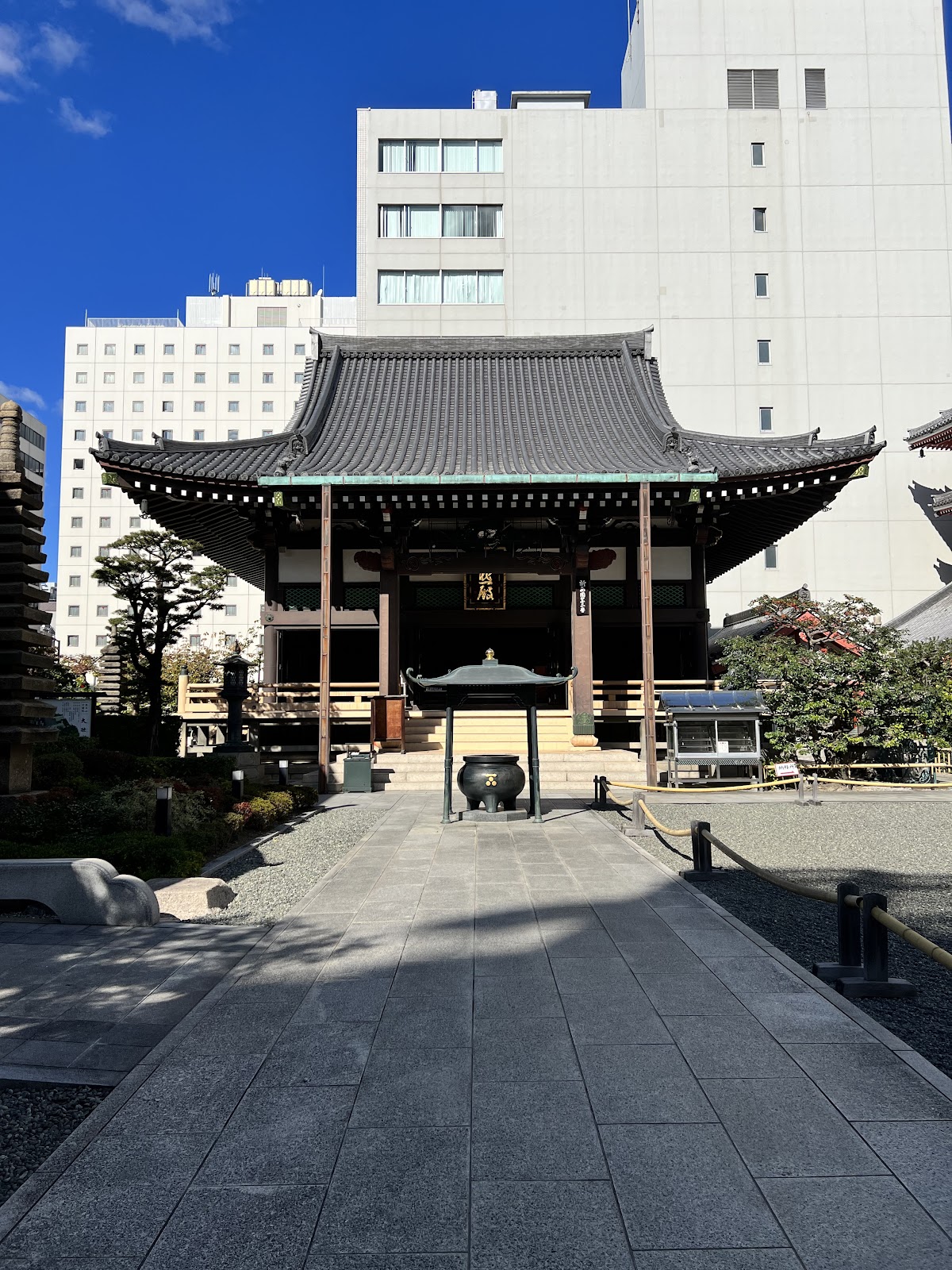
The main hall of Taiyuji Temple houses a statue of the Thousand-Armed Kannon Bodhisattva, which was the personal devotional image of Emperor Saga. This principal image is particularly revered as a Buddha statue that miraculously survived two major fires: the Summer Siege of Osaka and the Great Osaka Air Raid.
The Thousand-Armed Kannon has long been an object of worship for many people as a symbol of compassion that saves all sentient beings. The Thousand-Armed Kannon statue at Taiyuji Temple is a precious cultural asset that has received people’s prayers for over 1200 years.
Ichigan-do Hall and Ichigan Fudo Myoo
Within the temple grounds lies Ichigan-do Hall, where Ichigan Fudo Myoo is enshrined. This Fudo Myoo is believed to grant the wish of “fulfillment of one wish,” and it is said that if you pray with all your heart for one wish, it will be granted.
Many worshippers can be seen praying with their hands clasped together, offering their wishes for work, love, health, academic success, and more. Despite being in the heart of the city, it is a quiet space for prayer, cherished by both locals and tourists.
The Grave of Yodo-dono
Taiyuji Temple also houses a memorial tower believed to be the grave of Yodo-dono (Chacha), a concubine of Toyotomi Hideyoshi and mother of Toyotomi Hideyori. While it is said that Yodo-dono committed suicide at Osaka Castle along with Hideyori during the Siege of Osaka, there is a legend that her remains were buried at Taiyuji Temple.
Yodo-dono’s tomb is a historical site that evokes the historical romance of the Sengoku period, attracting the attention of history enthusiasts and tourists alike. The footsteps of a figure indispensable to the history of Osaka are etched into this place.
The South Gate and the Atmosphere of the Temple Grounds
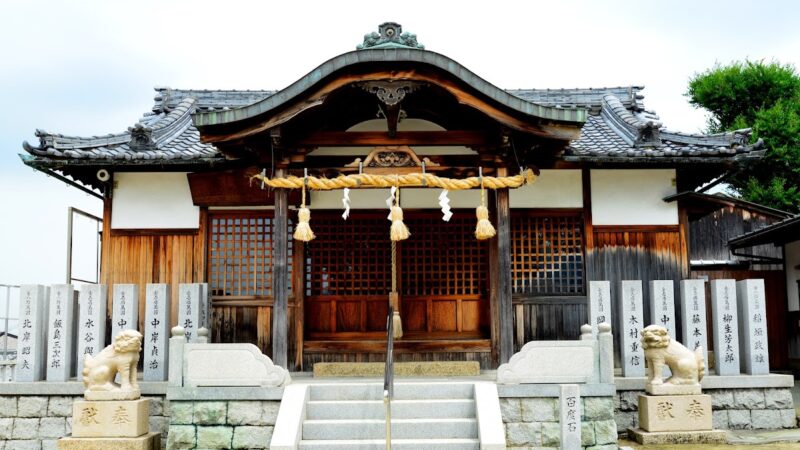
The South Gate of Taiyuji Temple is based on a structure built during the reconstruction in the Genroku era, and is an important building that demonstrates the temple’s status. Passing through the gate, the hustle and bustle of Umeda’s entertainment district disappears as if by magic, and you are enveloped in a tranquil atmosphere.
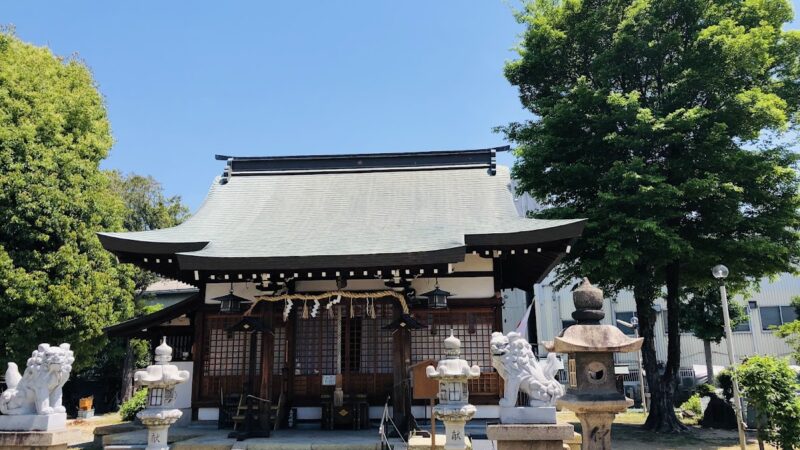
The temple grounds are beautifully landscaped with meticulously cared-for plants, providing peace to visitors regardless of the season. As a secluded space in the heart of the city, it is a place where people of all ages spend time in prayer and relaxation.
Annual Events at Taiyuji Temple
Saito Ogoma-ku (May 28th)
The most distinctive event at Taiyuji Temple is the Saito Ogoma-ku, held annually on May 28th. This event is conducted in a unique format, with Shugendo practitioners engaging in a question-and-answer session.
The sight of the fire burning on the goma altar and the Shugendo practitioners performing their duties while blowing conch shells is truly impressive. Many worshippers visit to pray for good health and safety for their families.
Other Seasonal Events
Taiyuji Temple holds various Buddhist services and events throughout the year. Traditional Buddhist temple events such as the New Year’s visit, the spring and autumn equinox services, and the Obon memorial service are all preserved.
Furthermore, as one of the 33 temples of the New Saigoku Kannon Pilgrimage, the temple receives a constant stream of pilgrims throughout the year.
Taiyuji Temple and Minamoto no Tōru
About Minamoto no Tōru
Minamoto no Tōru (822-895) was born as the twelfth son of Emperor Saga and was granted the surname Minamoto after being demoted to commoner status. Known as the ancestor of the Saga Minamoto clan, he was a high-ranking aristocrat of the Heian period, rising to the position of Kawara Sadaijin (Minister of the Left).
His waka poem, “Mutsu no Shinobu-mojizuri, dare yue ni midare hajime shi ware naranaku ni” (For whom is it that the Shinobu-mojizuri of Mutsu Province, though not myself, caused this disorder?), selected for the Hyakunin Isshu (One Hundred Poets, One Poem Each), is still widely known as one of Minamoto no Tōru’s representative works.
Connection to Taiyū-ji Temple
Minamoto no Tōru, as the restorer of Taiyū-ji Temple, founded by his father, Emperor Saga, constructed a vast complex of seven temple buildings on an 8-chō (approximately 800-400 square) site. The temple’s name, “Taiyū-ji,” is derived from the character “Tōru” in Minamoto no Tōru’s name.
Minamoto no Tōru’s contribution to Taiyū-ji Temple was not merely the construction of buildings, but also the laying of the foundation for its development as a renowned temple in Naniwa (Osaka). His faith and cultural refinement shaped the prestige and traditions of Taiyū-ji Temple.
New Saigoku Thirty-Three Kannon Pilgrimage, Temple No. 2
Taiyuji Temple is designated as the second temple on the New Saigoku Thirty-Three Kannon Pilgrimage. The New Saigoku Thirty-Three Pilgrimage is a pilgrimage route visiting Kannon temples in the Kinki region, where many believers deepen their faith by visiting the temples.
Previous and Next Temples:
- Temple No. 1: Ishiyama-dera (Otsu City, Shiga Prefecture)
- Temple No. 2: Taiyuji Temple (Kita Ward, Osaka City)
- Temple No. 3: Kiyomizu-dera (Kawachinagano City, Osaka Prefecture)
Pilgrims receive a Goshuin (temple stamp) at each temple, deepening their faith in Kannon Bodhisattva as they visit the sacred sites. At Taiyuji Temple, after praying at the main hall, you can receive a Goshuin at the temple office.
Naniwa Seven Lucky Pilgrimage
Taiyuji Temple is also counted as one of the “Naniwa Seven Lucky Pilgrimage” temples. The Naniwa Seven Lucky Gods Pilgrimage is a pilgrimage to seven temples and shrines in Osaka City, where one visits each to receive its respective blessings.
Taiyuji Temple is believed to grant the wish of “fulfillment of one wish,” and it is thought that praying to Ichigan Fudō Myōō will make one’s wish come true. It is believed that visiting all six temples and shrines together will bring various kinds of happiness.
Taiyuji Temple and the Meiji Freedom and People’s Rights Movement
Taiyuji Temple has deep ties to the Meiji era’s Freedom and People’s Rights Movement. During the Meiji era, Taiyuji Temple was sometimes used as a venue for political meetings, and it was a place where activists of the Freedom and People’s Rights Movement gathered from all over the country to engage in discussions.
While Osaka developed as a commercial city, it was also a place where political discussions were actively held. The fact that temples like Taiyuji Temple functioned not only as religious facilities but also as forums for social discussion is an interesting fact to consider when thinking about the history of modern Japan.
Access Information
Access by Train
From JR Osaka Station:
- Approximately 10 minutes on foot
- Head east from the Midosuji Exit, pass through the Hankyu Higashidori Shopping Street, and head north.
From Hankyu Umeda Station:
- Approximately 8 minutes on foot
- Head east from the Chayamachi Exit.
From Osaka Metro Tanimachi Line Nakazakicho Station:
- Approximately 5 minutes on foot
- Head southwest from Exit 4.
From Osaka Metro Midosuji Line Umeda Station:
- Approximately 10 minutes on foot.
Access by Bus
Osaka City Bus:
- Get off at the “Taiyuji-cho” bus stop and walk approximately 200m southwest.
Distance from Major Nearby Spots
- Umeda Sky Building: Approximately 15 minutes on foot
- HEP FIVE: Approximately 5 minutes on foot
- Hankyu Higashidori Shopping Street: Very close
- Ohatsu Tenjin (Tsuyu Tenjin Shrine): Approximately 3 minutes on foot
Taiyuji Temple is located in the heart of Umeda’s bustling downtown area, making it easy to stop by between shopping and dining.
Guidelines for Visiting and Information
Visiting Hours
While entry to the temple grounds is generally free, there are time restrictions for viewing the main hall and using the temple office.
Visiting Hours: Approximately 6:00 AM to 6:00 PM (may vary seasonally)
Temple Office Reception Hours: Approximately 9:00 AM to 5:00 PM
Admission Fee
Entry to the temple grounds is free.
Goshuin (Temple Seal)
You can receive a Goshuin for the New Saigoku Thirty-Three Kannon Pilgrimage. Available at the temple office (donation required).
Etiquette for Visiting the Temple
- Please pray quietly within the temple grounds.
- Please remove your hat in the main hall and respectfully clasp your hands together in prayer.
- Photography is permitted, but please be considerate of other visitors.
- Please refrain from taking photographs inside the main hall.
Attractions Around Taiyuji Temple
Ohatsu Tenjin Shrine (Tsuyu Tenjin Shrine)
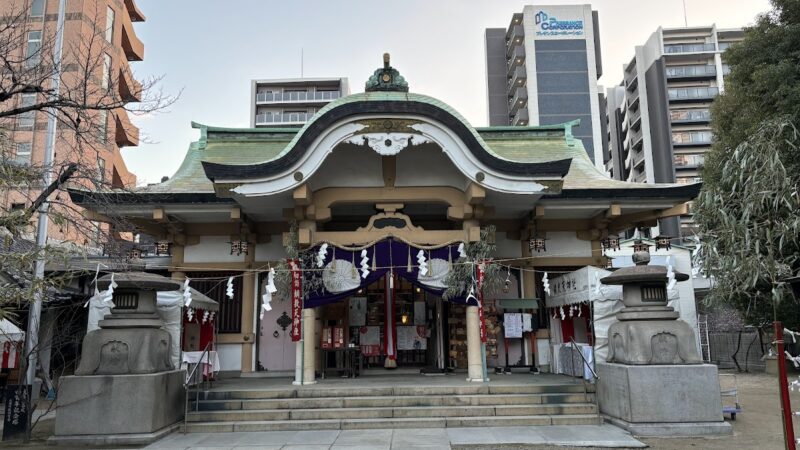
Located about a 3-minute walk from Taiyuji Temple, Ohatsu Tenjin Shrine is known as the setting for Chikamatsu Monzaemon’s “Sonezaki Shinju” (The Love Suicides at Sonezaki). It is popular among younger generations as a power spot for fulfilling romantic wishes.
Hankyu Higashidori Shopping Street
This shopping street is located very close to Taiyuji Temple and is lined with restaurants and general stores. You can enjoy Osaka’s food culture before or after visiting the temple.
Umeda’s Entertainment District
Taiyuji Temple is located in the heart of Umeda, providing excellent access to Osaka’s leading shopping spots such as Grand Front Osaka, Hankyu Department Store, and Hanshin Department Store.
Summary of Taiyuji Temple’s Charms
The greatest charm of Taiyuji Temple lies in its location in the heart of the city, while preserving over 1200 years of history and tradition. Founded by Kobo Daishi and associated with Emperor Saga and Minamoto no Toru, Taiyuji Temple boasts numerous historical anecdotes and is not merely a tourist spot, but a place that embodies the history of Osaka itself.
From the faith in the Ichigan Fudō Myōō for the fulfillment of a single wish, to the historical heritage of the Sengoku period as the tomb of Yodo-dono, and its role as a pilgrimage site of the New Saigoku Thirty-Three Kannon Pilgrimage, there are many reasons to visit Taiyuji Temple.
Why not extend your trip a little and visit Taiyuji Temple while enjoying shopping and dining in Umeda? The time spent in tranquility away from the hustle and bustle, calming your mind and reflecting on history, will surely be a special experience.
Its excellent accessibility, just a 10-minute walk from Osaka Station, is another major attraction of Taiyuji Temple. Taiyuji Temple continues to welcome many people today as a sanctuary in the heart of the city that can be easily visited anytime, whether during sightseeing, business trips, or simply in the midst of daily life.