Sumadera Temple Complete Guide: History, Highlights, and Visiting Information for the Head Temple with ties to the Genpei War
Located in Sumadera-cho, Suma-ku, Kobe City, Hyogo Prefecture, Sumadera Temple is the head temple of the Shingon sect’s Sumadera branch, famous as the site of the Genpei War. Its official name is “Jōyasan Fukushōji,” but it is widely known by its common name, “Sumadera.” Numerous historical sites and cultural assets associated with Taira no Atsumori remain, including the principal image, the Holy Kannon Bodhisattva, making it a renowned temple that constantly attracts history enthusiasts and worshippers.
History and Founding of Sumadera Temple
Founded in the 2nd year of Ninna
The history of Sumadera Temple is ancient, dating back to the 2nd year of Ninna (886). According to the brief history and origins of Sumadera Temple, it is said that the temple originated when, by imperial decree of Emperor Junna, Egezan Hokuhōji Temple was built on Aigayama Mountain in Hyogo Ward to enshrine a statue of the Holy Kannon Bodhisattva that emerged from the sea off Wadamisaki in Hyogo Ward. Later, the monk Monkyō, under imperial decree of Emperor Kōkō, built the seven main temple buildings, laying the foundation for the present-day Sumadera Temple.
Deep Connection to the Genpei War
Sumadera Temple holds particular historical significance due to its deep connection to the Genpei War. In 1184, during the Battle of Ichinotani, this area was the site of fierce fighting. The story of Taira no Atsumori, who died in battle at the young age of 16, and Kumagai Naozane, who killed him, is deeply etched in the hearts of the Japanese people through “The Tale of the Heike.” Many historical sites associated with Atsumori remain at Sumadera Temple, and it continues to attract many visitors as a temple connected to the Genpei War.
Connection to Ariwara no Yukihira
The history of Sumadera Temple is inextricably linked to Ariwara no Yukihira, a poet of the Heian period. It is said that Ariwara no Yukihira, famous for the Matsukaze Murasame story, stayed in the main hall at the time of the temple’s founding in 868 AD, and was pardoned from imperial reprimand. This story later became the subject of Noh and Kabuki plays, enhancing the cultural value of Sumadera Temple.
History of Disasters and Reconstruction
Throughout its long history, Sumadera Temple has been rebuilt numerous times due to disasters such as fires, floods, and earthquakes. Nevertheless, it has maintained its current form, supported by the local people as a center of faith. This history of reconstruction speaks to how important Sumadera Temple was to the local community.
Highlights and Historical Sites within the Temple Grounds
Main Hall and Principal Image
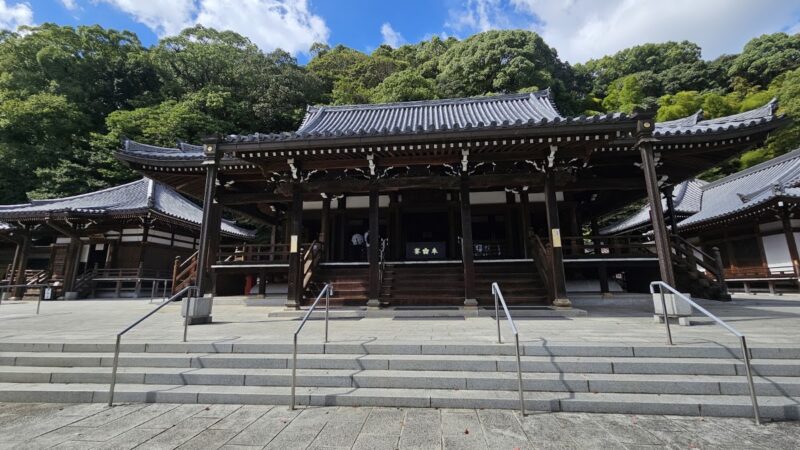
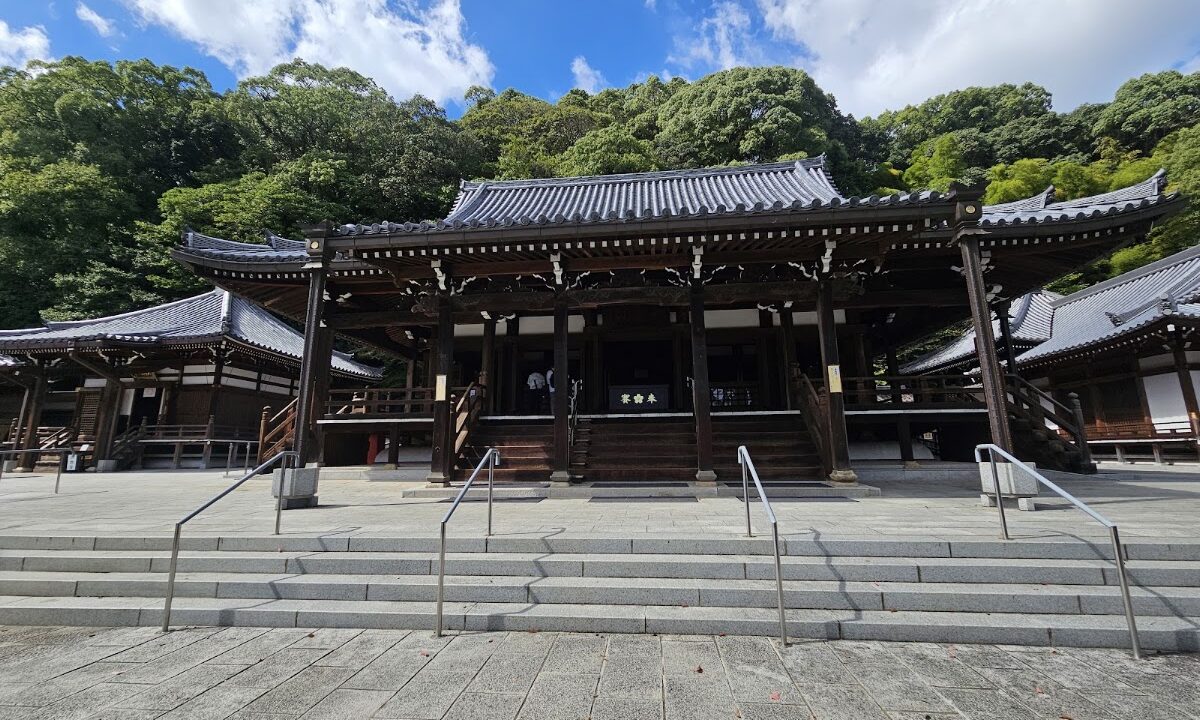
The main hall of Sumadera Temple houses the principal image, the Holy Kannon Bodhisattva. This Buddha statue, said to have emerged from the sea, has received people’s prayers for over 1100 years as the center of Sumadera Temple faith. The main hall is enveloped in a solemn atmosphere, allowing visitors to quietly offer their prayers.
Historical Sites Associated with Taira no Atsumori
Numerous historical sites related to Taira no Atsumori are scattered throughout the grounds of Sumadera Temple.
Atsumori’s Head Mound is said to be the burial place of the head of Taira no Atsumori, who was killed by Kumagai Naozane. This mound is an important historical site that conveys the tragedy of the Genpei War, and many visitors come to see it.
Atsumori’s Head-Washing Pond is a pond where it is said that Atsumori’s head was washed after he was killed. Standing before this pond, one naturally feels the brutality of the Genpei War and a sense of mourning for Atsumori, who lost his life at a young age.
Statues of Taira no Atsumori and Kumagai Naozane are also enshrined on the temple grounds, allowing visitors to reflect on a scene from history through the figures of these two warriors.
Yoshitsune’s Sitting Pine Tree
The Yoshitsune’s Sitting Pine Tree, where Minamoto no Yoshitsune is said to have sat, is one of the important sights at Sumadera Temple. The legend of Yoshitsune’s successful surprise attack, the “Hiyodorigoe no Sakasawatoshi” (reverse descent at Hiyodorigoe), at the Battle of Ichinotani is associated with this pine tree. While the current tree was replanted later, it remains a popular spot for its historical romance.
Genpei Garden
The Genpei Garden is a space that expresses the scenes of the Genpei War as a garden. Through stone arrangements and plantings, it symbolically represents the intensity of the battle and the way of life of the samurai. Seasonal flowers add color, showing different expressions depending on the time of year you visit.
Unique Features and “Interesting Things”
The grounds of Sumadera Temple are dotted with unique features and exhibits not found in other temples, and the official website states that “there are many interesting things.” These exhibits create a relaxed and approachable atmosphere, delighting visitors of all ages.
Cultural Properties and Treasures of Sumadera Temple
Nationally Designated Important Cultural Properties
Sumadera Temple houses numerous valuable cultural properties. Treasures of high historical and artistic value, including Buddhist statues, Buddhist paintings, and ancient documents, are stored there, some of which are on display in the Treasure Hall. These cultural properties are invaluable materials that tell the story of Sumadera Temple’s long history and deep faith.
Ichigen Sumagoto
The Ichigen Sumagoto, a traditional instrument passed down at Sumadera Temple, is said to have been invented by Ariwara no Yukihira in the Suma area. Played with only one string, this instrument symbolizes the culture of Suma and is still preserved and passed down today. The sound of the Sumagoto has a unique charm that evokes the sea and history of Suma.
The Aoba Flute
The Aoba Flute, said to have been a favorite of Taira no Atsumori, is an important treasure of Sumadera Temple. The *Tale of the Heike* records that Atsumori was a master flutist, and this flute conveys his cultural refinement and his youthful appearance.
Role as the Head Temple of the Shingon Sumadera School
Sumadera Temple holds a religiously important position as the head temple of the Shingon Sumadera School. Inheriting the teachings of Kobo Daishi Kukai, it functions as a center for the practice and faith of Shingon Esoteric Buddhism.
Temple Festivals and Events
On the 20th and 21st of each month, O-Daishi-sama’s Festival is held, and special memorial services are conducted. Many worshippers visit on these days, and the temple grounds become lively. Stalls sometimes line the temple grounds during the festival, making it a place for local people to interact.
Dharma Talks by Chief Administrator Koike Youjin
At Sumadera Temple, Dharma talks are regularly held by Chief Administrator Koike Youjin. These talks, which explain Buddhist teachings in an easy-to-understand manner, are a valuable learning opportunity for those who wish to deepen their faith.
Practice of Sutra Copying and Chanting
Sumadera Temple also offers experiences in sutra copying and chanting. Copying sutras, a practice of calming the mind, is a valuable time for meditation for modern people. The latest information regarding sutra copying and chanting is updated regularly on the official website, so it is recommended that those wishing to participate check in advance.
New Saigoku Thirty-Three Kannon Pilgrimage
Sumadera Temple is the 24th temple of the New Saigoku Thirty-Three Kannon Pilgrimage, making it an important temple for pilgrims. As a sacred site of Kannon worship, many pilgrims visit to seek temple stamps.
Preceding and Following Temples
When undertaking the New Saigoku Thirty-Three Kannon Pilgrimage, it is helpful to understand the relative locations of the preceding and succeeding temples. The pilgrimage continues from the 23rd temple, through Sumadera Temple, to the 25th temple. Each temple has its own unique history and charm, allowing you to gain a deep understanding of Kansai’s Buddhist culture through the pilgrimage.
Visiting Information and Access
Admission Fee and Opening Hours
Admission to the grounds of Sumadera Temple is free. This open and welcoming attitude is one of the reasons why it is so popular with many visitors. However, special viewings, such as the Treasure Hall, may require a separate fee.
Opening hours may vary depending on the season and events, so it is recommended to check the latest information on the official website before visiting.
Transportation Access
Access to Sumadera Temple is very convenient.
Access by Train:
- Approximately 5 minutes on foot from Sanyo Electric Railway “Sumadera Station”
- Approximately 12 minutes on foot from JR Kobe Line “Suma Station”
Sanyo Electric Railway Sumadera Station is the nearest station, and there are signs guiding you from the station to the temple. Access by Car:
- Approximately 5 minutes from the Hanshin Expressway “Tsukimiyama IC”
- Parking available (parking spaces for visitors)
Location:
4-6-8 Sumadera-cho, Suma-ku, Kobe City, Hyogo Prefecture 654-0071
Surrounding Area Information
Around Sumadera Temple are many of Kobe’s representative tourist spots, such as Suma Beach and Sumaura Park. Suma Beach has long been known as a scenic spot with “white sand and green pines,” and is bustling with beachgoers in the summer. Sumaura Park is also famous as a cherry blossom viewing spot, and many people visit in the spring.
When visiting Sumadera Temple, you can also enjoy the history and nature of Suma by visiting these surrounding spots. Suma Aquarium (currently under renovation) and Suma Rikyu Park are also nearby, making it an area where you can enjoy sightseeing at a leisurely pace for a whole day.
Sumadera Temple in Every Season
Spring at Sumadera Temple
In spring, cherry blossoms blooming throughout the temple grounds welcome visitors. The cherry blossoms in the Genpei Garden add a touch of splendor to the historical setting and are a popular spot for photography. From March to April, camellias and plum blossoms also come into full bloom, signaling the arrival of spring.
Summer at Sumadera Temple
In summer, the temple is enveloped in lush greenery, and the shade of the trees provides a pleasant coolness. The sound of cicadas fills the temple grounds, creating a summery atmosphere. Many people visit in conjunction with swimming at the nearby Suma Beach, making it a popular summer tourist destination in Suma.
Autumn at Sumadera Temple
In autumn, the temple grounds are adorned with colorful autumn leaves. Ginkgo and maple trees change color, painting the Genpei Garden and the approach to the temple in beautiful autumn hues. Visiting the temple in the crisp autumn air is a special experience that cleanses the soul.
Sumadera Temple in Winter
In winter, Sumadera Temple is enveloped in silence, exuding a dignified atmosphere. During the New Year’s pilgrimage season, it is bustling with many worshippers, who can be seen praying for safety and happiness in the new year. Details about visiting Sumadera Temple for the New Year’s pilgrimage are available on the official website.
Life of Faith at Sumadera Temple
Goshuin (Temple Seal)
At Sumadera Temple, you can receive a goshuin as proof of your visit. As a pilgrimage site of the New Saigoku Thirty-Three Kannon Pilgrimage, the goshuin is a precious memento for pilgrims. It is recommended to bring your goshuincho (stamp book) and receive it after a heartfelt visit.
Amulets and Souvenirs
Various amulets, talismans, and charms are available at the temple’s office. As a temple associated with the Genpei War, amulets for good fortune in competitions and long-lasting military success are popular. Amulets for various wishes, such as traffic safety, academic success, and family safety, are also available.
Prayers and Memorial Services
Sumadera Temple accepts various prayers and memorial services. We conduct services tailored to individual wishes, such as ancestral memorial services, memorial services for stillborn babies, and blessings for vehicles. For details, please contact the temple office directly.
Sumadera Temple and the Local Community
Sumadera Temple is more than just a tourist attraction or religious facility; it plays a vital role as a central part of the local community. It is deeply involved in local festivals and events, preserving the culture and traditions of Suma.
For local people, Sumadera Temple is an important place they visit at various milestones in their lives. From first shrine visits for newborns, Shichi-Go-San (a traditional rite of passage for children), exorcisms, and finally funerals and memorial services, it attracts the faith of people across generations in the community.
How to Check the Latest Information
Sumadera Temple regularly updates its official website with the latest information on events, memorial services, and special viewings. When planning your visit, we recommend checking the following information in advance:
- Schedule of annual events
- Availability of special viewings
- Parking availability
- Dates of Dharma talks and sutra copying sessions
- Visiting restrictions due to weather
This information is regularly updated on the official website (https://www.sumadera.or.jp/), so please be sure to check it before your visit.
Guidelines for Visiting Sumadera Temple
Etiquette for Worship
When visiting Sumadera Temple, please observe the following basic worship etiquette:
- Bow at the Temple Gate: Bow at the temple gate before entering the temple grounds.
- Purification at the Water Basin: Purify your hands and mouth before praying.
- Worship at the Main Hall: Quietly join your hands and pray with sincerity.
- Photography: Be considerate of other worshippers.
- Respect for the Temple Grounds: Keep loud conversations to a minimum.
Attire
There are no specific dress code requirements, but it is advisable to avoid overly revealing clothing, as this is a religious site. Comfortable walking shoes are recommended.
Estimated Time Required
If you plan to leisurely explore the temple grounds, allow approximately 1 to 1.5 hours. If you plan to visit the Treasure Hall or participate in activities such as sutra copying, please allow even more time.
Summary: The Charm of Sumadera Temple
Sumadera Temple, the head temple of the Shingon sect’s Sumadera branch with a history of over 1100 years, is a fascinating temple that combines historical importance as the site of the Genpei War, abundant cultural assets, and a friendly atmosphere.
Located at 4-chome, Sumadera-cho, Suma-ku, Kobe City, Hyogo Prefecture, and easily accessible by public transport, this temple is widely loved by history enthusiasts, pilgrims, tourists, and local residents alike. Historical sites related to the Genpei War, such as the burial mound of Taira no Atsumori and the pine tree where Yoshitsune sat, cultural assets such as the Ichigen Suma Koto (one-stringed Suma koto), and the beautiful scenery of the temple grounds throughout the seasons continue to captivate visitors.
The fact that admission is free is another reason why many people can easily visit. Sumadera Temple, where you can spend time quietly contemplating the history of the Genpei War, is a place you should definitely visit when you come to Kobe.
Sumadera Temple’s role as the 24th temple on the New Saigoku Thirty-Three Kannon Pilgrimage, its commemorative days for Kobo Daishi, religious activities such as Dharma talks and sutra copying sessions, and its deep connection with the local community—all of these have allowed Sumadera Temple to survive to this day not merely as a tourist destination, but as a living place of faith.
If you ever have the opportunity to visit Suma in Kobe, please be sure to stop by Sumadera Temple. You will be able to experience a story that transcends over a thousand years on the historical stage where warriors of the Genpei War fought.