Complete Guide to Ikuta Shrine | The Oldest Shrine in Ikeda City and the Legend of Orihime
Ikuta Shrine, located in Ayaha, Ikeda City, Osaka Prefecture, is the oldest shrine in Ikeda City, boasting a history of over 1600 years. Situated on a lush green hilltop at the western edge of Mount Satsuki, this shrine preserves numerous historical stories, including the “Legend of Orihime” related to the transmission of ancient weaving techniques and its deep connection to Sengoku period warlords.
This article comprehensively introduces information you should know before visiting Ikuta Shrine, from its history and enshrined deities to its architectural features and access methods.
Basic Information about Ikuta Shrine
Official Name and Pronunciation
The official name of Ikuta Shrine is “Ayahagu Ikuta Shrine (Ayahagu Ikeda Jinja)”. The shrine’s name, written as “伊居太,” is uniquely pronounced “Ikeda.” It’s important to note that another shrine with the same name in Amagasaki City, also written with the same kanji, is pronounced “Igota Jinja,” so care should be taken to avoid confusion.
Locally, it has long been affectionately known by various names such as “Kami no Miya-san,” “Ayaha Shrine,” and “Hata no Kami Shrine.”
Location and Access
Location: 2-4-5 Ayaha, Ikeda City, Osaka Prefecture
Transportation Access:
- Approximately 15 minutes on foot from Hankyu Takarazuka Line “Ikeda Station”
- Approximately 5 minutes on foot from the Hankyu Bus “Ayaha” bus stop
- Adjacent to Satsukiyama Park; a visit combined with a stroll through the park is recommended.
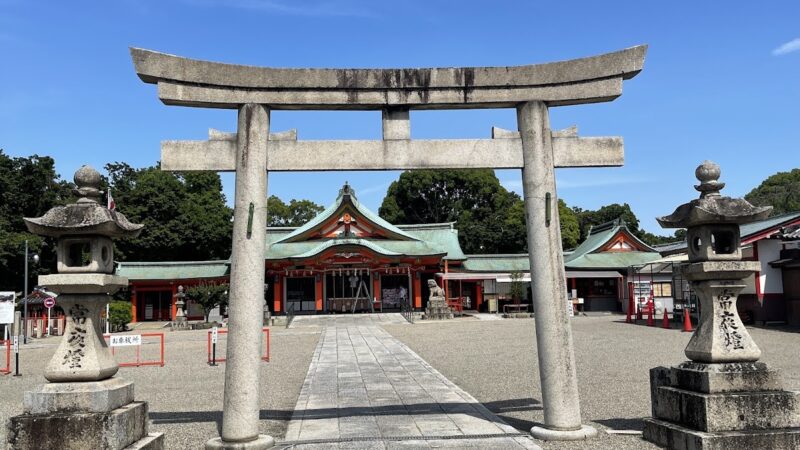
The shrine is located on a hill at the western end of Satsukiyama, offering panoramic views of Ikeda city from its grounds, providing a tranquil atmosphere for worship.
History of Ikuta Shrine
Origin of its Founding
Ikuta Shrine is said to have been founded in the 77th year of Emperor Nintoku’s reign (around 390 AD), making it the oldest existing shrine in Ikeda City. According to shrine tradition, based on the Nihon Shoki (Chronicles of Japan) entry for the 41st year of Emperor Ojin’s reign, its origins trace back to the transmission of ancient weaving techniques.
During the reign of Emperor Ojin, Achi no Omi and Tsuka no Omi, father and son, were dispatched to the Kingdom of Wu (Southern Dynasties of China) to acquire weaving and sewing techniques. They brought back four seamstresses at the request of the King of Wu. Among these, the sisters Kurehatori and Ayahatori, the younger sister Ayahatori-hime, was welcomed to Ikeda and introduced weaving techniques to this area.
When Anaorihime died in the 76th year of Emperor Nintoku’s reign, Emperor Nintoku himself enshrined her in the following year, the 77th year, to commemorate her achievements, which is considered the beginning of Ikuta Shrine.
Status as an Engishiki Shrine
Ikuta Shrine is a Shikinaisha (shrine listed in the Engishiki Jinmyocho), a historically significant shrine that has been revered by the imperial court and the royal family since ancient times. Its inclusion in the Engishiki, compiled in the 5th year of the Engi era (927 AD) during the Heian period, is evidence that it was already recognized as an important shrine at that time.
In 785 (Enryaku 4), a new shrine building was constructed, and Emperor Ojin and Emperor Nintoku were enshrined together. This established the current form of the shrine, which enshrines three deities in addition to Anaori Daimyojin.
Suffering and Reconstruction During the Sengoku Period
A major turning point in the history of Ikuta Shrine was the events of the Sengoku period (Warring States period). During Oda Nobunaga’s attack on Ishiyama Honganji Temple, the surrounding area was engulfed in flames, and the main hall was destroyed by fire.
The current main hall was rebuilt in 1604 by Toyotomi Hideyori. This reconstruction by the Toyotomi family speaks to the high status and importance of this shrine to the region. With a history of over 400 years, this shrine is a valuable cultural asset that preserves the architectural style of the Momoyama period.
Deities and Divine Virtues
Three Deities
The following three deities are enshrined at Ikuta Shrine:
1. Ayaha Daimyojin
The main deity is Ayahahime. She was a woman who came from ancient China and introduced advanced weaving techniques to Japan. She is revered as the ancestral deity of weaving, sewing, and dyeing techniques.
2. Emperor Ojin
The 15th Emperor. As the emperor who ordered the invitation of engineers from Kure, he was also a promoter of cultural exchange.
3. Emperor Nintoku
The 16th Emperor. He is the emperor who founded the shrine to commemorate the achievements of Anaorihime.
Divine Virtues
As Anaori Daimyojin is the main deity enshrined at Ikuta Shrine, it is believed to possess the following divine virtues:
- Improvement of Skills: Improvement of handiwork such as weaving and sewing, and artistic skills
- Industrial Development: Prosperity of the textile industry and manufacturing
- Protection of Women: Protection of working women and women with skills in particular
- Cultural Exchange: Achievement of intercultural understanding and international exchange
The Legend of Orihime and its Significance
The Legend of Orihime in Ikeda
The “Legend of Orihime” is indispensable when discussing Ikuta Shrine. This legend has an important historical background that tells of the cultural exchange between ancient Japan and China.
During the reign of Emperor Ōjin, Japanese weaving technology was underdeveloped compared to China. Therefore, the imperial court dispatched Achi no Omi and others to Wu (ancient China) to invite highly skilled weavers. The sisters Kureori and Anaori, brought back to Japan, each spread weaving techniques in different regions.
The elder sister, Kureori, is enshrined at the present-day Kurefuku Shrine (Muromachi, Ikeda City), and the younger sister, Anaori, is enshrined at the Ikuta Shrine. These two shrines, a pair within Ikeda City, continue to preserve the ancient weaving culture.
Himemurozuka (Princess’s Mound)
Within the shrine grounds is the Himemurozuka, believed to be the burial place of Anaorihime. This mound is considered Anaorihime’s tomb and has been carefully preserved as physical evidence of the legend of the weaver princess. It has also been suggested that it may be a relic from the Kofun period, making it an archaeologically interesting historical site.
Relationship to the Origin of the Place Name Ikeda
One theory suggests that the place name “Ikeda” itself is derived from the reading “Ikeda” (伊居太). Another theory suggests that the place name Ayaha originates from “Ayaori” (綾織), indicating a deep connection between this entire region and the ancient textile industry.
Architectural Features and Highlights of the Shrine Grounds
Three-Shrine Style Main Hall
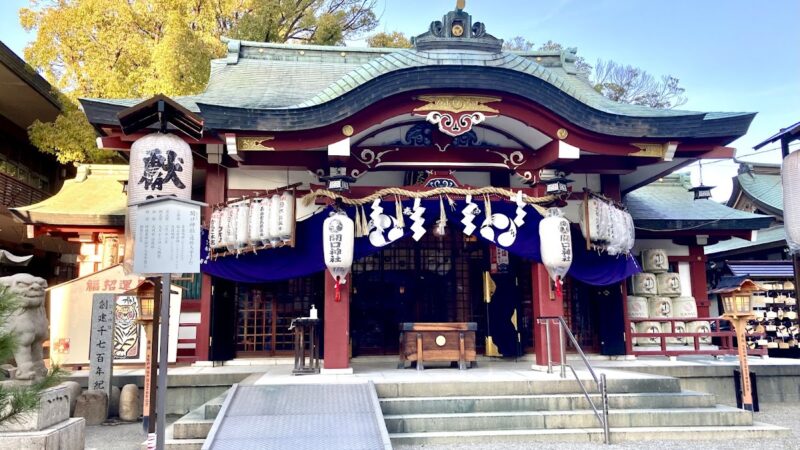
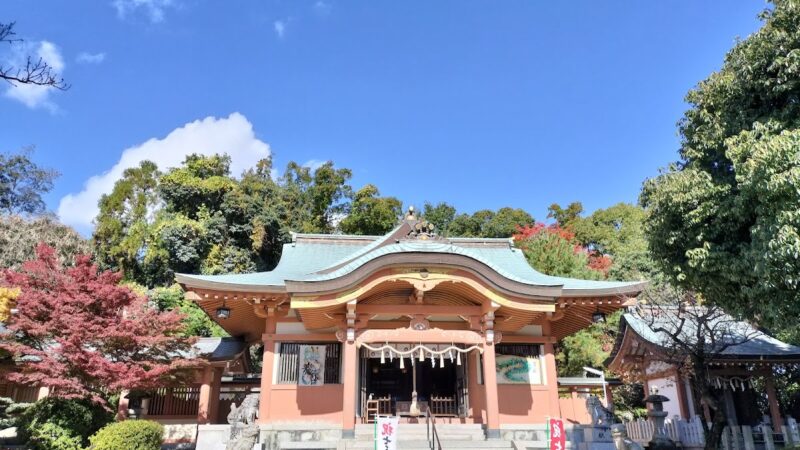
The main hall of Ikuta Shrine is built in a very rare architectural style called “three-shrine style.” This style features three shrine buildings arranged in parallel, with each of the three deities enshrined in an independent space.
Rebuilt in 1604 by Toyotomi Hideyori, the main hall boasts a dignified hip-and-gable roof, strongly retaining the characteristics of Momoyama period architecture. While the carvings and decorations are understated, its imposing and dignified presence evokes a long history.
The Yorimitsu Pine Planted by Minamoto no Yorimitsu
Within the shrine grounds stands a pine tree known as the “Yorimitsu Pine.” This pine is said to have been planted by Minamoto no Yorimitsu, a military commander from the mid-Heian period.
Minamoto no Yorimitsu is a legendary warrior known for his slaying of Shuten-doji at Mt. Oe, and he was based in Settsu Province (present-day northern Osaka Prefecture). The legend that Yorimitsu visited Ikuta Shrine and planted a pine tree indicates that this shrine was revered by samurai families.
While the current pine tree was planted in later generations, it is carefully preserved as the Yorimitsu Pine, and its presence evokes a sense of historical romance.
Shrines and Stone Structures
Besides the main shrine, several smaller shrines and stone structures are located within the grounds:
- Inari Shrine: A shrine where people pray for business prosperity and abundant harvests.
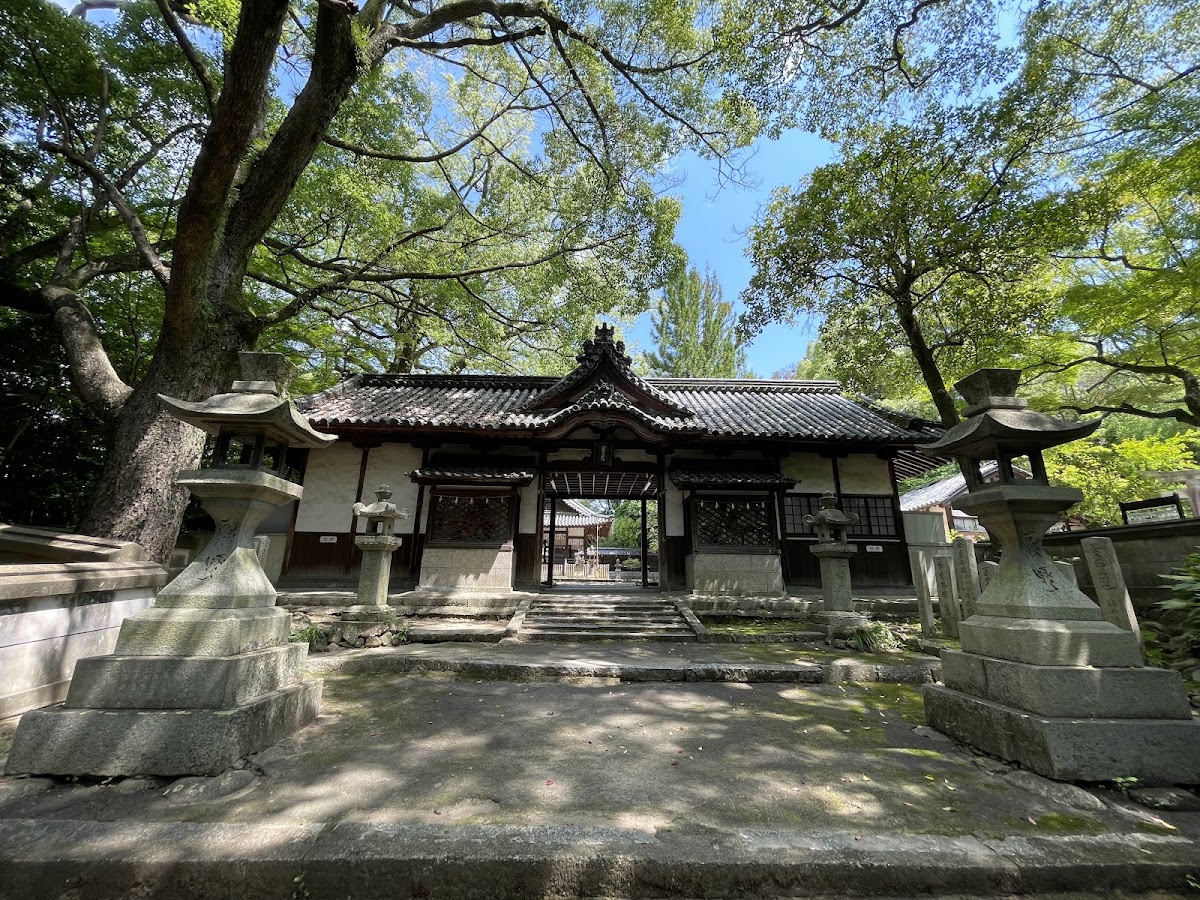
- Stone Lanterns: Several lanterns donated during the Edo period remain.
- Komainu (Guardian Lion-Dogs): These dignified guardian lion-dogs, showing their age, protect the approach to the shrine.
The names and dates of the donors are inscribed on these stone structures, telling the story of how the local people have supported the shrine for many years.
Natural Environment of Satsukiyama
Ikuta Shrine is located at the western end of Satsukiyama Mountain and is surrounded by abundant nature. The grounds contain many ancient trees, some estimated to be hundreds of years old, and offer particularly beautiful scenery during the spring when the leaves are fresh and the autumn when they change color.
As it is adjacent to Satsukiyama Park, many people combine their visit with hiking or nature walks, making it a valuable space where one can enjoy the atmosphere of a quiet forest despite being in an urban area.
Annual Events and Festivals
Annual Festival
Ikuta Shrine holds various festivals throughout the year. The autumn annual festival, in particular, is an important local event and attracts many worshippers.
New Year’s Visit
At the start of the new year, many worshippers visit the shrine for their first shrine visit of the year. Along with Gofuku Shrine, it is known as a popular spot for New Year’s visits in Ikeda City, with people praying for improvement in their skills and for the safety of their families throughout the year.
Shichi-Go-San Festival
As the local guardian shrine, many people visit for Shichi-Go-San (a traditional Japanese rite of passage for children). Commemorative photos taken in the historic shrine grounds create precious family memories.
Nearby Tourist Attractions
Satsukiyama Park
Satsukiyama Park, located very close to Ikuta Shrine, is a representative tourist spot in Ikeda City. From the observation deck, you can enjoy a panoramic view of the Osaka Plain, and it is also known as a famous spot for cherry blossoms and autumn leaves. Satsukiyama Zoo is also located on the premises, making it popular with families.
Gofuku Shrine
Gofuku Shrine, dedicated to Goori, the other protagonist of the Orihime legend, is within walking distance of Ikuta Shrine. Visiting both shrines will allow you to gain a deeper understanding of the Orihime legend.
Ikeda Castle Ruins Park
The ruins of Ikeda Castle are essential for understanding the history of Ikeda City. Currently, it is a park with an observation deck and a Japanese garden.
Kyuanji Temple
This ancient temple, said to have been founded by Gyoki, is known as a famous spot for hydrangeas. It is a beautiful temple where you can enjoy flowers throughout the seasons.
Manners and Enjoyment of Visiting a Shrine
Etiquette for Visiting a Shrine
- Bow before passing through the torii gate.
- Purify your body and mind at the water basin: Purify your left hand, right hand, and mouth in that order.
- Bow before the main shrine: The basic procedure is two bows, two claps, and one bow.
- Don’t forget to visit the subsidiary shrines within the grounds.
Goshuin (Shrine Seal)
You can receive a goshuin at Ikuta Shrine. Please inquire during the shrine office’s opening hours. A goshuin from a historical shrine is a precious memento of your visit.
Photography
Photography is generally permitted within the shrine grounds, but please refrain from taking photos inside the main shrine or during festivals. Also, please be considerate of other visitors.
Recommended Time to Visit
- Spring (Late March to April): Enjoy the cherry blossoms and combine them with a visit to Satsukiyama Park.
- Early Summer (May): The fresh greenery is beautiful; this is the season from which Satsukiyama Mountain got its name.
- Autumn (November): The autumn leaves are at their peak, and the annual festival is held.
- First Three Days of the New Year: Experience a special atmosphere for your first shrine visit of the year.
Ikuta Shrine and Local Culture
Connection to Ikeda’s Textile Industry
As symbolized by the legend of Orihime (the Weaver Princess), Ikeda has been known as a textile production area since ancient times. During the Edo period, it flourished as a cotton production area, and Ikuta Shrine attracted the faith of people involved in the textile industry.
Even today, textile companies and artisans visit the shrine to pray for technological advancement, and its role as a guardian deity of the industry continues.
Center of the Local Community
Ikuta Shrine, affectionately known as “Kami-no-Miya-san,” is a spiritual center for local residents. Local people gather for festivals, preserving and passing down traditions. Cleaning activities and maintenance of the shrine grounds are also supported by local residents, and a community centered around the shrine continues to function.
Educational Value
The legend of Orihime, which tells of ancient international exchange and the transmission of technology, is sometimes covered in local school education. Ikuta Shrine plays an important role as a living teaching material for children to learn about local history.
Ikuta Shrine from a Researcher’s Perspective
Relationship between Immigrants and the Hata Clan
Historically, the establishment of Ikuta Shrine is said to have been influenced by the Hata clan, a clan of immigrant origin. The Hata clan was known for their excellence in sericulture and weaving techniques, and there are Hata-related shrines throughout Japan.
The fact that it has the alternative name “Hata-kami-sha” also suggests a deep connection with the Hata clan. There is also a theory that the clan traditions of the Sakagami clan, descendants of the Yamato-no-Aya clan (who developed this area in place of the Hata clan from the mid-Heian period onward), formed the basis of the current shrine traditions. ### Archaeological Perspective
The remains within the shrine grounds, including the Hime-muro Mound, are of archaeological interest. The discovery of artifacts from the Kofun period in the surrounding area indicates that this region was an important center from ancient times.
Architectural Historical Value
The main shrine, rebuilt in 1604, is a valuable resource for studying Momoyama period shrine architecture. Its unique three-shrine style is also noteworthy from an architectural historical perspective.
Summary: The Charm of Ikuta Shrine
Ikuta Shrine, the oldest shrine in Ikeda City with a history of over 1600 years, possesses multifaceted charm:
- Historical Value: The legend of Orihime, which tells of ancient international exchange and the transmission of technology
- Architectural Charm: The three-shrine style main hall rebuilt by Toyotomi Hideyori
- Natural Environment: The lush green environment of Mt. Satsuki
- Cultural Significance: A faith deeply intertwined with the local textile industry
- Tourism Resource: Collaboration with surrounding spots such as Mt. Satsuki Park and Gofuku Shrine
When visiting Ikeda City, be sure to visit Ikuta Shrine. As you offer your prayers in the tranquil grounds, you will feel the weight of history that has continued since ancient times and a sense of respect for the technology of our ancestors.
The story of cultural exchange told by the legend of Orihime teaches us the importance of respecting and learning from different cultures, even in today’s increasingly globalized world. Ikuta Shrine is an irreplaceable cultural heritage site that connects the past and present and offers insights into the future.