Complete Guide to Izanami Shrine | History and Visiting Information for Japan’s Only Izanami Shrine Listed in the Engishiki
Izanami Shrine, located in Mima City, Tokushima Prefecture, is an extremely valuable shrine dedicated to Izanami-no-Mikoto, the goddess of creation in Japanese mythology. Among the 2,861 shrines listed in the Engishiki Jinmyocho (a list of shrines compiled in the Heian period), Izanami Shrine in Mima District, Awa Province, is the only one in Japan to bear the name Izanami.
This article will provide a detailed explanation of the history of this historic shrine, the differences between two candidate shrines, visiting information, and the deep connection between the Mima region and Izanami worship.
About Izanami Shrine | A Unique Izanami-themed Shrine, the Only One in Japan
The Only Izanami-themed Shrine in Japan
The most distinctive feature of Izanami Shrine is that it is the only shrine in Japan to bear the name of Izanami-no-Mikoto, one of the most important goddesses in Japanese mythology. While the Engishiki Jinmyocho (compiled in 927) lists all official shrines throughout Japan, the only shrine bearing the name of Izanami is “Izanami Shrine in Mima District, Awa Province.”
While there are several shrines throughout Japan dedicated to Izanagi, Izanami’s husband, such as Izanagi Shrines and Izanagi Shrines, the fact that only one shrine in Mima City, Tokushima Prefecture, lists Izanami as its principal deity suggests a deep connection between this region and the creation myth.
Relationship to the Creation Myth
According to the creation myth recorded in the Kojiki and Nihon Shoki, the two deities Izanagi and Izanami stood on the Heavenly Floating Bridge and stirred the sea with the Heavenly Jeweled Spear, creating the Japanese archipelago. The first island to be created was Awaji Island, followed by Shikoku (Iyo-no-Futana-shima), Oki Islands, Kyushu, Iki, Tsushima, Sado, and Honshu (Oyamato-Toyoaki-tsushima).
It is believed that the Kojiki and Nihon Shoki myths were compiled based on folk traditions passed down in various regions, and the creation myth in particular is thought to be based on traditions passed down around Awaji Island. Tokushima Prefecture is close to Awaji Island and formed its own unique cultural sphere as the ancient Awa Province. The existence of the only Shikinaisha (shrine listed in the Engishiki) dedicated to Izanami in this region suggests that the Awa region may have been closely connected to the creation myth.
History of Izanami Shrine | A Faith Continuing from Mythological Times
Founding and Granting of Divine Rank
The founding date of Izanami Shrine is unknown, but it is said to have been established in mythological times. It is believed to have been founded around the same time as Izanagi Shrine (Izanagi Jinmu) on Awaji Island. There is a legend that after Izanami completed the creation of the land, she built Izanami Shrine in Nakatori, Mima District, Awa Province, as the site of her divine tomb.
It first appears clearly in historical records during the Heian period, when Awa Izanami Shrine was granted the divine rank of Junior Fifth Rank, Lower Grade in the 11th year of the Jōgan era (869). This indicates that it held the highest status among the gods of Awa Province and was highly regarded by the imperial court.
Listing in the Engishiki Jinmyōchō (List of Shrines in the Engi Era)
The Engishiki Jinmyōchō, completed in the 5th year of the Enchō era (927), lists it as “Izanami Shrine, Mima District, Awa Province.” A Shikinaisha is a shrine listed in the Engishiki Jinmyocho (a list of shrines compiled in the Heian period), which grants it the right to receive offerings (heihaku) from the state, indicating its high status in ancient times.
There are 50 Shikinaisha in Awa Province, but among them, Izanami Shrine holds a special place. As the only Shikinaisha bearing the name of Izanami, the goddess who forms the core of Japanese mythology, it has attracted fervent devotion from ancient times to the present day.
The Legend of Nakatorishima
According to tradition, Izanami Shrine was once located on Nakatorishima, an island in the Yoshino River. For over a thousand years, the Yoshino River basin was repeatedly struck by floods, but it is said that the location of this shrine remained undamaged.
This legend demonstrates the belief that the divine power of Izanami, the goddess who created the land, protected the land from floods. The Yoshino River has long been known as a turbulent river that causes floods, but the legend that only the location of the shrine remained protected speaks to the deep faith of the local residents.
Two Candidate Shrines | Izanami Shrines in Anabuki-cho and Mima-cho
There are currently two candidate shrines for the Shikinaisha (a shrine listed in the Engishiki, an ancient Japanese legal text) “Izanami Shrine in Mima-gun, Awa Province.” A “candidate shrine” refers to a shrine that is a candidate for each of the multiple possible locations of a Shikinaisha.
Izanami Shrine (Mishima, Anabuki-cho)
Location: Maichujima, Mishima, Anabuki-cho, Mima City, Tokushima Prefecture
Former Shrine Rank: Village Shrine
This shrine, located on Maichujima in Mishima, Anabuki-cho, is considered a candidate shrine that is close to the location of Nakatorishima in the legend. Situated on a sandbar in the Yoshino River, it is thought to have been a center of Izanami worship as a water deity and land deity since ancient times.
The shrine grounds are surrounded by the natural beauty of the Yoshino River, and the atmosphere of a shrine that has etched its history alongside the flow of the river is strongly preserved. It has been cherished by the local people as a place with a legend of being protected from floods.
Izanami Shrine (Nakatori, Mima-cho)
Location: 338 Nakatori, Mima-cho, Mima City, Tokushima Prefecture
Former Shrine Rank: Village Shrine
This shrine, located in Nakatori, Mima-cho, is also one of the candidate shrines for the Shikinaisha Izanami Shrine. The place name Nakatori itself may be related to Nakatori Island in legend, suggesting that it has been a place of Izanami worship since ancient times.
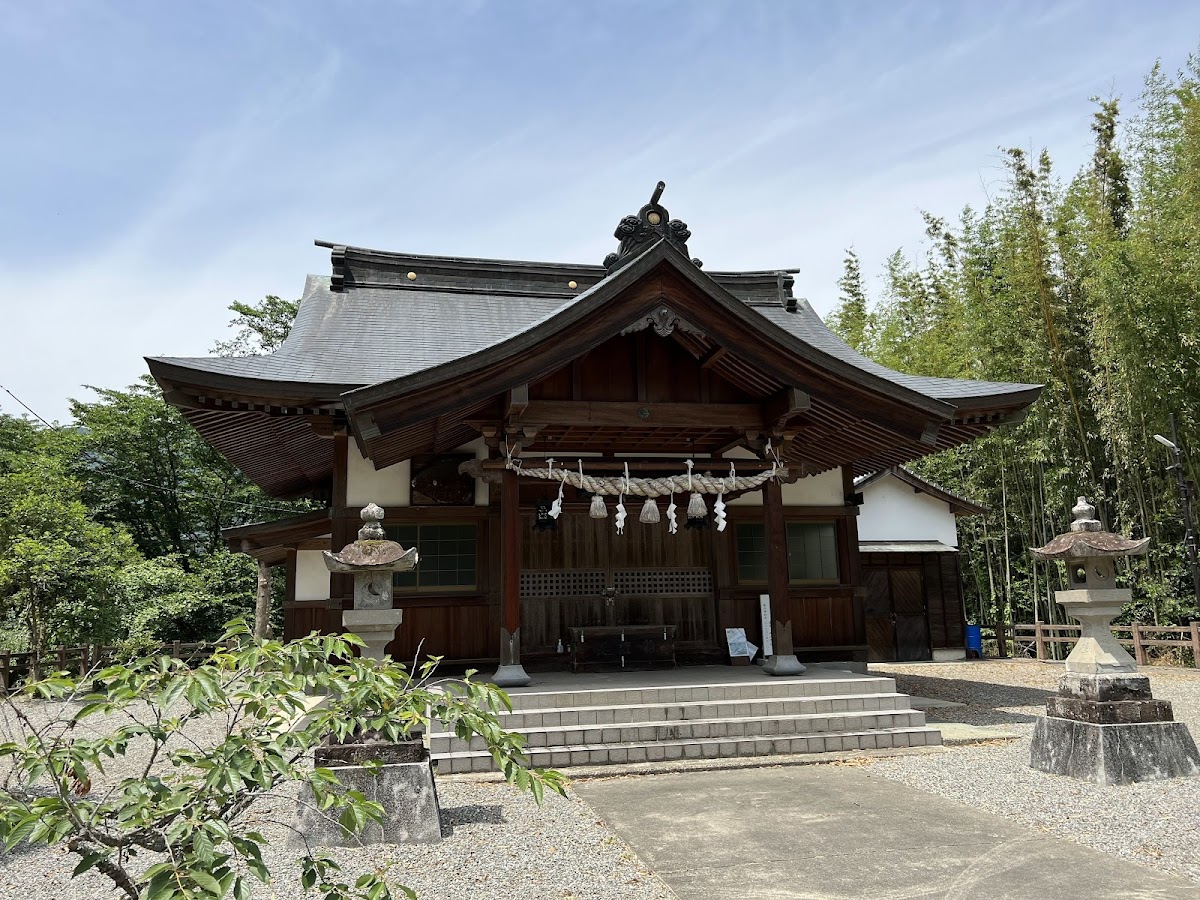
The shrine building is located at the foot of the mountain, allowing for worship in a tranquil atmosphere. Passing through the torii gate, a space unfolds where you can feel the history of faith that has continued since the age of mythology.
Reasons for the Existence of Two Candidate Shrines
There are several theories as to why two candidate shrines exist.
One possibility is that the shrine, originally located on Nakatorishima Island, was forced to relocate due to flooding or changes in the Yoshino River’s course, resulting in its division into multiple locations. The Yoshino River has historically been prone to course changes, and the location of Nakatorishima Island may have shifted over time.
Another possibility is that within the vast Mima County, Izanami worship was rooted in multiple regions, each claiming to be the successor to the Shikinaisha (a shrine listed in the Engishiki, an ancient Japanese legal code). In any case, both shrines have long histories and have consistently attracted the faith of their respective communities.
Deities and Divine Virtues | Izanami, Goddess of Creation
Main Deity: Izanami-no-Mikoto
The main deity of Izanami Shrine is Izanami-no-Mikoto. Izanami is one of the most important goddesses in Japanese mythology, a goddess of creation who, together with her husband Izanagi-no-Mikoto, created the land and gave birth to many gods.
In the Kojiki, she is written as “Izanami-no-Mikoto,” and in the Nihon Shoki, as “Izanami-no-Mikoto.” She plays a central role not only in the creation myth of Japan but also in the creation myth of the gods. The myth of her dying from burns while giving birth to Kagutsuchi-no-Kami, the god of fire, and going to the underworld, is also well-known.
The Divine Virtues of Izanami
Izanami-no-Mikoto is believed to possess the following divine virtues:
- National Security and Regional Protection: As the goddess who created the land, she protects the land and regions.
- Matchmaking and Marital Harmony: As the divine wife of Izanagi, she brings good fortune in relationships and marital harmony.
- Safe Childbirth and Fertility: As the mother goddess who gave birth to many gods, she grants blessings for safe childbirth and fertility.
- Abundant Harvest: As the goddess who brings blessings from the land and nature, she is also the guardian deity of agriculture.
- Fulfillment of Wishes: As the goddess of creation, she has the power to grant various wishes.
In particular, as the goddess who created the land, there has been a long-standing belief in her for the stability of the land and protection from disasters. The legend that Nakatorishima Island was spared from flood damage is also considered a manifestation of this divine virtue.
Mima Region and Izanami Worship | A Special Relationship with Awa Province
Awa Province and Izanami Legends
Tokushima Prefecture (formerly Awa Province) has numerous unique legends concerning Izanami. The Mima region, in particular, flourished as one of the centers of Awa Province from ancient times and retains a strong memory of the mythological era.
Awa Province has a particularly long history among the Shikoku provinces, and in the Kojiki, the entire Shikoku region appears in the creation myth as “Iyo no Futanashima.” It is depicted as an island with four faces (Awa, Sanuki, Iyo, and Tosa), and Awa is referred to by the name of the goddess “Ogetsuhime.”
The existence of the only Shikinaisha (shrine listed in the Engishiki) dedicated to Izanami in Awa Province, with its mythological background, suggests that this region played an important role as the stage for the creation myth.
Religious Culture of the Yoshino River Basin
The Yoshino River is the largest river in Shikoku and has been a major artery of culture and economy in Awa Province since ancient times. Many ancient shrines are located along its basin, fostering a unique religious culture.
The tradition that the Izanami Shrine was located on a sandbar (Nakatorishima) in the Yoshino River demonstrates a form of worship closely linked to the river. Water is the source of life, bringing blessings that nourish the land, but also disasters such as floods. It is believed that by enshrining Izanami, who created the land, by the water’s edge, people prayed for the blessings of water and sought protection from floods.
Historical Importance of Mima City
Mima City was the center of the ancient Mima County of Awa Province and is a historical town with many historical sites and cultural assets. The presence of numerous burial mounds, such as the Dan-no-Tsukaana Kofun Group, indicates the existence of a powerful force from ancient times.
The presence of the Shikinaisha Izanami Shrine in this region indicates that the Mima area held a religiously and politically significant position in ancient Awa Province. It is believed that the placement of a shrine dedicated to Izanami, a central goddess in national mythology, in this location held profound significance.
Visiting Information | Access to Izanami Shrine and Points to Note for Visitors
Access to Izanami Shrine (Nakatori, Mima-cho)
Location: 338 Nakatori, Mima-cho, Mima City, Tokushima Prefecture 771-2106
Transportation Access:
- Approximately 10 minutes by car from JR Tokushima Line “Awa-Handa Station”
- Approximately 15 minutes by car from Tokushima Expressway “Wakimachi IC”
- Approximately 50 minutes by car from Tokushima city center
Parking: Parking available for visitors on the shrine grounds (limited number of spaces)
Access to Izanami Shrine (Mishima, Anabuki-cho)
Location: Mai Nakajima, Mishima, Anabuki-cho, Mima City, Tokushima Prefecture
Transportation Access:
- Approximately 10 minutes by car from JR Tokushima Line “Anabuki Station”
- Approximately 15 minutes by car from Tokushima Expressway “Mima IC”
Notes: Because it is located on a sandbar in the Yoshino River, it may be inaccessible during floods. We recommend checking the weather and river conditions beforehand.
Points for Visiting
Visiting Hours: Both shrines are generally open for free visits, but it’s best to avoid early mornings and late evenings.
Attire: Wear appropriate attire for visiting a shrine. Especially during the summer, don’t forget insect repellent.
Visiting Manners:
- Bow before passing through the torii gate
- Cleanse your hands and mouth at the water basin
- Bow twice, clap twice, and bow once in front of the main hall
- Be quiet on the shrine grounds, and take photographs with moderation.
Goshuin (Shrine Seal) Information
Goshuin (shrine seals) are available at Izanami Shrine. However, since there may not always be a resident priest, we recommend contacting the shrine in advance to confirm availability if you wish to receive a goshuin.
The Goshuin (temple/shrine stamp) bears the calligraphy of “Izanami Shrine” and the shrine’s seal, and is cherished by many visitors as proof of Japan’s only Izanami-related shrine listed in the Engishiki (ancient Japanese legal code).
Nearby Tourist Attractions
Besides Izanami Shrine, Mima City has many other attractions:
- Udatsu Townscape (Wakimachi): A preservation district for important traditional buildings, lined with Edo-period merchant houses.
- Dan-no-Tsukaana Tumulus Cluster: A group of tumuli with horizontal stone chambers dating from the late Kofun period.
- Yoshino River: A magnificent river also known as Shikoku Saburo, where you can enjoy rafting and other activities.
- Teramachi: A historical district with many temples.
By experiencing the history and culture of Mima City in conjunction with your visit to Izanami Shrine, you will create even deeper travel memories.
Annual Events and Festivals of Izanami Shrine
Main Festivals
Izanami Shrine holds various festivals throughout the year. Please note that detailed dates may vary from year to year, so it is recommended to check before visiting.
Annual Grand Festival: The most important festival held in autumn, where prayers are offered for a bountiful harvest and peace in the community. Local parishioners gather, and traditional Shinto rituals are performed.
New Year’s Day Festival: A festival praying for happiness in the new year and safety throughout the year. It is bustling with worshippers making their first shrine visit of the year.
Connections with the Community
Izanami Shrine has functioned as the center of the local community throughout its long history. During festivals, local residents cooperate in preparations, and there is a history of protecting and passing down the shrine.
Even today, the shrine is cherished as a spiritual anchor for the community, and many people are involved in cleaning activities and the operation of festivals.
Cultural Assets and Highlights of Izanami Shrine
Shrine Architecture
Both shrines retain traditional shrine architectural styles. The shrine in Nakatori, Mima Town, in particular, takes advantage of its location at the foot of the mountain, creating a beautiful landscape in harmony with nature.
Both the main hall and the worship hall are wooden structures, and the texture of the wood, aged over many years, conveys a sense of history.
Nature within the Shrine Grounds
The grounds of Izanami Shrine are planted with ancient trees and seasonal flowers, allowing visitors to enjoy the beauty of each season. Especially during the fresh greenery of spring and the vibrant autumn foliage, the grounds are enveloped in natural beauty.
The shrine in Anabuki Town is located near the Yoshino River, offering a unique atmosphere where visitors can pray while listening to the gentle murmur of the river.
Stone Monuments and Memorials
Stone monuments inscribed with the history and origins of the shrine are erected within the grounds. These inscriptions reveal how the local people have cherished the shrine.
The Modern Significance of Izanami Worship
The Creation Myth and the Modern World
Izanami, enshrined at Izanami Shrine, is a central figure in the myth that recounts the origins of Japan. In modern times, the existence of shrines that preserve such myths holds invaluable significance in understanding the roots of Japanese culture.
The creation myth is not merely a folktale; it is an important story that has shaped the Japanese view of nature, land, and life. The worship of Izanami, the goddess of creation, embodies a universal prayer for nurturing life and protecting the land.
Izanami as a Female Deity
Izanami is one of the most important female deities in Japanese mythology. As the mother goddess who created the land and gave birth to the gods, she is considered a symbol of vitality and creativity.
In modern times, the worship of such a powerful female deity holds interesting significance from a gender perspective. It is noteworthy that in ancient Japan, the life-giving power of women was recounted as a fundamental aspect of the nation’s mythology.
Izanami as a Female Deity
Izanami is one of the most important female deities in Japanese mythology. As the mother goddess who created the land and gave birth to the gods, she is considered a symbol of vitality and creativity.
In modern times, the worship of such a powerful female deity holds interesting implications from a gender perspective. It is noteworthy that in ancient Japan, the life-giving power of women was recounted as a fundamental element of the nation’s mythology.
The Core of Regional Identity
Izanami Shrine is a crucial element in shaping the identity of the Mima region. As the only shrine in Japan bearing the name of Izanami, it is a special entity, a source of regional pride and a cultural focal point.
The historical and cultural value of this shrine holds great potential for regional revitalization and tourism promotion. Izanami Shrine symbolically embodies the charm of the Mima region, where mythology, history, and nature are intertwined.
Summary | The Significance of Visiting Izanami Shrine
Izanami Shrine is the only Izanami-related shrine in Japan, dedicated to Izanami-no-Mikoto, the goddess of creation who forms the foundation of Japanese mythology. Among the 2,861 shrines listed in the Engishiki Jinmyocho (a list of shrines compiled in the Heian period), this is the only one bearing the name of Izanami, making it a unique and valuable shrine that conveys the history of Japanese mythology and faith to the present day.
Izanami Shrine is the only shrine in Japan to bear the name of Izanami. Located in Mima City, Tokushima Prefecture, the heart of Awa Province, this shrine has been a center of local faith for over a thousand years. The legend of its original location on Nakatori Island in the Yoshino River, the miracle of its protection from floods, and the fervent devotion that continues to this day all speak to the shrine’s spiritual power and deep connection to the community.
The fact that two shrines, each preserving its traditions in their respective locations, demonstrates the diversity and flexibility of Japanese Shinto belief. Both shrines are important places that convey the faith in the great goddess Izanami to the present day.
Visiting Izanami Shrine offers a precious opportunity to touch upon the myths that tell the story of Japan’s creation and to experience the history of faith that has continued since ancient times. Why not visit Mima and reflect on the origins of Japanese culture at this shrine, where the goddess of creation is said to reside?
As you join your hands in prayer in the tranquil grounds, you will surely feel the history of prayer that has continued for over a thousand years and the great power of the goddess who created the land.