What is a Great Torii? A Complete Guide to the Meaning, Types, and Famous Spots of the Symbolic Gate of Shrines
Basic Knowledge of Great Torii
What is a Great Torii?
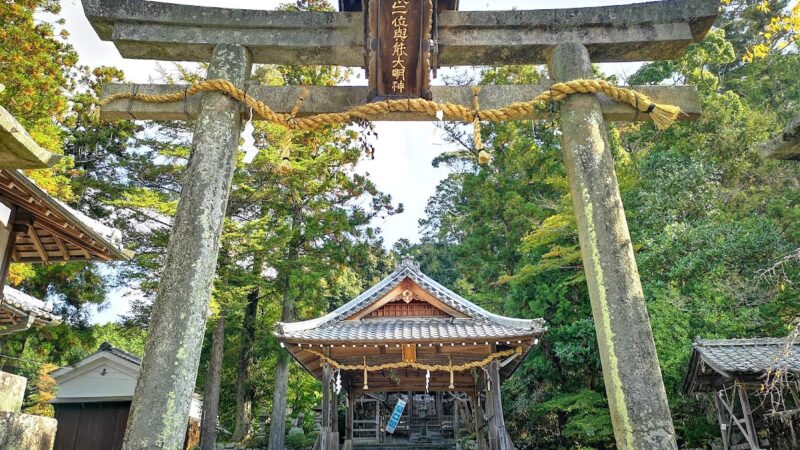
A great torii (ōtorii) is a large torii gate that stands at the entrance to the approach to a shrine or within the shrine grounds. Torii gates function as a boundary separating the sacred realm from the secular world, and particularly large and impressive ones are called “great torii.”
While typical torii gates are around 3-5 meters tall, great torii gates often exceed 10 meters, and some even reach over 20 meters.
The Origin and Meaning of Torii Gates
There are several theories regarding the origin of torii gates, but the main ones are listed below:
- The Legend of Ama-no-Iwato: The origin lies in the tree where a chicken was perched when Amaterasu Omikami hid in Ama-no-Iwato.
- The Torana Theory of Indian Buddhism: It originated from a gate in Buddhist architecture that was introduced to Japan and transformed.
- The Bird Perch Theory: It was installed as a tree for birds, messengers of the gods, to perch on.
Passing through a torii gate has a spiritual meaning: it cleanses one of the impurities of daily life and enters a sacred area with a pure heart.
Famous Torii Gate Spots in Japan
Itsukushima Shrine (Hiroshima Prefecture)
Features:
- A vermilion torii gate standing in the sea, 16.6 meters tall
- The circumference of the main pillars is approximately 10 meters
- Accessible on foot at low tide
- One of Japan’s Three Most Scenic Views, a World Cultural Heritage Site
Benefits: Traffic safety, safe voyages, business prosperity, matchmaking
Points to Note When Visiting:
- Enjoy both its appearance floating on the sea at high tide and its approachable form at low tide
- It is recommended to check the tides in advance
- The nighttime illumination is also fantastic
Access:
- Approximately 10 minutes by ferry from JR Miyajimaguchi Station, 12 minutes on foot from Miyajima Pier
- Approximately 1 hour by car from Hiroshima city (to the ferry terminal)
Heian Shrine (Kyoto Prefecture)
Features:
- One of Japan’s largest vermilion torii gates, 24.4 meters tall
- Built in 1895 (Meiji 28)
- Constructed to commemorate the 1100th anniversary of the founding of Heian-kyo
Benefits: Good fortune, protection from evil, academic success, matchmaking
Points to note when visiting:
- The seasonal scenery of the Shinen (sacred garden) is beautiful
- The weeping cherry blossoms in spring and the autumn leaves are particularly popular
- The Jidai Matsuri (October 22nd) is one of Kyoto’s three major festivals
Access:
- 10-minute walk from Higashiyama Station on the Kyoto Municipal Subway Tozai Line
- Immediately after alighting at the Okazaki Park Museum/Heian Jingu-mae bus stop on the Kyoto City Bus
Meiji Jingu (Tokyo)
Features:
- A large wooden torii gate, 12 meters high
- Made from 1500-year-old Taiwanese cypress
- A sacred site surrounded by a vast forest, despite being in the heart of the city.
Benefits: Family safety, business prosperity, success in examinations, matchmaking
Points to note when visiting:
- The highest number of visitors for New Year’s prayers in Japan (over 3 million annually)
- Kiyomasa’s Well is a popular power spot
- The irises in the Imperial Garden (June) are magnificent
Access:
- 1-minute walk from JR Yamanote Line “Harajuku Station”
- 1-minute walk from Tokyo Metro Chiyoda Line/Fukutoshin Line “Meiji-jingumae Station”
Kumano Hongu Taisha (Wakayama Prefecture)
Features:
- The tallest torii gate in Japan, standing at 33.9 meters
- Built in 2000
- Located at the entrance to the Kumano Kodo pilgrimage route
Benefits: Family safety, traffic safety, good fortune, matchmaking
Points to note when visiting:
- A giant torii gate standing at the former shrine grounds, “Oyuhara”
- Ideal starting point for Kumano Kodo walking
- Part of the World Heritage Site “Sacred Sites and Pilgrimage Routes in the Kii Mountain Range”
Access:
- Approximately 1 hour and 20 minutes by bus from JR Kisei Main Line “Shingu Station”
- Approximately 1 hour by car from Kisei Expressway “Kamitonda IC”
Kashima Shrine (Ibaraki Prefecture)
Features:
- 10.5-meter-tall, granite torii gate
- Rebuilt in 2014 after collapsing in the Great East Japan Earthquake
- One of Japan’s three great torii gates
Benefits: Improvement in martial arts, good fortune in competitions, good fortune in work, protection from evil
Points to Note When Visiting:
- The Kanameishi (foundation stone) is worshipped as a sacred stone that calms earthquakes
- The path to the inner shrine is through a mystical forest
- The spring water at Mitarai Pond is remarkably clear and mystical.
Access:
- 10-minute walk from JR Kashima Line “Kashima Jingu Station”
- Approximately 15-minute drive from Higashi-Kanto Expressway “Itako IC”
Types and Structures of Torii Gates
Main Types of Torii Gates
Shinmei Torii:
- The oldest type, exemplified by Ise Grand Shrine
- A simple structure with straight lines and minimal ornamentation
- The crossbeam (nuki) does not penetrate the pillars
Myojin Torii:
- The most common type
- The lintel (kasagi) curves upwards, and the crossbeam (nuki) penetrates the pillars
- Seen at Itsukushima Shrine, Heian Jingu Shrine, etc.
Ryobu Torii:
- Has small pillars (chigobashira) in front of and behind the main pillars
- The large torii gate at Itsukushima Shrine is of this type
- A form influenced by the syncretism of Shinto and Buddhism
Torii Gate Materials
- Wooden: Traditional materials such as cypress, cedar, and camphor wood are used.
- Stone: Stone materials such as granite, which are highly durable.
- Metal: Modern materials such as bronze and stainless steel.
- Concrete: Sometimes used for large torii gates.
Manners and Points for Visiting a Large Torii Gate
Correct Worship Etiquette
- How to Pass Through a Torii Gate:
- Bow before passing through the torii gate.
- Walk along the edge of the path, as the center is the path for the gods.
- When leaving, turn around and bow after exiting the torii gate.
- How to Purify at the Water Basin:
- Hold the ladle in your right hand and purify your left hand.
- Switch the ladle to your left hand and purify your right hand.
- Hold the ladle in your right hand again, receive water in your left hand, and rinse your mouth.
- Finally, stand the ladle upright to purify the handle.
- Worship at the Main Hall:
- The basic etiquette is two bows, two claps, and one bow (may vary depending on the shrine).
- Place your offering quietly, do not throw it.
- Make your wishes specific, and don’t forget to express gratitude.
Photography Etiquette
- Photography of the torii gate and shrine grounds is generally permitted, but photography inside the main hall is often prohibited.
- Be considerate of other worshippers.
- Use of a tripod requires prior confirmation.
- When posting on social media, be careful not to include the faces of other worshippers.
Suitable Times for Visiting
- Early Morning: Fewer people, allowing for a quiet visit and a refreshing atmosphere.
- Dusk: The torii gate illuminated by the setting sun is beautiful.
- Nighttime: Shrines lit up at night offer a magical atmosphere.
Benefits and Beliefs of the Great Torii Gate
Legends Regarding the Torii Gate
- Passing through it purifies impurities: It cleanses the mind of daily negativity and brings a pure heart.
- Wishes Come True: Passing through the torii gate with a sincere heart and offering prayers makes your wishes more likely to be granted.
- Protection from Evil: Torii gates act as a barrier, blocking evil.
Main Benefits of Each Shrine
Matchmaking/Love Fulfillment:
- Izumo Taisha (Shimane Prefecture)
- Kawagoe Hikawa Shrine (Saitama Prefecture)
- Kifune Shrine (Kyoto Prefecture)
Business Prosperity/Financial Luck:
- Fushimi Inari Taisha (Kyoto Prefecture)
- Sumiyoshi Taisha (Osaka Prefecture)
- Kotohira-gu (Kagawa Prefecture)
Academic Success/Prayers for Passing Exams:
- Dazaifu Tenmangu (Fukuoka Prefecture)
- Kitano Tenmangu (Kyoto Prefecture)
- Yushima Tenjin (Tokyo)
Health and Longevity/Healing from Illness:
- Iwashimizu Hachimangu (Kyoto Prefecture)
- Omiwa Shrine (Nara Prefecture)
- Suwa Taisha (Nagano Prefecture)
Summary
The large torii gate is not merely a structure; it has been a symbol of Japanese spiritual culture and an entrance to a sacred area, attracting people’s faith since ancient times. Large torii gates of various forms and sizes exist throughout Japan, each with its own history and story.
When visiting a shrine, observing proper etiquette and reflecting on the meaning and history of the torii gate will lead to a deeper experience. Be sure to visit and experience the large torii gates firsthand, as they show different expressions depending on the season and time of day.