Complete Guide to Wanishita Shrine | History and Highlights of the Ancient Shrine on Top of a Keyhole-Shaped Burial Mound
What is Wanishita Shrine?
Wanishita Shrine is an Engishiki-listed shrine located in Ichimoto-cho, Tenri City, Nara Prefecture. The main shrine is built on the circular rear section of the “Wanishita Shrine Kofun,” a keyhole-shaped burial mound constructed during the Kofun period, creating a unique space where ancient and modern elements blend.
This shrine, which has long been revered as the guardian deity of the Ichimoto region, is located at a crucial transportation hub where the ancient Tatsuta Road and Kamitsumichi Road intersect, and is a historically important shrine with deep ties to the ancient Wani clan.
How to Read and Alternative Names of Wanishita Shrine
Wanishita Shrine is pronounced “Wanishita Jinja.” Historically, it has been known by the following alternative names:
- Harumichi-miya (or Jido-gu)
- Kami-Harumichi-Tenno (Upper Harumichi Heavenly King)
- Kami-Harumichi-gu (Upper Harumichi Shrine)
- Gozu-Tenno-sha (Gozu Heavenly King Shrine)
- Kakinomoto-kami-no-miya (Kakinomoto Upper Shrine)
It has been called “Kami-Harumichi” in contrast to Wani-shimo Shrine (Shimo-Harumichi-gu), located approximately 2.5 kilometers west in Yamato-Koriyama City.
Deities and Divine Virtues
Current Deities
Currently, the following three deities are enshrined at Wani-shimo Shrine.
- Ōnamuchi-no-Mikoto (also known as Ōkuninushi-no-Mikoto)
- Susanoo-no-Mikoto
- Inada-hime-no-Mikoto
Because it enshrines Susanoo-no-Mikoto, it is also called Gozu Tennō Shrine and has attracted worshippers seeking protection from disease and misfortune.
Original Deities
In the ancient times recorded in the Engishiki, the following two deities were enshrined as the ancestral gods of the ancient powerful clans “Wanibe” and “Ichii-no-Omi.”
- Amatarashihiko Kunioshihito no Mikoto – Son of the 5th Emperor Kōshō
- Yamatotarashihiko Kunioshihito no Mikoto – Emperor Kōan, the 6th Emperor
In the early Meiji period, it was determined that this shrine corresponds to the Wani-shimo Shrine listed in the Engishiki (ancient Japanese legal code), and the current shrine name was established.
History of Wani-shimo Shrine
Relationship with the Ancient Wani Clan
Wani-shimo Shrine is believed to have been founded as the tutelary shrine of the ancient Wani clan, which was based in the Ichimoto area. The Wani clan was a powerful clan based in Kasuga-go, Soekami-gun, Yamato Province, and had deep ties with the imperial court.
Many burial mounds were constructed within the Wani clan’s sphere of influence, and the Wani-shimo Shrine burial mound is one of them. The fact that the shrine is built on top of a burial mound indicates that this area was a sacred site for the Wani clan.
Relationship with Kakimoto-dera Temple
Wani-shimo Shrine has a deep connection with Kakimoto-dera Temple, which once stood on this site. Kakimoto-dera Temple is believed to be associated with Kakinomoto no Hitomaro, a well-known poet of the Manyoshu era, and because of this connection, the shrine was also called “Kakimoto-kami-gu.”
Currently, the ruins of Kakimoto-dera Temple remain to the west of the shrine, with a poetry mound and a stone monument to Kagehime evoking memories of the past.
Harumichi-no-Mori Forest and Takase River
In 769 AD (Jingo-Keiun 3), the Takase River’s waterway was rerouted to the current path leading to the shrine in order to supply water to Ichisho, a territory of Todai-ji Temple. It is said that at this time, the road was also newly and straightened, leading to the forest being called “Harumichi-no-Mori” (Harumichi Forest) and the shrine being called “Harumichi-sha” (Harumichi Shrine).
The origin of this place name lies in the etymology of the shrine’s alternative name, “Jido-no-miya,” and the characters for “Jido-no-miya” can be seen on stone lanterns and other objects within the shrine grounds.
Status as an Engishiki-listed Shrine
This shrine is listed in the Engishiki Jinmyocho (a list of shrines compiled in the Heian period) as a Shikinaisha (a shrine listed in the Engishiki), registered as “Wanishimo Shrine, two deities,” belonging to Soekami District, Yamato Province. Shikinaisha are historically significant shrines that received special treatment from the imperial court during the Heian period, demonstrating the antiquity and status of Wanishimo Shrine.
Its former shrine rank was Village Shrine, and it was designated as a shrine receiving offerings of sacred food and cloth.
Main Hall, a Nationally Important Cultural Property
Momoyama Period Architectural Style
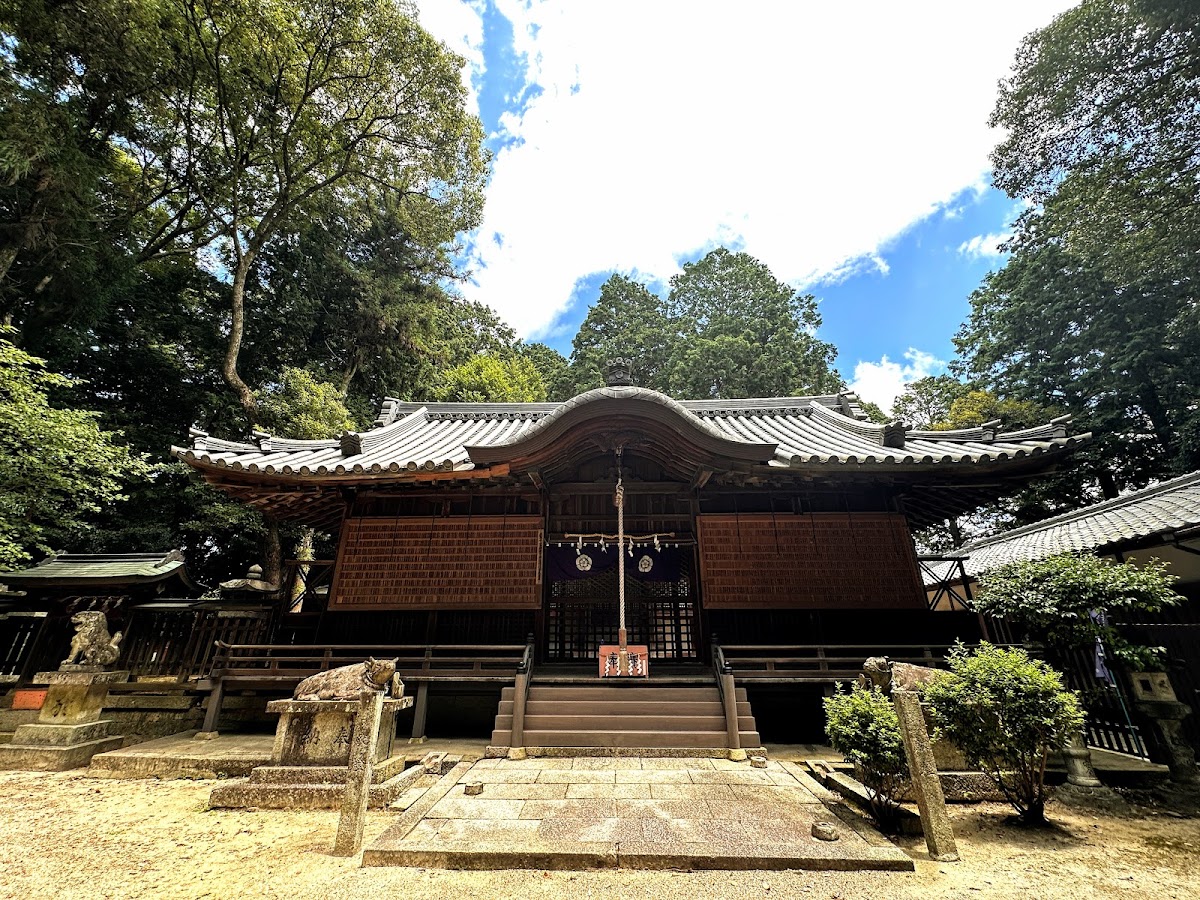
The main hall of Wanishimo Shrine is a valuable building exhibiting the architectural style of the Momoyama period. The characteristics of the architectural style are as follows:
- Structure: Three bays in length, two bays in width, single story
- Roof: Gable roof, cypress bark roofing
- Front porch: One bay
- Architectural style: Three-bay nagare-zukuri style
The cypress bark roof is constructed using a traditional method of layering thinly shaved cypress bark, creating elegant curves.
From National Treasure to Important Cultural Property
The main hall was designated a National Treasure in 1938. Following the revision of the Cultural Properties Protection Law after the war, it is now designated as an Important Cultural Property of Japan.
It holds high value as a shrine building from the Momoyama period and occupies an important position in architectural history. The harmonious combination of the beautiful cypress bark roof and the powerful wooden framework captivates visitors.
Wani-shimo Shrine Tumulus
Size and Shape of the Tumulus
The Wani-shimo Shrine Tumulus is a bachigata (spear-shaped) keyhole-shaped tumulus with the following dimensions:
- Total Length: Approximately 120 meters
- Diameter of Rear Circular Section: Approximately 70 meters
- Height: Approximately 5 meters
- Construction Period: Late 4th to Early 5th Century
- Orientation of Front Section: North-facing
It boasts one of the largest scales among the Todaiji-yama Tumulus Group, attesting to the immense power of the Wani clan.
Relationship between the Tumulus and the Shrine
The main shrine is built on top of the rear circular section of the tumulus, and the entire tumulus constitutes the shrine grounds. Therefore, the area surrounding the tumulus is densely covered with trees, forming a lush forest.
Examples of shrines built on top of tumuli are rare nationwide, making this a valuable example demonstrating the history of ancient burial sites being preserved as sacred places.
Highlights of the Shrine Grounds
Approach and Torii Gate
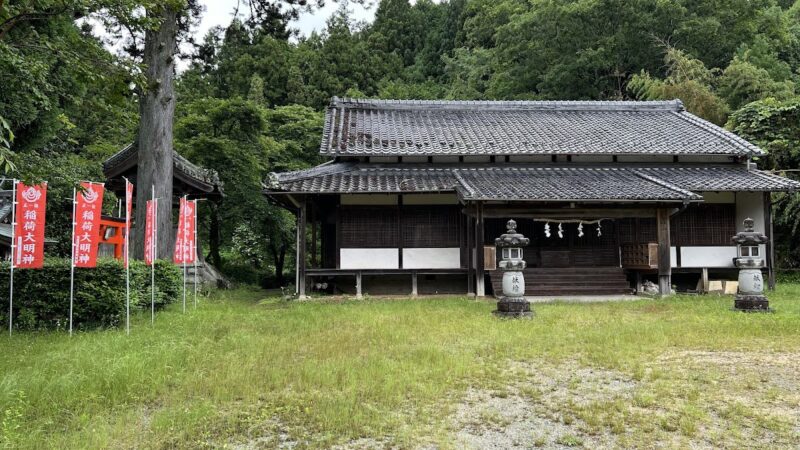
To reach the shrine, you proceed along a quiet approach surrounded by trees. Stone lanterns inscribed with “Jido-gu” line the path, evoking a sense of history.
Located at the intersection of the ancient Tatsuta Road and the Kamitsumichi Road, it was an important transportation hub since ancient times.
Kakimoto-dera Temple Ruins and Utazuka Mound
To the west of the shrine are the ruins of Kakimoto-dera Temple. The following historical sites remain here:
- Utazuka: A mound erected in memory of Kakinomoto no Hitomaro
- Kagehime’s Stone Monument: A stone monument dedicated to Yosami no Otome, believed to be the wife of Kakinomoto no Hitomaro
- Remains of Kakimoto-dera Temple: Traces of the temple from its heyday
These historical sites retain their traditional appearance, creating an atmosphere reminiscent of the Manyo era.
The Forest of Harumichiyama
The entire ancient burial mound is enveloped in a dense forest, hence the name “Harumichiyama.” The grounds are enveloped in silence, retaining a strong sense of a sacred place that has existed since ancient times.
The light filtering through the trees and the chirping of birds create a mystical atmosphere.
Access Information
Location
632-0004 Harumichiyama, Ichimotocho, Tenri City, Nara Prefecture
Access by Public Transportation
Using JR/Kintetsu
- Approximately 10 minutes on foot from JR Sakurai Line “Ichimoto Station”
- Take a bus from Kintetsu Tenri Line “Tenri Station,” get off at “Ichimoto” bus stop, and walk for approximately 5 minutes.
Ichimoto Station is an unmanned station, but it is within walking distance of the shrine, and signposts are well-maintained.
Access by Car
- Approximately 10 minutes from the Tenri Interchange on the Nishi-Meihan Expressway
- Via Prefectural Road 51 from National Route 25
There is parking space on the shrine grounds, but the number of spaces is limited, so the use of public transportation is recommended.
Nearby Tourist Attractions
The following are some of the attractions around Wani-shimo Shrine:
- Todaiji-yama Tumulus Cluster: A group of tumuli scattered throughout the area
- Historical Streetscape of Ichimoto-cho: An area where old townscapes remain
- Tenri City Tourist Attractions: Isonokami Shrine, Yamato Shrine, etc.
Points to Note When Visiting
Visiting Hours
Wani-shimo Shrine is open for worship at all times, but the shrine office may not always be staffed. Those wishing to receive a Goshuin (shrine stamp) are advised to check in advance.
Etiquette for Visiting the Shrine
- Bow before passing through the torii gate
- Walk away from the center of the path
- Purify yourself at the water basin
- Worship using the two bows, two claps, and one bow ritual
Be mindful that this is a special place located on top of an ancient burial mound, and worship quietly.
Photography
Photography is generally permitted within the shrine grounds, but photography is prohibited inside the main hall. Please keep in mind that it is an important cultural property and take photographs while observing proper etiquette.
Recommended Time to Visit
- Spring: Beautiful fresh greenery and a refreshing atmosphere
- Autumn: Autumn leaves color the grounds, creating a deeply evocative landscape
- Winter: A sacred space enveloped in silence
The shrine grounds show different expressions in each of the four seasons, offering new discoveries with every visit.
Cultural Value of Wani-shimo Shrine
Significance in Architectural History
As a shrine building from the Momoyama period, the main hall of Wani-shimo Shrine is highly valued for the following reasons:
- It retains many characteristics of the Momoyama style.
- Its cypress bark roofing technique is excellent.
- It is in good condition.
- It shows the evolution of local shrine architecture.
The three-bay nagare-zukuri style is a style that developed from the Muromachi period to the Momoyama period, and the main hall is a valuable example of this style.
Archaeological Value
The Wani-shimo Shrine burial mound is archaeologically important for the following reasons:
- It forms the core of the Todaiji-yama burial mound group.
- It shows the characteristics of the middle Kofun period, from the late 4th to early 5th centuries.
- It shows the sphere of influence of the Wani clan.
- It is a good example showing the relationship between burial mounds and shrines.
Examples of shrines built on top of burial mounds are important materials that show the process by which ancient burial sites were inherited as sacred places in later generations. ### Historical Value
As a shrine with a multi-layered history, possessing the status of an Engishiki-listed shrine, a relationship with the Wani clan, and connections to Kakimoto-dera Temple, it occupies an important position in the study of ancient Japanese history.
Ichimoto Area and Wani-shimo Shrine
History of Ichimoto
Ichimoto is a region that has flourished as a transportation hub since ancient times. Located where the Kami-tsu-michi and Tatsuta-michi roads intersected, it was on an important route connecting Yamato and Kawachi.
The place name “Ichii” is said to originate from the fact that many oak trees grew in this area.
As a Local Guardian Shrine
Wani-shimo Shrine has been revered by the local people as the guardian shrine of the Ichimoto area. Various prayers have been offered, including protection from disease, abundant harvests, and family safety.
Even today, it plays a central role in local festivals and events, supporting community unity.
Surrounding Environment
The area surrounding the shrine is a quiet environment with sprawling rural landscapes. Historical scenery dating back to the Kofun period remains, allowing one to feel the weight of history amidst a tranquil atmosphere.
Although residential areas have increased in recent years, the shrine’s grove remains unchanged, maintaining its presence as a local landmark.
Summary
Wanishimo Shrine, a Shikinaisha (ancient shrine listed in the Engishiki) situated atop a keyhole-shaped burial mound, holds high value in the fields of architecture, archaeology, and history.
The main hall, a designated Important Cultural Property, preserves the style of the Momoyama period, and the Wanishimo Shrine burial mound speaks to the power of the ancient Wani clan. Its connection to the Kakimoto Temple ruins and the Utazuka (poetry mound) provides an opportunity to reflect on the Manyo period.
Wanishimo Shrine, rooted in the Ichimoto region as its guardian shrine, conveys its ancient history to the present day. Why not experience the passage of time in the tranquil grounds of the shrine?
When you visit Tenri City, be sure to stop by Wanishimo Shrine and experience its unique setting as a shrine built on top of an ancient burial mound. The shrine, with its important cultural property main hall, the lush forest of Chidoyama Mountain, and the ruins of Kakimoto Temple, is full of attractions that await you.