
Myoryu-ji Temple Complete Guide: Kamakura’s Temple Associated with “Nabekamuri Nichishin” and the Seven Lucky Gods Pilgrimage
Myoryu-ji Temple, located along Komachi-oji Street in Kamakura, is an ancient Nichiren Buddhist temple known for the legend of Nabekamuri Nichishin. It enshrines Jurojin, one of the Seven Lucky Gods of Kamakura and Enoshima, and is a quiet temple visited by many worshippers. This article comprehensively introduces information you should know before visiting Myoryu-ji Temple, including its history, highlights, goshuin (temple stamp) information, and access methods.
What is Myoryu-ji Temple?: History and Overview
Basic Information and Mountain Name
Myoryu-ji Temple is a Nichiren Buddhist temple located in Komachi, Kamakura City, Kanagawa Prefecture. Its mountain name is Eishozan, and its official name is Eishozan Myoryu-ji. Its former head temple was Nakayama Hokkeji Temple, and it belongs to the Tatsushi lineage. The Nichiren sect abolished its head temple/branch temple system in 1941 (Showa 16), so nowadays, the terms “former head temple” and “former branch temple” are used.
History of Founding and the Chiba Residence
Myoryu-ji Temple’s founding dates back to the second year of Genchū/Shitoku (1385). The founder was Chiba Tanesada, a descendant of Chiba Tsunetane, a powerful retainer of the Kamakura Shogunate. The founding priest was Nichiei Shōnin, an uncle of Nichishin, and it is said that Tanesada founded the temple to pray for the repose of his ancestors’ souls.
This site was originally the location of the Chiba clan’s residence and was also known as “Chiba Yashiki” (Chiba Residence). Chiba Tsunetane, who played an active role as a powerful retainer of Minamoto no Yoritomo, greatly contributed to the establishment of the Kamakura Shogunate. His descendants built a residence on this site, and later it was developed into a temple, thus Myoryu-ji Temple remains a temple associated with the Chiba clan to this day.
As the Center of the Nakayama Branch of the Nichiren Sect
The founding priest, Nichiei Shonin, was from Nakayama Hokkeji Temple and is known for his victory in a doctrinal debate against Nichiei of Minobu-san Kuonji Temple. This victory established Myoryu-ji Temple’s position as the central temple of the Nakayama branch of the Nichiren sect in Kamakura. This historical background explains why Myoryu-ji Temple occupies a special place among Nichiren sect temples in Kamakura.
Nabekamuri Nichishin: The Legend of a High Priest Who Upheld His Beliefs
The Life and Training of Nichishin Shonin
Indispensable to discussing Myoryu-ji Temple is the existence of the second patriarch, Nichishin Shonin. Nichishin (1407-1488) was the nephew of the founder, Nichiei, and became a monk at a young age, undergoing rigorous training. He dedicated his life to spreading the teachings of the Nichiren sect, and was particularly enthusiastic about converting other sects.
The Truth Behind the Legend of “Nabekamuri Nichishin”
The reason why Nichishin Shonin became known as “Nabekamuri Nichishin” lies in his unwavering conviction. During the Muromachi period, Nichishin presented Shogun Ashikaga Yoshinori with his “Rissho Chikoku Ron” (Treatise on Establishing Righteousness and Governing the Nation), urging him to convert to the Nichiren sect. However, this direct appeal angered Yoshinori, and Nichishin was arrested and tortured.
The most famous form of torture was the cruel act of having a burning pot placed over his head. However, it is said that Nichishin endured this hardship without wavering in his beliefs. This anecdote gave rise to the name “Nabekamuri Nichishin,” and he has been passed down to this day as a symbol of unwavering conviction.
Within the grounds of Myoryu-ji Temple, statues and materials related to Nabekamuri Nichishin are displayed, allowing visitors to experience the indomitable spirit of Shonin Nichishin.
The Legacy of Nichishin Shonin
Nichishin, who endured torture, was later pardoned and founded Honpoji Temple in Kyoto. His teachings were passed down to many disciples and greatly contributed to the development of the Nichiren sect. Myoryu-ji Temple, as a temple associated with Nichishin Shonin, continues to attract many worshippers today.
Jurojin, one of the Seven Lucky Gods of Kamakura and Enoshima
The Seven Lucky Gods Pilgrimage and Myoryu-ji Temple
Myoryu-ji Temple enshrines Jurojin, one of the Seven Lucky Gods of Kamakura and Enoshima. The Kamakura and Enoshima Seven Lucky Gods Pilgrimage is a popular pilgrimage route that visits eight temples and shrines around Kamakura and Enoshima. It is especially crowded with worshippers from January 1st to January 7th, but the Seven Lucky Gods Pilgrimage can be enjoyed year-round.
The Blessings of Jurojin
Jurojin is a deity originating from Chinese Taoism and is believed to grant blessings of longevity, prosperity, and healing from all illnesses. This deity is often depicted with white hair and a long beard, leaning on a staff, and accompanied by a deer. A statue of Jurōjin is enshrined in the main hall of Myōryū-ji Temple, where visitors can pray for health and longevity.
Route of the Seven Lucky Gods Pilgrimage
The Kamakura and Enoshima Seven Lucky Gods pilgrimage consists of the following eight locations:
- Jōchi-ji Temple (Hotei)
- Tsurugaoka Hachimangū Shrine (Hataage Benzaiten)
- Hōkai-ji Temple (Bishamonten)
- Myōryū-ji Temple (Jurōjin)
- Hongaku-ji Temple (Ebisu)
- Hase-dera Temple (Daikokuten)
- Goryō Shrine (Fukurokuju)
- Enoshima Shrine (Benzaiten)
Myōryū-ji Temple is within walking distance of Kamakura Station and is easily accessible on the Seven Lucky Gods pilgrimage route.
Highlights and Grounds Guide of Myoryu-ji Temple
Atmosphere of the Main Hall and Grounds
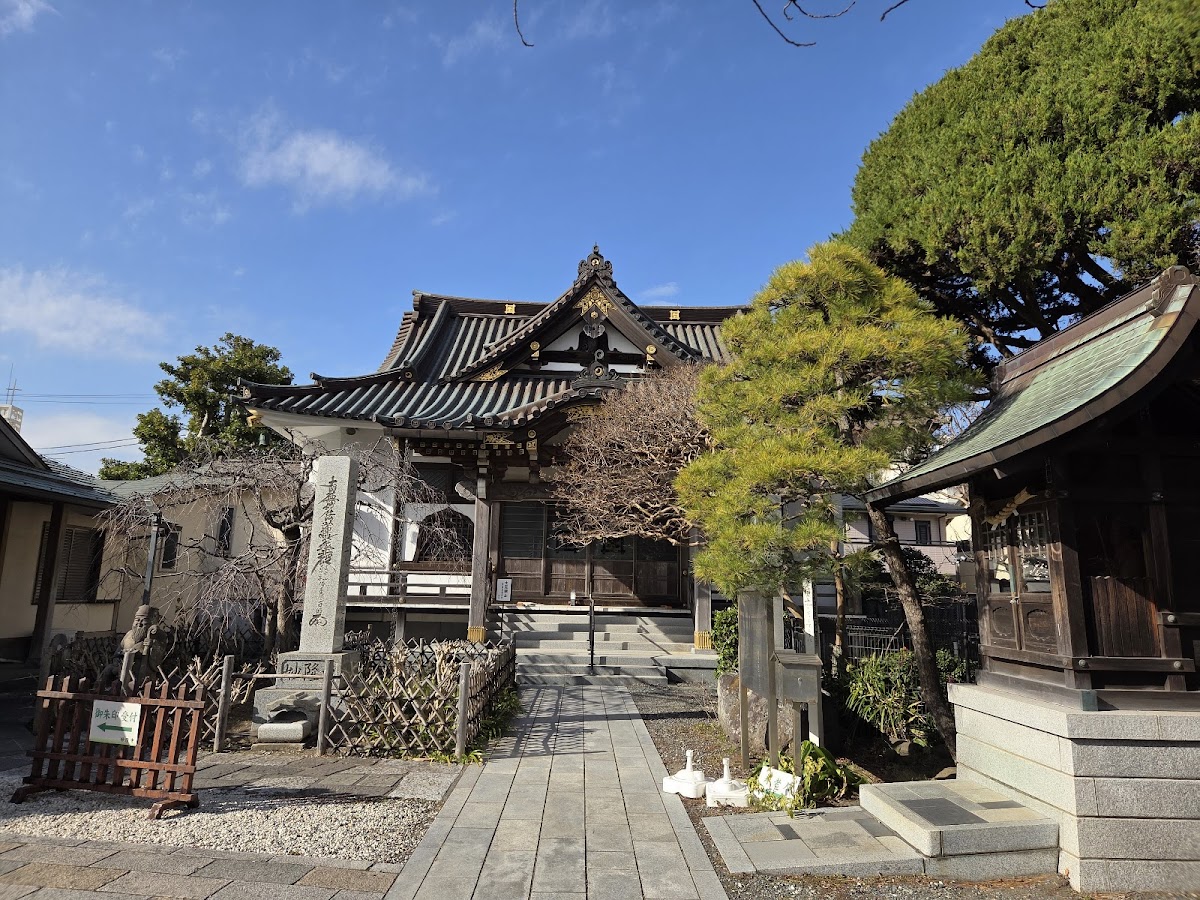
Myoryu-ji Temple’s main hall is a small yet dignified building. Inside, in addition to the principal image of Shakyamuni Buddha, statues of Jurojin and Nichiren Shonin are enshrined. The grounds are enveloped in a quiet and peaceful atmosphere, providing a space for peaceful worship away from the hustle and bustle of Kamakura.
In front of the main hall is a well-maintained garden that displays different expressions with each season. Despite its small size, it is a space where you can feel the charm of Kamakura.
Stone Monument of Maruyama Sadao, “The Danjuro of the New Theater”
Within the grounds of Myoryu-ji Temple is a stone monument to Maruyama Sadao, an actor known as “The Danjuro of the New Theater.” Sadao Maruyama (1901-1945) was a New Theatre actor who was active from the early Showa period through to the war. He was praised for his exceptional acting skills and was nicknamed “the Danjuro of New Theatre.”
Sadao Maruyama had ties to Kamakura, and a monument to him stands at Myoryu-ji Temple. For those interested in theatre history, this is a must-see spot. This monument indicates that Myoryu-ji Temple is not merely a religious institution, but also a temple with a cultural aspect.
Flowers at Myoryu-ji Temple: Beauty in Every Season
Myoryu-ji Temple is also known as the “Temple of Flowers,” and visitors can enjoy a variety of flowers throughout the year.
Spring (March-May)
- Plum blossoms: In early spring, the plum trees in the temple grounds bloom, announcing the arrival of spring.
- Cherry blossoms: Somei Yoshino cherry blossoms and other varieties adorn the temple grounds.
- Iris: You can see these lovely flowers blooming in the shade.
Early Summer (June-July)
- Hydrangeas: Myoryu-ji Temple is a hidden gem for hydrangeas in Kamakura. Hydrangeas planted around the main hall bloom beautifully during the rainy season.
- Crape Myrtle: Blooms with vibrant flowers during the hot summer months.
Autumn (September-November)
- Spider Lily: Blooms with bright red flowers around the time of the autumn equinox.
- Autumn Leaves: The trees on the temple grounds change color, creating an autumnal atmosphere.
Winter (December-February)
- Camellia: Blooms with vibrant flowers even in the winter cold.
- Winter Sweet: Fragrant winter sweet flowers begin to bloom in early spring.
Especially during the hydrangea season in June, it’s less crowded than Meigetsuin and Hase-dera temples, making it a recommended hidden gem for enjoying the flowers at a leisurely pace.
Goshuin Information and Goshuin Pilgrimage
Goshuin of Myoryu-ji Temple
You can receive multiple goshuin (temple stamps) at Myoryu-ji Temple. The main types of Goshuin (temple stamps) are as follows:
- Regular Goshuin: The mountain name “Eishozan” and the temple name “Myoryu-ji” are written in ink.
- Goshuin of Jurojin: This is a Goshuin for the Kamakura/Enoshima Seven Lucky Gods pilgrimage, and features the characters and seal of “Jurojin.”
- Goshuin of Nichishin Shonin: A Goshuin related to Nichishin wearing a pot-shaped head covering may also be available.
Goshuin Reception Hours and Location
Goshuin can be obtained at the reception in the main hall. Reception hours are usually from 9:00 to 16:00, but staff may be absent for religious services, so it is recommended to check in advance if you want to be sure to get a Goshuin.
The offering fee is usually around 300 to 500 yen. Bring your Goshuincho (stamp book) or you may find pre-printed Goshuin available.
Special Shikishi (decorative paper) for the Seven Lucky Gods
For the Kamakura and Enoshima Seven Lucky Gods pilgrimage, a special shikishi (decorative paper) is provided, allowing you to collect stamps at each temple and shrine. The shikishi can be purchased at each temple/shrine or at souvenir shops around Kamakura Station. Collecting all the stamps marks the completion of the pilgrimage.
Transportation Access and Surrounding Information
Access by Train
From JR Yokosuka Line/Enoshima Electric Railway Kamakura Station
- Approximately 12 minutes on foot from the east exit of Kamakura Station
- Walk through Komachi Street and head north along Komachi-oji Street
- Located past Honkaku-ji Temple, near Daiko-ji Temple
The route from Kamakura Station is flat and easy to follow, so even first-time visitors can arrive without getting lost. Visiting in conjunction with shopping and dining on Komachi Street is also recommended.
Access by Car and Parking
Myoryu-ji Temple does not have its own parking lot. If visiting by car, you will need to use a paid parking lot around Kamakura Station. However, Kamakura gets extremely crowded during peak tourist season and on weekends, so we strongly recommend using public transportation.
Nearby Attractions
There are many tourist spots around Myoryu-ji Temple:
Within a 5-minute walk
- Honkaku-ji Temple: A temple dedicated to Ebisu, one of the Seven Lucky Gods
- Daigyoji Temple: Famous for prayers for safe childbirth, known as “Onme-sama”
- Myohon-ji Temple: A Nichiren Buddhist temple with one of the largest main halls in Kamakura
Within a 10-minute walk
- Tsurugaoka Hachimangu Shrine: A representative shrine of Kamakura
- Hokai-ji Temple: A Tendai Buddhist temple known as the temple of bush clover
- Komachi-dori: A shopping street where you can enjoy street food and shopping
Starting from Myoryu-ji Temple, you can efficiently visit the main tourist spots of Kamakura.
Visiting Information and Etiquette
Visiting Hours and Admission Fee
- Visiting Hours: Approximately 9:00 AM to 4:30 PM (may vary depending on the season)
- Admission Fee: Free entry to the grounds
- Closed: No specific closing days (however, visits may be closed during religious services)
Entry to Myoryu-ji Temple grounds is free, and there is no admission fee. However, to view the interior of the main hall or receive a temple stamp, you must visit during the reception hours.
Etiquette for Visiting
When visiting a temple, please observe the following etiquette:
- Bow at the Temple Gate: Bow before entering the temple grounds.
- Be Quiet: Be quiet on the temple grounds and refrain from loud conversations.
- Photography: Photography inside the main hall and of Buddha statues may be prohibited. Please check before taking photos.
- Offering: Place your offering in front of the main hall and quietly clasp your hands together in prayer.
- Attire: Avoid revealing clothing and dress appropriately for your visit.
Best Season to Visit
Myoryu-ji Temple can be visited throughout the year, but the best times are:
- January 1st-7th: The time for the Seven Lucky Gods pilgrimage. You can experience the special atmosphere of the New Year.
- June: Hydrangea season. It’s less crowded, allowing you to enjoy the flowers at your leisure.
- November: Autumn foliage season. You can feel the beauty of autumn.
Conversely, during peak tourist seasons such as Golden Week and summer vacation, Kamakura as a whole becomes crowded, so if you want to visit at a leisurely pace, weekdays are recommended.
Kamakura Tourism and Culture Examination Preparation: Key Points of Myoryu-ji Temple
For those taking the Kamakura Tourism and Culture Examination (commonly known as the Kamakura Examination), here is a summary of key points regarding Myoryu-ji Temple:
Basic Information
- Sect: Nichiren Buddhism
- Mountain Name: Eishozan
- Founder: Chiba Tanetsada
- First Abbot: Nichiei Shonin
- Founded: Genchu 2nd year / Shitoku 2nd year (1385)
- Former Head Temple: Nakayama Hokkeji Temple
Historically Important Points
- Built on the site of “Chiba Yashiki,” the villa of Chiba Tanetsada, a descendant of Chiba Tsunetane
- The second abbot was Nichishin Shonin, known as “Nabekamuri Nichishin”
- Nichiei Shonin won a debate against Nichiei of Minobu-san Kuonji Temple, making it the center of the Nakayama branch of the Nichiren sect in Kamakura
Related to the Seven Lucky Gods
- One of the Seven Lucky Gods of Kamakura and Enoshima
- Deity enshrined here is “Jurojin”
- Benefits include longevity, prosperity, and healing from all illnesses
Other Features
- There is a stone monument to Maruyama Sadao, “Danjuro of the New Theater”
- A hidden gem for hydrangeas
- Located along Komachi-oji Street
Keeping these points in mind should help you answer the Myoryu-ji Temple related questions on the Kamakura Examination.
Kamakura Sightseeing Model Course Including Myoryu-ji Temple
Half-Day Course: Temple and Shrine Tour around Komachi
Duration: Approximately 3 hours
- Kamakura Station (Departure 9:00)
- Myoryu-ji Temple (9:15-9:45) – Visit Jurojin and obtain a Goshuin (temple stamp)
- Honkaku-ji Temple (9:50-10:20) – Visit Ebisu
- Myohon-ji Temple (10:30-11:15) – Stroll through the temple grounds
- Komachi Street (11:30-12:30) – Lunch and shopping
- Kamakura Station (Arrival 12:30)
Full-Day Course: Seven Lucky Gods Pilgrimage
Duration: Approximately 6-7 hours
- Kamakura Station (Departure 9:00)
- Jochi-ji Temple (9:30-10:00) – Hotei
- Tsurugaoka Hachimangu Shrine (10:30-11:15) – Hatage Benzaiten
- Hokaiji Temple (11:25-11:50) – Bishamonten
- Myoryu-ji Temple (12:00-12:20) – Jurojin
- Honkaku-ji Temple (12:25-12:45) – Ebisu
- Lunch (12:50-13:50)
- Hase-dera Temple (14:30-15:15) – Daikokuten
- Goryo Shrine (15:25-15:45) – Fukurokuju
- Enoshima Shrine (16:30-17:00) – Benzaiten
This course allows you to efficiently visit the Seven Lucky Gods by combining walking and the Enoden train.
Recommended Restaurants Around Myoryu-ji Temple
Here are some recommended restaurants near Myoryu-ji Temple that you might want to visit before or after your visit.
Dishes Using Kamakura Vegetables
Numerous restaurants serving healthy dishes using Kamakura vegetables can be found on Komachi Street and around Myoryu-ji Temple. Enjoying dishes made with fresh, locally sourced vegetables is one of the pleasures of sightseeing in Kamakura.
Shojin Ryori (Vegetarian Buddhist Cuisine)
For those who want to enjoy a meal typical of Kamakura, Shojin Ryori is recommended. There are also restaurants near the temple that offer authentic Shojin Ryori.
Japanese Sweet Shops
For a break after visiting the temple, a traditional Japanese sweet shop is perfect. You can enjoy seasonal Japanese sweets such as anmitsu and shiratamazenai.
Street Food on Komachi Street
On your way back to Kamakura Station from Myoryu-ji Temple, enjoying street food on Komachi Street is a classic Kamakura sightseeing experience. You can savor a variety of gourmet treats, including shirasu croquettes, Kamakura beer, and matcha ice cream.
Summary of Myoryu-ji Temple
Myoryu-ji Temple is an ancient Nichiren Buddhist temple located along Komachi-oji Street in Kamakura. It is known for the legend of “Nabekamuri Nichishin” and as the temple of Jurojin, one of the Seven Lucky Gods of Kamakura and Enoshima. Founded in 1385 on the site of the Chiba clan’s former residence, it has played an important role as a central temple of the Nakayama branch of the Nichiren sect.
The temple grounds are small, but the seasonal flowers are beautiful, and the hydrangeas in June are a particularly hidden gem. There are also cultural points of interest, such as the stone monument to Maruyama Sadao, the “Danjuro of modern theater.”
Its convenient location, just a 12-minute walk from Kamakura Station, makes it easy to stop by during a Seven Lucky Gods pilgrimage or Kamakura sightseeing. Admission is free, and it is a temple with a charming Kamakura atmosphere where you can pray peacefully in a quiet setting.
Touching upon the spirit of the unwavering Nichishin Shonin, praying to Jurojin for longevity, and admiring the seasonal flowers—Myoryu-ji Temple is a temple well worth visiting, where you can experience the history and culture of Kamakura and the beauty of the four seasons. When you visit Kamakura, be sure to stop by.
.png)