About Sugawara Tenmangu Shrine
Sugawara Tenmangu Shrine is a Shinto shrine located in Sugawara-cho, Nara City, Nara Prefecture. It is the oldest Tenmangu shrine in Japan, dedicated to Sugawara no Michizane, known as the god of learning. Built on the site believed to be Michizane’s birthplace, it is revered as the birthplace of approximately 12,000 Tenmangu and Tenjin shrines throughout Japan.
Deities and History
Main Deities
- Sugawara no Michizane: A scholar and politician of the Heian period, worshipped as the god of learning, literature, and calligraphy.
- Ame no Hohi no Mikoto: An ancestral deity of Michizane.
- Nomi no Sukune no Mikoto: An ancestor of Michizane, considered the founder of sumo wrestling.
History and Founding
Sugawara Tenmangu Shrine is said to have been founded in the first year of the Engi era (901 AD). Built on the site of the Sugawara family’s residence, this shrine was founded the year after Michizane was exiled to Dazaifu, to appease his spirit. Because it is Michizane’s birthplace, it is called “Japan’s oldest Tenmangu shrine” and is sometimes counted as one of the “Three Great Tenjin Shrines of Japan,” alongside Dazaifu Tenmangu and Kitano Tenmangu.
Highlights of the Temple Grounds
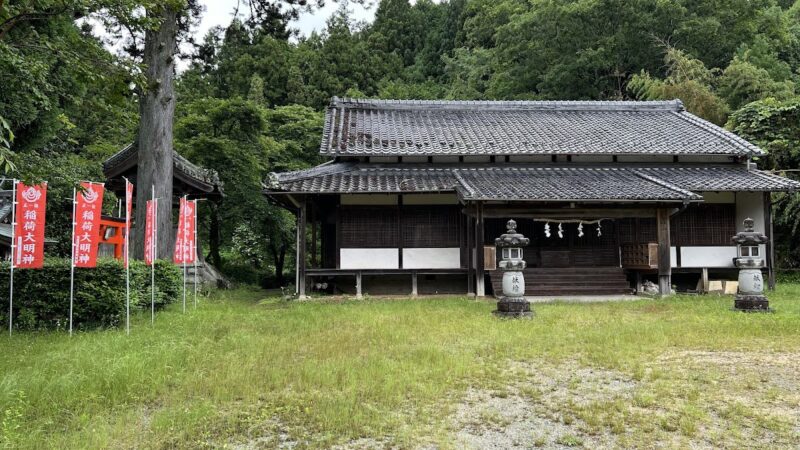
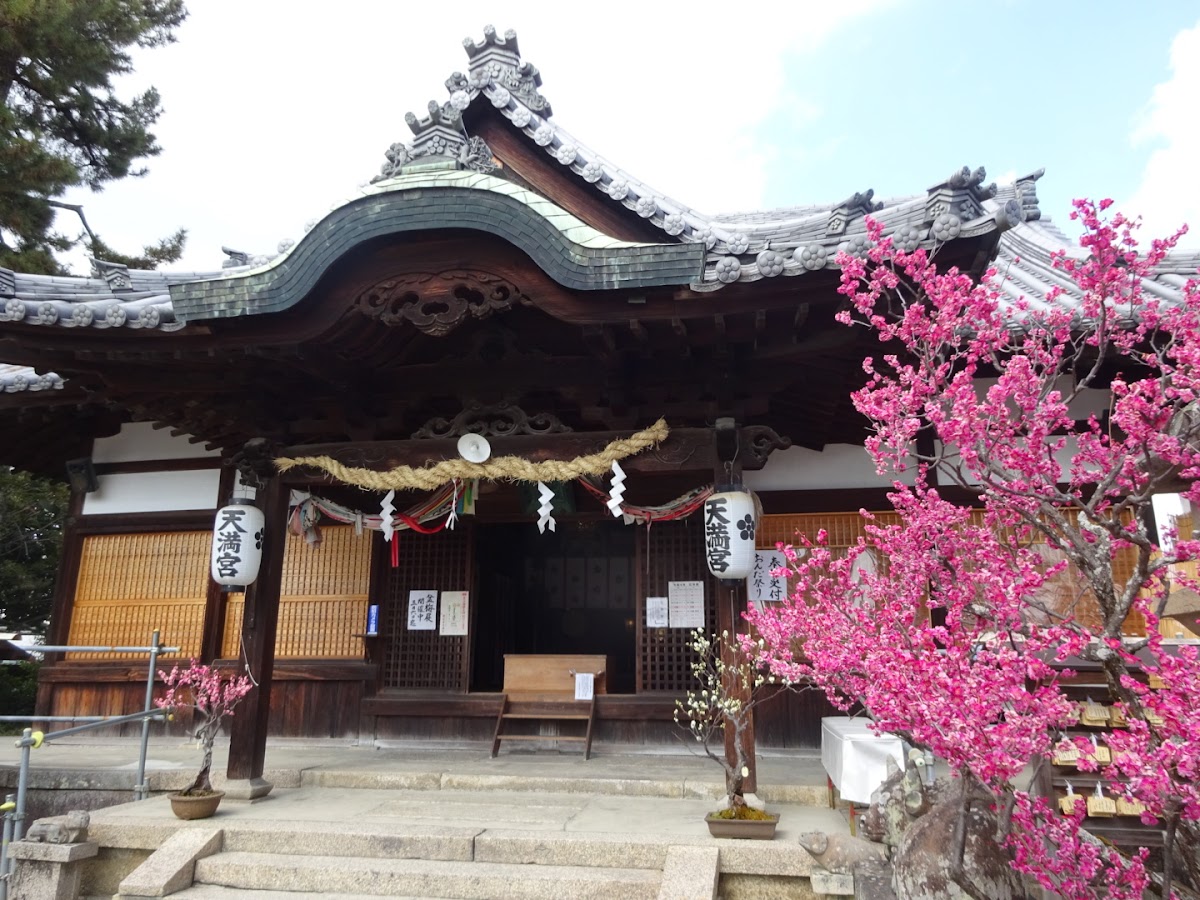
Main Hall and Worship Hall
The main hall was rebuilt during the Edo period and boasts an elegant architectural style with a cypress bark roof. Many votive tablets are dedicated in the worship hall, imbued with the wishes of students and those taking exams.
Brush Mound
Within the temple grounds is the “Brush Mound,” where worn-out brushes are commemorated. Visitors praying for improvement in calligraphy skills come to the site. A brush memorial service is held every January, where brushes donated from all over Japan are honored.
Bonsai Plum Trees and Plum Garden
In honor of the plum trees loved by Sugawara no Michizane, approximately 80 varieties of plum trees are planted on the temple grounds. The “bonsai plum tree,” said to be over a thousand years old, is particularly magnificent, and the area is bustling with visitors during the plum blossom season from February to March. The scenery evokes Michizane’s famous waka poem: “When the east wind blows, send forth your fragrance, plum blossoms; do not forget spring, even though your master is gone.” ### The Well of Sugawara no Michizane’s Birth
Within the temple grounds remains the “Well of Birth,” where Sugawara no Michizane is said to have been bathed in after birth, preserving the history of this place as his birthplace.
Benefits and Faith
Main Benefits
- Academic Achievement/Prayer for Passing Exams: Passing exams, overcoming tests, improving academic ability
- Improvement in Calligraphy: Improving calligraphy skills, blossoming artistic talent
- Improvement in Literature: Improving writing ability, blossoming literary talent
- Protection from Evil and Misfortune: Exorcism through the strong spiritual power of Sugawara no Michizane
Popular Items Offered
- Academic Amulet: A popular amulet among students taking exams
- Prayer Ema for Passing Exams: An ema (votive tablet) with a picture of a cow (related to the auspicious association of Sugawara no Michizane and cows)
- Academic Pencil: A pencil blessed for use in exam preparation and testing
- Plum Blossom Amulet: An amulet featuring plum blossoms, associated with Sugawara no Michizane
Points for Visiting
Etiquette for Visiting
- Bow Before Passing Through the Torii Gate: A courtesy before entering the sacred area
- Purifying at the Water Basin: Purify in the following order: left hand → right hand → mouth → handle of left hand
- Worship at the Main Shrine: Follow the ritual of two bows, two claps, and one bow.
- Touching the Stroke Cow: It is believed that stroking the cow statue on the shrine grounds brings good fortune in academic performance.
Recommended Time to Visit
- January 25th (Hatsutenjin): The first festival of the new year, bustling with many worshippers.
- Mid-February to Early March: The shrine grounds are vibrant with the blooming plum blossoms.
- Exam Season (December to February): The number of worshippers praying for success in exams increases.
- October 1st to 4th (Autumn Grand Festival): Traditional events are held.
Points to Note When Visiting
- During exam season, it gets crowded, so allow plenty of time for your visit.
- During the plum blossom season, the parking lot gets crowded, so using public transportation is recommended.
- Photography is permitted, but please check beforehand as photography may be prohibited inside the main hall.
Access Information
Access by Train
- Approximately 10 minutes on foot from Kintetsu Kashihara Line “Amagatsuji Station”
- Approximately 15 minutes by bus from JR Kansai Main Line “Koriyama Station,” get off at “Sugawara Shrine Mae” bus stop
- Approximately 20 minutes by bus from Kintetsu Nara Station, get off at “Sugawara Shrine Mae” bus stop
Access by Car
- Approximately 10 minutes from Daini Hanna Expressway “Nakamachi Ramp”
- Approximately 15 minutes from Nishimeihan Expressway “Koriyama IC”
- Free parking available (approximately 30 spaces, may be crowded during plum blossom season)
Location and Contact Information
- Address: 518 Sugawara-cho, Nara City, Nara Prefecture 631-0842
- Phone: 0742-45-3576
- Visiting Hours: Grounds are freely accessible (Shrine office is open from 9:00 to 17:00)
- Admission Fee: Free
Nearby Tourist Attractions
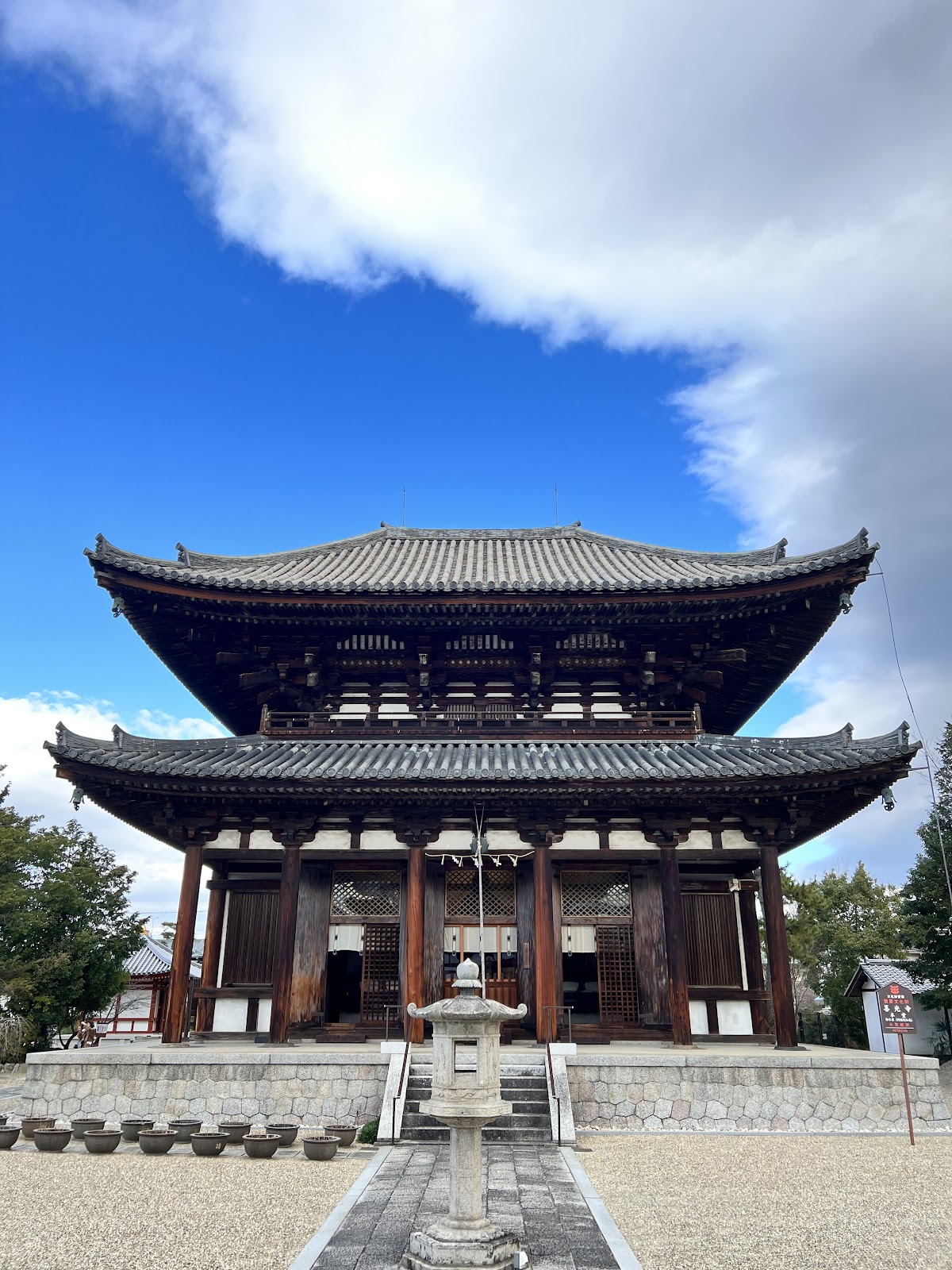
Kikoji Temple (approx. 15-minute walk)
A historic temple known as the “Trial Great Buddha Hall,” also famous for its lotus flowers.
Toshodaiji Temple (approx. 10-minute drive)
The head temple of the Ritsu sect, registered as a World Heritage Site, and associated with the Venerable Ganjin.
Yakushiji Temple (approx. 10-minute drive)
The head temple of the Hosso sect, a World Heritage Site known for its East Pagoda (National Treasure) and the Yakushi Triad statues.
Summary
Sugawara Tenmangu Shrine is a historic shrine with over a thousand years of history, built on the birthplace of Sugawara no Michizane, the god of learning. Visitors from all over Japan come to pray for success in exams and academic achievement, and it is especially crowded with students and their parents during exam season. Known as a famous spot for plum blossoms, the temple grounds are adorned with beautiful plum blossoms in early spring. When visiting Nara, why not take a stroll through the historic temple grounds associated with Sugawara no Michizane while praying for academic success?