About Kikoji Temple (Sugawara-dera Temple)
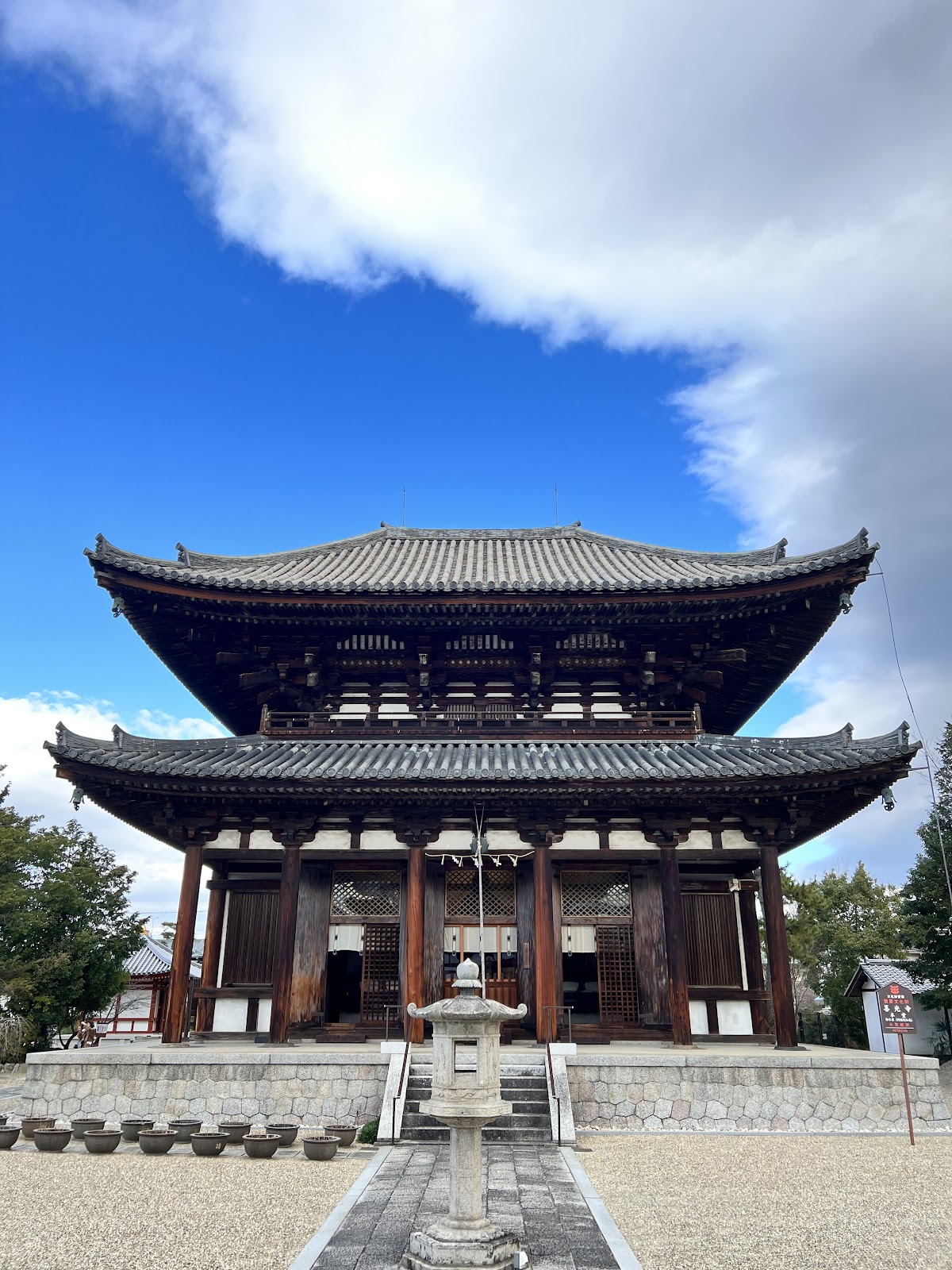
Kikoji Temple is a Hossō sect temple located in Sugawara-cho, Nara City. Also known as “Sugawara-dera Temple,” it is a well-known ancient temple said to have been founded by the Nara period high priest, Gyōki Bodhisattva. The main hall, which was used as a “trial model” for the Great Buddha Hall of Tōdai-ji Temple, is designated as a National Important Cultural Property.
History of Kikoji Temple
Founding and Gyōki Bodhisattva
Kikoji Temple is said to have been founded in 721 AD by Gyōki Bodhisattva. Gyōki was a monk who conducted missionary work in various regions to help the people and also dedicated himself to social projects such as bridges, roads, and reservoirs. This area is close to Sugawara-no-sato, Gyōki’s birthplace, and is also known as the place where Gyōki spent his later years.
Role as a “Trial Great Buddha Hall”
There is a legend that when Emperor Shomu planned the construction of the Great Buddha Hall of Todai-ji Temple in 745 AD, the main hall of Kiko-ji Temple was used as a model. For this reason, it is also known as the “Trial Great Buddha Hall.” The current main hall is a reconstruction from the Edo period, but it is a valuable building that preserves the style of that time.
Origin of the Temple Name
Originally called “Sugawara-dera,” it is said that when Gyoki passed away at this temple in 751 AD, it was renamed “Kiko-ji” in honor of his virtues.
Highlights of the Temple Grounds
Main Hall (Important Cultural Property)
Rebuilt in 1732, the main hall is a magnificent single-story building with a hipped roof. It measures seven bays wide and four bays deep, and is said to be about one-fifth the size of the Great Buddha Hall of Todai-ji Temple. Inside, the principal image, a seated statue of Amida Buddha, is enshrined, flanked by statues of Kannon Bodhisattva and Seishi Bodhisattva.
Lotus Pond and Lotus Flowers
Kikoji Temple is widely known as the “Temple of Lotuses.” Approximately 250 varieties of lotus flowers are planted on the temple grounds, blooming one after another from late June to early August. The lotus flowers are at their most beautiful in the early morning, attracting many worshippers and photography enthusiasts.
Representative varieties include the Oga Lotus, Oji Lotus, and Maihime Lotus, offering a variety of colors including white, pink, and crimson.
Gyoki Hall
Within the temple grounds is the Gyoki Hall, dedicated to Gyoki Bodhisattva. On February 2nd, the anniversary of Gyoki’s death, the Gyoki Memorial Service is held, attracting many worshippers.
Benten Hall
In the center of the lotus pond stands the Benten Hall, where Benzaiten is enshrined. This shrine is revered as the god of water and performing arts, and its appearance surrounded by lotus flowers is breathtakingly beautiful, like a painting.
Points to Note When Visiting
Visiting Hours and Admission Fees
- Visiting Hours: 9:00 AM – 4:30 PM (Last entry 4:00 PM)
- Admission Fee: Adults 500 yen, Junior/Senior High School Students 300 yen, Elementary School Students 200 yen
- Lotus Blooming Season (Late June – Early August): 7:00 AM – 4:30 PM (Early morning visits possible)
Lotus flowers are most beautiful in the morning, especially early morning, so early morning visits are recommended during the summer.
Annual Events
- February 2nd: Gyoki-e Ceremony (Memorial service for the death anniversary of Gyoki Bodhisattva)
- Late June to Early August: Lotus blooming season
- July 7th: Benzaiten Ceremony
Best Photo Spots
- Lotus Pond and Main Hall: A classic angle for photographing the main hall through the lotus flowers
- Around the Benzaiten Hall: The Benzaiten Hall floating on the lotus pond makes for a picturesque composition
- Close-up of Lotuses in the Early Morning: Lotus petals wet with morning dew are enchanting
Benefits and Faith
Main Benefits
Kikoji Temple is believed to offer the following benefits:
- Fulfillment of Wishes: The fulfillment of wishes through the compassionate power of Gyoki Bodhisattva
- Academic Success: Due to the place name Sugawara, the temple has a deep connection with Sugawara no Michizane and is also worshipped as the god of learning
- Protection from Evil and Good Fortune: Rebirth in paradise and worldly benefits through Amida Buddha
- Improvement in Performing Arts: Improvement in music and performing arts through Benzaiten worship
Goshuin (Temple Seal)
At Kikoji Temple, you can receive multiple goshuin. In addition to the regular goshuin, a limited-edition lotus goshuin is given out during the lotus blooming season. Beautifully designed goshuin notebooks featuring lotus motifs are also available for purchase.
Access Information
Access by Train
Using the Kintetsu Kashihara Line
- Get off at Kintetsu “Amagatsuji Station,” approximately 10 minutes on foot (approx. 800m)
- Exit the station and head north towards Sugawara-cho.
Using the JR Line
- Take a bus from JR “Nara Station,” or approximately 25 minutes on foot (approx. 2km)
Access by Bus
Nara Kotsu Bus
- Take the Nara Kotsu bus bound for “Saidaiji Station” from JR/Kintetsu “Nara Station”
- Get off at the “Hanna Sugawara” bus stop, approximately 3 minutes on foot
- Travel time: approximately 15 minutes, fare: 230 yen (as of 2024)
Access by Car
- Approximately 5 minutes from Dai-ni Hanna Expressway “Nakamachi Ramp”
- Approximately 15 minutes from Nishi-Meihan Expressway “Koriyama IC”
- Parking: Free parking available (approximately 20 spaces for regular cars)
Due to expected crowds during the lotus blooming season, we recommend using public transportation.
Nearby Tourist Attractions
- Toshodai-ji Temple: Approximately 15 minutes on foot (approx. 1.2 km)
- Yakushi-ji Temple: Approximately 20 minutes on foot (approx. 1.5 km)
- Saidai-ji Temple: Approximately 15 minutes on foot (approx. 1.2 km)
Visiting these temples in conjunction with the World Heritage Site of the Ancient Capital of Nara will allow you to experience Nara’s history more deeply.
Notes for Visitors
- Lotus flowers open in the morning and begin to close in the afternoon, so morning viewing is recommended.
- Opening times differ during early morning visits in summer, so please check in advance.
- Photography is permitted within the temple grounds, but prohibited inside the main hall.
- The area around the lotus pond can be slippery, so comfortable walking shoes are recommended.
Summary
Kikoji Temple is a historical temple associated with Gyoki Bodhisattva, and is an attractive spot that combines architectural value as a “trial Great Buddha Hall” with the natural beauty of a “lotus temple.” Especially during the summer lotus blooming season, it is bustling with many visitors from early morning. It is one of the ancient temples that you should definitely visit when you come to Nara.