Complete Guide to Moriyama Hachimangu Shrine | The Sacred Site of Minamoto no Yoritomo’s Uprising, History, Goshuin (Shrine Seal), and Access Information
Located on the slopes of Mt. Moriyama in Izunokuni City, Shizuoka Prefecture, Moriyama Hachimangu Shrine is known as a historical sacred site where Minamoto no Yoritomo prayed for victory against the Taira clan and raised an army. This shrine, dedicated to Hachiman, the guardian deity of the Minamoto clan, is the starting point of the founding of the Kamakura Shogunate and a valuable historical site that conveys a crucial turning point in Japanese history.
This article comprehensively introduces information you should know before visiting Moriyama Hachimangu Shrine, including its detailed history, enshrined deities, highlights within the grounds, goshuin information, and access methods.
History and Origins of Moriyama Hachimangu Shrine
Founding and the Roots of Ishitoku Takajinja Shrine
The history of Moriyama Hachimangu Shrine is ancient, dating back to the Asuka period. It is believed that the shrine was founded in 647 AD, two years after the Isshi Incident of the Taika Reforms, with Oyamatsumi-no-kami as its enshrined deity.
Initially, it was located on the summit of Mt. Ootoko (Yutoku-yama), west of the Kano River, as the “Ishitoku-Taka Shrine,” a Shikinaisha (shrine listed in the Engishiki Jinmyocho). This ancient shrine is the direct root of Moriyama Hachimangu Shrine, and it is a venerable shrine with a history of over 1300 years.
Invitation and Merger of Hachiman-no-kami
In 907 AD, Hachiman-no-kami was invited from Usa Hachimangu Shrine in Buzen Province and merged with the existing Oyamatsumi-no-kami. This strengthened the shrine’s character as a shrine dedicated to Hachiman-no-kami, the guardian deity of the Minamoto clan.
Later, during the time of Minamoto no Yorinobu at the end of the Heian period, the shrine was moved from Mt. Ootoko to its current location in Terake, on the slopes of Mt. Moriyama. This relocation established the shrine’s position as the central shrine of Hojo village.
The Deep Connection Between Minamoto no Yoritomo and Moriyama Hachimangu Shrine
Moriyama Hachimangu Shrine played its most important role in history during Minamoto no Yoritomo’s uprising in 1180.
On April 27th of that year, Yoritomo received an order from Prince Takakura Mochihito to pursue and defeat the Taira clan. It is said that before opening this crucial secret letter, Yoritomo prayed to Moriyama Hachimangu Shrine from afar, solidifying his resolve to restore the Minamoto clan.
Then, on the fateful August 15th, Yoritomo prayed at Moriyama Hachimangu Shrine for the defeat of the Taira clan and finally launched his uprising. Under the cover of night, Yoritomo’s forces, consisting of several dozen soldiers, attacked the residence of Yamaki Hangan Taira no Kanetaka, the Taira clan’s deputy, and successfully killed him.
It is said that Yoritomo, seeing the smoke rising from the fires of Yamaki Manor from this spot, rejoiced at having taken the first step towards achieving his long-cherished wish. This uprising marked the “beginning of the administration of the Kanto region” and a historical moment that led to the establishment of the Kamakura Shogunate.
Deities and Divine Virtues
Three deities are enshrined at Moriyama Hachimangu Shrine.
Hondawake-no-Mikoto
This deity is the deification of Emperor Ojin, the 15th emperor, and is the central deity of Hachiman. As the tutelary deity of the Minamoto clan, he is believed to bestow blessings of military success, victory in competitions, and career advancement. He has been deeply revered by samurai families, including Minamoto no Yoritomo.
Oyamatsumi-no-Mikoto
Known as the god of mountains and the sea, he has been the principal deity of Moriyama Hachimangu Shrine since its founding. He bestows blessings of national peace, abundant harvests, and safe voyages, and has been worshipped as the guardian deity of the region. ### Konohanasakuya-hime no Mikoto
She is the daughter of Oyamatsumi no Mikoto and is also known as the goddess of Mount Fuji. She is believed to bestow blessings for safe childbirth, child-rearing, matchmaking, and protection from fire, and is a deity deeply revered by women.
With these three deities, the shrine is visited by many worshippers who wish to receive a wide range of blessings, from military success to family safety and safe childbirth.
Highlights of the Shrine Grounds
Monument to Minamoto no Yoritomo’s Uprising
To the left of the torii gate facing east stands the “Monument to Minamoto no Yoritomo’s Uprising.” This monument was erected to commemorate the historical event on August 15th, 1180 (Jisho 4), when Minamoto no Yoritomo prayed at Moriyama Hachimangu Shrine for the defeat of the Taira clan, raised an army, and took the first step towards achieving his long-cherished goal by attacking Yamaki Kanetaka under the cover of night.
The inscription on the monument records that Yoritomo led several dozen soldiers to attack Yamaki Manor, and rejoiced upon seeing the resulting fire and smoke. This marked the beginning of the Kamakura Shogunate, making it a valuable historical site that conveys a crucial turning point in Japanese history.
Maiden (Worship Hall)
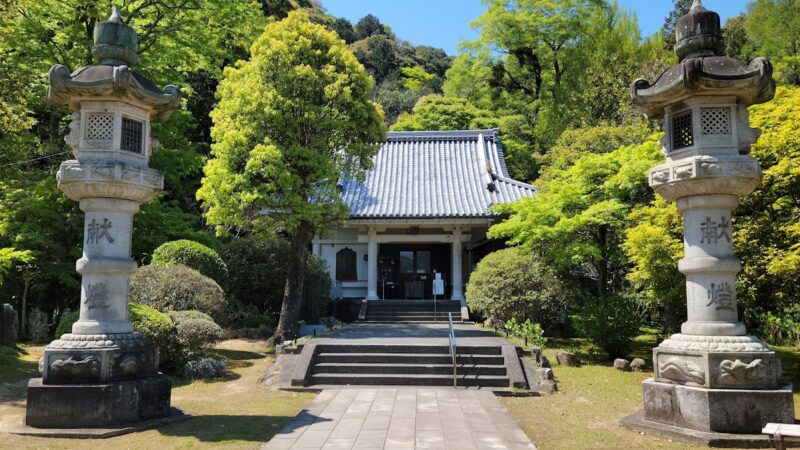
After passing through the torii gate, you will see the Maiden directly ahead. This Maiden also serves as the worship hall, and worshippers can first offer their prayers here.
Every year during the October festival, the traditional Sanbaso dance is performed in this Maiden. It remains a cherished place for preserving and passing on local culture.
Stone Steps to the Main Shrine and the Main Shrine
Behind the Maiden are steep stone steps leading to the main shrine. The main shrine is located at the top of these steps, offering a more sacred space for worship.
There are two theories regarding the current main hall: one suggests it was built in 1597 by Naito Nobunari, the lord of Nirayama Castle, and the other suggests it was built in 1632 by Sakakibara Teruhisa, who served Tokugawa Ieyasu and later became the chief priest of Kunozan Toshogu Shrine. In any case, it is an early Edo period building and a shrine of great historical value.
The stone steps are steep, but we highly recommend climbing them to visit the main hall. The view from the hilltop is magnificent, offering a panoramic view of the Hojo region.
Location in relation to Ganjoju-in Temple
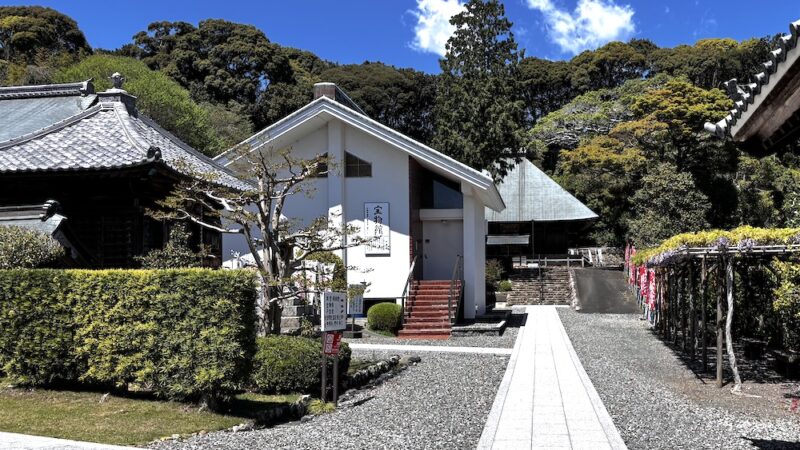
Moriyama Hachimangu Shrine is located on the mountainside of Moriyama, behind Ganjoju-in Temple, a famous temple associated with the Hojo clan. Ganjoju-in Temple was built by Hojo Tokimasa and is an important cultural property housing numerous national treasure Buddhist statues.
Visiting both together allows for a deeper understanding of the historical flow from Minamoto no Yoritomo’s uprising to the establishment of the Kamakura Shogunate and the prosperity of the Hojo clan. ## Moriyama Hachimangu Shrine and Ashikaga Masatomo, the Horikoshi Shogun
Tradition remains that Moriyama Hachimangu Shrine was revered not only by Minamoto no Yoritomo but also by Ashikaga Masatomo, the Horikoshi Shogun of the Muromachi period.
Ashikaga Masatomo was the half-brother of Ashikaga Yoshimasa, the 8th Shogun of the Muromachi Shogunate, and resided at the Horikoshi Palace in Nirayama, Izu Province, as the Kanto Kanrei (governor of the Kanto region). Moriyama Hachimangu Shrine, which enshrines the guardian deity of the Minamoto clan, was an important object of worship for the Ashikaga clan as well.
Thus, Moriyama Hachimangu Shrine has a history of being revered for generations by samurai families descended from the Minamoto clan.
Goshuin (Shrine Seal) Information
Goshuin are available at Moriyama Hachimangu Shrine. Many people receive a goshuin as a memento of their visit and as proof of their connection to the shrine.
Goshuin are usually given out at the shrine office, but since staff may be absent, it is recommended to contact them in advance if you wish to be sure to receive a goshuin.
The offering fee is the same as at most shrines; it’s a donation based on your feelings. If you don’t already have a goshuincho (stamp book), this might be a good opportunity to start collecting new ones.
Annual Festivals and Events
Moriyama Hachimangu Shrine holds various festivals and events throughout the year.
Annual Festival (October)
The annual festival, held every October, is the most important annual event at Moriyama Hachimangu Shrine. During this festival, the traditional performing art of Sanbaso is performed in the dance hall.
Sanbaso is a type of Noh dance, known as an auspicious dance praying for a bountiful harvest and peace throughout the land. Many worshippers and locals gather for this valuable opportunity to preserve and pass on the region’s traditional culture.
Other Festivals
In addition to the New Year’s Day festival, seasonal festivals are held throughout the year. Especially during the New Year’s first shrine visit, the shrine is bustling with worshippers praying for the achievement of their goals and good fortune in the coming year, as it is the shrine where Minamoto no Yoritomo prayed for the raising of his army.
Access Information
Location
Address: Jike, Izunokuni City, Shizuoka Prefecture
Moriyama Hachimangu Shrine is located behind Ganjoju-in Temple in the Hojo district of Izunokuni City.
Access by Train
Nearest Station: Nirayama Station, Izuhakone Railway Sunzu Line
It’s about a 15-20 minute walk from Nirayama Station. It’s easiest to head towards Hojo and Ganjoju-in Temple after leaving the station. Moriyama Hachimangu Shrine is located on the mountainside of Moriyama, behind Ganjoju-in Temple.
Taking a leisurely stroll through this historical village is another way to enjoy this region.
Access by Car
Tomei Expressway: Approximately 30 minutes from Numazu IC
Shin-Tomei Expressway: Approximately 30 minutes from Nagaizumi-Numazu IC
Access is even more convenient using the Izu Jukan Expressway.
Parking is available at the Ganjojuin Temple parking lot. However, on days when congestion is expected, such as during festivals, we recommend using public transportation.
Nearby Tourist Attractions
Near Moriyama Hachimangu Shrine, there are many tourist attractions representative of Izunokuni City.
- Ganjoju-in Temple: An ancient temple associated with the Hojo clan, housing a national treasure Buddhist statue.
- Nirayama Reverberatory Furnace: A late Edo period industrial heritage site registered as a World Heritage Site.
- Egawa Residence: A magistrate’s residence designated as a nationally important cultural property.
- Hojo-ji Temple: A temple associated with Hojo Yoshitoki.
- Hiruga-kojima Island: The site of Minamoto no Yoritomo’s exile.
By visiting these spots together, you can gain a deep understanding of the history of Izu, which played a crucial role in Japanese history from the Genpei War to the Kamakura period and even to the end of the Edo period.
Manners and Points for Visiting a Shrine
Basic Etiquette for Visiting a Shrine
- Bow before entering the shrine grounds after bowing at the torii gate.
- Purify your hands and mouth at the temizuya (water basin) (if available).
- Pray at the dance hall (haiden) using the two bows, two claps, and one bow ritual.
- Climb the stone steps to the main shrine and pray in the same manner.
- When leaving, turn around and bow after exiting the torii gate.
Best Season for Visiting a Shrine
Moriyama Hachimangu Shrine can be visited throughout the year, but there are particularly recommended times.
Spring (March-May): The fresh greenery is beautiful, and the weather is mild, making it ideal for visiting.
Autumn (October-November): October, when the annual festival is held, offers a rare opportunity to witness the Sanbaso performance. The autumn foliage also provides beautiful scenery.
Summer (June-August): The period around August 15th, the day Minamoto no Yoritomo raised his army, holds special significance for history buffs.
Winter (December-February): The shrine is bustling with many visitors during the New Year’s pilgrimage. It’s the perfect time to pray for the achievement of your New Year’s goals.
Regarding Photography
Photography is generally permitted within the shrine grounds, but there are areas and times where photography is restricted, such as inside the main hall or during religious ceremonies. If unsure, please check with the shrine office.
Also, please be mindful of other visitors and observe proper etiquette when taking photos.
Summary of Moriyama Hachimangu Shrine’s Charms
Moriyama Hachimangu Shrine is not merely a tourist spot; it is a sacred site marking a crucial turning point in Japanese history: the rebellion of Minamoto no Yoritomo. With a history spanning over 1300 years, this shrine, dedicated to Hachiman, the guardian deity of the Minamoto clan, has been revered by many worshippers seeking military success, victory, and career advancement. The shrine grounds offer plenty to see, from the steep stone steps leading to the main hall, to the traditional performances at the dance hall, and the monument commemorating Minamoto no Yoritomo’s uprising. Visiting the surrounding historical sites, including Ganjoju-in Temple, allows you to experience the flow of history from the Genpei War to the establishment of the Kamakura Shogunate.
When you visit Izunokuni City, be sure to pay your respects at Moriyama Hachimangu Shrine and feel the spirit of Japanese history at this place where Minamoto no Yoritomo prayed for the defeat of the Taira clan. It will be a sacred place that offers special strength to those embarking on new challenges or hoping to achieve their goals.
Moriyama Hachimangu Shrine sits quietly on the slopes of Mt. Moriyama in Izunokuni City, Shizuoka Prefecture. Knowing its history and divine virtues will give your visit a deeper meaning. Why not take your own new step at this place where Minamoto no Yoritomo took his first step towards achieving his long-cherished wish?