Kofuku-ji Temple’s East Golden Hall | A National Treasure Building and a Nara Temple Enshrining Yakushi Nyorai
The Kofuku-ji Temple’s East Golden Hall (Tokondo) is a National Treasure building located within the grounds of Kofuku-ji Temple in Nara City, Nara Prefecture. With Yakushi Nyorai as its principal deity, it attracts many visitors with its history dating back to the Nara period and its collection of precious Buddhist statues.
History of the East Golden Hall
Founding and Transformations
The East Golden Hall was founded in 726 AD by Emperor Shomu to pray for the recovery of his aunt, Empress Gensho, from illness. Initially called “Yakushi Kondo” (Yakushi Golden Hall), it enshrined Yakushi Nyorai as its principal deity.
Subsequently, it was repeatedly destroyed and rebuilt due to fires. The current building was rebuilt in 1415 AD and, as a valuable relic that preserves the architectural style of the Muromachi period, it was designated a National Treasure in 1952.
Architectural Features
The East Golden Hall is a seven-bay, four-bay hip-roofed building with a tiled roof. A mokoshi (a type of veranda) is built on the front, giving it a dignified appearance. The interior features a central altar, employing a typical Golden Hall style with the Yakushi Triad at the center and other Buddha statues arranged around it.
Enshrined Buddha Statues
Principal Image: Seated Yakushi Nyorai Statue (Important Cultural Property)
The principal image enshrined on the central altar is a bronze seated statue of Yakushi Nyorai. It is believed to be a work from the Hakuhō period (late 7th century), and its total height, including the pedestal, reaches approximately 255 cm. It is characterized by its gentle expression and well-proportioned physique, strongly retaining the Buddhist statue style of the Asuka and Hakuhō periods.
Standing Nikko and Gekko Bodhisattva Statues (Important Cultural Property)
Nikko Bodhisattva and Gekko Bodhisattva stand on either side of Yakushi Nyorai as attendant bodhisattvas. All are early Heian period works, and their elegant wooden forms enhance the beauty of the Yakushi Nyorai (Medicine Buddha).
Standing Statues of the Four Heavenly Kings (National Treasure)
At the four corners of the altar are standing statues of the Four Heavenly Kings, believed to be the work of Unkei and his school. Characterized by the powerful form of the Kei school of Buddhist sculptors from the Kamakura period, Jikokuten, Zochoten, Komokuten, and Tamonten each stand trampling on evil spirits, protecting the Buddhist teachings.
In particular, Jikokuten and Zochoten are said to be the work of Koben, Unkei’s son, and are notable for their realistic expression and dynamic postures.
Standing Statues of the Twelve Divine Generals (National Treasure)
The Twelve Divine Generals, who protect the Yakushi Nyorai, are also enshrined here. Created during the Kamakura period, each represents one of the twelve zodiac signs, and are characterized by their unique expressions and dynamic postures. The figure, clad in armor and wielding weapons, is incredibly impressive and highly regarded as a masterpiece of Kamakura-period sculpture.
Points to Note During Your Visit
Flow of Your Visit
- Entering the Hall: Located on the east side of the Central Golden Hall within the Kofuku-ji Temple grounds. Pay the entrance fee and enter the hall.
- Central Altar: First, view the main image, the seated statue of Yakushi Nyorai (Medicine Buddha), from the front.
- Four Heavenly Kings Statues: While walking around the altar, observe the expressions and postures of the Four Heavenly Kings guarding the four directions.
- Twelve Divine Generals: Pay attention to their unique expressions and possessions.
- Architectural Beauty: The structure of the ceiling and pillars inside the hall is also a highlight.
Photography
Photography is prohibited inside the hall. Please take your time to appreciate the sights. Photography of the exterior is permitted, but please be considerate of other visitors.
Recommended Time to Visit
The temple is relatively uncrowded right after opening in the morning (around 9:00 AM), allowing for a peaceful visit. The time just before closing in the evening is also a calm and peaceful time for worship.
Benefits and Faith
Healing from Illness and Prayer for Good Health
The principal image of the East Golden Hall, Yakushi Nyorai (Medicine Buddha), is worshipped as a Buddha who heals illnesses and brings good health. Given that the temple was founded to pray for the recovery of Empress Gensho from illness, it has been known for its blessings of healing since ancient times.
Protection from Evil and Disaster
The Four Heavenly Kings and Twelve Divine Generals are believed to ward off evil spirits and protect against disaster. Many people in their unlucky years or those facing turning points in their lives visit the temple.
Faith for Worldly Benefits
Yakushi Nyorai has attracted worshippers seeking happiness in this world as a Buddha of “worldly benefits.” Visitors constantly come to pray for peace and tranquility in daily life, such as health and longevity, family safety, and business prosperity.
Access and Visiting Information
Location
48 Noborioji-cho, Nara City, Nara Prefecture 630-8213, within the grounds of Kofuku-ji Temple
Transportation Access
By Train
- Approximately 5 minutes on foot from Kintetsu Nara Station (east from the east ticket gate)
- Approximately 15 minutes on foot from JR Nara Station, or immediately after getting off at “Kencho-mae” (Prefectural Office) bus stop on the city loop bus
By Car
- Approximately 15 minutes from the Horai IC on the Daini-Hanna Expressway
- Parking: Kofuku-ji Temple does not have its own parking lot, so please use nearby paid parking lots (e.g., Nara Prefectural Noborioji Parking Lot)
Visiting Hours and Admission Fee
Visiting Hours
- 9:00 AM to 5:00 PM (Last entry 4:45 PM)
- Open all year round
Admission Fee (as of 2024)
- East Golden Hall (single entry): Adults 300 yen, Junior/Senior High School Students 200 yen, Elementary School Students 100 yen
- Combined ticket with National Treasure Museum: Adults 900 yen, Junior/Senior High School Students 700 yen, Elementary School Students 350 yen
- Combined ticket for Central Golden Hall, East Golden Hall, and National Treasure Museum: Adults 1,200 yen, Junior/Senior High School Students 1,000 yen, Elementary School Students 500 yen
*Prices are subject to change. Please check the official website for the latest information.
Nearby Attractions
- Chūkondō: The central hall of Kōfuku-ji Temple, rebuilt in 2018 (1-minute walk)
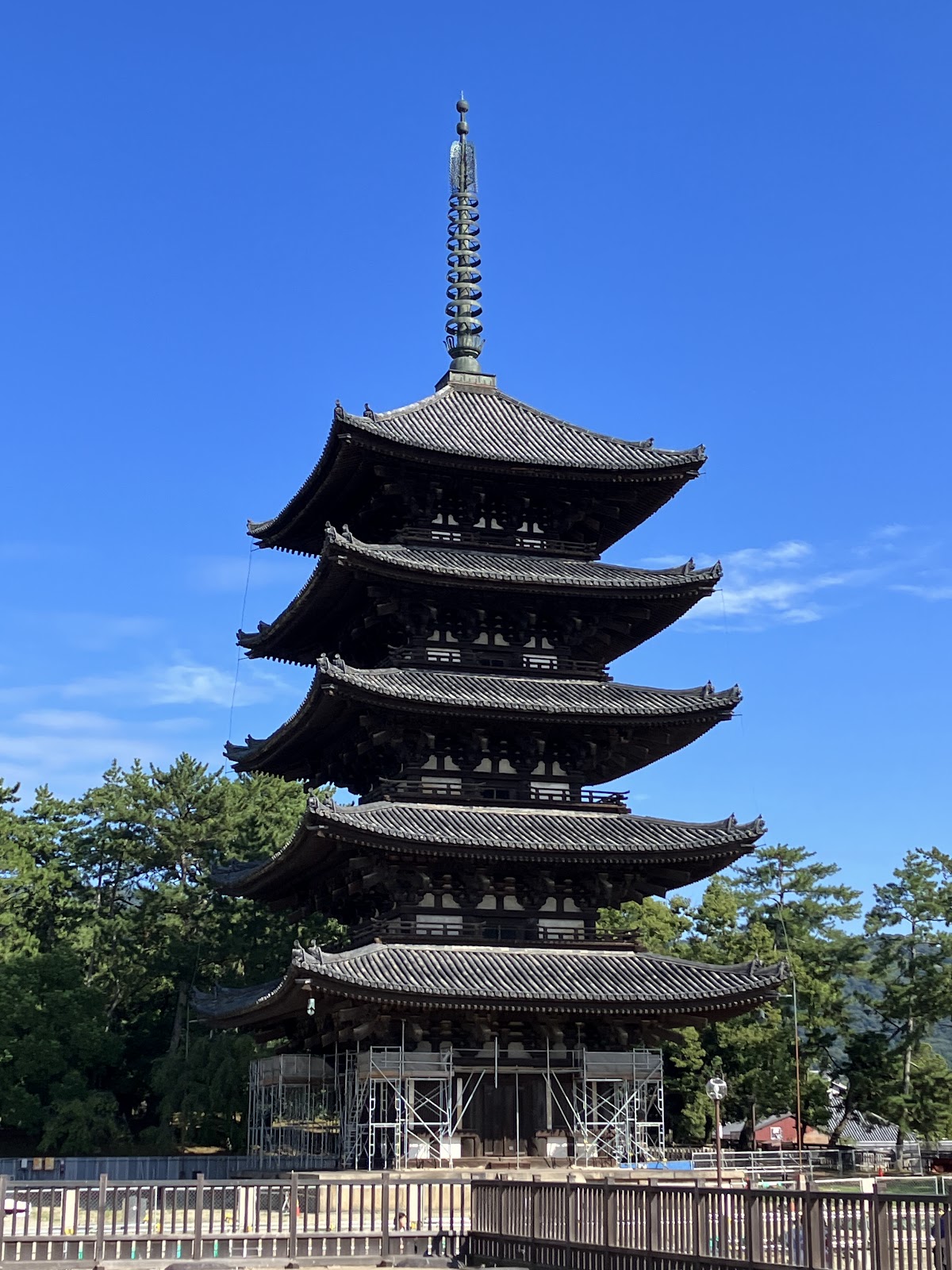
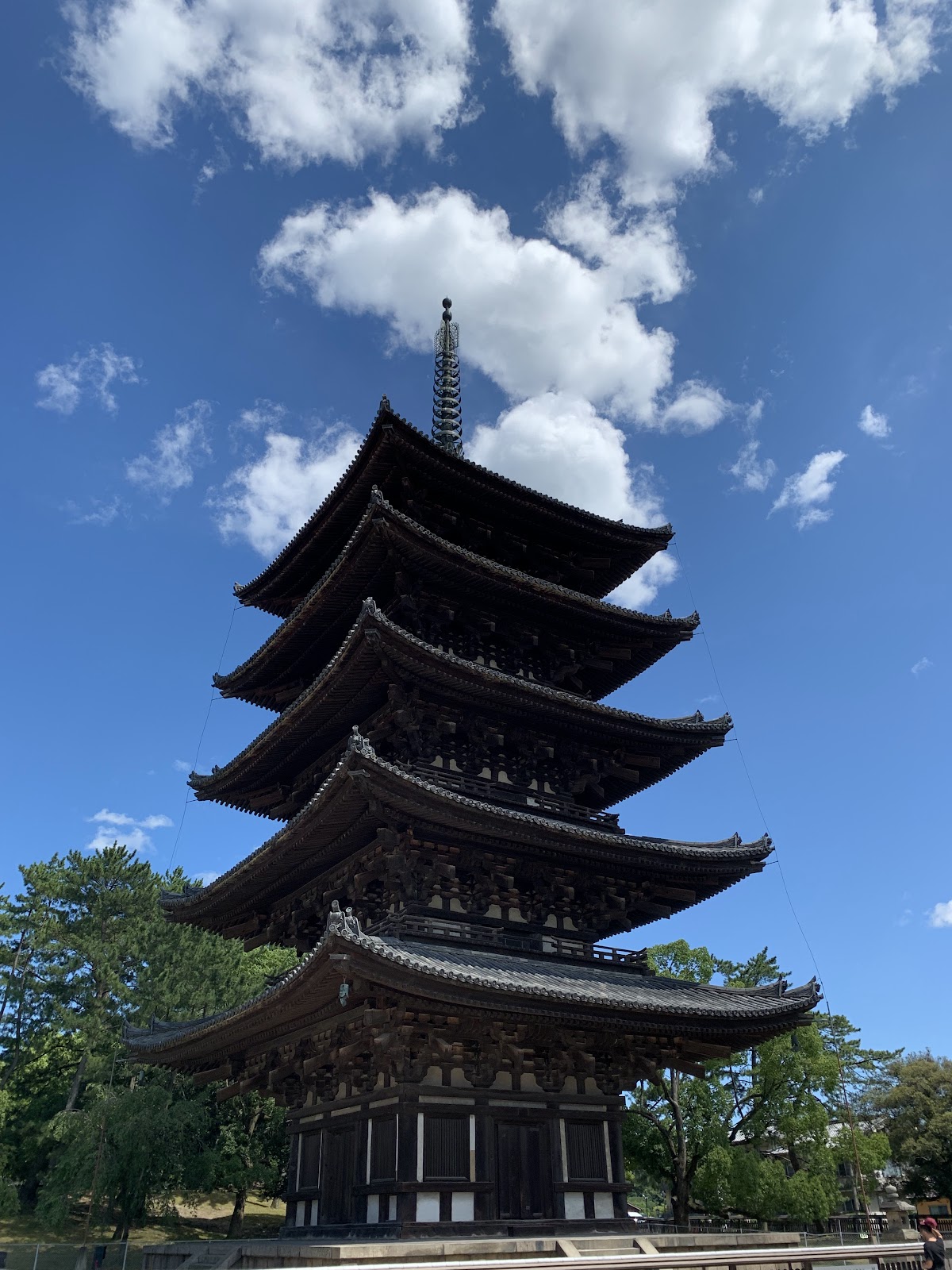
- Gojū-no-tō: A national treasure and symbol of Nara (2-minute walk)
- Kokuhōkan: Exhibits treasures of Kōfuku-ji Temple, including the Ashura statue (3-minute walk)
- Nara Park: A vast park where you can interact with deer (immediately adjacent)
- Tōdai-ji: A World Heritage Site famous for its Great Buddha (15-minute walk)
Annual Events
Shūshō-e (New Year’s Ceremony)
A New Year’s service held annually from January 1st to 3rd. Prayers are offered for national peace and a bountiful harvest.
Yakushi Keka (Medicine Buddha Repentance)
A service held annually on October 8th in front of the Yakushi Nyorai (Medicine Buddha), where sins are repented and prayers for recovery from illness are offered. General visitors are welcome to attend.
Summary
Kofuku-ji Temple’s East Golden Hall is a National Treasure building with a history of nearly 1300 years. It is an important hall housing a precious collection of Buddhist statues, centered around Yakushi Nyorai (Medicine Buddha). It is a must-see spot not only for those seeking healing from illness, but also for anyone interested in Japanese Buddhist art.
When strolling through Nara Park, be sure to visit the East Golden Hall and spend some time immersed in history and art in this tranquil space.