Complete Guide to Kawaguchi Shrine | Thorough Explanation of Goshuin (Shrine Seals), Prayers, Access, and History
Located in the heart of Kawaguchi City, Saitama Prefecture, Kawaguchi Shrine is a historic shrine said to have been founded during the Tenkei era (around 940 AD). Formerly known as “Hikawa Shrine” or “Hikawa Daimyojin,” it has been cherished by the local people as the guardian shrine of Kawaguchi City. This article comprehensively introduces information useful for visiting Kawaguchi Shrine, including its history, enshrined deities and their blessings, details of prayers, annual events, and access methods.
History and Origins of Kawaguchi Shrine
From Founding to the Hikawa Shrine Era
Kawaguchi Shrine is said to have been founded during the Tenkei era (around 940 AD). Unfortunately, detailed records of its founding were lost due to flooding of the Arakawa River. However, a stone monument from the second year of the Ryakuō era (1339) and ancient divine statues from the early Muromachi period still exist, proving the long-standing existence of a shrine in this area.
Originally known as “Hikawa Shrine,” it was deeply revered by the lord and residents of Kawaguchi Town as the town’s guardian deity. During the Edo period, it was known by the honorific title “Hikawa Daimyojin” and played a crucial role as a spiritual pillar of the region.
Merger and Renaming in the Meiji Era
After the Meiji Restoration, with the reform of the shrine system, four shrines in the town, including Kanayama Shrine, were merged. At this time, the shrine’s name was changed to “Kawaguchi Shrine,” marking a new chapter in its history. The incorporation of Kanayama Shrine, which enshrines Kanayamahiko-no-Mikoto, further deepened its connection to the industry of Kawaguchi, a town that prospered as a foundry.
Development in the Showa Era and Promotion to Prefectural Shrine
In 1933, when Kawaguchi Town became a city, Kawaguchi Shrine established its position as the principal guardian shrine of Kawaguchi City. Two years later, in 1935, it was promoted to a Saitama Prefecture shrine, further enhancing its status as a representative shrine of the region.
Currently, the shrine boasts a vast sacred area of approximately 3,000 tsubo (about 10,000 square meters), and its dignified shrine buildings welcome visitors.
Deities and Benefits
Main Deity
Kawaguchi Shrine enshrines several deities, each possessing different divine virtues.
Susanoo-no-Mikoto
A brave deity known in Japanese mythology for slaying Yamata-no-Orochi. He is believed to offer protection from evil, ward off disaster and bring good fortune, and grant blessings for matchmaking, attracting many worshippers.
Ukanomitama-no-Mikoto
A deity of abundant harvests, known as Inari-sama. Offers blessings for business prosperity, industrial development, and family safety.
Ukemochi-no-Mikoto
A deity who presides over food, attracting worshippers who pray for bountiful harvests and food safety.
Kanayamahiko-no-Mikoto
This deity is known as the guardian deity of metalworking and mining. Deeply connected to the history of Kawaguchi City’s development as a foundry town, this deity is revered as the guardian deity of industry.
Main Benefits
The following benefits are believed to be worshipped at Kawaguchi Shrine:
- Protection from Misfortune and Unfavorable Directions: Protection from calamities through the divine virtues of Susanoo-no-Mikoto
- Family Safety and Traffic Safety: Prayers for the health and safety of family members
- Business Prosperity and Industrial Development: Prosperity of business through Ukanomitama-no-Mikoto and Kanayamahiko-no-Mikoto
- Safe Childbirth and Child-Rearing: Watching over the health and growth of mother and child
- Matchmaking: Benefits for successful relationships
- Abundant Harvest: Prayers for abundant harvests through Uke-mochi-no-Mikoto
About Prayers and Sorrows
Types of Prayers
Kawaguchi Shrine accepts various prayers to suit life’s milestones and daily wishes.
Life Rituals
- Prayer for Safe Childbirth: Generally performed on the Day of the Dog in the 5th month of pregnancy.
- First Shrine Visit (Omiyamairi): Praying for the healthy growth of a baby around 1 month after birth.
- Shichi-Go-San: Celebrating the growth of children at ages 3, 5, and 7, and praying for their future health.
- Exorcism: Praying for protection from misfortune and good fortune for those entering their unlucky year.
Daily Prayers
- Family Safety: Praying for the health and peaceful life of all family members.
- Traffic Safety: Blessing of cars and motorcycles, and prayers for safe driving.
- Business Prosperity: Praying for the development and prosperity of business.
- Recovery from Illness: Praying for recovery from illness and recovery of health.
- Prayer for Success in Exams: Praying for success in exams and qualification tests.
- Protection from Directional Misfortune: Removing misfortune related to direction during moving or travel.
Prayer Reception Hours and Reservation Method
Reception Hours
- Morning: 9:00 AM – 12:00 PM
- Afternoon: 1:00 PM – 4:00 PM
Reservation Method
We request that you make a reservation by phone in advance for prayers.
- Phone Number: 048-222-2342
While same-day registration is possible, there may be a waiting time, so we recommend making a reservation in advance. Especially during the Shichi-Go-San season (October-November) and the beginning of the year, congestion is expected, so early reservations are recommended.
Estimated Offering Fee (Prayer Fee)
The offering fee for prayers varies depending on the content of the prayer. Please contact the shrine directly for details. While many shrines generally start from 5,000 yen, we recommend confirming the exact amount at Kawaguchi Shrine in advance.
Shrine Office and Items
Shrine Office Hours
- Morning: 9:00 AM – 12:00 PM
- Afternoon: 1:00 PM – 5:00 PM
Main Items Available
Amulets
- Exorcism Amulet: For those in their unlucky year or those seeking protection from misfortune
- Traffic Safety Amulet: A traffic safety amulet to carry in your car or on your motorcycle
- Academic Success Amulet: For students taking exams or those wishing for academic improvement
- Safe Childbirth Amulet: For pregnant women praying for a safe delivery
- Matchmaking Amulet: For those seeking a good match
- Business Prosperity Amulet: For those wishing for business prosperity
Goshuin (Shrine Seal)
Kawaguchi Shrine offers Goshuin. Please inform the shrine office if you have a Goshuincho (stamp book). Goshuincho are also available for purchase for first-time visitors.
Hama-ya (Exorcism Arrow) and Kumade (Rake)
During the New Year and Tori-no-ichi festivals, Hama-ya (exorcism arrows) for good fortune and kumade (rakes) for business prosperity are also given out.
Annual Festivals and Events
Kawaguchi Shrine holds various festivals and events throughout the year.
Main Annual Events
Kinensai (February 17th)
A grand spring festival praying for a bountiful harvest and the development of industry for the year.
Heiwa Kigansai (Prayer for Peace Festival) (Second Saturday of April)
A festival praying for world peace and the tranquility of the region.
Kanayama-sai (Kanayama-hiko Festival) (Second Saturday of May)
A festival dedicated to Kanayama-hiko-no-mikoto, praying for the prosperity of Kawaguchi’s foundry industry and the development of industry. It is an important festival symbolizing the history of Kawaguchi’s thriving history as a town of foundries.
Reitaisai (Grand Festival) (October 19th and 20th)
The most important annual event at Kawaguchi Shrine. The portable shrine procession and offering ceremonies take place, attracting many worshippers.
Niiname-sai (November 23rd)
This festival expresses gratitude for the autumn harvest and offers new grain to the gods. It coincides with Labor Thanksgiving Day, and also expresses gratitude to working people.
Okame-ichi (December 15th)
This is the largest festival at Kawaguchi Shrine, marking the end of the year, also known as the “Great Year-End Festival.” Over 600 stalls line the shrine grounds and surrounding area, creating a lively atmosphere with New Year’s goods, lucky charms, and food stalls. It is the largest festival in Kawaguchi City and is beloved by the citizens, attracting many visitors every year.
Highlights of the Shrine Grounds
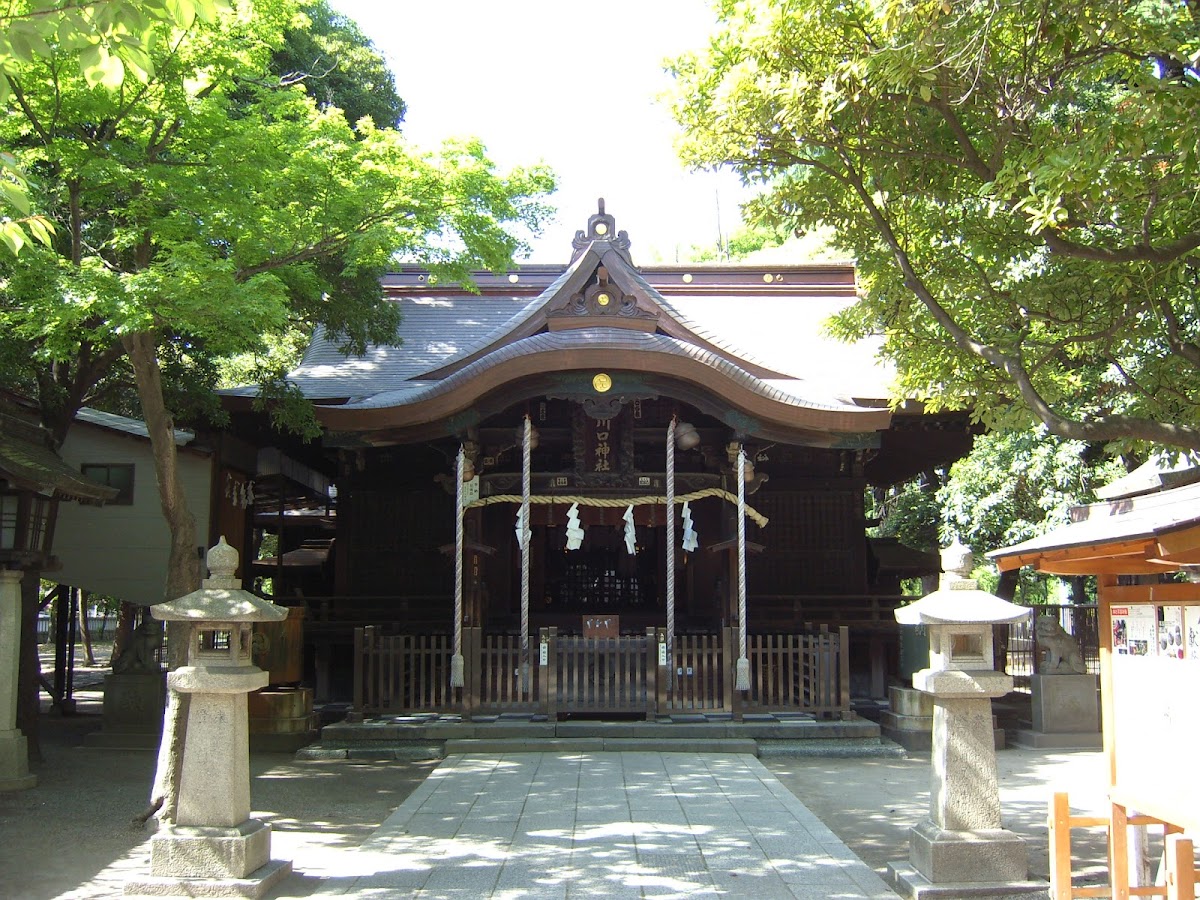
Main Hall and Worship Hall
The dignified shrine buildings are the heart of Kawaguchi Shrine. When praying, please follow the proper etiquette of two bows, two claps, and one bow.
Shrines within the Precincts
Within the grounds of Kawaguchi Shrine, there are eight smaller shrines, each dedicated to a different deity. After visiting the main shrine, we recommend visiting these smaller shrines as well.
Asama Shrine
Located at the foot of the Fujizuka (miniature Mount Fuji) within the grounds, Asama Shrine enshrines Konohanasakuya-hime and is a place of worship for safe childbirth and child-rearing.
Fujizuka
A Fujizuka, built during the Edo period, remains on the shrine grounds. It was believed that people unable to climb Mount Fuji could receive the same blessings by climbing this mound. As a historically valuable structure, it also holds cultural significance for Kawaguchi City.
Nature of the Sacred Grounds
Despite being in an urban area, the vast sacred grounds, covering approximately 3,000 tsubo (about 10,000 square meters), retain abundant greenery. The trees within the grounds, displaying different appearances with each season, provide tranquility to visitors.
Access and Parking Information
Basic Information
Address
6-15 Kanayama-cho, Kawaguchi City, Saitama Prefecture 332-0014
Phone Number
048-222-2342
Access by Train
From JR Keihin-Tohoku Line “Kawaguchi Station”
- 7-8 minute walk from the East Exit
- Proceed along Honmachi Avenue; it is located behind the Central Police Box
- It is close to the station and very convenient to access
Access by Car and Parking
Kawaguchi Shrine has a parking lot for visitors. However, congestion is expected during major festivals such as the annual festival and Okame Market, so we recommend using public transportation.
For details on parking (number of spaces, operating hours, etc.), please contact the shrine in advance.
Landmarks in the vicinity
- Along Honmachi Avenue from Kawaguchi Station East Exit
- Behind Kawaguchi Central Police Box
- Conveniently located near Kawaguchi City Hall
About the Kawaguchi Nine Shrines Pilgrimage (Magatama Pilgrimage)
Kawaguchi Shrine participates as one of the shrines in the “Kawaguchi Nine Shrines Pilgrimage (Magatama Pilgrimage).” This is a pilgrimage to collect Goshuin (shrine stamps) from nine shrines in Kawaguchi City, a project to pray for “purification and regeneration of life (spirit)” through the blessings of the nine shrines.
Magatama (comma-shaped beads) have been considered important as ritual objects and ornaments since the time of Japanese mythology, and are also counted as one of the “Three Sacred Treasures” (Yasakani no Magatama) passed down through generations of Emperors. By visiting the nine shrines, you can receive different blessings from each shrine.
If you are interested in visiting shrines in Kawaguchi City, why not start at Kawaguchi Shrine and visit the other eight shrines as well?
Manners and Etiquette for Visiting a Shrine
Basic Etiquette for Visiting a Shrine
- Bow before passing through the torii gate: This is a courtesy when entering the sacred area.
- Purify yourself at the water basin: Purify your left hand, right hand, and mouth in that order.
- Walk along the edge of the path: The center is considered the path of the gods.
- Etiquette in front of the main hall: Two bows, two claps, and one bow are the basics.
Regarding Attire
While everyday clothes are acceptable for visiting a shrine, please keep the following in mind if you are receiving prayers:
- Clean and presentable attire
- For occasions such as Shichi-Go-San (7-5-3) or Hatsumiyamairi (first shrine visit), formal attire for children and semi-formal attire for parents are common.
- Avoid extremely revealing or overly flashy clothing.
Regarding Photography
Photography is generally permitted on the shrine grounds, but please note the following:
- Do not take photographs in areas where photography is prohibited, such as inside the main shrine.
- During festivals, be considerate so as not to disrupt the religious ceremonies.
- Remember to be considerate of other worshippers.
The Charm of Kawaguchi Shrine and its Connection to the Community
As the Guardian Shrine of Kawaguchi City
Kawaguchi Shrine serves as the guardian shrine of Kawaguchi City, a spiritual anchor for its citizens. Many citizens visit the shrine to offer prayers to the gods during important life events such as New Year’s visits, Shichi-Go-San (a traditional rite of passage for children), and exorcisms.
Connection to the Foundry Town
Kawaguchi City has flourished as a foundry town since the Edo period. Kawaguchi Shrine, which enshrines Kanayamahiko-no-Mikoto, is deeply connected to this industry, and the Kanayama Festival prays for the prosperity of local industries, including the foundry industry.
Center of the Community
Festivals such as the Okame Market and the Grand Festival provide valuable opportunities for local residents to gather. They also play a role in deepening community bonds as a place for intergenerational exchange.
Nearby Tourist Attractions
When visiting Kawaguchi Shrine, why not explore the surrounding tourist attractions as well?
Around Kawaguchi Station
- Kawaguchi Station Shopping Street: Enjoy the local atmosphere in this old-fashioned shopping street.
- Cupola: A large commercial complex in front of Kawaguchi Station.
Cultural Facilities in Kawaguchi City
- Kawaguchi City Cultural Hall: A cultural hub where various performances are held.
- Kawaguchi General Cultural Center Lilia: A multi-purpose facility equipped with a concert hall and library.
Other Shrines and Temples
Visiting other shrines participating in the Kawaguchi Nine Shrine Pilgrimage, as well as temples in the city, is also recommended.
Summary
Kawaguchi Shrine is a representative shrine of Kawaguchi City, with a history of over 1000 years since its founding around 940 AD. This shrine enshrines multiple deities: Susanoo-no-Mikoto, Ukanomitama-no-Mikoto, Ukemochi-no-Mikoto, and Kanayamahiko-no-Mikoto. It is believed to offer various blessings, including protection from evil, family safety, business prosperity, and safe childbirth.
The vast grounds, spanning approximately 3,000 tsubo (about 10,000 square meters), feature a dignified shrine building, a miniature Mount Fuji dating back to the Edo period, and eight smaller shrines, offering numerous points of interest. Throughout the year, various events are held, including the Kinensai (harvest festival), Kanayamasai (golden mountain festival), Reitaisai (grand festival), and Okameichi (Okame market). The Okameichi on December 15th, in particular, is one of Kawaguchi City’s largest festivals, attracting large crowds.
The shrine boasts a convenient location, just a 7-8 minute walk from JR Kawaguchi Station. Prayers are available by prior reservation (telephone 048-222-2342) from 9:00 AM to 4:00 PM. The shrine office offers Goshuin (stamped seals) and amulets until 5:00 PM.
From prayers for life’s milestones to daily expressions of gratitude, Kawaguchi Shrine will continue to warmly welcome many visitors as a spiritual haven for the people of the region. When you visit Kawaguchi City, be sure to stop by Kawaguchi Shrine.