Complete Guide to Kenpuku-ji Temple | Exploring the History Related to the Takeda Family and the Stone Buddha Statues of Takato Stonemasons
Kenpuku-ji Temple, located in Nishitakato, Takato-machi, Ina City, Nagano Prefecture, is a Rinzai Zen temple of the Myoshin-ji school, deeply rooted in history as the family temple of the Takeda family and the Hoshina clan, the lords of the Takato domain. The impressive collection of stone Buddha statues created by Takato stonemasons within the temple grounds continues to fascinate many visitors and history enthusiasts, earning it the nickname “Temple of Stone Buddhas.”
This article provides a detailed explanation of Kenpuku-ji Temple’s history from its founding to the present day, its valuable cultural assets including those of Suwa Goryonin, the mother of Takeda Katsuyori, and the artistic legacy of Takato stonemasons.
About Kenpuku-ji Temple
Kenpuku-ji Temple is a Zen Buddhist temple belonging to the Myoshin-ji school of the Rinzai sect, officially known as “Hokomochi-yama Kenpuku-ji.” Located in Takato, overlooking the Ina Valley, it preserves numerous historical artifacts from the Sengoku period to the Edo period. ### Location and Basic Information
Location: Nishitakato, Takato-machi, Ina City, Nagano Prefecture
Sect: Rinzai Zen Myoshinji School
Mountain Name: Hokomochi-yama
Principal Image: Shakyamuni Buddha
Kenfuku-ji Temple is located near Takato Castle Ruins Park and is positioned as an important spot for exploring the history of Takato. Many tourists visit in conjunction with Takato Castle Ruins Park, known for its cherry blossoms, in spring, making it a location where history and nature can be enjoyed simultaneously.
History of Kenfuku-ji Temple
The history of Kenfuku-ji Temple dates back to the Kamakura period and has undergone numerous changes to reach its current form.
Founding Legend
According to legend, Kenfuku-ji Temple was founded by Monk Mongaku (1139-1203) near Tokkoike Pond. Monk Mongaku was a Shingon Buddhist monk who was active from the late Heian period to the early Kamakura period, and is known for his deep connection with Minamoto no Yoritomo.
Restoration in the Kamakura Period
In 1256 (Kogen 1), Rankei Dōryū (also known as Daikaku Zenji), a Zen monk who came to Japan from the Southern Song dynasty of China, stopped in this area and founded “Hokomochi-san Kenfuku Kōkoku Zenji.” Rankei Dōryū is a highly respected monk also known as the founder of Kenchō-ji Temple in Kamakura, and he greatly contributed to the development of Rinzai Zen in Japan.
During this period, the foundation of the temple as a Zen Buddhist temple was established, and thereafter, Kenfuku-ji Temple developed into an important center of Zen Buddhism in Shinano Province.
Deep Connections with the Takeda Family
During the Sengoku period, Kenfuku-ji Temple developed deep connections with the Takeda family, a powerful daimyo family of Kai Province. The connection to Suwa Goryōnin, a concubine of Takeda Shingen and mother of Takeda Katsuyori, holds particular significance in the history of Kenfuku-ji Temple.
Suwa Goryōnin was from the Suwa clan and became Shingen’s concubine when he conquered Suwa. She is said to have died young after giving birth to Katsuyori, and her tomb is located at Kenfuku-ji Temple. This tomb is a valuable historical site associated with the Takeda family and is carefully preserved to this day.
Even after the fall of the Takeda family, Kenfuku-ji Temple continued to function as a temple for the repose of the Takeda family’s souls.
Relationship with the Hoshina Clan during the Edo Period
During the Edo period, Kenfuku-ji Temple also took on the role of a family temple for the Hoshina clan, the lords of the Takatō Domain. The Hoshina clan was a lineage descended from Hoshina Masanao, the half-brother of Tokugawa Ieyasu, and ruled the Takatō Domain with a 30,000 koku (unit of rice production) yield.
Kenfuku-ji Temple houses the graves of Hoshina Masanao and Hoshina Masamitsu, and was carefully protected as the family temple of the feudal lord’s family. Under the patronage of the Hoshina clan, the temple complex was developed, and many cultural artifacts were accumulated.
Cultural Artifacts of Kenfuku-ji Temple
Kenfuku-ji Temple preserves a diverse range of cultural artifacts, including historical relics related to the Takeda family and the Hoshina clan, as well as a group of stone Buddha statues created by Takato stonemasons.
Grave and Memorial Tablet of Suwa Goryōnin, Mother of Takeda Katsuyori
One of the most noteworthy cultural artifacts at Kenfuku-ji Temple is the grave and memorial tablet of Suwa Goryōnin, the mother of Takeda Katsuyori.
Suwa Goryōnin was the daughter of Suwa Yorishige, became a concubine of Takeda Shingen, and gave birth to Katsuyori, who would later inherit the Takeda family. Her grave stands quietly in a corner of the temple grounds, conveying the tragedy of the Sengoku period to this day.
The memorial tablets are carefully preserved and are valuable resources for studying the history of the Takeda family. While much remains unknown about the life of Lady Suwa, the relics preserved at Kenfuku-ji Temple certainly prove her existence.
The Hoshina Family’s Burial Ground
Kenfuku-ji Temple also houses the burial grounds of the Hoshina family, lords of the Takato Domain. In particular, the graves of Hoshina Masanao and Hoshina Masamitsu are important historical sites that tell the story of the Takato Domain during the Edo period.
Hoshina Masanao was the half-brother of Tokugawa Ieyasu, and Hoshina Masamitsu was the elder brother of Hoshina Masayuki, the founder of the Aizu Matsudaira family; both are historically significant figures. These burial grounds are indispensable legacies for understanding the history of the Takato Domain and its relationship with the Tokugawa family.
The Stone Buddha Statues of Takato Stonemasons
Kenfuku-ji Temple became widely known as the “Temple of Stone Buddha Statues” due to the presence of over 40 stone Buddha statues enshrined on its grounds. These sculptures were created by Moriya Teiji, a master stonemason of Takato, and represent a valuable collection of works showcasing the skill and artistry of Takato stonemasons.
About Takato Stonemasons
The Takato stonemasons were a group of stonemasons who were based in Takato-machi, Ina City, Nagano Prefecture. From the Edo period to the Meiji period, they worked throughout Japan as “traveling craftsmen,” producing numerous stone Buddha statues, stone pagodas, and stone bridges.
The characteristics of Takato stonemasons lie in their superior technical skill and unique stylistic beauty. In particular, their Buddhist sculptures are highly regarded for their soft expressions and realistic depiction of drapery.
Works of Moriya Teiji
Moriya Teiji was one of the leading masters of Takato stonemasons, active from the late Edo period to the early Meiji period. While his works are scattered throughout Japan, there is no other place in Takato where so many of his Buddhist statues can be seen concentrated in one location besides Kenfuku-ji Temple.
The stone Buddha statues at Kenfuku-ji Temple are displayed and preserved on the cliff at the temple entrance, and the sight of 45 statues lined up is breathtaking. Various Buddhist figures, including Kannon Bodhisattva, Jizo Bodhisattva, and Fudo Myoo, are carved, each with intricate expressions and decorations.
Despite being exposed to the elements, the stone Buddhas have watched over worshippers for many years, and their presence possesses a unique dignity and tranquility.
Other Cultural Assets
Besides the above, Kenfuku-ji Temple houses numerous cultural assets, including ancient documents, Buddhist implements, and paintings. Many of these are not open to the public, but they are valuable materials that tell the story of the temple’s long history and cultural accumulation.
Highlights of Kenfuku-ji Temple
Here are some highlights that you should definitely pay attention to when visiting Kenfuku-ji Temple.
Viewing the Stone Buddha Statues
The greatest highlight of Kenfuku-ji Temple is undoubtedly the stone Buddha statues created by Takato stonemason Moriya Sadaji. The stone Buddha statues lining the stone steps each possess a unique expression, captivating the viewer.
The graceful form of the Kannon Bodhisattva statue and the compassionate expression of the Jizo Bodhisattva are particularly noteworthy. Taking your time to appreciate them slowly allows you to feel the high level of stonemasonry and the deep faith in Buddha.
Visiting Historical Sites Related to the Takeda Family
Visiting the tomb of Lady Suwa offers a valuable opportunity to reflect on the history of the Takeda family. Why not quietly offer your prayers while contemplating the life of a woman who lived through the turbulent Sengoku period?
Strolling Through the Temple Grounds
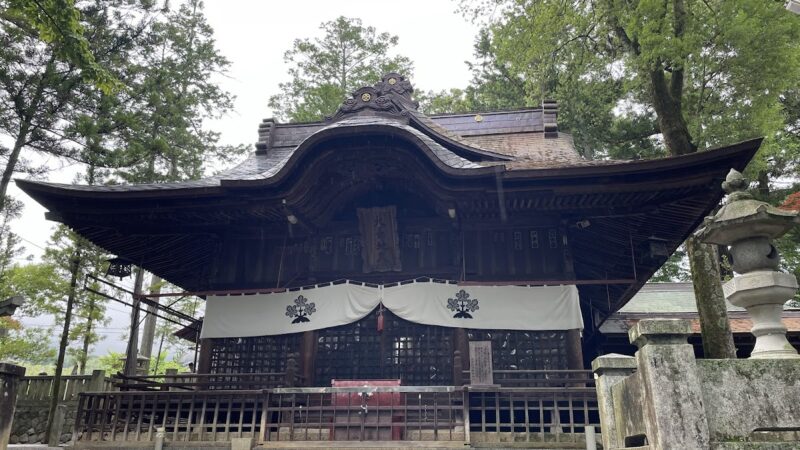
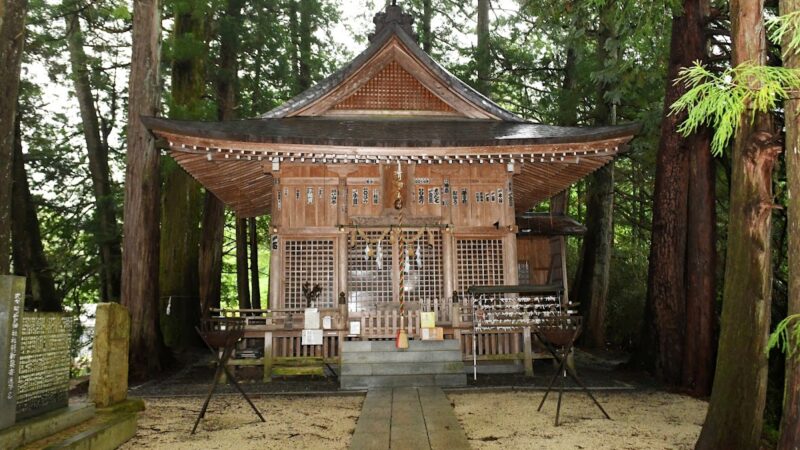
The grounds of Kenfuku-ji Temple are enveloped in a tranquil atmosphere, making it ideal for a peaceful stroll. You can enjoy the simple yet beautiful architecture and landscaping characteristic of Zen temples, including the main hall, temple gate, and gardens.
The changing seasons are also beautiful, especially during the fresh greenery of spring and the vibrant autumn foliage.
Access Information
Here’s how to access Kenfuku-ji Temple. ### Access by Public Transportation
Nearest Station: JR Iida Line “Ina-shi Station”
From Ina-shi Station, take the JR Bus bound for Takato and get off at “Takato Bus Terminal” (approximately 25 minutes). It’s about a 10-minute walk from Takato Bus Terminal to Kenfuku-ji Temple.
Access by Car
From Chuo Expressway “Ina IC”: Approximately 30 minutes
From Chuo Expressway “Suwa IC”: Approximately 50 minutes
There are a few parking spaces on the temple grounds, but it is expected to be crowded during peak tourist seasons such as cherry blossom season. It is also possible to visit on foot using the parking lot at Takato Castle Ruins Park.
Visiting Information
Visiting Hours: Anytime during the day (please inquire in advance for details)
Admission Fee: Voluntary donation
Estimated Time Required: Approximately 30 minutes to 1 hour
If you wish to leisurely appreciate the stone Buddha statues, it is recommended to allow about 1 hour.
Nearby Tourist Attractions
When visiting Kenfuku-ji Temple, exploring the surrounding tourist attractions will allow you to gain a deeper understanding of Takato’s history and culture.
Takato Castle Ruins Park
Takato Castle Ruins Park, within walking distance of Kenfuku-ji Temple, is a famous cherry blossom viewing spot known as “the best cherry blossoms in the world.” In spring, approximately 1,500 Takato Kohigan cherry trees bloom, attracting many visitors from all over Japan.
Takato Castle was a mountain castle said to have been designed by Yamamoto Kansuke, a retainer of Takeda Shingen, and was an important base for the Takeda family. Remains such as earthworks and dry moats remain at the castle site, allowing visitors to imagine the appearance of a mountain castle from the Sengoku period.
Takato Town History Museum
This museum offers a comprehensive learning experience of Takato’s history and culture. It features diverse exhibits, including the history of the Takato domain, works by Takato stonemasons, and the Ejima Enclosed Residence. Visiting before or after your visit to Kenfuku-ji Temple will provide a deeper understanding.
Ejima’s Enclosed Residence
This is the residence where Ejima, exiled to Takato after the “Ejima-Ikushima Incident,” a scandal in the Edo period’s inner palace, was imprisoned. The building has been restored to its original state, offering a glimpse into Edo-period history.
Takato Soba
Takato is also a famous production area for Shinshu soba noodles. “Takato soba” in particular is known for its unique style of being eaten with the juice of spicy radish and grilled miso. After visiting Kenfuku-ji Temple, enjoying the authentic taste at a local soba restaurant is highly recommended.
Points to Note When Visiting Kenfuku-ji Temple
Please note the following points when visiting Kenfuku-ji Temple.
Temple Visiting Manners
Kenfuku-ji Temple is a temple that still functions as a place of worship. Please observe the following manners when visiting.
- Please behave quietly within the temple grounds.
- Photography is only permitted in designated areas.
- Do not touch or climb on the stone Buddha statues.
- Please take all your trash with you.
- Please refrain from eating or drinking inside the main hall.
Clothing and Belongings
- As there are stone steps within the temple grounds, we recommend wearing comfortable shoes.
- In summer, the sun is strong, so a hat or parasol is useful.
- In winter, there is a possibility of snow and ice, so please take precautions against the cold and wear non-slip shoes.
Considerations During Visits
Visiting may be restricted if religious services or events are being held. Please check in advance or follow the signs within the temple grounds.
Annual Events at Kenfuku-ji Temple
Kenfuku-ji Temple, as a Zen Buddhist temple, holds various annual events.
Spring Events
Flower Festival (April 8th): A Buddhist event celebrating the birth of Shakyamuni Buddha. The Kanbutsu-e ceremony, in which sweet tea is poured over the Buddha, is held.
Summer Events
Obon Memorial Service (Mid-August): A memorial service is held to honor ancestors.
Autumn Events
Autumn Equinox Memorial Service (September): A memorial service is held around the middle day of the equinox.
Winter Events
New Year’s Eve Bell Ringing (December 31st): The New Year’s Eve bell is rung to welcome the new year.
For details on these events and whether public participation is permitted, it is recommended to inquire with the temple in advance.
Temples with the Same Name as Kenfukuji
There are several temples named “Kenfukuji” throughout Japan. To avoid confusion, we introduce the main temples with the same name.
Kenfukuji (Koriyama City, Fukushima Prefecture)
This is a Rinzai Zen Myoshinji-ha temple located in Nishida-cho, Koriyama City, Fukushima Prefecture. Its official name is “Horinzan Kenfukuji”. It is said to have been founded in 1583 (Tensho 11) when Abbot Jiun Ikō was invited from Fukuju-ji Temple.
Kenfuku-ji Temple (Hanyu City, Saitama Prefecture)
This is a Soto Zen temple located in Hanyu City, Saitama Prefecture, founded during the Tensho era (1573-1592) by Kakugei Dōrin. It is known as a temple associated with Tayama Katai’s novel “Inaka Kyōshi” (The Country Teacher), and holds an important position in literary history.
Kenfuku-ji Temple (Kyoto Prefecture)
There was once a temple called Kenfuku-ji in Kyoto, but it is now a ruined temple.
The Kenfuku-ji Temple introduced in this article is located in Takatō-machi, Ina City, Nagano Prefecture, so please be careful not to confuse it when visiting.
Takatō Stone Masonry Research and Kenfuku-ji Temple
Kenfuku-ji Temple also holds an important position in the research of Takatō stone masonry. The Takato Stonemasonry Research Center showcases the stone Buddha statues of Kenfuku-ji Temple as representative works of Takato stonemasonry, attracting attention from researchers and stone Buddha enthusiasts.
Nowhere else does such a large concentration of works by Moriya Sadaji remain, making the Kenfuku-ji stone Buddha statues a first-class resource for studying the evolution of Takato stonemasonry techniques and stylistic characteristics.
In recent years, from the perspective of cultural property preservation, surveys of the stone Buddha’s condition and restoration work have been carried out, continuing efforts to pass on this valuable cultural heritage to future generations.
Summary
Kenfuku-ji Temple is a historical temple with deep ties to powerful samurai families from the Sengoku period to the Edo period, such as the Takeda and Hoshina clans, and preserves valuable historical sites such as the tomb of Suwa Goryōnin and the Hoshina clan’s burial grounds.
Furthermore, the more than 40 stone Buddha statues carved by Moriya Sadaji, a master stonemason of Takato, represent a collection of works that symbolize Japanese stone Buddha art, making Kenfuku-ji Temple widely known as the “Temple of Stone Buddhas.”
When you visit Takato, be sure to also visit Kenfuku-ji Temple, along with Takato Castle Ruins Park, famous for its cherry blossoms. Standing before the stone Buddha statues in the tranquil temple grounds and feeling the weight of history that has continued since the Sengoku period will surely be a memorable experience.
With its grounds imbued with the spirit of Zen, its burial grounds that tell the story of the tragedy of the Takeda family, and its collection of stone Buddha statues imbued with the souls of stonemasons, Kenfuku-ji Temple encapsulates diverse aspects of Japanese history and culture. We recommend a visit to Kenfuku-ji Temple to history buffs, Buddhist art enthusiasts, and anyone seeking peace of mind.