Complete Guide to Kyohōji Temples | Detailed Explanation of the History, Access, and Characteristics of Kyohōji Temples Nationwide
Kyōhōji is the name of several Buddhist temples located throughout Japan. While primarily known as temples of the Jōdo Shinshū Honganji sect, it also includes temples of the Honmon Butsuryū sect. This article provides detailed explanations of the history, sect, access methods, and characteristics of various Kyohōji temples, offering helpful information for those considering visiting or sightseeing.
What is Kyohōji? | Overview of Temples with the Same Name Scattered Across Japan
The name “Kyōhōji” signifies the preservation and transmission of “Kyōhō” (the teachings of Buddha) in Buddhism, and is used throughout Japan. Major Kyohōji temples are located in the following regions:
- Toyama City, Toyama Prefecture – Jodo Shinshu Honganji School
- Fukui City, Fukui Prefecture – Jodo Shinshu Honganji School
- Fushimi Ward, Kyoto City, Kyoto Prefecture – Jodo Shinshu Honganji School
- Chuo Ward, Kobe City, Hyogo Prefecture – Honmon Butsuryu Sect
- Kainan City, Wakayama Prefecture – Jodo Shinshu Honganji School
- Kure City, Hiroshima Prefecture – Jodo Shinshu Honganji School
- Etajima City, Hiroshima Prefecture – Jodo Shinshu Honganji School
- Shimonoseki City, Yamaguchi Prefecture – Jodo Shinshu Honganji School
- Iwakuni City, Yamaguchi Prefecture – Jodo Shinshu Honganji School
- Sasebo City, Nagasaki Prefecture – Jodo Shinshu Honganji School
- Hasami Town, Nagasaki Prefecture – Jodo Shinshu Honganji School
- Imari City, Saga Prefecture – Jodo Shinshu Honganji School
These temples each possess their own unique history and deep ties to their respective regions, and are known as temples worth visiting.
Kyohōji Temple in Shimonoseki | History and the Kyohōji Incident
History and Founding of Shimonoseki Kyohōji Temple
Kyōhōji Temple, located in Shimonoseki City, Yamaguchi Prefecture, is a historical temple belonging to the Jodo Shinshu Honganji School. Its history dates back to the Kamakura period, during the Gen’ō era (1319-1321).
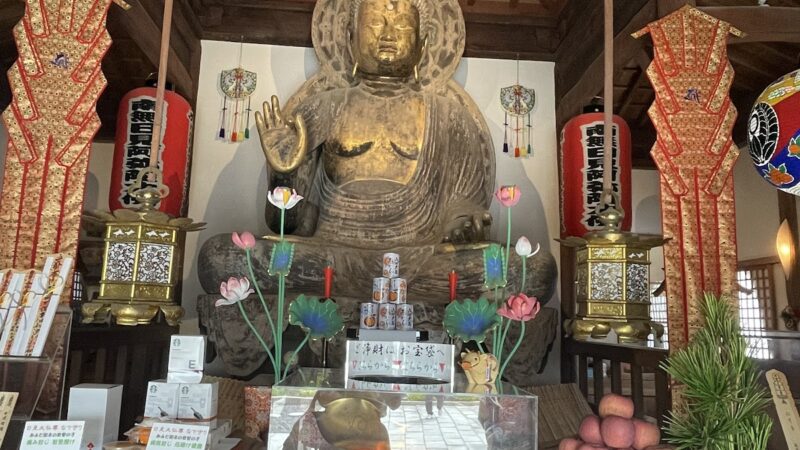
There is an interesting legend regarding the temple’s founding. It is said to have begun when Kyōhōbō Jōshin, the younger brother of Hatanaka Shigetada, built the temple to enshrine a wooden Buddha statue that had washed ashore on the coast.
The Restorer and His Connection to Rennyo Shōnin
Tada Yoshitada, the head of Tada no Shō in Settsu Province (present-day Kawanishi City, Hyogo Prefecture), played a crucial role in the development of Shimonoseki Kyohōji Temple. Tada Yoshitada was a descendant of Tada Mitsunaka, the ancestor of the Tada clan, which traced its lineage back to the Seiwa Genji clan.
Tada Yoshitada converted to Jodo Shinshu Buddhism under the guidance of Rennyo Shonin and received the Buddhist name “Shakujunsei.” Furthermore, he received a six-character mantra (tiger-striped mantra) personally written by Rennyo Shonin. He entered Shimonoseki to promote Shinshu Buddhism and became the restorer of Kyohōji Temple.
The Kyohōji Incident in the Late Edo Period
Kyohōji Temple in Shimonoseki became an important stage in the history of the late Edo period. On August 16, 1863 (Bunkyū 3), an incident occurred at Kyohōji Temple, which was being used as lodging for the vanguard unit, between the vanguard unit formed by the aristocratic families of the Hagi Domain and the Kiheitai unit organized by Takasugi Shinsaku.
The “Kyōhōji Incident” resulted in the tragic assassination of a vanguard soldier. Following the incident, Takasugi Shinsaku was relieved of his command of the Kiheitai (irregular troops), and the Kiheitai’s headquarters were temporarily moved to Ogōri (present-day Yamaguchi City). This incident is remembered as an important historical event illustrating the complex political situation on the eve of the Meiji Restoration.
Facilities at Shimonoseki Kyōhōji Temple
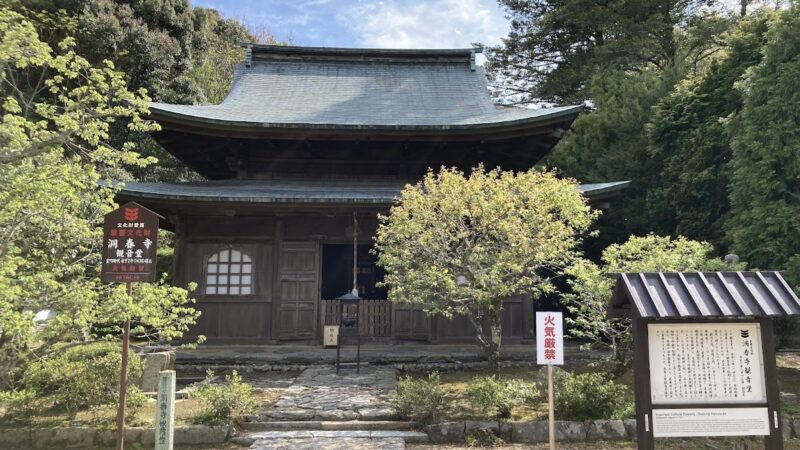
The current Shimonoseki Kyōhōji Temple boasts impressive grounds, including the main hall. Particularly noteworthy are the towering phoenix palms and ginkgo trees within the grounds, offering beautiful scenery throughout the seasons.
The temple regularly holds memorial services and events, serving as a center of faith for the local community. It also has a columbarium, functioning as a place for memorial services for parishioners and believers.
Access Information
Shimonoseki Kyōhōji Temple is within walking distance of JR Shimonoseki Station, making it conveniently located for sightseeing and worship. Detailed transportation information can be found on the temple’s official website.
Kyohōji Temple in Kobe City | A Temple of the Honmon Butsuryu Sect
Overview of Kobe Kyohōji Temple
Located on Tachibana-dori in Chuo-ku, Kobe City, Hyogo Prefecture, Kyohōji Temple belongs to the Honmon Butsuryu Sect. The Honmon Butsuryu Sect is a religious sect that inherits the teachings of Nichiren Shonin, and Kobe Kyohōji Temple belongs to the 11th branch office, the Kobe Missionary District, of this sect.
The current head priest (in charge) is Reverend Nakanishi Nichigen, who conducts religious activities together with local believers.
Access and Location
Kobe Kyohōji Temple is located in the heart of Kobe and is accessible by multiple modes of transportation.
Location:
4-2-23 Tachibana-dori, Chuo-ku, Kobe City, Hyogo Prefecture 650-0016
Main Access Methods:
- Approximately 5 minutes on foot northwest from JR Kobe Station
- Approximately 2 minutes on foot north from the “Arima-michi/Yamate/Kobe University Hospital Exit” of Hankyu, Hanshin, and Sanyo Railway “Kobe Kosoku Station”
- Approximately 5 minutes on foot southwest from Kobe Municipal Subway “Okurayama Station”
Its convenient location within walking distance of multiple stations makes it easy to visit and participate in memorial services.
Contact Information:
- TEL: 078-341-5788
- FAX: 078-371-2120
About Honmon Butsuryu-shu
Honmon Butsuryu-shu is a Buddhist sect based on the teachings of Nichiren Shonin. “Butsuryu” means “the Buddha stands,” emphasizing the importance of applying and practicing Buddhist teachings in modern times. Kobe Kyohōji Temple conducts religious services and missionary activities based on these teachings.
Kyohōji Temple in Sasebo City | Family Temple of the Matsuura Clan
History of Sasebo Kyohōji Temple
Kyohōji Temple, located in Sasebo City, Nagasaki Prefecture, is a temple belonging to the Jodo Shinshu Honganji sect, and its mountain name is Daichizan. This temple has deep ties to the Matsuura clan, the regional rulers during the Sengoku period.
Founded in 1490 (Entoku 2), it served as the family temple of the Matsuura clan, who ruled the Sasebo region from the Muromachi period to the mid-Sengoku period. Initially, it was built in the castle town of Daichian Castle (formerly Ōno, Kitamatsuura District, now Setogoe, Sasebo City), one of the Matsuura clan’s castles.
Fire and Relocation
Shortly after its establishment, in 1498 (Meiō 7), Kyōhōji Temple was destroyed by fire during the fall of Daichian Castle. It is said to have been relocated to its current location and rebuilt.
This history is a valuable example demonstrating the close ties between temples and local rulers during the turbulent Sengoku period.
The Present State of Sasebo Kyōhōji Temple
Currently, Sasebo Kyōhōji Temple serves as a base for the Jōdo Shinshū Honganji sect in the region, supporting the faith of its parishioners and local residents. As a temple with a long history dating back to the Sengoku period, it holds an important position as a regional cultural heritage site.
Kyōhōji Temple in Hasami Town | Nagasaki Prefecture’s First Jōdo Shinshū Temple
Located in Shukugō, Hasami Town, Nagasaki Prefecture, Kyōhōji Temple, with Ryūkeizan as its mountain name, belongs to the Jōdo Shinshū Honganji sect.
Founded in 1623 (Genna 9) during the early Edo period by Myōshin, this temple holds historical significance as the first Jōdo Shinshū temple established within the domain.
Myōshin, the founder, was originally named Takemiya Rokurōzaemon. He became a Buddhist disciple at Saikyōji Temple in Takeo and changed his name to Myōshin. Through his efforts, the teachings of Jōdo Shinshū Buddhism took root in Hasami, becoming a center of local faith.
While Hasami is known as a center for ceramics, Kyōhōji Temple remains a beloved temple to the local people today, having formed the foundation of the region’s spiritual culture.
Other Kyōhōji Temples
Kyōhōji Temple in Toyama City
Located in Toyama City, Toyama Prefecture, Kyōhōji Temple belongs to the Jōdo Shinshū Honganji sect. The faith in Jōdo Shinshū Buddhism is very strong in the Hokuriku region, and Kyōhōji Temple in Toyama is one of the temples that carries on this tradition, continuing its activities rooted in the local community. ### Kyohōji Temple in Fukui City
Kyōhōji Temple in Fukui City, Fukui Prefecture, is also a temple of the Jōdo Shinshū Honganji sect. Fukui Prefecture is a region where Rennyo Shōnin established a base for missionary work in the Hokuriku region, and Jōdo Shinshū faith is deeply rooted there. Kyohōji Temple in Fukui City has played an important role within this historical context.
Kyohōji Temple in Fushimi Ward, Kyoto City
Kyōhōji Temple in Fushimi Ward, Kyoto City, is a temple belonging to the Jōdo Shinshū Honganji sect. Kyoto is the location of Nishi Honganji Temple, the head temple of Jōdo Shinshū, and Kyohōji Temple in Fushimi Ward maintains deep ties with the head temple while supporting the faith of the local community.
Kyohōji Temple in Kainan City
Kyōhōji Temple in Kainan City, Wakayama Prefecture, is a temple belonging to the Jōdo Shinshū Honganji sect. As a base for Jōdo Shinshū missionary work on the Kii Peninsula, it supports the religious lives of local parishioners and believers.
Kyōhōji Temples in Kure and Etajima
In Hiroshima Prefecture, there are Kyōhōji temples in Kure City and Etajima City, both belonging to the Jōdo Shinshū Honganji sect. These temples are cherished by the local people as they demonstrate the spread of Jōdo Shinshū faith in the Seto Inland Sea coastal region.
Kyōhōji Temple in Iwakuni City
In Iwakuni City, Yamaguchi Prefecture, there is also a Kyōhōji temple belonging to the Jōdo Shinshū Honganji sect. Within Yamaguchi Prefecture, there are Kyōhōji temples in Shimonoseki City and Iwakuni City, each functioning as a center of faith in their respective regions.
Kyōhōji Temple in Imari City
Kyōhōji Temple in Imari City, Saga Prefecture, is a temple belonging to the Jōdo Shinshū Honganji sect and includes a cemetery and ossuary. In Imari, known as a center of ceramics production, it serves as a spiritual anchor for the local residents.
Points to Note When Visiting Kyohōji Temple
Manners for Visiting
When visiting Kyohōji Temple, please observe the following basic manners:
- Attire: Modest, understated clothing is preferable.
- Greeting: Bow when passing through the temple gate.
- Quiet: Behave quietly within the temple grounds.
- Photography: Refrain from taking photographs in areas where photography is prohibited.
- Worship: Join your hands in prayer at the main hall and pray with sincerity.
Understanding the Characteristics of Each Temple
Even though they share the same name, “Kyōhōji,” each temple has its own unique history and characteristics. Researching the history and features of each temple before your visit will lead to a deeper understanding and appreciation.
Participating in Events and Ceremonies
Many Kyohōji temples regularly hold ceremonies and events. Check the official website or bulletin board for information, and if possible, we recommend participating. Participating in an actual ceremony allows you to experience the atmosphere of faith at that temple firsthand. ### Pre-Visit Access Information
Access methods vary for each Kyohōji temple. Checking the availability of public transportation, parking, and distance from the nearest station in advance will ensure a smooth visit.
About the Jōdo Shinshū Honganji School
Having basic knowledge of the Jōdo Shinshū Honganji School, to which many Kyohōji temples belong, will make your temple visit more meaningful.
Teachings of Jōdo Shinshū
Jōdo Shinshū is a Buddhist sect founded by Shinran Shōnin. It teaches the doctrine of “other-power vow,” stating that everyone is equally saved by the power of Amida Buddha’s vow through the recitation of “Namu Amida Butsu.”
Characteristics of the Honganji School
The Honganji school is a branch of Jōdo Shinshū with its head temple, Nishi Honganji (Ryūkokuzan Honganji), in Kyoto. It boasts over 10,000 temples nationwide, making it one of the largest Buddhist organizations in Japan.
Rennyo Shonin and Kyohōji Temple
In the history of many Kyohōji temples, Rennyo Shonin (1415-1499), a high-ranking priest of the Muromachi period, played a significant role. Known as the restorer of Jodo Shinshu Buddhism, Rennyo Shonin traveled throughout Japan, spreading his teachings. Temples associated with Rennyo Shonin, including Kyohōji Temple in Shimonoseki, preserve treasures and traditions related to him.
Kyohōji Temple and the Local Community
The Danka System and Temple Management
Many Kyohōji temples are supported by the Danka system. A Danka is a family that supports a specific temple as their family temple (the temple where their ancestors’ graves are located). Donations and offerings from Danka make it possible to maintain the temple and conduct religious services.
Hubs of Local Culture
Kyohōji temples have functioned not only as religious facilities but also as hubs of local culture. Temple events and festivals serve as places for interaction among local residents, strengthening community bonds. ### Value as Historical Heritage
Temples that played a significant role in important historical events during the late Edo period, such as Kyohōji Temple in Shimonoseki, possess value beyond mere religious facilities, as regional historical heritage sites. Visiting such temples offers a valuable opportunity to learn about Japanese history.
Memorial Services and Interment at Kyohōji Temple
Use of the Columbarium
Many Kyohōji temples have columbariums where the remains of parishioners and followers can be interred. In recent years, many families have found it difficult to manage their family graves, making temple columbariums an important option.
Perpetual Memorial Services
If there are no successors or if managing a grave is difficult, it is possible to request perpetual memorial services. The temple will take responsibility for continuing the memorial services, allowing you to honor your ancestors with peace of mind.
Types of Memorial Services
Kyohōji Temple holds various memorial services, including annual memorial services (first anniversary, third anniversary, seventh anniversary, etc.), Higan memorial services, and Obon memorial services. Participating in these memorial services provides an opportunity to remember the deceased and to experience Buddhist teachings.
Enjoying a Pilgrimage to Kyohōji Temples
The Significance of Temple Pilgrimage
Visiting Kyohōji temples throughout Japan is also a journey to learn about the history and culture of each region. Even temples with the same name have their own unique stories, and each visit offers new discoveries.
Collecting Goshuin (Temple Seals)
As a memento of your visit to a temple, you may be able to receive a goshuin. A goshuin is a stamp and calligraphy in a goshuincho (stamp book) as proof of your visit. However, remember that goshuin are not stamps for a stamp rally, but a symbol of faith, and receive them with respect.
Seasonal Scenery
Many temples, like the phoenix and ginkgo trees at Kyohōji Temple in Shimonoseki, boast beautiful natural scenery. You can enjoy different expressions in each season, such as cherry blossoms in spring, fresh greenery in summer, autumn leaves, and snowscapes in winter.
Summary | Diversity and Commonality of Kyohōji Temples
Kyōhōji temples, located throughout Japan, each possess their own unique history and characteristics, yet they share the common mission of preserving and transmitting the teachings of Buddha.
While the majority belong to the Jōdo Shinshū Honganji sect, there are also temples belonging to the Honmon Butsuryū sect, such as the Kyohōji in Kobe, and this diversity speaks to the richness of Japanese Buddhist culture.
Each temple is deeply intertwined with its local history; for example, the Kyohōji in Shimonoseki was the stage for historical events during the late Edo period; the Kyohōji in Sasebo was founded as the family temple of a Sengoku-era daimyo; and the Kyohōji in Hasami was the first Jōdo Shinshū temple in its region.
Visiting a Kyohōji temple is not merely sightseeing; it is a valuable opportunity to learn about Japanese history, culture, and faith. By researching access information and history of each temple beforehand and observing proper etiquette during your visit, you can gain a deeper experience.
Taking time to quietly put your hands together in prayer, while reflecting on the teachings of Buddhism and the history of faith of our ancestors, will be a precious moment to step away from the hustle and bustle of modern life and reflect on yourself.