Complete Guide to Saishoin Five-Storied Pagoda: History and Highlights of Japan’s Northernmost National Treasure-Class Five-Storied Pagoda
Located in Douya-machi, Hirosaki City, Aomori Prefecture, Saishoin is a renowned Shingon sect Chizan school temple boasting Japan’s northernmost important cultural property, a five-storied pagoda. Praised as “the most beautiful pagoda in the Tohoku region,” its beauty has made it a beloved symbol of Hirosaki City. This article comprehensively covers everything you need to know before visiting, from Saishoin’s history and the pagoda’s architectural features to access information.
About Saishoin: The Foremost Temple of the Tsugaru Shingon Sect
The official name of Saishoin is “Kongozan Komyoji Saishoin.” This name originates from the Buddhist scripture “Konkomyo Saisho-o Sutra,” and embodies a deep wish for abundant harvests and national peace.
History and Founding of Saishoin Temple
The origins of Saishoin Temple date back to 1532 (Tenbun 1). It is said to have begun when Koshin Hoin built three temple buildings in Hagino, north of Horikoshi Castle in Hiraga District, and founded the temple. Later, under the patronage of the Tsugaru Domain, it became the foremost of the five major Shingon temples of Tsugaru and other sects, wielding significant influence over temples and shrines throughout the Tsugaru region.
In the Hirosaki Domain, it became the principal prayer temple of the Tsugaru family, the feudal lords, and developed into one of the representative temples of the Tsugaru region. Throughout the Edo period, Saishoin boasted the highest temple rank in the Tsugaru Domain and was a central figure in the region’s Buddhist culture.
Role as a Temple of the Shingon Chizan School
Saishoin Temple belongs to the Shingon Chizan School. Shingon Buddhism is a branch of Esoteric Buddhism with Kukai (Kobo Daishi) as its founder, and the Chizan School is one of the influential factions within it. Even today, it welcomes many visitors as the first temple on the Tsugaru Kobo Daishi pilgrimage route.
The principal deity is Fudo Myoo, and it has attracted the faith of many people since ancient times. It is particularly known for its blessings related to matchmaking and successful relationships, and is popular as a power spot.
Saishoin Five-Storied Pagoda: Japan’s Northernmost Important Cultural Property
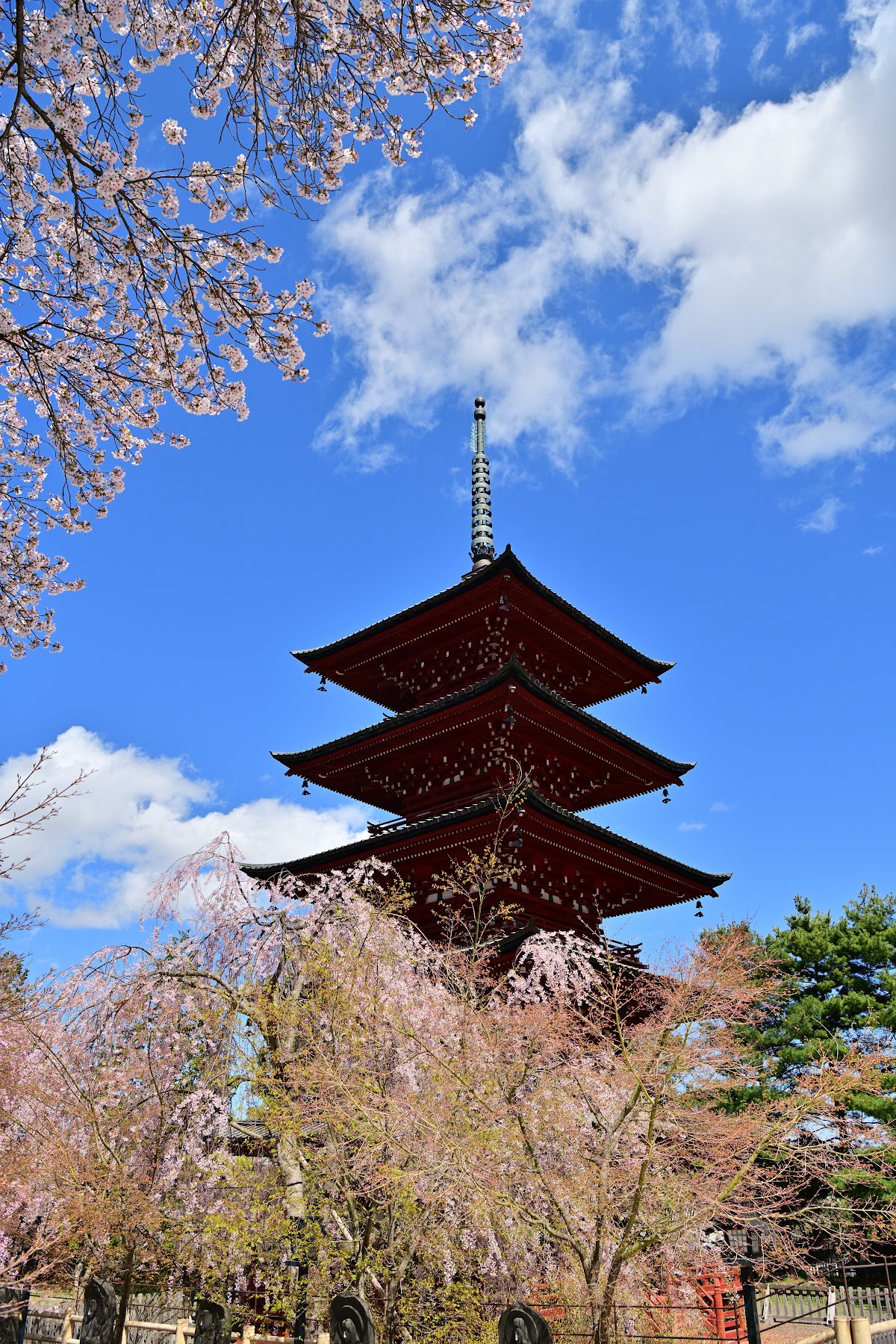
What captivates the eyes of visitors to Saishoin is the beautiful five-storied pagoda that stands tall within the temple grounds. This pagoda is known as a special example among Japanese five-storied pagoda architecture.
The History and Background of the Five-Storied Pagoda’s Construction
The Saishoin Five-Storied Pagoda was planned in 1656 (Meireki 2) at the behest of Kyokai, the 6th head priest of Daienji Temple (during the time of the 3rd lord, Nobuyoshi), and was constructed in 1666 (Kanbun 6). This magnificent project, which took 10 years to complete, was a testament to the prestige of the Tsugaru domain.
The Five-Storied Pagoda Was Built for Memorial Services
The most important reason for the construction of this five-storied pagoda is to commemorate those who died in battle. It is said to have been built during the Sengoku period, under the first lord Tamenobu, to commemorate all those who died in the process of unifying Tsugaru, regardless of whether they were friend or foe.
This idea of “regardless of friend or foe” was remarkably progressive for its time. This five-storied pagoda embodies a religious mission: to comfort the countless souls who lost their lives in times of war.
Why it is Called the Most Beautiful Pagoda in the Tohoku Region
There are 22 five-storied pagodas built before the Edo period that still exist throughout Japan. Among them, the Saishoin Five-Storied Pagoda is the northernmost and, in 1908 (Meiji 41), was designated as the first National Important Cultural Property in Aomori Prefecture (at the time, it was designated a National Treasure).
The designation description specifically states that it is “the most beautiful pagoda in the Tohoku region,” and its beauty is highly praised by experts. The pagoda stands approximately 31.2 meters tall and, situated on a hill, has a striking presence even from the city of Hirosaki.
The Secret to its Beauty: Architectural Features of the Five-Storied Pagoda
The reason why the Saishoin Five-Storied Pagoda is called “the most beautiful pagoda in Tohoku” lies in its meticulous architectural techniques and aesthetic balance.
The Balance of the Finial is Also a Reason for its Beauty
One of the elements that determines the beauty of a five-storied pagoda is the finial (sorin) located at the top of the pagoda. The finial is a decorative metal part, and the ratio of the finial to the overall height of the pagoda greatly influences its visual beauty.
The finial of the Saishoin Five-Storied Pagoda is exquisitely balanced with the pagoda body, giving it an overall elegant impression. This beautiful ratio is one of the main reasons why it is called “the most beautiful pagoda in Tohoku.”
A Single Cedar Tree at the Center of the Pagoda, Rare in Japan
The central pillar (shinbashira) is the structural center of the five-storied pagoda. The central pillar of the Saishoin Five-Storied Pagoda is made from a single cedar tree, a rarity in Japan. This central pillar plays a crucial role in maintaining the pagoda’s stability and represents the pinnacle of traditional Japanese wooden architecture.
The central pillar also functions as a seismic isolation structure, absorbing earthquake tremors and supporting the pagoda for hundreds of years. This technology is attracting attention from modern architectural engineering.
What is housed in the first story?
The first story (shoju), the lowest level of the five-storied pagoda, houses sacred objects of Buddhist importance. While not visible during regular visits, the interior is adorned with vibrant colors, revealing a complex internal structure composed of interconnected parts.
Special viewing opportunities allow visitors to experience the beauty of the pagoda’s interior, which is usually hidden, surprising and moving them.
Strong against earthquakes but not against wind? Typhoon damage and recovery
Traditional Japanese five-storied pagoda architecture, with its central pillar structure, possesses extremely high resistance to earthquakes. However, surprisingly, it can be vulnerable to wind.
Damage from Typhoon Hagibis (Typhoon No. 19) in 1991
In 1991, Typhoon Hagibis struck Aomori Prefecture, bringing the Saishoin Five-Story Pagoda to the brink of collapse. The damage from this typhoon was severe, causing significant structural damage to the pagoda.
Wooden structures exceeding 31 meters in height are subjected to considerable wind pressure from strong winds. Tall, vertical structures like five-story pagodas are particularly susceptible to wind damage.
Demolition, Restoration, and Completion
The five-story pagoda, damaged by the typhoon, underwent demolition and restoration work. This large-scale project utilized traditional architectural techniques and was completed in the autumn of 1994. A completion ceremony was held in the spring of 1995.
The restoration work respected the original architectural techniques while incorporating modern structural reinforcement technologies. Through this work, the five-story pagoda regained its beautiful form and was reborn as a cultural asset to be passed down to future generations.
Who Built the Five-Storied Pagoda?: The People Involved in its Construction
Many people were involved in the construction of the Saishoin Five-Storied Pagoda. Beginning with the 6th Abbot of Daienji Temple, Kyokai, who initiated the project, and with the support of the 3rd Lord of the Tsugaru Domain, Tsugaru Nobuyoshi, the pagoda was completed over a period of 10 years by master carpenters possessing the highest level of skill at the time.
Edo period architectural techniques were passed down through oral tradition and apprenticeship systems, and the names of specific carpenters are often not recorded. However, the high level of skill of the craftsmen who built this five-storied pagoda is best evidenced by the beauty of the existing pagoda.
The Five-Storied Pagoda Commissioned by the Tsugaru Domain: Its Relationship to Domain Administration
The construction of the Saishoin Five-Storied Pagoda was not merely the construction of a religious facility, but also a political and cultural project of the Tsugaru Domain. Built during the reign of the 3rd Lord, Tsugaru Nobuyoshi, this five-storied pagoda also served as a symbol of the domain’s prestige.
The Tsugaru Domain developed its castle town around Hirosaki Castle, aiming for cultural development. The Saishoin Five-Storied Pagoda was positioned as part of this cultural policy, becoming a symbol of the domain’s prosperity and the peace and well-being of its people.
A Beloved Five-Storied Pagoda: A Symbol of Hirosaki City
The Saishoin Five-Storied Pagoda has been beloved by the citizens of Hirosaki since its construction. Located on a hill, it offers panoramic views from the city center, making it an important element characterizing the landscape of Hirosaki.
Even today, the five-storied pagoda frequently appears in tourist brochures and postcards as a symbol of Hirosaki City. During cherry blossom season and autumn foliage season, the beautiful scenery created by the pagoda amidst the surrounding nature attracts many photography enthusiasts.
A Famous Spot for Cherry Blossoms and Autumn Leaves
The grounds of Saishoin Temple are beautiful with cherry blossoms in spring and autumn leaves in fall, displaying different expressions throughout the seasons. Especially during cherry blossom season, many tourists visit in conjunction with the Hirosaki Cherry Blossom Festival. The collaboration of the five-story pagoda and cherry blossoms is one of Hirosaki’s most representative spring landscapes.
During the autumn foliage season, the temple grounds are dyed in red and yellow, creating a fantastical atmosphere in combination with the majestic appearance of the five-story pagoda. It is known as one of the best autumn foliage spots in Aomori Prefecture.
Special Viewing and Temple Stay Experience
At Saishoin Temple, in addition to regular visits, opportunities for special viewings are sometimes offered. This is a rare opportunity to see the interior of the five-story pagoda, allowing you to observe the vividly colored decorations and internal structure up close, which are not usually visible.
In recent years, a “Temple Stay” program has also been implemented, allowing you to spend a special time having the important cultural property, the five-story pagoda, all to yourself. The experience of gazing at the five-story pagoda in the tranquility of the early morning leaves a deep impression on visitors.
Basic Information: Access and Visiting Guide
We have compiled the basic information you need when visiting Saishoin Temple.
Location and Contact Information
Address: 63, Douya-cho, Hirosaki City, Aomori Prefecture
Sect: Shingon-shu Chizan-ha
Mountain Name: Kongozan
Temple Name: Komyoji
Principal Image: Fudo Myoo
Access Methods
Access by Train: Approximately 2.5 kilometers from JR Hirosaki Station. About a 30-minute walk.
Access by Bus: Take a Konan Bus from Hirosaki Station and get off at the “Saishoin” bus stop. It’s a short walk from the bus stop. City loop buses are also available.
Access by Car: Approximately 20 minutes from the Owani-Hirosaki Interchange on the Tohoku Expressway. Parking is available on the temple grounds.
Visiting Hours and Admission Fees
While visiting the temple grounds is generally free, special viewings of the five-story pagoda may require advance reservations. We recommend checking the Saishoin official website for details.
Please check the latest information before visiting, as visiting hours may change depending on the season and time of year.
Nearby Tourist Attractions
When visiting Saishoin Temple, we recommend also visiting nearby tourist attractions.
Hirosaki Park and Hirosaki Castle
Located approximately 1 kilometer southwest of Saishoin Temple, Hirosaki Park is a vast park centered around Hirosaki Castle. Its spring cherry blossom festival is nationally famous, with approximately 2,600 cherry trees in full bloom. Hirosaki Castle’s keep is one of the 12 remaining original castle keeps and is designated as a National Important Cultural Property.
Hirosaki City Museum and Hirosaki Brick Warehouse Museum
Hirosaki City also boasts numerous cultural facilities. At the Hirosaki City Museum, you can learn about the history and culture of Tsugaru, while the Hirosaki Brick Warehouse Museum (Hirosaki Warehouse Museum) offers opportunities to enjoy contemporary art.
Fujita Memorial Garden
Near Hirosaki Park, the Fujita Memorial Garden is a Japanese garden that opened the former villa of a wealthy merchant from the Taisho era. The view of Mount Iwaki from the hilltop is spectacular, and you can enjoy the beauty of the gardens throughout the seasons.
The Cultural Value of Saishoin Temple
The Saishoin Five-Storied Pagoda is not merely a tourist attraction, but a cultural property that holds an important position in the history of Japanese architecture and culture.
Significance as a National Important Cultural Property
Designated as a National Important Cultural Property in 1908 (Meiji 41), the Saishoin Five-Storied Pagoda was the first in Aomori Prefecture to be designated as a National Important Cultural Property, making it a monumental presence in the history of cultural property protection in Aomori Prefecture. At the time, it was designated as a “National Treasure,” and later became an Important Cultural Property following the revision of the Cultural Properties Protection Law.
Technical Value of Edo Period Architecture
Built in 1666 (Kanbun 6), it is a valuable historical document that conveys the architectural techniques of the early Edo period. Among the 22 five-storied pagodas from the Edo period or earlier that still exist nationwide, it is in good condition and is an important example that allows for detailed study of the architectural techniques of the time.
Symbol of Local Culture
The Saishoin Five-Storied Pagoda is a symbol of the history and culture of the Tsugaru region. It has been deeply intertwined with the region across generations, from the unification wars of the Sengoku period, the feudal administration of the Edo period, the preservation of cultural properties in modern times, to the promotion of tourism today.
Manners and Precautions for Visiting
When visiting Saishoin Temple, it is important to observe proper etiquette as a religious site.
Basic Manners for Visiting
- Maintain silence within the temple grounds and be considerate of other visitors.
- Photography is permitted, but please refrain from using flash.
- During special viewings of the interior of the five-storied pagoda, please follow the instructions of the staff.
- Please take all your trash with you.
Regarding Clothing
There are no specific dress code regulations, but considering it is a religious site, it is advisable to avoid overly revealing clothing. If you are entering the interior during a special viewing, shoes that are easy to remove and put on are convenient.
Annual Events at Saishoin Temple
Saishoin Temple, as a Shingon Buddhist temple, holds various annual events.
Main Annual Events
- New Year’s Visit: Many worshippers visit the temple in the new year.
- Setsubun Festival: Events such as bean-throwing are held on Setsubun in February.
- Cherry Blossom Viewing: The cherry blossom season from late April to early May is enveloped in a special atmosphere.
- Autumn Foliage Season: Late October to early November is a beautiful time for viewing autumn leaves.
You can find information about these events and seasonal activities on Saishoin Temple’s official website and Hirosaki City’s tourist information.
Summary: The Charm of Saishoin Five-Storied Pagoda
Saishoin Five-Storied Pagoda is a valuable cultural heritage site with high historical, architectural, and cultural value, as the northernmost important cultural property five-storied pagoda in Japan. Since its construction in 1666, the Saishoin Five-Storied Pagoda has watched over the Tsugaru region for over 350 years.
Its beauty, hailed as “the most beautiful pagoda in the Tohoku region,” is a testament to meticulous architectural techniques and aesthetic balance. The spirit of its construction—to commemorate all war dead, regardless of friend or foe—continues to speak to us of the preciousness of peace even today.
Having overcome typhoon damage in 1991 and undergone dismantling and restoration work, the five-storied pagoda is also an example of the importance of cultural property preservation. As a symbol of Hirosaki City and a representation of the cultural identity of the Tsugaru region, the Saishoin Five-Storied Pagoda will undoubtedly continue to be cherished by many people.
When you visit Hirosaki, be sure to stop by Saishoin Temple and see this beautiful five-storied pagoda for yourself. The pagoda, displaying different expressions throughout the seasons—cherry blossoms in spring, lush greenery in summer, vibrant autumn leaves, and snowscapes in winter—is sure to deeply impress visitors.