
Saruga Shrine Complete Guide | A Thorough Explanation of History, Deities, the Fifteen-Night Festival, and the Best Time to See the Lotus Flowers
Located in Hirakawa City, Aomori Prefecture, Saruga Shrine is a historic shrine that has long been revered as a “sacred place of Oshu Tsugaru.” Its vast grounds, approximately 16,000 tsubo (or possibly 15,000 tsubo), include Kagami-ga-ike and Mihara-ga-ike ponds, famous for their lotus flowers. In summer, the vast expanse of blooming lotus flowers captivates visitors. This article comprehensively introduces all the information you need to know before visiting Saruga Shrine, including its history, deities, festivals, highlights, and access methods.
What is Saruga Shrine?
Saruga Shrine (Saruga Jinja, Saruka Jinja) is a shrine located in Saruga, Hirakawa City, Aomori Prefecture. Its former shrine rank was Prefectural Shrine. Along with Iwaki-yama Shrine and Takayama Inari Shrine, it is counted among the “Three Great Shrines of Tsugaru,” and occupies an important position as one of the centers of faith in the Tsugaru region. It is said to have been founded by Sakanoue no Tamuramaro, the Shogun of the early Heian period, and was originally called “Jinjagu” or “Shinjagu.” It has been revered as the guardian deity of agriculture, fishing, transportation, and eyesight, and as the guardian deity of those born in the Year of the Dragon and the Year of the Snake, from the feudal period to the present day.
History of Saruga Shrine
Origin of Founding and the Legend of Sakanoue no Tamuramaro
Sakanoue no Tamuramaro, the Shogun, was deeply involved in the founding of Saruga Shrine. The enshrined deity, Kamitsukenu no Kimitamichi no Mikoto, is said to have died in battle against the Emishi at Idera Minato (present-day Iwaki River basin) in the 55th year of Emperor Nintoku’s reign (367 AD, 1027th year of the Imperial calendar).
On August 23, Enryaku 12 (793 AD, 1453 in the Imperial calendar), Sakanoue no Tamuramaro, the Shogun who marched north to subdue the Emishi, received a divine inspiration and temporarily enshrined the spirit of Tamiji no Mikoto in Sarugano, west of the current location. Later, by imperial decree, on August 15, Daido 2 (807 AD, 1467 in the Imperial calendar), the deity was permanently moved to its present location, and the shrine building was constructed as Fukasago-gu (Kamija-gu).
This founding year of 807 is considered the official founding year of Saruga Shrine, demonstrating its long history of over 1200 years.
From the Edo Period to the Present
During the Edo period, under the protection of the Tsugaru Domain, the shrine was deeply revered by the local people as the guardian deity of agriculture, fishing, transportation, and healing of eye diseases. In the Tsugaru region, where agriculture is particularly thriving, this shrine has played an important role as a place to pray for a bountiful harvest.
After the Meiji Restoration’s separation of Shinto and Buddhism, it was ranked as a prefectural shrine under the modern shrine ranking system. Even today, it remains one of Aomori Prefecture’s leading shrines, attracting many worshippers.
Deities and Divine Virtues
Main Deity: Kamitsukenu no Kimitamichi no Mikoto
The main deity of Saruga Shrine is Kamitsukenu no Kimitamichi no Mikoto. He was an ancient warrior and is enshrined as a hero who lost his life in the conquest of the Emishi people. Due to his brave fighting and his achievements in protecting this land, he has been revered as a guardian deity of the region.
Divine Virtues and Faith
Saruga Shrine is believed to possess the following divine virtues and attracts diverse devotions:
- Protection of Agriculture and Fisheries: Prayers for abundant harvests and bountiful catches
- Traffic Safety: Safe travels and protection along the road
- Healing of Eye Diseases: Eye health and improved eyesight
- Guardian Deity for Those Born in the Year of the Dragon and Snake: Protection from the Chinese Zodiac
- Good Fortune and Prosperity: Protection from evil and family safety
The shrine’s reputation as a guardian deity of the eyes has been well-established since ancient times, attracting worshippers from all over Japan suffering from eye diseases. It also enjoys strong devotion from those engaged in agriculture, fishing, and transportation-related occupations.
Shrine Buildings and Cultural Properties
Main Hall (Aomori Prefecture Important Cultural Property)
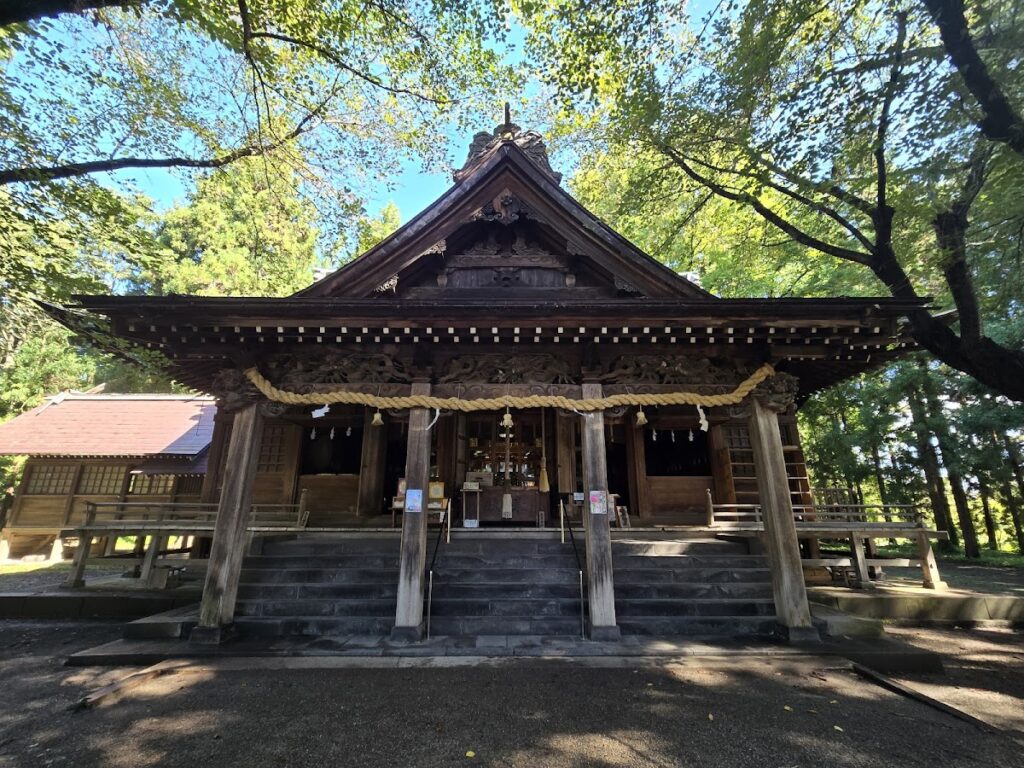
The main hall of Saruga Shrine is a valuable building designated as an Aomori Prefecture Important Cultural Property. The shrine, which preserves the architectural style of the Edo period, clearly represents the characteristics of shrine architecture in the Tsugaru region. The main shrine, adorned with intricate carvings and decorations, is a point of interest that you should definitely pay attention to when visiting.
Layout of the Worship Hall and Shrine Buildings
Within the vast grounds, in addition to the main shrine, there are the worship hall, Kagura hall, and shrine office. The path leading from the approach to the worship hall is well-maintained, creating an environment where you can worship while experiencing the changing seasons.
Highlights of the Shrine Grounds
Kagami-ga-ike Pond and Lotus Flowers
One of the biggest highlights of Saruga Shrine is Kagami-ga-ike Pond. This pond, which stretches along the path from the worship hall to the subsidiary shrine Munakata Shrine, is covered in lotus flowers from late July to August, presenting a truly spectacular sight.
The best time to see the lotus flowers is usually from late July to mid-August, and the sight of the flowers opening in the early morning is mystical and beautiful. Many photography enthusiasts and tourists visit during this time, and it becomes a popular topic on social media such as Instagram. The official Instagram account of Saruga Shrine (@sarukajinjya) also provides regular updates on the lotus flowering status.
Miharashigaike Pond
Along with Kagamigaike Pond, another large pond within the shrine grounds is Miharashigaike Pond. This pond also boasts a vast surface area, adding tranquility to the shrine’s landscape. It’s rare for a shrine to have two ponds, forming a distinctive feature of Saruga Shrine’s scenery.
Shrine within the Grounds: Munakata Shrine
Several shrines are located within the grounds, but Munakata Shrine holds a particularly important position. You can enjoy views of lotus flowers along the path leading to this shrine, which is situated across from Kagamigaike Pond.
Vast Shrine Grounds
The vast shrine grounds, covering approximately 16,000 tsubo (approximately 53,000 square meters), offer a sense of openness unimaginable in urban shrines. The environment, where you can stroll leisurely while experiencing the changing seasons, is a special place for visitors seeking peace of mind.
Festivals and Annual Events
The Grand Festival of the Fifteenth Night (Tsugaru’s Largest Festival)
The most important festival at Saruga Shrine is the Grand Festival of the Fifteenth Night, held from the 14th to the 16th of the eighth month of the lunar calendar. Known as “Tsugaru’s largest festival,” this festival features various Shinto rituals and festive events over three days.
Main Contents of the Fifteenth Night Festival:
- 14th Day of the 8th Month (Yoiyoi Festival): The Yoiyoi Festival, marking the start of the festival, is held.
- Tsugaru Kagura Performance: Tsugaru Kagura, designated as an Intangible Folk Cultural Property of Aomori Prefecture, is performed before the deity.
- Prefectural Lion Dance Competition: Lion dances from all over Aomori Prefecture gather to compete.
- Tozanbayashi Performance: Tozanbayashi, a traditional performing art of the Tsugaru region, is performed.
- Giant Banner Dedication: Giant banners are erected on the shrine grounds, adding to the festive atmosphere.
During this period, the area is bustling with many worshippers and tourists, and numerous stalls are set up, enhancing the festive atmosphere. Many people from both within and outside the prefecture visit, seeking a rare opportunity to enjoy traditional Shinto rituals and folk performing arts at the same time.
Other Annual Events
Besides the Fifteenth Night Festival, Saruga Shrine holds various festivals throughout the year:
- Annual Grand Festival: The shrine’s most important annual festival
- New Year’s Visit: The shrine is bustling with many visitors during the first three days of the New Year
- Setsubun Festival: Events such as bean-throwing
- Summer Purification Ceremony: A Shinto ritual to purify oneself of impurities accumulated over the past six months
For detailed festival schedules, we recommend checking the Saruga Shrine official website or the Hirakawa City Tourism Association.
Visiting Information and Access
Basic Information
- Location: Sarugaishibayashi, Hirakawa City, Aomori Prefecture
- Phone: Please contact the Saruga Shrine office
- Visiting Hours: Grounds are freely accessible (please check the office hours)
- Parking: Available (free)
- Admission Fee: Free
Transportation Access
Access by Train:
- Get off at Tsugaru-Onoe Station on the Konan Railway Konan Line, approximately 15 minutes on foot
- Transfer to the Konan Railway from Hirosaki Station on the JR Ou Main Line
Access by Car:
- Approximately 15 minutes from Kuroishi IC on the Tohoku Expressway
- Approximately 20 minutes from Owani-Hirosaki IC on the Tohoku Expressway
- Approximately 20 minutes from the center of Hirosaki City
Access by Bus:
- Konan Bus routes are also available, but the number of buses is limited, so it is recommended to check the timetable in advance.
Nearby Tourist Attractions
The following are some of the tourist attractions near Saruga Shrine:
- Seibien Garden: A Japanese garden designated as a national scenic spot
- Saruga Park: A park known for its cherry blossoms
- Hirakawa City Hot Spring Village: A hot spring facility where you can relax and unwind
- Hirosaki City: Hirosaki Castle and Western-style buildings are about a 20-minute drive away.
The Hirakawa City Tourism Association also offers model courses for visiting tourist spots in the city, including Saruga Shrine, so it would be a good idea to refer to them.
Manners and Precautions for Visiting a Shrine
Etiquette for Visiting a Shrine
When visiting Saruga Shrine, follow the general etiquette for visiting a shrine:
- Bow before passing through the torii gate
- Avoid walking in the center of the path
- Cleanse your hands and mouth at the water basin
- Bow twice, clap twice, and bow once in front of the main hall
- Bow once again at the torii gate on your way out
Photography
Photography is generally permitted on the shrine grounds, but please note the following:
- Take photos with moderation in sacred areas such as the main hall
- Be considerate of other worshippers during religious ceremonies
- Avoid using tripods during crowded times
During the lotus flower season, many photographers visit, so please enjoy photography with a spirit of mutual consideration.
Precautions When Visiting During the Lotus Blooming Season
If visiting during the lotus blooming season from late July to August:
- Early morning (around 6:00 AM to 9:00 AM) is when the flowers are in full bloom.
- Don’t forget to take precautions against the heat (hat, drinks, etc.).
- Insect repellent is also recommended.
- Early arrival is recommended as the parking lot may be crowded.
Summary of Saruga Shrine’s Charms
Saruga Shrine is a historic shrine with over 1200 years of history, yet it is also known for its beautiful scenery of blooming lotus flowers, making it a special place where history and nature harmonize.
Main Attractions of Saruga Shrine:
- Historical Value: Founded by Sakanoue no Tamuramaro, the main hall is a prefectural treasure.
- Natural Beauty: Lotus flowers in Kagami-ga-ike Pond, the four seasons within the vast shrine grounds.
- Traditional Culture: Intangible cultural practices such as Tsugaru Kagura and the Jugoya Grand Festival.
- Diverse Divine Virtues: Protection from agriculture and fisheries, safe travels, healing of eye diseases, etc.
- One of the Three Great Shrines of Tsugaru: A shrine of comparable prestige to Iwaki-yama Shrine and Takayama Inari Shrine.
When visiting Hirosaki or the Tsugaru region of Aomori Prefecture, be sure to visit Saruga Shrine. Especially during the summer when the lotus flowers are in bloom, and during the Jugoya Grand Festival, Tsugaru’s largest festival, are excellent opportunities to fully experience the charm of Saruga Shrine.
Why not spend some time quietly praying at Saruga Shrine, a place that has long been revered as a “sacred site of Oshu Tsugaru,” and experiencing its timeless history and natural beauty?
Related Links and Reference Information
For more detailed information about Saruga Shrine, please refer to the following resources:
- Saruka Shrine Official Website: Latest festival information and photos of the shrine grounds
- Saruka Shrine Official Instagram (@sarukajinjya): Photos showing the lotus flowering status and more
- Hirakawa City Tourism Association: Information on surrounding tourist attractions and access
- Amazing AOMORI (Aomori Prefecture Tourism Information Site): Introduction as a tourist spot within the prefecture
- Tabi Tohoku (Tohoku Tourism Promotion Organization): Tourism information for the Tohoku region
While the information is primarily in Japanese, as a representative shrine of Aomori Prefecture, it is sure to become even more widely known in the future. Please visit Saruga Shrine, where you can experience the history and culture of the Tsugaru region.

