Complete Guide to Kinpu Shrine: A World Heritage Site and Sacred Place of the Yoshitsune Legend in Okusenbon, Yoshino Mountain
What is Kinpu Shrine?: An Ancient Shrine Dedicating the Local Guardian Deity at the Deepest Part of Yoshino Mountain
Kinpu Shrine is a historic shrine located in Okusenbon, the innermost part of Yoshino Mountain in Yoshino Town, Yoshino District, Nara Prefecture. As an ancient shrine dedicated to Kanayamahiko-no-kami, the local guardian deity of Kinpu Mountain, which spans from Yoshino Mountain to the area around Mt. Omine’s Jōgatake, it has attracted deep devotion since ancient times.
It is a highly prestigious shrine listed in the Engishiki (an ancient Japanese legal code), and in 2004 it was registered as a UNESCO World Heritage Site as part of the “Sacred Sites and Pilgrimage Routes in the Kii Mountain Range.” The shrine grounds, surrounded by ancient cedar and cherry trees, exude a sacred atmosphere enveloped in silence, deeply moving visitors.
The Divine Virtues of Kanayama-hiko-no-kami, the Deity Enshrined at Kinpu Shrine
Kanayama-hiko-no-kami, the deity enshrined at Kinpu Shrine, is known as the god who presides over metals and minerals. This god has been revered since ancient times as a god who prevents the death of living things, that is, a god who protects life force.
The divine virtues of Kanayama-hiko-no-kami are wide-ranging, and are believed to bring the following benefits:
- Longevity: Protects vitality and brings healthy longevity
- Healing from Illness: Heals physical ailments and aids in health recovery
- Increased Financial Fortune: Attracts wealth as the god of metals and minerals
- Industrial Prosperity: Protects the development of industries such as mining and metal processing
- Protection from Misfortune: Powerful protection against disaster
History of Kinpu Shrine: A Trajectory of Faith Continuing from Ancient Times
Founding and Ancient Beliefs
The founding date of Kinpu Shrine is unclear, but it is believed to have existed since ancient times as a shrine dedicated to the local deity of Mount Yoshino. It is a Shikinaisha (a shrine listed in the Engishiki Jinmyocho) and has been deeply revered by the imperial court as a Myojin Taisha (a major shrine).
Mount Yoshino has been known as a sacred mountain since ancient times, and the entire Mount Kinpu was an object of worship as a sacred site. Kinpu Shrine has played a crucial role as a central institution enshrining the guardian deity of the sacred site.
Connection with Shugendo from the Medieval Period Onward
From the medieval period onward, Kinpu Shrine developed as an important training ground for Shugendo. Shugendo is a uniquely Japanese religion that fuses mountain worship and Buddhism, and the mountains from Mount Yoshino to Mount Omine became a major training ground for Shugendo practitioners.
The area around Kinpu Shrine was also used as a training ground for Shugendo, and many practitioners trained there. During this period, influenced by the syncretism of Shinto and Buddhism, Kinpu Shrine also developed while incorporating Buddhist elements.
Fujiwara no Michinaga and Kinpu Shrine
Fujiwara no Michinaga, who served as regent and chancellor during the Heian period, was also deeply devoted to Kinpu Shrine. The “Eiga Monogatari” (Tale of Glory) records that Michinaga prayed at Kinpu Shrine.
Kinpu Shrine houses a sutra container donated by Fujiwara no Michinaga, designated a National Treasure (currently on deposit at the Kyoto National Museum), demonstrating the deep faith it commanded from powerful figures of the time. This sutra container, a precious cultural artifact showcasing the pinnacle of Heian period craftsmanship, holds a significant place in the history of Japanese art.
Minamoto no Yoshitsune and the Yoshitsune Hiding Tower: A Legend Full of Historical Romance
The Place Where Yoshitsune and Benkei Hided
A three-minute walk down the slope to the left from the grounds of Kinpu Shrine leads to a historical site called the “Yoshitsune Hiding Tower.” This is said to be the place where Minamoto no Yoshitsune, pursued by his brother Minamoto no Yoritomo, fled to Mount Yoshino and hid with his retainer, Musashibo Benkei.
In 1185, after defeating the Taira clan at the Battle of Dan-no-ura, Yoshitsune was forced to leave the capital due to his conflict with Yoritomo. It is said that Yoshitsune, who fled to Mount Yoshino with Shizuka Gozen, hid from his pursuers in this Okusenbon area.
The Legend of Yoshitsune’s Hiding Tower
A dramatic legend surrounds the Yoshitsune’s Hiding Tower, stating that when pursuers approached, Yoshitsune kicked through (or kicked through) the tower’s roof to escape. The alternative names, “Kicked-Through Tower” and “Kicked-Through Tower,” originate from this legend.
While the current Yoshitsune’s Hiding Tower was rebuilt in later times, standing here evokes a sense of historical romance, allowing one to imagine the tense situation where Yoshitsune and his party hid, fearing their pursuers.
Kinpu Shrine Grounds Guide: Highlights and Pilgrimage Route
Characteristics of the Shrine Architecture
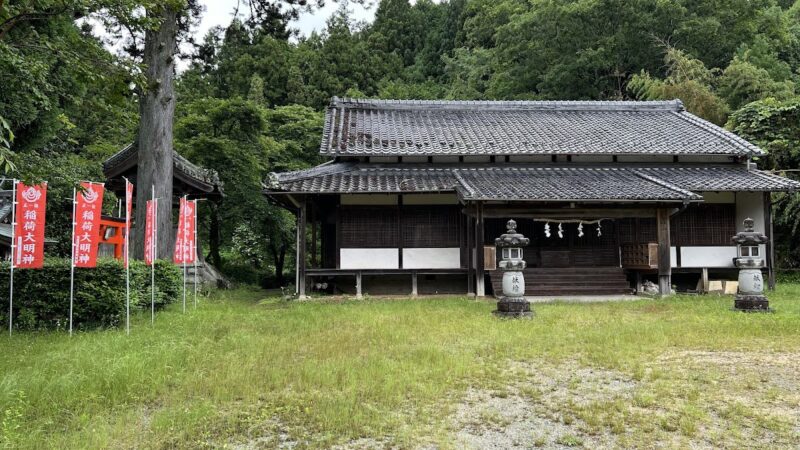
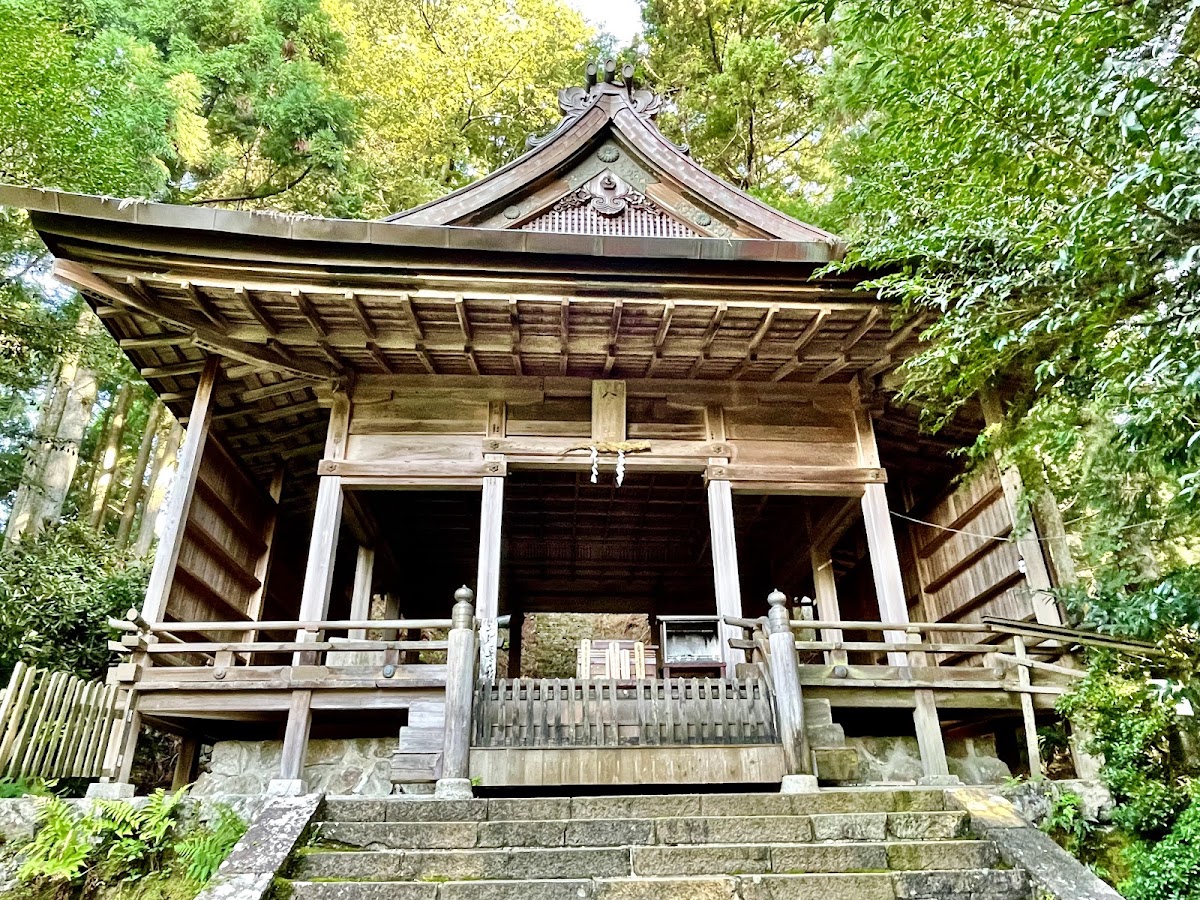
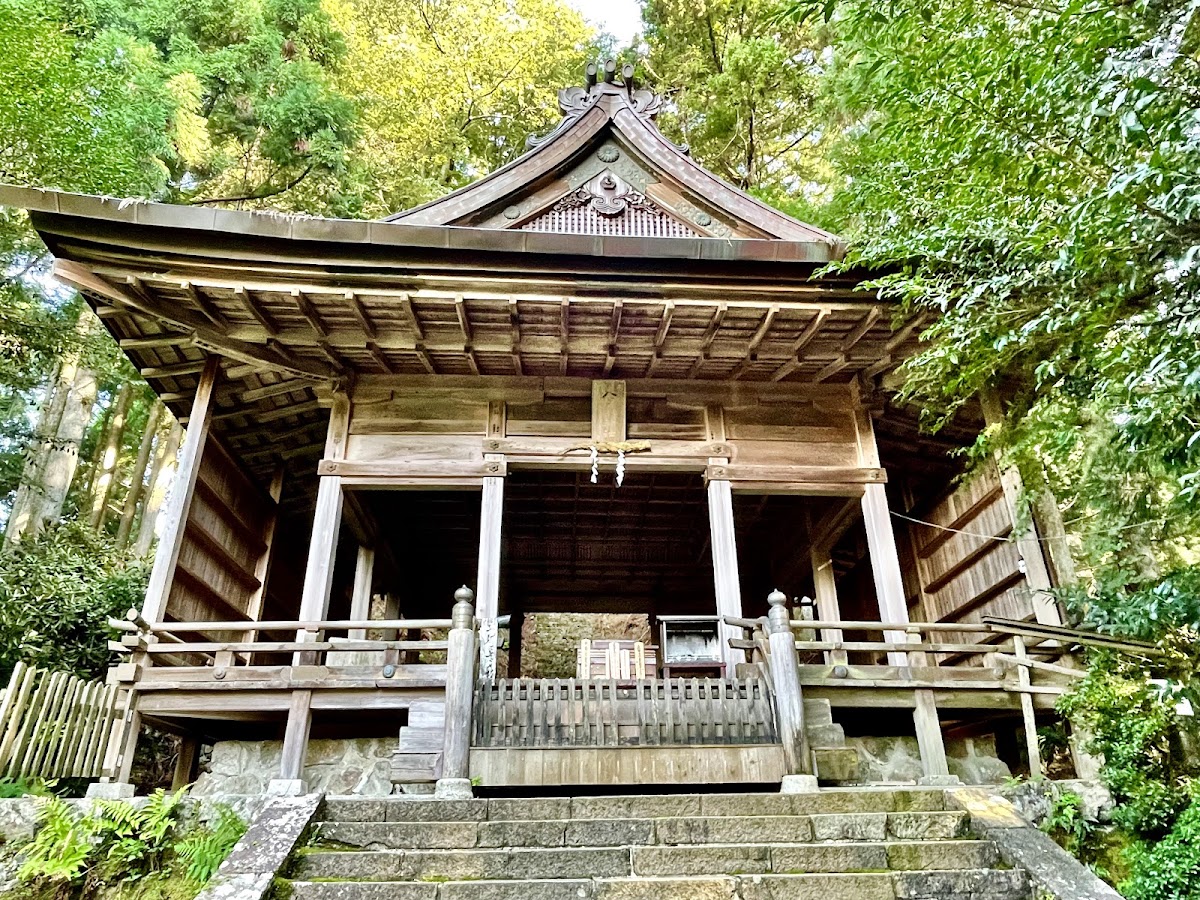
The shrine buildings of Kinpu Shrine are simple yet majestic, typical of shrines in mountainous areas. The main hall is a one-bay Kasuga-style structure, surrounded by giant cedar trees, creating a sacred atmosphere. The architectural style of the shrine buildings has been renovated over time, but it still conveys the dignity of an ancient shrine. In particular, its placement, harmonizing with the surrounding natural environment, embodies the aesthetics of Japanese shrine architecture.
Natural Environment of the Shrine Grounds
Okusenbon, where Kinpu Shrine is located, is the highest elevation area of Mount Yoshino and a region rich in nature. The shrine grounds are surrounded by ancient cedar and cherry trees, allowing visitors to enjoy beautiful scenery throughout the seasons.
Especially in spring, during the cherry blossom season, the cherry blossoms of Okusenbon bloom in profusion, making it the final point of the cherry blossom viewing on Mount Yoshino, following Shimosenbon, Nakasenbon, and Kamisenbon, attracting many cherry blossom viewers. In autumn, the autumn leaves are beautiful, and in winter, the sight of the shrine standing amidst the snowscape is majestic.
Hiking Trail to Aonegatake
Near Kinpu Shrine is a hiking trail to Aonegatake (elevation 858m), the highest peak of Mount Yoshino. From the summit of Aonegatake Mountain, on a clear day, you can see the mountains of the Omine mountain range, giving you a real sense of Yoshino’s geographical importance as a sacred site for Shugendo (mountain asceticism).
Annual Events at Kinpu Shrine: Festivals Throughout the Four Seasons
Major Festivals and Rituals
Kinpu Shrine holds various festivals and rituals throughout the year. The main annual events include the following:
Spring Grand Festival: An important festival held with the arrival of spring, praying for a bountiful harvest and the well-being of the parishioners. It often coincides with cherry blossom season, attracting many visitors who also enjoy cherry blossom viewing.
Summer Purification Ceremony: A ritual held on June 30th to purify oneself of sins and impurities accumulated over the past six months and pray for good health for the remaining half of the year.
Autumn Grand Festival: A festival to give thanks for the autumn harvest and pray for a bountiful harvest in the coming year. It takes place during the beautiful autumn foliage season.
Saitansai (New Year’s Day Festival): The first festival of the new year, held on New Year’s Day, to pray for peace and prosperity throughout the year.
Events Related to Shugendo
Kinpu Shrine also holds events that carry on the traditions of Shugendo. In particular, many Shugendo practitioners pray for safety at Kinpu Shrine before entering Mount Omine for ascetic training.
Access and Visiting Information: How to Get to Kinpu Shrine
Access by Public Transportation
Kinpu Shrine is located in Okusenbon, the innermost part of Mount Yoshino, so access requires time and physical effort.
If using Kintetsu Railway:
- Get off at “Yoshino Station” on the Kintetsu Yoshino Line.
- Take the ropeway to “Yoshinoyama Station” (walking is also possible).
- From Yoshinoyama Station to Okusenbon, it’s about an 80-100 minute walk.
If using the bus:
- During the cherry blossom season (early to mid-April), temporary buses may run to Okusenbon-guchi.
- It’s also about a 15-20 minute walk from the bus stop.
Access by car
If using a car:
- There are several parking lots in Yoshinoyama, but you cannot drive to Okusenbon.
- Park at Shimosenbon Parking Lot or Yoshinoyama Tourist Parking Lot and proceed on foot or by bus.
- During the cherry blossom season, there are traffic restrictions and private car restrictions, so please be aware.
Points to note when visiting
- Estimated time: Please allow approximately 3-4 hours round trip from Yoshinoyama Station.
- Attire: Since you will be walking on mountain paths, comfortable shoes and clothing are essential.
- Season: In winter, there may be snow, so please check in advance.
- Physical Fitness: There are considerable uphill sections, so please do not overexert yourself if you are not confident in your physical fitness.
Visiting Hours and Admission Fee
- Visiting Hours: The grounds are freely accessible (however, visiting during reasonable hours is recommended).
- Admission Fee: Free
- Shrine Office: The chief priest’s residence is nearby, but he may be absent.
Goshuin (Shrine Seal) and Gifts: Information on the Kinpu Shrine Gift Office
About Goshuin (Shrine Seals)
Kinpu Shrine offers Goshuin. However, they may not be available if the chief priest is absent, so it is recommended to check in advance if you definitely want to receive a Goshuin.
Kinpu Shrine’s Goshuin features simple yet powerful calligraphy, reflecting its status as a World Heritage site shrine.
Using the Online Amulet and Talisman Service
Kinpu Shrine has opened an online amulet and talisman service for those who live far away or are unable to visit in person for various reasons. You can order amulets, talismans, and other items from the official website.
Main items available at the online store:
- Amulets (talismans)
- Various charms
- Goshuin (pre-printed stamps)
- Other items
Types of main items
Kinpu Shrine offers a variety of charms and items:
- Health Charm: A charm for health and longevity through the divine virtues of Kanayama-hiko-no-kami
- Exorcism Charm: A charm to ward off misfortune and protect oneself
- Financial Fortune Charm: A charm for increased financial fortune through the divine virtues of the god of metal
- Traffic Safety Charm: A charm to protect against travel dangers
Value as a World Heritage Site “Sacred Sites and Pilgrimage Routes in the Kii Mountain Range”
Significance of World Heritage Registration
Kinpu Shrine was registered as a UNESCO World Heritage Site in 2004 as part of the “Sacred Sites and Pilgrimage Routes in the Kii Mountain Range.” This World Heritage Site is a cultural landscape consisting of three sacred sites in the Kii Mountains: “Yoshino-Omine,” “Kumano Sanzan,” and “Koyasan,” and the pilgrimage routes connecting them.
Kinpu Shrine is valued as an important component of the Yoshino-Omine sacred site for the following reasons:
- Evidence of ancient mountain worship: As an ancient shrine dedicated to the local deity of Mt. Kinpu, it conveys the history of Japanese mountain worship to the present day.
- Sacred site of Shugendo: An important base in the development of Shugendo from the medieval period onward.
- Harmony between nature and faith: The formation of a sacred space integrated with the surrounding natural environment.
- Cultural continuity: Its value as a place of worship that has continued from ancient times to the present day.
Cultural Value of the Entire Yoshino Mountain Area
The entire Yoshino Mountain area, where Kinpu Shrine is located, holds special significance in Japanese religious culture. Yoshino Mountain is home to numerous important religious sites, including Kinpu Shrine, Kinpusen-ji Temple, Yoshimizu Shrine, and Yoshino Mizuwake Shrine, all of which together form a unique cultural landscape.
Tourist Attractions Around Kinpu Shrine
Cherry Blossoms of Yoshino Mountain
Yoshino Mountain is known as Japan’s best cherry blossom viewing spot, with approximately 30,000 cherry trees adorning the entire mountain. Because the blooming period differs depending on the elevation (Shimo-senbon, Naka-senbon, Kami-senbon, and Oku-senbon), visitors can enjoy the cherry blossoms for an extended period.
Oku-senbon, where Kinpu Shrine is located, is the best place to see the latest-blooming cherry blossoms, with the peak viewing period being from mid- to late April.
Kinpusen-ji Temple
Located in the heart of Yoshino Mountain, Kinpusen-ji Temple is known as the head temple of Shugendo (mountain asceticism). Its main hall (Zaō-dō), a national treasure, boasts the second largest size among ancient wooden buildings, after the Great Buddha Hall of Tōdai-ji Temple.
Yoshimizu Shrine
Yoshimizu Shrine, a UNESCO World Heritage Site, is the site of Emperor Go-Daigo’s temporary palace and is also known as the place where Minamoto no Yoshitsune and Shizuka Gozen took refuge. The shrine grounds offer a spectacular panoramic view of the cherry blossoms of Mount Yoshino.
Takagiyama Observatory
From the Takagiyama Observatory in Okusenbon, you can enjoy magnificent views of the entire Mount Yoshino and the Omine mountain range. This is a spot you should visit when visiting Kinpu Shrine.
Etiquette and Customs for Visiting Kinpu Shrine
Basic Worship Etiquette
When visiting Kinpu Shrine, follow the general etiquette for visiting a shrine:
- Bow before passing through the torii gate.
- Walk along the edge of the path. (The center is the path for the gods.)
- Purify yourself at the water basin.
- Bow twice, clap twice, and bow once in front of the main hall.
- Bow once again at the torii gate when leaving.
Mindset as a Sacred Site of Mountain Worship
Kinpu Shrine is not merely a tourist destination, but a place of worship that has continued since ancient times. Please observe the following points when visiting the shrine:
- Maintain silence: Do not speak loudly on the shrine grounds and pray quietly.
- Respect nature: Do not damage plants or litter.
- Photography etiquette: Do not take photos in areas where photography is prohibited, such as inside the main hall.
- Consider your attire: Dress appropriately for a sacred place.
Kinpu Shrine’s Seasons: Seasonal Charms
Spring (March-May)
The greatest charm of Kinpu Shrine in spring is undoubtedly the cherry blossom season. The cherry blossoms in Okusenbon are at their peak from mid- to late April, coloring the shrine grounds. The fresh greenery is also beautiful, making it a season full of vitality.
Summer (June-August)
In summer, Kinpu Shrine is enveloped in deep green. Due to its high altitude, it is cooler than the city and suitable for escaping the summer heat. You can find peace of mind in the quiet shrine grounds, where the sound of cicadas resonates.
Autumn (September – November)
Autumn is the season of autumn leaves. From late October to early November, the trees on the shrine grounds turn red and yellow, creating a beautiful landscape. Visiting the shrine in the crisp autumn air is a special experience.
Winter (December – February)
In winter, Kinpu Shrine can become a world of white due to snowfall. The snow-covered grounds are enveloped in a mystical atmosphere, allowing visitors to feel a deep spirituality in the silence. However, caution is necessary when visiting during winter due to the slippery grounds.
Kinpu Shrine Blog “Shrine Affairs Diary”: Learn about the daily life of the shrine
Kinpu Shrine publishes a blog, “Shrine Affairs Diary,” on its official website. This blog is updated daily with the following content:
- Scenes from the Shrine Grounds: Seasonal scenery and natural changes within the shrine grounds
- Reports on Annual Events: Reports on festivals and Shinto rituals
- Discussions on Shinto: Explanations of Shinto teachings and beliefs
- Discussions on Life Rituals: Rituals marking life milestones such as the first shrine visit, Shichi-Go-San (7-5-3) festival, and exorcism
- History of Yoshino Mountain: Information on the history and culture of the region
By reading this blog, you can gain a deeper understanding of Kinpu Shrine and use it to prepare before your visit or review afterward.
Summary: The Significance of Visiting Kinpu Shrine
Kinpu Shrine, a World Heritage site located in Okusenbon, Yoshino Mountain, possesses the following multifaceted values:
- Place of Worship: Dedicated to Kanayama-hiko-no-kami, it bestows blessings of health, longevity, and protection from evil.
- Witness to History: Connected to important historical figures such as Fujiwara no Michinaga and Minamoto no Yoshitsune.
- Sacred Site of Shugendo: An important base for the development of Shugendo from the medieval period onward.
- Harmony with Nature: A sacred space surrounded by the beautiful nature of the four seasons.
- Cultural Heritage: Value internationally recognized as a World Heritage site.
The journey to Okusenbon is not easy, but the sense of accomplishment upon arrival and the sacred atmosphere felt within the tranquil grounds are exceptional. When visiting Yoshino Mountain, be sure to extend your trip to Kinpu Shrine and experience the origins of Japanese mountain worship.
A visit to Kinpu Shrine is not merely sightseeing; it will be a precious experience that touches upon the profound depths of Japanese spiritual culture. The changing seasons, the weight of history, and the continuing practice of faith—all these elements harmonize to create Kinpu Shrine, a place that leaves a deep impression on the hearts of visitors and is truly a treasure of Japan.