Aoshima Shrine Complete Guide | The Power Spot for Matchmaking and the Charm of the Devil’s Washboard
What is Aoshima Shrine? – A Sacred Site Woven from Mythology and Nature
Aoshima Shrine is a shrine located in Aoshima 2-chome, Miyazaki City, Miyazaki Prefecture, encompassing the entire island of Aoshima, which has a circumference of approximately 1.5 km. The main shrine is located almost in the center of the island and is known as the setting for the myth of “Umisachihiko and Yamasachihiko” recorded in the Kojiki and Nihon Shoki.
The entire island is designated as a National Special Natural Monument for its clusters of tropical and subtropical plants, and the surrounding strangely shaped rocks known as “Devil’s Washboard” are designated as a National Natural Monument as uplifted seabed and unusual wave-eroded marks. Currently, it is a special shrine of the Association of Shinto Shrines and a popular tourist spot in Miyazaki, attracting many visitors throughout the year.
History and Origins of Aoshima Shrine
Aoshima Shrine is located on the site of the palace where Hikohodemi-no-Mikoto returned from Watatsumi-no-Miya. It enshrines three deities: Hikohodemi-no-Mikoto, Toyotama-hime-no-Mikoto, and Shiotsutsu-no-Okami.
While the exact date of its founding is unclear, the Heian period provincial governor’s inspection record, “Hyuga Miyage,” mentions “Aoshima Daimyojin worshipped during the reign of Emperor Saga,” indicating that it was already an object of worship approximately 1200 years ago. During the Bunki era (1501-1504), the shrine buildings were rebuilt by the then-lord, Ito Tadasuke.
During the Edo period, the entire island of Aoshima was considered a sacred area, and entry by ordinary people was prohibited. Visiting the island was permitted only twice a year, on the 16th of the 3rd and 16th of the 10th month of the lunar calendar. This tradition of restricted access to the area continued until the Meiji era. In 1737 (Genbun 2), a bridge to Aoshima was built by Ito Sukezane, the lord of the Obi domain, but public access remained restricted.
After the Meiji Restoration, when the restrictions were lifted, Aoshima Shrine gradually developed as a tourist destination and is now a nationally popular power spot for matchmaking.
A Popular Power Spot Known for its Matchmaking Benefits
The Love Story of Yamasachihiko and Toyotamahime
The reason Aoshima Shrine is known as a sacred place for matchmaking lies in the Japanese myth of “Umisachihiko and Yamasachihiko.” Yamasachihiko (Hikohodemi-no-Mikoto) lost a fishing hook he borrowed from his brother Umisachihiko and went to the sea god’s palace, Umizumi-no-Miya, to search for it.
There, he met Toyotamahime-no-Mikoto, the daughter of the sea god, and the two fell in love. It is said that after Yamasachihiko spent three years at Umizumi Palace, he returned to Aoshima with Toyotamahime, and they were united there. Because of this myth, Aoshima Shrine is believed to grant blessings for successful relationships, matchmaking, and marital harmony, attracting many couples and worshippers seeking good fortune in love.
Shrine Grounds Spots Related to Matchmaking
Within the grounds of Aoshima Shrine, there are various spots related to matchmaking and successful relationships.
The Ema Tunnel is a place where ema (votive tablets) bearing the wishes of countless worshippers are hung. After receiving an ema at the shrine office, you can hang it here with your prayers. The tunnel, woven from countless ema, is a sacred space where the wishes of many people gather.
Musubi Koyori is a way to pray for matchmaking and the fulfillment of wishes by tying a paper cord with a wish in mind. Many worshippers tie paper cords with their wishes at the tying points set up around the main hall. Amanohirakanage is a popular prayer method where you throw an unglazed earthenware vessel (kawarake) and it is believed that if you can land it on the rope above the torii gate, your wish will come true. It is located on the path leading to the original shrine, and many worshippers try their luck.
Amulets and Souvenirs
Aoshima Shrine offers amulets for various blessings, including matchmaking. Representative amulets include those for matchmaking, love, and marriage, all featuring bright and charming designs reminiscent of the tropics.
The shrine office offers various amulets even outside of the New Year period, making them popular as souvenirs and mementos of your visit. You can also receive Goshuin (shrine stamps), and limited-edition Goshuin are sometimes offered seasonally.
A Sacred Shrine Surrounded by the Oni no Sentakuita (Devil’s Washboard)
What is the Oni no Sentakuita?
The “Oni no Sentakuita” (Devil’s Washboard), surrounding Aoshima Island, is a natural wonder that is essential to understanding when visiting Aoshima Shrine. Officially known as “Wave-Shaped Rocks,” these rock formations, a combination of uplifted seabed and uniquely shaped wave-eroded rocks, are designated a national natural monument.
Approximately 7 to 8 million years ago, geological strata were uplifted, and the alternating erosion of hard sandstone and soft mudstone layers created the wave-like rock formations resembling a washboard. This unique topography stretches for about 8 km along the coastline around Aoshima Island, and its appearance is particularly clear at low tide.
The regularly spaced stripes of the rocks create a truly miraculous natural landscape, attracting many tourists who enjoy taking photographs. The “Devil’s Washboard,” whose appearance changes depending on the angle of the sunlight, is a perfect spot to reflect on the distant past.
The Pilgrimage Route Crossing the Yayoi Bridge
To visit Aoshima Shrine, you cross the Yayoi Bridge connecting the mainland to Aoshima Island. The experience of crossing this bridge itself is a special moment, stepping from everyday life into a sacred place.
On both sides of the bridge, the unique rock formations known as “Oni no Sentakuita” (Devil’s Washboard) stretch out, and the scenery, a tapestry of emerald green sea, blue sky, and tropical plants, gives you the feeling of having wandered into another world. As you cross the bridge, the sound of the waves and the sea breeze create a naturally refreshing feeling in your heart.
Yayoi Bridge is for pedestrians only, allowing you to cross at a leisurely pace and enjoy the scenery. The view of the sea and the Oni no Sentakuita, which changes depending on the weather and time of day, offers a fresh and moving experience no matter how many times you visit.
Aoshima Island as a Temple Ground – Subtropical Plants Designated as a Special Natural Monument
Clusters of Livistona Palm Trees
The entire island of Aoshima is designated as a Special Natural Monument of Japan, due to its clusters of tropical and subtropical plants. Particularly distinctive is the cluster of Livistona palm trees (evergreen trees of the palm family) that cover the entire island.
Livistona palm trees are a symbol of the tropics, and approximately 5,000 of them grow naturally on Aoshima Island. The dense clusters of large palm trees, some over 10 meters tall, resemble a jungle on a southern island, a landscape symbolic of Miyazaki’s warm climate.
Walking through the shrine grounds, the shade cast by the leaves of the Livistona palm trees overhead is refreshing, allowing you to forget the hustle and bustle of city life. Livistona palm leaves have been used in Shinto rituals since ancient times, and are used in various festivals at Aoshima Shrine.
Over 200 Species of Flora
Besides the Livistona palm, Aoshima Island is home to over 200 species of tropical and subtropical plants. Plants unique to the tropics, such as sea vines, Crinum asiaticum, phoenix palms, and cycads, form a rich ecosystem.
These plants have been protected by the warm climate influenced by the Kuroshio Current and the isolated environment of the island. The entire island is like a botanical garden, where you can enjoy flowers and fruits throughout the seasons.
Especially from spring to summer, various flowers bloom in profusion, adorning the shrine grounds with vibrant, tropical colors. For plant lovers, this is a valuable spot where you can enjoy plant observation in addition to visiting the shrine.
Highlights of the Motomiya and Main Hall
Visiting the Motomiya
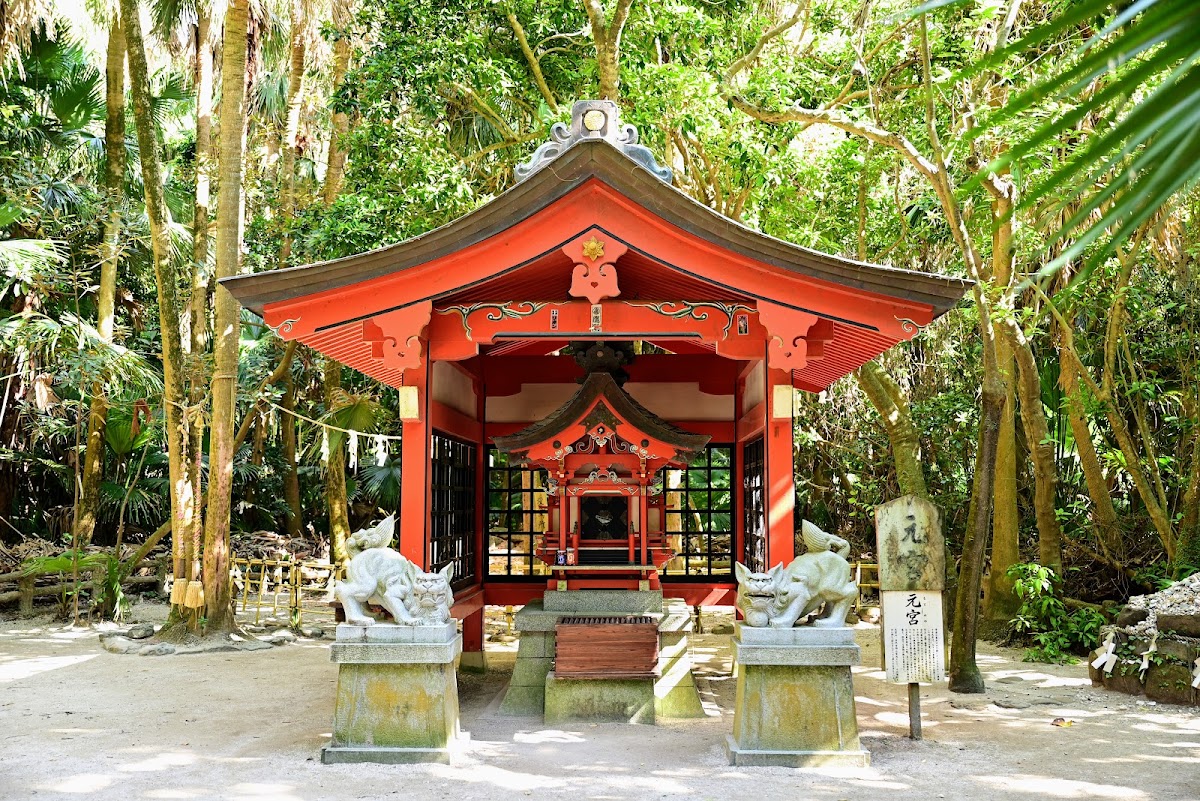
Aoshima Shrine has a separate ritual site called “Motomiya” in addition to the main hall. Located deep within the island, amidst a forest of Livistona palm trees, Motomiya is considered the center of ancient worship.
Motomiya lacks a shrine building, preserving a primitive form of worship with an altar set up on natural rock formations. This form is a valuable example of ancient Shinto belief, exuding a sacred atmosphere.
The path to Motomiya is a mystical journey through dense Livistona palm trees. Walking along the path, bathed in dappled sunlight, you are enveloped in a silence that feels as if time has stopped. After visiting the main hall, we highly recommend extending your visit to Motomiya for a deeper moment of prayer.
The Architectural Beauty of the Main Shrine
The main shrine of Aoshima Shrine is a beautiful building characterized by its vibrant vermilion color. The current shrine building has been rebuilt several times, and its vivid colors, shining brightly in the strong southern sunlight, are striking.
In the worship hall in front of the main shrine, you can offer prayers in a sacred space dedicated to Yamasachihiko and Toyotamahime. Pay attention to the decorations and carvings of the shrine building; you can appreciate the meticulously crafted architectural beauty down to the smallest detail.
Besides the main shrine, there are numerous subsidiary shrines scattered throughout the grounds, each offering different blessings. Taking your time to slowly explore the grounds allows you to experience the diverse forms of faith at Aoshima Shrine.
Learning About Mythology at the Hyuga Mythology Museum
Within the grounds of Aoshima Shrine is the “Hyuga Mythology Museum,” where you can learn about the myth of Umisachihiko and Yamasachihiko in an easy-to-understand way. The museum features dioramas and exhibits recreating the myth, and visiting before praying will allow you to understand the meaning of the shrine more deeply.
At the Mythology Museum, important scenes from the story are visually depicted, such as Yamasachihiko’s journey to the Sea Palace, his encounter with Toyotama-hime, and his adventure in search of the fishing hook. The content is enjoyable for both children and adults, making it highly recommended for families.
The Hyuga mythology is an important story connected to Japan’s founding myths, and visiting Aoshima Shrine allows you to touch upon the roots of Japanese history and culture. Standing on the land of Aoshima, the setting of the myth, you can experience the sacredness felt by the ancient people.
Tourist Attractions Around Aoshima Shrine
AOSHIMA BEACH PARK
Located very close to Aoshima Shrine is AOSHIMA BEACH PARK. This park features stylish cafes and restaurants facing the beach, allowing visitors to enjoy a meal or a break while gazing at the sea after their visit.
This facility offers a tropical resort atmosphere, and dishes and sweets made with local ingredients are popular. The terrace seating offers a panoramic view of Aoshima and the Oni no Sentakuita (Devil’s Washboard), making it a popular spot for photos.
Miyako Botanic Garden Aoshima (Okinawa Prefectural Aoshima Subtropical Botanical Garden)
Located on the north side of Aoshima Island is the Miyako Botanic Garden Aoshima (Okinawa Prefectural Aoshima Subtropical Botanical Garden). On approximately 1.6 hectares, it cultivates tropical and subtropical plants from around the world, allowing visitors to gain a deeper understanding of Aoshima’s natural environment.
In the large greenhouse, you can enjoy colorful tropical flowers such as bougainvillea and hibiscus year-round. From the botanical garden, you can also see Aoshima Shrine in the distance, making it ideal for understanding the overall landscape of the island.
Kodomo no Kuni (AOSHIMA PICNIC CLUB)
For families, “Kodomo no Kuni (AOSHIMA PICNIC CLUB)” is highly recommended. With its vast grounds, athletic facilities, and playground equipment, children can play to their heart’s content.
From within the park, you can enjoy a panoramic view of the Pacific Ocean, making it perfect for a picnic-like day out. Combined with a visit to Aoshima Shrine, it makes for a fun family sightseeing plan.
Horikiri Pass and “Roadside Station” Phoenix
Located about 10 minutes south of Aoshima by car, Horikiri Pass is a representative scenic spot on the Nichinan Coast. From the pass’s observation deck, you can enjoy a panoramic view of the coastline with its unique rock formations (Oni no Sentakuita) and the rows of phoenix trees.
Nearby is “Roadside Station” Phoenix, where you can purchase Miyazaki’s local products and souvenirs. The restaurant serves dishes made with local seafood, and the view from the observation deck is also magnificent.
It’s an ideal stop during a drive along the Nichinan Coast, and visiting it along with Aoshima Shrine allows you to fully appreciate the beauty of Miyazaki’s coastline.
Access and Basic Information to Aoshima Shrine
Access by Train
The most common access method is a 15-minute walk from JR Nichinan Line’s “Aoshima Station.” Aoshima Station is an unmanned station, but it’s about 30 minutes from Miyazaki Station, and the walk from the station to Aoshima Shrine offers scenic coastal views.
From Miyazaki Station, it takes about 25-30 minutes by local train, with 1-2 trains per hour. Checking the timetable in advance is recommended.
Access by Car
Approximately 15km from Miyazaki IC, about 20 minutes by car. Head south on National Route 220 (Nichinan Coast Road) and follow the signs for Aoshima.
There are several parking lots around Aoshima. There is a municipal parking lot (paid) near the entrance to the Aoshima approach road. It can get crowded during peak tourist season and on weekends, so early arrival is recommended.
Access by Bus
From Miyazaki Station, take a Miyazaki Kotsu bus bound for “Aoshima, Nichinan, or Obi,” get off at the “Aoshima” bus stop, and it’s about a 5-minute walk. Buses run approximately 2-3 times per hour, and the journey takes about 40 minutes.
Basic Information
Location: 2-13-1 Aoshima, Miyazaki City, Miyazaki Prefecture
Visiting Hours: Grounds are freely accessible (Shrine office is generally open from 8:00 to 17:00)
Admission Fee: Free
Parking: Paid parking available nearby
Inquiries: Aoshima Shrine Office (Information can be found on the official website)
Best Season for Visiting
Aoshima Shrine can be visited year-round, but each season offers a different charm.
Spring (March-May) is warm and pleasant, and the fresh greenery of subtropical plants is beautiful. While it gets crowded during Golden Week, visiting in the refreshing early summer weather is pleasant.
Summer (June-August) is the swimming season, and Aoshima Beach is bustling. However, the sun is strong, so don’t forget sun protection and hydration. Visiting in the early morning or evening is recommended.
Autumn (September to November) is a time when the weather becomes pleasant again after the typhoon season. There are relatively few tourists, allowing for a peaceful visit.
Winter (December to February) is relatively mild even in Miyazaki, attracting many tourists seeking refuge from the cold of Honshu. While it gets very crowded during the New Year’s pilgrimage, it calms down after mid-January.
Prayers and Applications
Various Prayers
Aoshima Shrine accepts various prayers, including those for matchmaking, safe childbirth, traffic safety, family safety, and business prosperity. Applications for prayers can be made at the shrine office.
Particularly popular are prayers for matchmaking and prayers for safe childbirth, attracting many visitors seeking blessings related to mythology. While prayers are accepted without reservations, it is recommended to contact the shrine in advance for groups or special requests.
Wedding Announcement Ceremony
Aoshima Shrine also holds a “Wedding Announcement Ceremony” where couples who prayed for a successful marriage at the shrine can visit after their wedding to report their union. This is a special ceremony where couples report their marriage before the gods and pray for the happiness of the couple. Advance registration is required.
New Year’s Special Prayer Ceremony / Group Prayer Ceremony
A special New Year’s prayer ceremony is held during the New Year period, attracting many worshippers praying for happiness throughout the year. The shrine also accepts prayer ceremonies for companies and groups, and advance reservations are required.
Online applications can also be made through the official website, allowing worshippers from distant locations to prepare in advance.
Media Coverage and Photography
Aoshima Shrine is a popular tourist spot, and receives many requests for media coverage and commercial photography. If you wish to conduct coverage or photography on the shrine grounds, advance registration with the shrine is required.
Personal commemorative photography is permitted, but prior permission is required for the use of tripods, commercial photography, and drones. Pre-wedding photoshoots are also popular, and photos taken against the backdrop of the tropical atmosphere and Livistona palm trees create special memories.
If you wish to have a photoshoot, we recommend checking the application method on the official website and contacting them well in advance.
Summary – A Special Sacred Place Where Mythology and Nature Harmonize
Aoshima Shrine is a unique shrine that combines its history as the setting for Japanese mythology, its appeal as a power spot for matchmaking, the natural beauty of its formations such as the “Devil’s Washboard” and subtropical plants, and the liberating feeling of a tropical resort.
From the moment you cross the Yayoi Bridge and step onto the island, a special time unlike everyday life begins. Walk in the shade of the Livistona palm trees, offer prayers at the main shrine, and reflect on ancient beliefs at the original shrine. And while gazing at the spectacular scenery created by the Devil’s Washboard, feel the passage of time.
Aoshima Shrine is a must-visit when you come to Miyazaki. This sacred site offers a special experience for everyone: those seeking love, those enjoying power spot pilgrimages, those interested in Japanese mythology, and those moved by the beauty of nature’s formations.
Even in the Reiwa era, Aoshima Shrine maintains its unchanging sacredness and natural beauty. We encourage you to visit and experience its charm with all your senses. It will surely become a special memory that will stay with you.