Complete Guide to Oya-ji Temple | A Thorough Explanation of the Charms of Japan’s Oldest Stone Buddha and the Peace Kannon
Located in Oya-cho, Utsunomiya City, Tochigi Prefecture, Oya-ji Temple is a mystical Tendai sect temple nestled in a natural rock face. It houses two Kannon statues: the “Oya Kannon,” known as Japan’s oldest rock-carved Buddha, and the 27-meter-tall “Peace Kannon,” erected after the war to pray for peace. As the 19th temple on the Bando Thirty-Three Kannon Pilgrimage, it welcomes many visitors. This article comprehensively covers everything you need to know before visiting Oya-ji Temple, from its history and cultural value to its highlights and access methods.
History and Origin of Oya-ji Temple
Founding and the Legend of Kobo Daishi
Oya-ji Temple is said to have been founded in the early Heian period, in the first year of the Konin era (810 AD). It is attributed to Kobo Daishi (Kukai), and its mountain name is Tenkai-zan, and its temple name is Jodo-in. According to legend, Kobo Daishi visited this site during his pilgrimage through eastern Japan and carved a statue of the Thousand-Armed Kannon in the cave.
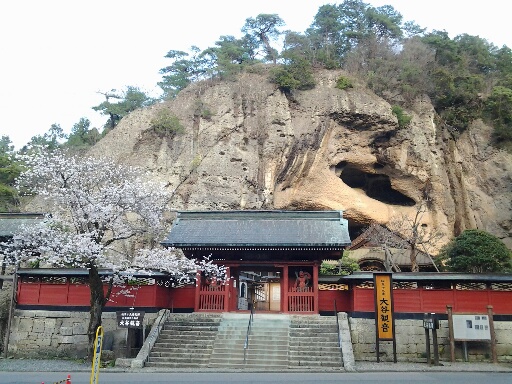
The natural tuff (Oya stone) cliff face forms the back of the main hall, creating a unique space where nature and man-made structures are integrated. This location conveys the remnants of an ancient form of worship where people revered caves and grottoes as sacred places.
Development in the Kamakura Period and the Bando Pilgrimage
During the Kamakura period, Oya-ji Temple was officially designated as the 19th temple of the Bando Thirty-Three Kannon Pilgrimage. During this period, with the rise of the samurai class, Kannon worship flourished in the Kanto region, and Oya-ji Temple became widely known as “Oya Kannon.” Many samurai and commoners visited the temple, and it developed into an important sacred site in eastern Japan.
Its status as a Bando pilgrimage temple has been maintained to this day, and pilgrims continue to visit without interruption. The temple’s hymn, “Even those who hear its name, O Kannon of Otani, guide us, whether we know or not,” is beloved as a verse expressing the profound compassion of Otani Kannon.
Preservation and Commemoration in Modern Times
Since the Meiji era, Otani-ji Temple has attracted attention from the perspective of cultural property protection. In 1922 (Taisho 11), the Otani Cliff Buddhas were designated a National Historic Site, and in 1954 (Showa 29), they were upgraded to a Special Historic Site. The group of cliff Buddhas, including the principal image, the standing statue of the Thousand-Armed Kannon, were designated Important Cultural Properties in 1961 (Showa 36).
In 1948 (Showa 23), after the war, a 27-meter-tall Peace Kannon statue was erected south of Otani-ji Temple to commemorate war dead and pray for world peace. This colossal Kannon statue, constructed from stacked Otani stone, is a beloved symbol of the Otani region.
Characteristics and New Theories about Otani Kannon
Japan’s Oldest Rock-Carved Buddha
The standing statue of Senju Kannon (Thousand-Armed Kannon), the principal image of Otani-ji Temple, is a rock-carved Buddha approximately 4 meters tall and is highly regarded academically as Japan’s oldest stone Buddha. Carved directly into the tuff rock face, the Senju Kannon is known for its graceful form and exquisite detail, strongly retaining the characteristics of early Heian period Buddhist sculpture.
Surrounding the Senju Kannon are a total of 10 rock-carved Buddhas, including those believed to be the Shakyamuni Triad, the Yakushi Triad, and the Amida Triad. All of these are designated as Special Historic Sites and Important Cultural Properties. The group of Buddhas carved into the rock face exudes a mystical atmosphere through the interplay of light and shadow created by natural and artificial lighting.
Connection to the Bamiyan Buddhas
Recent research has pointed out interesting commonalities between Otani Kannon and the Bamiyan Buddhas in Afghanistan. Researchers, including Hideo Kitaguchi, have proposed that the Otani Kannon statue may have been carved by a monk who traveled along the Silk Road during the late Nara period, based on similarities in production techniques and styles.
According to this new theory, the Otani Kannon is not merely a piece of Japanese Buddhist art, but rather a product of East-West cultural exchange. The choice of tuff as a material, the technique of rock carving, and the Central Asian elements seen in the style of the Buddha statue suggest that ancient Japan was part of an international cultural network. This “Japanese Silk Road” perspective is attracting attention as it further enhances the cultural value of the Otani Kannon.
Production Techniques and Preservation
The production of the Otani Kannon utilized the unique softness of tuff. While Otani stone is easy to process, it is also prone to weathering. The fact that it has remained in relatively good condition even after more than 1200 years is due to the cave environment protecting the Buddha statue from wind and rain.
Traces of past coloring have been found on the surface of the Thousand-Armed Kannon statue, suggesting that it was originally adorned with vibrant colors. While the texture of the stone surface is now prominent, this actually enhances the ancient aesthetic beauty.
Value as a Nationally Designated Cultural Property
Special Historic Site “Otani Magaibutsu”
The Otani Magaibutsu, owned by Otani-ji Temple, is designated as a National Special Historic Site. Special Historic Sites are those of particular importance among historic sites, and only a limited number exist nationwide. The Otani Magaibutsu receives this designation because it is a representative example of a cave temple in Japan and a valuable heritage that conveys ancient forms of belief and sculptural techniques to the present day.
The entire cave functions as a single religious space, and the temple architecture, which utilizes the natural terrain, possesses universal value in East Asian Buddhist culture.
Group of Rock-Carved Buddhas Designated as Important Cultural Properties
The ten rock-carved Buddhas, including the principal image, a standing statue of the Thousand-Armed Kannon, were collectively designated as a National Important Cultural Property in 1961. These statues are estimated to have been created during the early to mid-Heian period and occupy an important position in the history of Japanese Buddhist art.
While each statue possesses its own unique style, they harmonize as a whole, suggesting a planned arrangement. In particular, the three triad formations—Shaka Triad, Yakushi Triad, and Amida Triad—reflect the diversity of Buddhist beliefs at the time.
Designation as a Place of Scenic Beauty and Landscape Preservation
The grounds of Oya-ji Temple and the surrounding area are also designated as a Place of Scenic Beauty. The unique landscape created by the Oya stone cliffs is valued as a cultural landscape where nature and human activity are in harmony. The entire Oya region has been designated a Japan Heritage site as “Utsunomiya, a town where Oya stone culture thrives,” leading to a renewed recognition of the region’s historical and cultural value.
The Significance of the Peace Kannon
History of Construction
The Peace Kannon, standing a few minutes’ walk south of Oya-ji Temple, was erected over a period of six years, starting in 1948. It was planned by local volunteers with the purpose of commemorating those who died in World War II and praying for lasting peace.
The colossal Kannon statue, standing 27 meters tall (approximately 88 feet including the base), is constructed from Oya stone, weighing approximately 20,000 tons. Designed by Asajiro Tobita and sculpted by Sohei Matsuda, it served as a spiritual pillar for the community during the post-war reconstruction period.
Symbol of Oya Stone Culture
The Peace Kannon is a monumental work that embodies the pinnacle of Oya stone quarrying and processing techniques. The Oya region of Utsunomiya City has been known as a source of Oya stone since the Edo period, and this stone has been widely used as a building material due to its fire resistance and ease of processing.
The construction of the Peace Kannon statue demonstrates the technical prowess of the Oya stone industry and is an important element in shaping the region’s identity. It occupies an important position, along with the rock-carved Buddhas of Oya-ji Temple, as a component of the Japan Heritage site, “Utsunomiya: A City Where Oya Stone Culture Thrives.”
Visiting and Viewing
You can climb to the base of the Peace Kannon statue, from where you can enjoy a panoramic view of Utsunomiya city. The Kannon statue’s compassionate expression conveys the preciousness of peace to visitors. Its harmonious appearance amidst the changing seasons—cherry blossoms in spring, lush greenery in summer, autumn leaves, and snowscapes in winter—makes it a popular spot for many photography enthusiasts.
Highlights of Oya-ji Temple
Main Hall and Cave
The main hall of Oya-ji Temple is built against a natural rock face, and upon entering, you can witness how the cave is an integral part of the hall. Natural light softly filters into the hall, creating a tranquil atmosphere.
The group of rock-carved Buddha statues, centered around the principal image of the Thousand-Armed Kannon, are illuminated, creating a mystical atmosphere. The sight, where the texture of the rock face and the sculptural beauty of the Buddha statues blend together, is unique and unlike anything seen elsewhere.
Treasure Hall
Oya-ji Temple has an attached treasure hall displaying temple treasures and excavated artifacts. It houses ancient documents, Buddhist implements, and paintings, allowing visitors to gain a deep understanding of Oya-ji Temple’s history and culture. In particular, the materials from the Kamakura period onward are invaluable in telling the story of its history as a pilgrimage site in the Bando region.
Nature within the Temple Grounds
The grounds of Oya-ji Temple have a unique topography, surrounded by Oya stone cliffs, allowing visitors to enjoy nature throughout the seasons. Cherry blossoms bloom in spring, the greenery deepens in summer, and autumn leaves color the rock face. The temple grounds, enveloped in the silence of winter, are also deeply atmospheric, showing different expressions with each season.
Goshuin (Temple Seal) and Commemorative Items
As the 19th temple on the Bandō Thirty-Three Kannon Pilgrimage, Ōya-ji Temple offers Goshuin (temple seals). Many visitors come not only on pilgrimage but also to collect Goshuin. Both pre-printed and handwritten Goshuin are available, making them popular as mementos of visits.
Nearby Tourist Attractions
Ōya Stone Museum
Located within walking distance of Ōya-ji Temple, the Ōya Stone Museum is a facility that tells the history of Ōya stone quarrying. The underground quarry remains are open to the public, and the vast underground space is truly impressive. The exhibits showcase the evolution of Ōya stone quarrying techniques and its uses as building material.
Visiting both Ōya-ji Temple and the Ōya Stone Museum together provides a comprehensive understanding of Ōya stone culture. Both facilities form the core of the Japan Heritage site “Utsunomiya, a City Where Ōya Stone Culture Thrives,” and visiting them together is highly recommended.
Oya Landscape Park
This park allows you to experience the nature and history of the Oya region, and you can see the Oya stone cliffs and quarry ruins up close. Walking paths are well-maintained, making it ideal for a stroll.
Utsunomiya City
Utsunomiya City is also famous as a city of gyoza (dumplings), and many tourists enjoy meals in the city center after visiting Oya-ji Temple. Other historical sites such as Utsunomiya Castle Ruins Park and Futara-san Shrine are also scattered throughout the city.
Access Information
By Public Transportation
From JR Utsunomiya Station
- Take the Kanto Bus bound for Oya/Tateiwa (approx. 30 minutes)
- Get off at the Oya Kannon-mae bus stop and it’s a short walk.
- Buses run only 1-2 times per hour, so we recommend checking the timetable in advance.
From Tobu Utsunomiya Station
- Take the Kanto Bus bound for Oya/Tateiwa (approx. 20 minutes)
- Get off at the Oya Kannon-mae bus stop and it’s a short walk.
By Car
From Tohoku Expressway
- Approximately 12km (20 minutes) from Utsunomiya IC
- Approximately 20km (30 minutes) from Kanuma IC
Parking
- Oya-ji Temple’s dedicated parking lot: Accommodates approximately 50 regular cars (free)
- Heiwa Kannon parking lot: Available separately
- It can get crowded during peak tourist season and on weekends, so we recommend arriving early.
Address
1198 Oya-cho, Utsunomiya City, Tochigi Prefecture
Car Navigation Settings
You can search using the phone number: 028-652-0128 (Oya-ji Temple)
Visiting Information
Visiting Hours
- April to September: 8:30 AM to 5:00 PM (Last entry at 4:30 PM)
- October to March: 9:00 AM to 4:30 PM (Last entry at 4:00 PM)
- Open all year round (However, visits may be closed due to religious services, etc.)
Admission Fee
- Adults (High school students and older): 400 yen
- Junior high school students: 200 yen
- Elementary school students: 100 yen
- Group discounts available (20 or more people)
Peace Kannon
- Visiting Hours: 9:00 AM to 4:30 PM
- Admission Fee: Adults 200 yen, Children 100 yen
- A combined ticket with Oya-ji Temple is also available.
Notes
- Photography is prohibited inside the hall (exterior photography is permitted).
- Please wear comfortable shoes as there are stairs.
- The ground may freeze in winter.
- Pets are not allowed.
Oya Stone Culture and Japan Heritage
In 2018, “Utsunomiya, a town where Oya stone culture thrives” was designated a Japan Heritage site by the Agency for Cultural Affairs. This designation recognized the cultural value of the entire region, including the rock-carved Buddhas of Oya-ji Temple, the Peace Kannon, the Oya Stone Museum, and the modern buildings constructed using Oya stone.
Oya stone is a tuff formed by volcanic activity approximately 15 million years ago and is mainly produced in the Oya area of Utsunomiya City. Large-scale mining began in the Edo period, and from the Meiji era onward, it was shipped nationwide as building material. It is also known for its use in the former Imperial Hotel designed by Frank Lloyd Wright.
Otani-ji Temple is considered the origin of Otani stone culture. The history of people carving Buddhist statues into Otani stone cliffs and worshipping them since ancient times demonstrates that Otani stone held a special significance even before its use as a building material.
Otani-ji Temple in Every Season
Spring (March-May)
The cherry blossoms in the temple grounds are in full bloom, creating a beautiful contrast between the cliffs and the blossoms. New greenery begins to sprout, offering a vibrant and lively landscape. With the arrival of spring, the number of visitors increases, creating a bustling atmosphere.
Summer (June-August)
The temple grounds, covered in lush greenery, exude a cool and refreshing atmosphere. The caves are cooler than the outside air, making them a comfortable summer retreat. During the rainy season, the moss is beautiful, creating a tranquil and serene ambiance.
Autumn (September-November)
The autumn leaves color the rock faces, making this the most beautiful season. The best time to visit is especially from mid- to late November, attracting many tourists. On clear autumn days, the view from the Peace Kannon is particularly spectacular.
Winter (December-February)
The snow-covered temple grounds are enveloped in silence, enhancing the mystical atmosphere. It’s a season with fewer visitors, allowing for a more leisurely visit. However, caution is needed regarding icy ground.
Manners and Etiquette for Visitors
Otani-ji Temple is an active temple and a place of worship. Please keep the following points in mind when visiting.
- Please maintain silence and be considerate of other visitors.
- Photography is prohibited inside the hall.
- Touching the Buddha statues is strictly forbidden.
- Please dress appropriately.
- Please take all your trash with you.
- Smoking is only permitted in designated areas.
Summary
Otani-ji Temple is a historical temple housing the Otani Kannon, Japan’s oldest rock-carved Buddha, and is a valuable cultural heritage designated as a Special Historic Site and Important Cultural Property. Since its founding in the Heian period, it has attracted the faith of people for over 1200 years.
Recent research has pointed to a connection with the Bamiyan Buddhas, suggesting the possibility that it is a product of East-West cultural exchange via the Silk Road. This new theory further enhances the cultural value of the Otani Kannon.
The 27-meter-tall Peace Kannon symbolizes Japan’s wish for peace after the war and represents the technical achievement of Otani stone culture. The entire area, including Oya-ji Temple, the Peace Kannon statue, and the surrounding Oya Stone Museum, has been designated a Japan Heritage site as “Utsunomiya, a town where Oya stone culture thrives,” making it a valuable place to experience the region’s history and culture.
When visiting Utsunomiya, be sure to visit Oya-ji Temple and experience the layered nature of faith and culture that has continued from ancient times to the present day. The mystical space nestled within natural rock faces will surely provide visitors with deep emotion and tranquility.