Complete Guide to Fukiji Temple | Exploring Kyushu’s Oldest Wooden Architecture: The National Treasure Main Hall and the Murals of the Pure Land
Fukiji Temple, located in Tashibu-Fuki, Bungo-Takada City, Oita Prefecture, is an ancient Tendai sect temple that preserves the atmosphere of the Heian period. The Fukiji Temple Main Hall, designated a National Treasure, is the oldest existing wooden building in Kyushu and is counted among Japan’s three great Amida Halls, alongside the Phoenix Hall of Byodo-in Temple in Uji and the Golden Hall of Chuson-ji Temple in Hiraizumi.
Surrounded by the rich natural beauty of the Kunisaki Peninsula, this temple played a central role in the Rokugo Manzan culture and has a history spanning over a thousand years. This article provides a detailed introduction to Fukiji Temple, including its historical value, architectural features, the allure of its murals, and essential information for your visit.
About Fukiji Temple | A Famous Temple of the Tendai Sect’s Rokugo Manzan Group
Fukiji Temple is a Tendai sect temple located in Tashibubuki, Bungo-Takada City, Oita Prefecture. Its mountain name is Rengezan, and its principal image is Amida Buddha. As one of the Rokugo Manzan temples widely distributed around the Kunisaki Peninsula, it was a center of Buddhist culture that continued from the Heian period.
History and Founding of Fukiji Temple
There are various theories regarding the founding of Fukiji Temple, but according to temple tradition, it is said to have been founded in 718 AD by the Bodhisattva Ninmon. However, judging from the architectural style of the current main hall, it is believed that the actual construction took place in the late Heian period.
It is recorded as a branch temple of Takayama in the Antei Mokuroku (a historical record), and based on historical materials such as the Itozu documents and ink inscriptions on wooden masks, the prevailing theory is that it was founded around the mid-Heian period as the family temple of the chief priest of Usa Shrine. The deep connection with Usa Shrine speaks to the history of syncretism of Shinto and Buddhism in this region.
Positioning within the Rokugo Manzan Culture
Rokugo Manzan is a collective term for the group of Tendai Buddhist temples spread throughout the Kunisaki Peninsula. Fukiji Temple, as one of its head temples and branch temples, also functioned as a center for Shugendo (mountain asceticism). It has a history of many monks training there, serving as a training ground for mountain asceticism on the Kunisaki Peninsula.
National Treasure: Fukiji Temple’s Main Hall | The Charm of Kyushu’s Oldest Wooden Architecture
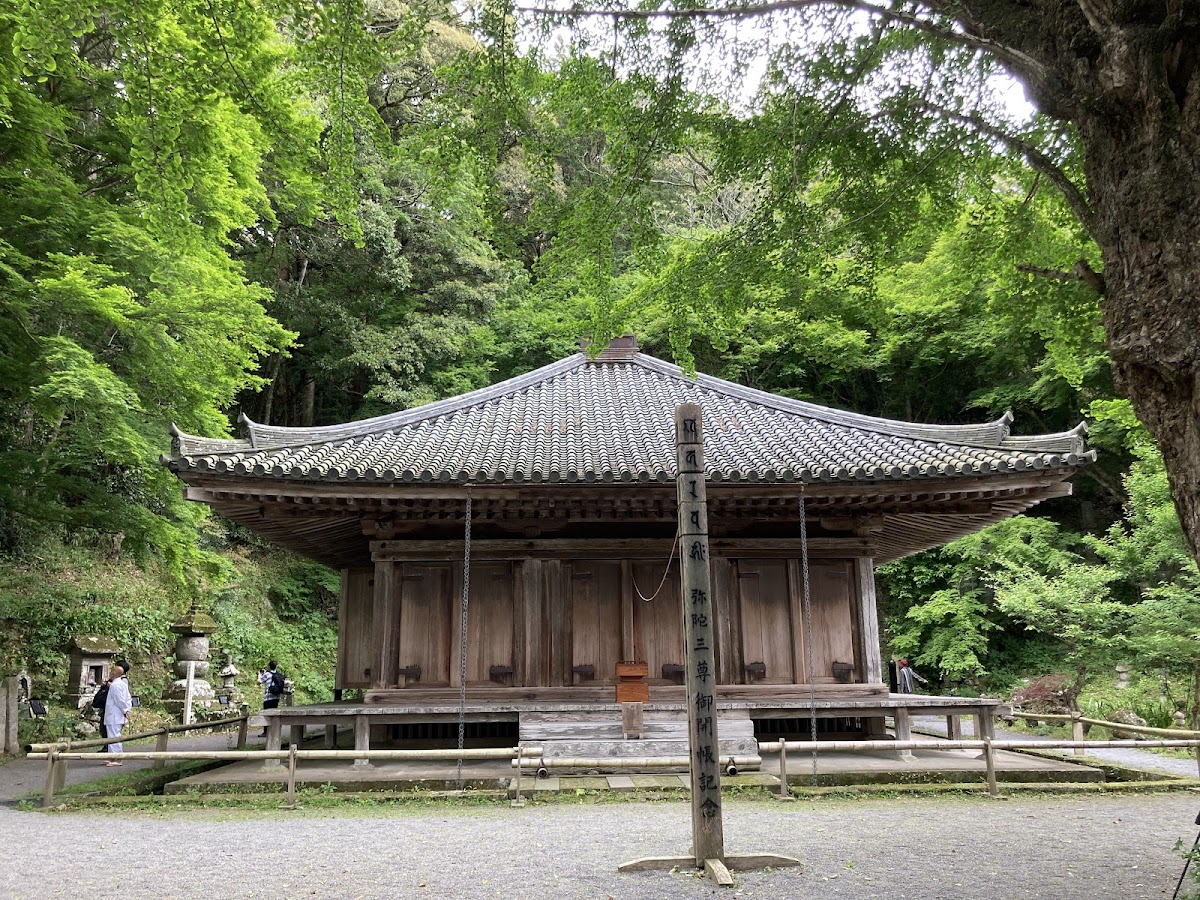
The Fukiji Temple’s Main Hall (Ōdō), designated a National Treasure on November 22, 1952 (Showa 27), is the oldest existing wooden building in Kyushu. As one of the few Heian period buildings located outside the Kinki region, it is an extremely valuable structure in architectural history.
Architectural Features and Structure
The Main Hall is an Amida Hall with three bays in length and four bays in width, and currently has a pyramidal roof. This building strongly retains the architectural style of the late Heian period, characterized by its simple yet dignified appearance.
The entire building is constructed of plain kaya wood, and according to legend, the main hall and the principal image of Amida Buddha were carved from a single kaya tree measuring 970 jo (approximately 2,900 meters). This magnificent legend speaks to the depth of faith and high level of skill of the people of that time.
The interior of the hall consists of an inner sanctuary measuring one ken (approximately 1.8 meters) on each side, surrounded by an outer sanctuary. A Buddhist altar is set up in the inner sanctuary, where the principal image of Amida Buddha is enshrined. Heian period architectural techniques can be seen throughout the pillars and beams, making it an important resource for the study of architectural history.
Value as one of Japan’s Three Great Amida Halls
Fukiji Temple’s main hall is counted as one of Japan’s “Three Great Amida Halls,” alongside Byodo-in Temple’s Phoenix Hall in Uji, Kyoto Prefecture, and Chuson-ji Temple’s Golden Hall in Hiraizumi, Iwate Prefecture. Built amidst the rise of Pure Land Buddhism during the Heian period, these Amida halls are masterpieces that express the yearning for the Pure Land through architecture.
While the Phoenix Hall and Golden Hall are characterized by their ornate decorations, Fukiji Temple’s main hall, though constructed of simple white wood, depicts the Pure Land through its interior murals. This contrast is what gives Fukiji Temple’s main hall its unique charm.
Murals Depicting the Pure Land | Artistic Value of an Important Cultural Property
The murals adorning the interior of Fukiji Temple’s main hall are designated as an Important Cultural Property, conveying the essence of Heian period Pure Land Buddhism and art to the present day.
Content and Composition of the Murals
The four walls inside the main hall are adorned with murals depicting scenes of the Pure Land. While these murals, once vibrantly colored, have faded considerably, they still convey the aesthetic sensibilities and faith of the Heian period.
The murals depict the Pure Land world centered around Amida Buddha, including bodhisattvas, celestial beings, and scenes of paradise such as treasure pavilions and treasure ponds. These images are based on Pure Land Buddhist scriptures such as the *Contemplation Sutra*, visualizing the ideal world envisioned by people of that time.
Preservation and Public Access of the Murals
To maintain the preservation of the murals, viewing inside the main hall is not permitted during rainy weather. Humidity negatively impacts the murals, so please consider the weather when planning your visit.
For those who wish to experience the murals in their original vibrant colors, the restored murals at the Oita Prefectural Museum of History (Usa City) are recommended. The murals, recreated based on the latest research findings, bring back to life the splendor of the Pure Land as seen by people of the Heian period.
Highlights of Fukiji Temple Grounds
Besides the National Treasure Main Hall, the grounds of Fukiji Temple are dotted with cultural assets of high historical value.
The Ninmon Stone and Traces of Ascetic Training
Within the temple grounds is the “Ninmon Stone,” believed to have been used by monks during their ascetic training. This stone is inscribed with Sanskrit characters and is named after Ninmon Bodhisattva, who is said to have founded the Rokugo Manzan. It is a valuable relic that tells the story of Fukiji Temple’s history as a training ground for Shugendo (mountain asceticism).
Kasatoba and Kunisaki Pagoda
The temple grounds also contain a Kasatoba (a type of stone stupa) from the Kamakura period and a Kunisaki pagoda from the Muromachi period. The Kunisaki pagoda is a unique stone art form specific to the Kunisaki Peninsula, combining elements of a treasure pagoda and a five-ring pagoda. These stone structures serve as evidence of Fukiji Temple’s prosperity during the medieval period.
Natural Environment of the Temple Grounds
On October 17, 2013, the grounds of Fukiji Temple were designated a National Historic Site. The temple grounds are surrounded by abundant nature, and the autumn foliage of the ginkgo trees is particularly magnificent. The sight of the golden fallen leaves covering the grounds is truly reminiscent of paradise.
Basic Information on Fukiji Temple | Visiting Information
Location and Access
Address: 2395 Tashibufu, Bungo-Takada City, Oita Prefecture
Access Method:
- By Car: Approximately 30 minutes from Usa IC on the Usa-Beppu Expressway, or approximately 40 minutes from Hiji IC on the Oita Airport Expressway
- By Public Transportation: Approximately 30 minutes by taxi from JR Usa Station. Tourist buses also operate from Usa Station during the tourist season.
Because Fukiji Temple is located in a mountainous area, access by public transportation is somewhat inconvenient. We recommend using a rental car or a tourist bus.
Visiting Hours and Fees
Visiting Hours: 8:30 AM – 4:30 PM (May vary depending on the season)
Admission Fee:
- General/High School Students: 300 yen
- Elementary/Junior High School Students: 150 yen
Notes: Visiting the main hall is not possible during rainy weather. This is a measure to protect the murals, so we recommend visiting on a fine day.
Parking Information
Free parking is available on the temple grounds. There is space for approximately 30 regular cars, and parking for tour buses is also available.
Contact Information
Phone Number: 0978-26-3189 (Fukiji Temple)
We recommend contacting us in advance for details regarding visits and group visits.
Tourist Attractions Around Fukiji Temple
When visiting Fukiji Temple, we recommend also visiting other attractive tourist spots on the Kunisaki Peninsula.
Kumano Magaibutsu (Rock-Carved Buddhas)
Located about 15 minutes by car from Fukiji Temple, the Kumano Magaibutsu are among the largest rock-carved Buddhas in Japan, carved in the late Heian period. Designated as a National Important Cultural Property and Historic Site, it’s a popular tourist spot often visited in conjunction with Fukiji Temple.
Maki Daido Hall
Maki Daido Hall houses numerous Buddhist statues from the Heian to Kamakura periods, making it a treasure trove of valuable cultural assets, including National Treasures and Important Cultural Properties. Together with Fukiji Temple, you can experience the culture of “Kunisaki, the Land of Buddha.”
Kunisaki Peninsula Mine-michi Long Trail
The Kunisaki Peninsula boasts the “Kunisaki Peninsula Mine-michi Long Trail,” which traces the training paths of the Rokugo Manzan monks. Fukiji Temple is also located along this trail, allowing you to enjoy history and nature simultaneously.
Bungo Takada’s “Showa Town”
In the city center of Bungo Takada, there is “Showa Town,” a recreation of the townscape from the 1950s. In this retro-style shopping street, you can experience a nostalgic journey back in time. It’s about a 20-minute drive from Fukiji Temple.
Special Experiences at Fukiji Temple
Experience History with AR
In recent years, Fukiji Temple has been offering experiential services utilizing AR (Augmented Reality) technology. Efforts are underway to allow visitors to visually experience the original coloring of the murals and the appearance of the temple grounds through smartphones and tablets.
Audio Guide Service
An audio guide is available within the temple grounds. You can learn about the history of Fukiji Temple, its architectural features, and explanations of the murals, gaining a deeper understanding and appreciation.
Virtual Museum “Traveling History Museum”
The virtual museum “Traveling History Museum,” provided by the Oita Prefectural Museum of History, allows you to view the restored murals and related materials of Fukiji Temple online. This is an ideal resource for preparation before your visit and review afterward.
Adjacent Accommodation: “Ryokan Fukinotou”
Right next to Fukiji Temple is “Ryokan Fukinotou,” an accommodation facility. It offers a rare experience of staying while being close to a national treasure.
You can enjoy special moments that you can’t experience on a day trip, such as strolling through the tranquil temple grounds in the early morning or gazing at the main hall at dusk. The cuisine, made with local ingredients, is also highly regarded, allowing you to experience the nature and culture of the Kunisaki Peninsula with all your senses.
Points to Note When Visiting Fukiji Temple
Best Time to Visit
Fukiji Temple is beautiful in every season, but the best times to visit are:
- Spring (April-May): The fresh greenery is beautiful, the weather is mild, and it’s ideal for sightseeing.
- Autumn (November): The ginkgo leaves turn a magnificent golden color, decorating the temple grounds.
- Early Summer (June): On sunny days before the rainy season, the lush green temple grounds are refreshing.
Since it’s not possible to visit the main hall during rainy weather, it’s important to check the weather forecast and choose a sunny day.
Estimated Time Required
If you want to leisurely explore the grounds of Fukiji Temple, the estimated time required is about 45 minutes to 1 hour. If you also plan to visit the nearby Kumano Magaibutsu and Maki Daido, it’s best to allocate about half a day.
Photography
Photography is generally permitted on the temple grounds, but it is prohibited inside the main hall. Please observe the rules to protect the murals. You are free to photograph the exterior, allowing you to capture the beautiful scenery throughout the seasons.
Clothing and Items to Bring
- Comfortable shoes: While the temple grounds are paved, comfortable shoes are essential if you plan to explore the surrounding area.
- Weather gear: Sun protection in summer, and warm clothing in winter.
- Camera: To photograph the beautiful architecture and natural scenery.
- Cash: Admission fees may be cash only.
Fukiji Temple and the Japan Heritage Site “Kunisaki: The Village Where Demons Became Buddhas”
Fukiji Temple is one of the cultural properties that make up the Japan Heritage Site “Kunisaki: The Village Where Demons Became Buddhas,” designated in 2018. This Japan Heritage site was recognized for its unique syncretic Shinto-Buddhist culture of the Kunisaki Peninsula and the story of a unique world of faith in which demons transformed into Buddhas.
In the Kunisaki Peninsula, a belief developed that through the rigorous ascetic practices of Shugendo, practitioners, initially possessing a fierce, demonic nature, would eventually transform into compassionate beings like Buddhas. Fukiji Temple, as a central temple in this tradition, has supported the spiritual culture of this region for over a thousand years.
Summary of Fukiji Temple’s Cultural Property Designations
The following are cultural property designations related to Fukiji Temple:
- National Treasure: Fukiji Temple Main Hall (Designated November 22, 1952)
- Important Cultural Property: Murals inside the Fukiji Temple Main Hall
- National Historic Site: Fukiji Temple Grounds (Designated October 17, 2013)
- Japan Heritage: Cultural Properties of “Kunisaki, the Village Where Demons Became Buddhas”
These designations demonstrate the high historical, cultural, and artistic value of Fukiji Temple.
Summary | A Space of Prayer Transcending a Thousand Years
Fukiji Temple is a precious cultural heritage site that conveys the essence of Japanese Buddhist culture and architectural techniques that have continued since the Heian period. The National Treasure, Fukiji Temple’s main hall, is the oldest wooden building in Kyushu and one of Japan’s three most important Amida halls, occupying an extremely important position in architectural history.
The murals depicting the Pure Land inside the main hall are works of art that convey the faith and aesthetic sensibilities of the people of the Heian period to the present day. Cultural assets remaining on the temple grounds, such as the Ninmon Stone and the Kunisaki Pagoda, tell the story of the deep history of the Rokugo Manzan culture.
Nestled in the quiet mountains of Bungo Takada City, Oita Prefecture, Fukiji Temple has continued to provide a space of prayer and peace to visitors for over a thousand years. Please visit Fukiji Temple to experience the rich nature and historical culture of the Kunisaki Peninsula.
Please note that the main hall is not open to visitors during rainy weather. Choose a day with fine weather to visit and enjoy a special time contemplating the world of the Pure Land of the Heian period.