Complete Guide to Iwatoji Temple: Experiencing the Rokugo Manzan Culture and the Charm of the Shushō Onie Festival at an Ancient Temple on the Kunisaki Peninsula
Iwatoji Temple, located in Kunisaki City, Oita Prefecture, is an ancient Tendai sect temple with a history of over 1300 years. As a representative temple of the Rokugo Manzan, a unique Buddhist culture of the Kunisaki Peninsula, it is counted as the 18th temple of the Usa Jingu Rokugo Manzan pilgrimage and the 10th temple of the Kyushu Forty-Nine Yakushi Pilgrimage. This article comprehensively introduces information you should know before visiting Iwatoji Temple, including its history, highlights, annual events, and access methods.
History and Origin of Iwatoji Temple
Founded by Ninmon Bodhisattva
Iwatoji Temple is said to have been founded in 718 AD (Yōrō 2) by Ninmon Bodhisattva. Ninmon Bodhisattva is a legendary monk who established the Rokugo Manzan temple culture on the Kunisaki Peninsula. There are 28 temples in the Kunisaki region that are said to have been founded by Ninmon Bodhisattva. These temples are collectively known as “Rokugo Manzan,” and they have formed a unique syncretic Shinto-Buddhist culture specific to the Kunisaki Peninsula.
Iwato-ji Temple, whose mountain name is Sekiryuzan, is built in a mystical location with a rock formation behind it, as its name suggests. This area has long been revered as a sacred site and has played an important role as a training ground for Shugendo practitioners.
Positioning within Rokugo Manzan
Rokugo Manzan is a collective term for a group of temples spread throughout the Kunisaki Peninsula, possessing a unique form of syncretic Shinto-Buddhist faith centered around Usa Shrine. Iwato-ji Temple occupies an important position within this group, playing a central role in the region’s faith within the classification of main temples, intermediate temples, and branch temples.
As the 18th temple of the Usa Jingu Rokugo Manzan pilgrimage route and the 10th temple of the Kyushu Forty-Nine Yakushi Pilgrimage, Iwatoji Temple is a sacred site visited by many pilgrims. These two pilgrimage routes remain important pilgrimage routes in Kyushu and continue to attract many followers.
Principal Image and Sect
Seated Statue of Yakushi Nyorai
The principal image of Iwatoji Temple is a seated statue of Yakushi Nyorai (Medicine Buddha). This statue is said to be the work of Ninmon Bodhisattva and has attracted the faith of people praying for healing from illness and longevity. Yakushi Nyorai is the principal deity of the Eastern Pure Land and has long been revered by ordinary people as a Buddha who grants worldly benefits.
Yakushi Nyorai is generally depicted holding a medicine jar in his left hand and forming the Abhaya Mudra (gesture of fearlessness) with his right hand. The Yakushi Nyorai at Iwatoji Temple is also carefully enshrined as a protector of the physical and mental health of visitors.
As a Tendai Sect Temple
Iwatoji Temple belongs to the Tendai sect. The Tendai sect is a branch of Japanese Buddhism founded by Saichō, with Enryaku-ji Temple on Mount Hiei as its head temple. Many temples in the Rokugō Manzan region belong to the Tendai sect, and Iwatoji Temple inherits this tradition.
The teachings of the Tendai sect are based on the “One Vehicle” concept, preaching the equality of all beings who can attain Buddhahood. This teaching has become intertwined with the folk beliefs of the Kunisaki Peninsula, forming a unique religious culture.
Highlights of Iwatoji Temple
Japan’s Oldest Stone Nio Statues
The first thing visitors to Iwatoji Temple will see are the stone Nio statues standing along the approach to the temple. These Nio statues were created during the Muromachi period and are said to be the oldest stone Buddha Nio statues in Japan.
Nio statues are placed at the entrance of temples and serve to ward off evil spirits and protect Buddhist teachings. While most Nio statues are made of wood, the Nio statues at Iwato-ji Temple are extremely rare in that they are made of stone, making them a valuable cultural asset symbolizing the stone culture of the Kunisaki Peninsula.
The right-hand statue is the Agyo (open mouth) and the left-hand statue is the Ungyo (closed mouth), forming a pair. This “A-Un” is said to represent the beginning and end of the universe, symbolizing the all-encompassing teachings of Buddha.
Kunisaki Pagoda
Within the grounds of Iwato-ji Temple remains a Kunisaki pagoda, a unique stone structure of the Kunisaki Peninsula. The Kunisaki pagoda is a stone pagoda with a form intermediate between a treasure pagoda and a Hōkyōintō (treasure chest-shaped pagoda), a unique style found only on the Kunisaki Peninsula.
Behind the temple is a Kunisaki pagoda with a lotus-shaped base and a tubular pagoda body; its elegant form conveys the essence of the Rokugō Manzan culture. This Kunisaki pagoda is considered the oldest of its kind and is a culturally significant artifact in the history of stone sculpture.
Many Kunisaki pagodas were erected as memorial towers, serving to pray for the repose of the deceased and visually representing Buddhist teachings.
Stone Cultural Properties on the Temple Grounds
Besides the Nio statues and Kunisaki pagodas, numerous other stone cultural properties are scattered throughout the grounds of Iwato-ji Temple. Stone Buddhas, stone pagodas, stone lanterns, and other works representing the stone culture of the Kunisaki Peninsula add a sense of historical weight to the tranquil temple grounds.
These stone structures were created from the medieval to early modern periods, conveying the depth of faith and high level of stonemasonry skills of the time. The Kunisaki Peninsula is rich in volcanic rock, and has long been a region where stone culture has flourished.
Shujō Onie (Demon Festival)
A Traditional Event with a 1300-Year History
Iwatoji Temple is famous for holding the “Shujō Onie” festival in odd-numbered years. The Shujō Onie is a traditional fire festival passed down in the Rokugō Manzan region, and is said to have a history of over 1300 years.
The Shujō Onie originated from the Shushō-e, a Buddhist service held during the Lunar New Year, and is a ceremony to pray for a bountiful harvest and good health in the new year. In the Kunisaki Peninsula, a unique demon dance was added, developing it into the distinctive form known as “Shujō Onie.”
The Story of Demons Becoming Buddhas
The most distinctive feature of the Shujō Onie is that the demons play the leading role. While demons are generally depicted as beings to be vanquished, in the Shujō Onie of the Kunisaki Peninsula, demons are portrayed as incarnations of Buddha, bestowing blessings upon people.
Red and black demons run around the temple carrying torches, and it is believed that being showered with their sparks brings good health and protection from illness. This story, “The Village Where Demons Became Buddhas,” was a major factor in the Kunisaki Peninsula’s designation as a Japan Heritage site.
The Meaning of Holding the Ceremony in Odd-Numbered Years
The Shushō Onie (demon ritual) at Iwato-ji Temple is held only in odd-numbered years, a tradition that considers the burden of preparation and transmission. While some other temples on the Kunisaki Peninsula hold the ceremony annually, Iwato-ji Temple maintains the tradition more carefully by holding it every two years.
It is recommended to check when the next Shushō Onie will be held before your visit. Witnessing this precious traditional event will allow you to gain a deeper understanding of the faith and culture of the Kunisaki Peninsula.
Japan Heritage Site “Kunisaki: The Village Where Demons Became Buddhas”
Iwato-ji Temple as a Constituent Cultural Property
In 2018, the Rokugō Manzan culture of the Kunisaki Peninsula was designated as a Japan Heritage site under the name “Kunisaki: The Village Where Demons Became Buddhas.” Iwatoji Temple plays a crucial role as one of the constituent cultural properties.
Japan Heritage is a system that certifies stories that tell of Japanese culture and traditions through the historical charm and characteristics of a region. The Kunisaki Peninsula’s syncretic Shinto-Buddhist culture, the Shushō Onie ritual, and the stone sculpture culture were recognized as a unified entity.
Inheritance of Rokugō Manzan Culture
Iwatoji Temple, as a valuable temple that conveys the Rokugō Manzan culture to the present day, strives to preserve cultural properties and pass on traditional events. While cherishing annual events such as the Shushō Onie ritual, the maintenance and management of stone sculptures, and its connection with the local community, it connects its 1300-year history to the future.
Visitors can experience the unique religious culture of the Kunisaki Peninsula through Iwatoji Temple and appreciate the diversity and richness of regional Japanese faith.
Access Information
Location
Iwatoji Temple is located at 1232 Iwatoji, Kunisaki-cho, Kunisaki City, Oita Prefecture. Located in the relatively mountainous northeastern part of the Kunisaki Peninsula, it is easily accessible by car.
Access by Car
It is approximately a 40-minute drive from Oita Airport. From Oita Airport, head north on National Route 213, passing through Kunisaki city center towards Iwatoji Temple. Along the way, you can enjoy the beautiful natural scenery of the Kunisaki Peninsula.
If using a car navigation system, searching for “Iwatoji Temple” or the address “1232 Iwatoji, Kunisaki-cho, Kunisaki City, Oita Prefecture” will provide accurate directions. Parking is available near the temple grounds.
Access by Public Transportation
If using public transportation, you will need to take a bus from JR Kitsuki Station or Usa Station. However, since the number of buses is limited, it is recommended to check the timetable in advance. The nearest bus stop is operated by Kunisaki Kanko Bus.
For sightseeing, renting a car or chartering a taxi is convenient. The Kunisaki City Tourism Association also provides information on sightseeing taxis.
Nearby Tourist Attractions
Around Iwatoji Temple, you’ll find other temples of the Rokugo Manzan group and various tourist attractions on the Kunisaki Peninsula. You can enjoy a Rokugo Manzan pilgrimage, visiting ancient temples such as Monju-senji, Ryōshi-ji, and Fuki-ji, as well as the beautiful coastline of the Kunisaki Peninsula and hot spring facilities.
Planning a day trip around the Kunisaki Peninsula will make for a more fulfilling travel experience. The Kunisaki City Tourism Association provides various brochures and tourist maps.
Etiquette and Manners for Visiting Temples
Visiting Hours and Admission Fees
Iwatoji Temple is generally open for daytime visits. However, visits may be restricted during events and religious ceremonies, so it’s recommended to check in advance if you plan to visit on a special day.
Regarding admission fees, regular visits are free, but there may be separate fees for special viewings or viewing of treasures. Please contact the temple directly for details.
Etiquette for Visiting Temples
When visiting a temple, please maintain quiet and be considerate of other visitors. Photography is generally permitted, but there may be restrictions on taking pictures inside the main hall or of Buddhist statues.
Please be careful not to touch cultural artifacts such as the stone Nio statues and Kunisaki pagoda, and treat the plants and buildings on the temple grounds with care. Please take all your trash with you and help preserve the clean environment of this sacred site.
About Goshuin (Temple Seals)
At Iwatoji Temple, you can receive Goshuin for the Usa Jingu Rokugo Manzan pilgrimage and the Kyushu Forty-Nine Yakushi pilgrimage. Bring your Goshuin book and politely request one from the head priest or the temple office.
Goshuin are not merely commemorative stamps, but important proof of your connection with Buddha. Please receive them with reverence. The fee for a Goshuin is generally around 300 yen, but please offer whatever you feel is appropriate.
Annual Events
Shushō Onie (Odd-Numbered Years)
As mentioned above, the largest annual event at Iwatoji Temple is the Shushō Onie, held in odd-numbered years. This traditional event, held during the Lunar New Year, has become a major event attracting many worshippers and tourists.
Other Buddhist Services
Besides the Shushō Onie (a Buddhist memorial service), Iwatoji Temple holds various Buddhist services and events throughout the year. Traditional Buddhist temple events such as the spring and autumn equinox services, the Obon (Buddhist festival) Segaki (feeding of hungry ghosts) service, and the Yakushi Nyorai (Medicine Buddha) festival are preserved.
Participating in these events allows you to experience firsthand the faith of the local people and their connection to the temple.
Learning about the History and Culture of the Kunisaki Peninsula
What is Rokugō Manzan?
Rokugō Manzan is a collective term for the group of temples spread throughout the Kunisaki Peninsula, representing a unique form of syncretic Shinto-Buddhist faith centered around Usa Shrine. “Rokugō” originates from the administrative division of the Kunisaki Peninsula into six districts, and “Manzan” means numerous temples.
This group of temples was formed from the Nara period to the Heian period, reaching its peak in the medieval period. The temples were classified into three hierarchical levels: Honzan, Nakayama, and Sueyama, each functioning as a regional center of faith.
Syncretism of Shinto and Buddhism
A characteristic feature of the Kunisaki Peninsula is its syncretism of Shinto and Buddhism, where the sacred Shinto site of Usa Shrine and the Buddhist temple complex of Rokugo Manzan are integrated. A uniquely Japanese religious view, where gods and Buddhas are not distinguished but worshipped simultaneously, remains strongly present here.
Iwato-ji Temple also inherits this tradition of syncretism, possessing a unique form of faith that, while being a Buddhist temple, also incorporates Shinto elements. The role of demons in the Shushō Onie ritual can be understood within this cultural context.
Stone Sculpture Culture of the Kunisaki Peninsula
The Kunisaki Peninsula is one of Japan’s leading treasure troves of stone sculpture culture. Due to the abundant production of volcanic tuff, stone art such as stone Buddhas, stone pagodas, and cliff-carved Buddhas developed from ancient times.
The stone Nio statues and Kunisaki pagodas at Iwato-ji Temple are representative examples. Thousands of stone cultural artifacts remain throughout the Kunisaki Peninsula, each telling a story of the region’s history and beliefs.
Points to Note When Visiting Iwatoji Temple
Season and Clothing
Iwatoji Temple is located in a mountainous area, so temperatures vary depending on the season. Summers are relatively cool and pleasant, but winters can be cold, so warm clothing is necessary.
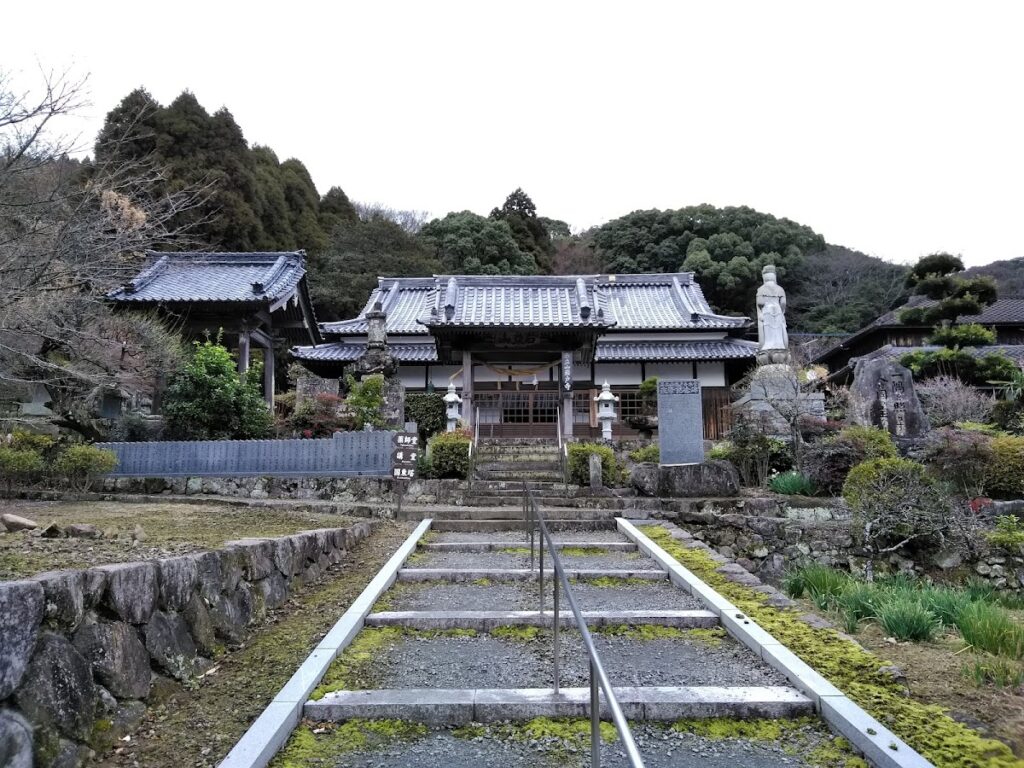
The approach to the temple and the temple grounds have stone steps and slopes, so comfortable walking shoes are recommended. Particular caution is needed during rainy weather, as the grounds can become slippery.
Time Required
If you plan to leisurely explore the grounds of Iwatoji Temple, allow 30 minutes to an hour. This is sufficient time to visit the main attractions such as the stone Nio statues, the main hall, and the Kunisaki Pagoda, and to offer quiet prayers.
If you plan to participate in special events such as the Shushō Onie ceremony, you will need more time. Also, if you plan to visit the surrounding Rokugō Manzan temples, you will need to plan a full day of sightseeing.
Contact Information
For detailed information about Iwatoji Temple, including visiting hours and event schedules, please contact the Kunisaki City Tourism Association or Iwatoji Temple directly.
The Kunisaki City Tourism Association provides general tourism information for the Kunisaki Peninsula, and you can also obtain pamphlets and tourist maps for the Rokugo Manzan pilgrimage.
To Enjoy the Charms of Iwatoji Temple to the Fullest
Photo Spots
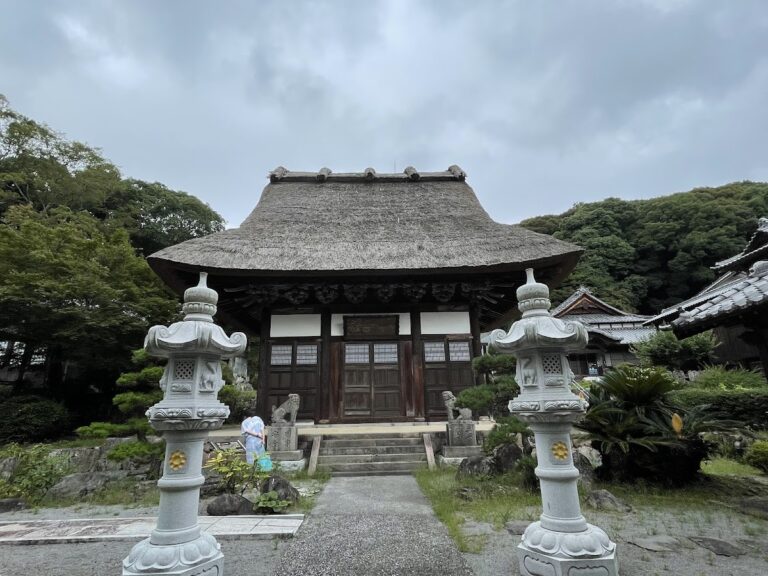
Iwatoji Temple boasts numerous excellent photo spots. The stone Nio statues along the approach, the majestic appearance of the main hall, the Kunisaki pagoda within the temple grounds, and the surrounding natural scenery are all photogenic subjects.
Especially during the autumn foliage season and the fresh green season, the temple grounds are beautifully colored, allowing for even more captivating photographs. However, please observe proper photography etiquette and be considerate of other visitors.
Rokugo Manzan Pilgrimage
Iwatoji Temple is one of the Rokugo Manzan pilgrimage sites of Usa Jingu Shrine. If you have time, why not try a pilgrimage to other temples on the Kunisaki Peninsula? Each temple has its own unique history and charm, allowing you to gain a deeper understanding of the Kunisaki Peninsula’s culture.
Pilgrimages can be enjoyed in various styles, from a full-fledged pilgrimage on foot to a sightseeing tour visiting the main temples by car.
Local Food and Hot Springs
The Kunisaki Peninsula is blessed with beautiful nature and an abundance of fresh seafood and mountain produce. After visiting Iwatoji Temple, enjoy the flavors of Kunisaki at local restaurants and eateries.
Furthermore, the Kunisaki Peninsula has numerous hot spring facilities. Relaxing your tired body in a hot spring after walking around the temples is one of the pleasures of your trip. There are many hot springs with excellent water quality, such as Kunisaki Onsen and Kitsuki Onsen.
Summary
Iwatoji Temple is a representative ancient temple of the Kunisaki Peninsula with a history of over 1300 years. Founded in 718 AD by the Bodhisattva Ninmon, Iwatoji Temple is a Tendai sect temple and has attracted many worshippers as the 18th temple of the Usa Jingu Rokugo Manzan pilgrimage route and the 10th temple of the Kyushu Forty-Nine Yakushi Pilgrimage route.
It is a valuable cultural heritage site that conveys the essence of Rokugo Manzan culture, featuring Japan’s oldest stone Nio statues, an elegant Kunisaki pagoda, and the Shushō Onie festival held in odd-numbered years. As a component cultural property of the Japan Heritage site “Kunisaki: The Village Where Demons Became Buddhas,” it is a place where you can experience the history and culture of the Kunisaki Peninsula.
Despite its relatively easy accessibility, being about 40 minutes by car from Oita Airport, it is located in a quiet mountainous area, offering a sacred atmosphere far removed from the secular world. When visiting the Kunisaki Peninsula, be sure to stop by Iwatoji Temple and experience the world of faith woven over 1300 years of history.
Through your visit, you will be able to experience the richness of Japan’s regional faiths, the profoundness of the syncretic culture of Shinto and Buddhism, and the beauty of stone sculpture. Iwatoji Temple will continue to protect the spiritual culture of the Kunisaki Peninsula as a bridge connecting the past and the present.