What is a Haiden? A Complete Guide to Architectural Styles and Worship Etiquette You Should Know When Visiting a Shrine
Basic Knowledge of Haiden
What is a Haiden?
A haiden (worship hall) is the building in a shrine where worshippers pay their respects to the gods. Generally, when visiting a shrine, the area where you put your hands together in front of the offering box is the haiden.
Shrine architecture usually consists of two main buildings: the “haiden” where worshippers stand, and the “honden” where the gods reside. The haiden plays a central role in shrine worship, serving as an important space connecting worshippers and the gods.
Difference from Honden
The honden is the most sacred building where the gods are enshrined. It is usually located behind the haiden and is inaccessible to general worshippers. It is the space where the sacred object is enshrined, and only Shinto priests perform rituals.
On the other hand, the haiden is a place where worshippers offer prayers to the gods and has an open structure. At many shrines, such as Ise Grand Shrine and Izumo Grand Shrine, it is not possible to directly see the main sanctuary from the worship hall. It is believed that prayers reach the deity in the main sanctuary by offering prayers at the worship hall.
About the Heiden
In large shrines, a building called the Heiden is sometimes placed between the worship hall and the main sanctuary. The Heiden is a ceremonial space where Shinto priests recite prayers and offer sacred food (offerings).
At Meiji Jingu and Yasukuni Shrine, a three-hall configuration of “Worship Hall, Heiden, and Main Sanctuary” is seen, forming a complex architectural style connected by corridors.
Architectural Styles and Characteristics of the Worship Hall
Main Architectural Styles
While the architectural styles of worship halls vary from shrine to shrine, the following are representative examples:
Irimoya-zukuri: This is considered the most prestigious roof style, with a two-tiered structure consisting of a gable roof on top and a hipped roof on the bottom. This style can be seen in the worship halls of Meiji Jingu Shrine and Heian Jingu Shrine.
Gable roof (Kirizuma-zukuri): A triangular roof shape resembling an open book lying face down. It gives a simple yet powerful impression and is an ancient style exemplified by the architecture of Ise Jingu Shrine.
Nagare-zukuri: A style where the front roof is long and flows forward. This style is frequently seen in Kyoto shrines, such as Kamo Wakeikazuchi Shrine (Kamigamo Shrine).
Structural Characteristics
The structure of the worship hall has the following characteristics:
- Open-Air Structure: Many shrine halls have few walls, creating an open, airy structure that allows worshippers to freely offer their prayers.
- Placement of Offering Box: Offering boxes are placed in front of the shrine hall, where worshippers stand.
- Bell Rope: Bells are hung from the eaves of the shrine hall, with a rope for ringing the bells during worship.
- Sacred Rope: A sacred rope (shimenawa) is often stretched across the front of the shrine hall to indicate a sacred space.
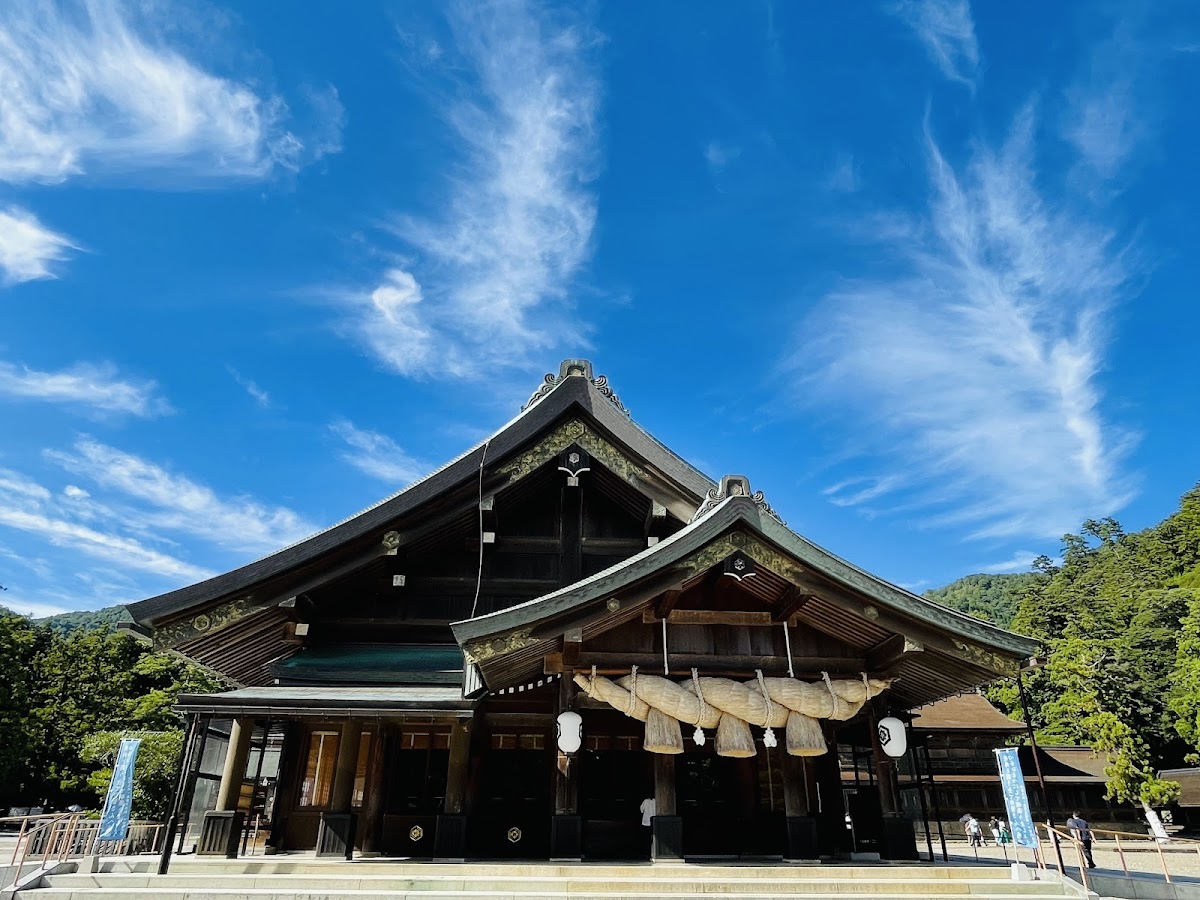
Izumo Taisha Shrine’s shrine hall boasts one of the largest shimenawa in Japan (approximately 13 meters long and weighing about 5 tons), exuding an overwhelming presence.
Correct Worship Etiquette at the Shrine Hall
Basic Worship Procedure
Worship at the shrine hall is performed using the following procedure:
- Bow: Stand in front of the main hall and bow slightly.
- Ring the Bell: If there is a bell rope, ring it quietly to announce your visit to the gods.
- Offering a Coin: Gently place your offering in the offering box (throwing it in is considered good manners).
- Two Bows, Two Claps, One Bow: Bow deeply twice, clap twice at chest height, and finally bow deeply once more.
- Exit: Take a few steps back before turning around.
Mindset When Visiting a Shrine
Prioritize Gratitude: It is important to express gratitude not only for your wishes but also for your daily safety.
How to Express Your Specific Wishes: It is considered good practice to state your address and name in your mind before stating your specific wish. For example, “I am △△ from ○○ City. I am working hard to pass this year’s exam. Please lend me your support.”
Maintain a Quiet Environment: As consideration for other worshippers, please avoid loud conversations and occupying the area for extended periods.
Special Worship Etiquette
Some shrines have their own unique worship etiquette.
- Izumo Taisha: The formal etiquette is “two bows, four claps, one bow.”
- Usa Jingu: The same “two bows, four claps, one bow” as Izumo Taisha is performed.
- Ise Jingu: While general worship is “two bows, two claps, one bow,” the formal worship etiquette differs.
Checking the etiquette of the shrine you plan to visit beforehand will allow for a more respectful worship experience.
Characteristic Worship Halls of Major Shrines
Meiji Jingu (Tokyo)
The worship hall of Meiji Jingu, which enshrines Emperor Meiji and Empress Shoken, is a magnificent hip-and-gable roofed structure made of cypress wood. This large-scale building, approximately 28 meters wide and 18 meters deep, boasts the highest number of visitors in Japan for Hatsumode (New Year’s visit) (over 3 million annually).
Access: 5-minute walk from JR Harajuku Station, 1-minute walk from Tokyo Metro Meiji-jingumae Station
Benefits: Family safety, academic success, matchmaking, protection from evil
Ise Grand Shrine, Inner Shrine (Mie Prefecture)
The highest-ranking shrine in Japan, dedicated to Amaterasu Omikami. The main hall is built in the ancient Shinmei-zukuri style, maintaining its new appearance through the Shikinen Sengu (periodic rebuilding) every 20 years. It is characterized by its simple beauty, constructed of unadorned cypress wood.
Access: Approximately 20 minutes by bus from Kintetsu/JR Ise-shi Station, get off at “Naiku-mae” bus stop.
Benefits: National peace and security, abundant harvests, good fortune, fulfillment of wishes.
Tips for Visiting: Early morning visits (5:00 AM – 6:00 AM) are recommended. You can pray peacefully in the refreshing air.
Izumo Taisha Shrine (Shimane Prefecture)
The head shrine of all shrines dedicated to Okuninushi-no-Okami, associated with matchmaking. The worship hall, rebuilt in 1959, features a hip-and-gable roof and is famous for its massive shimenawa (sacred rope). The main hall is designated a National Treasure, and its approximately 24-meter-high Taisha-zukuri style is the oldest shrine architecture in Japan.
Access: 10-minute walk from Ichibata Electric Railway Izumo Taisha-mae Station, approximately 25 minutes by bus from JR Izumo-shi Station.
Benefits: Matchmaking (not just romantic relationships, but also good relationships in work, friendships, etc.), marital harmony, fertility
Points to Note When Visiting: During the month of Kamiari (October in the lunar calendar), it is believed that gods from all over Japan gather here, and special rituals are performed.
Heian Jingu Shrine (Kyoto Prefecture)
Founded in 1895 to commemorate the 1100th anniversary of the transfer of the capital to Heian-kyo. The outer worship hall is a magnificent building, a replica of the Chodoin, the main hall of Heian-kyo, at approximately 5/8 scale. The contrast between the vermilion pillars and green roof tiles is beautiful, and a large torii gate, 24.4 meters tall, stands behind it.
Access: 10-minute walk from Higashiyama Station on the Kyoto Municipal Subway; immediately after alighting at the “Okazaki Park Museum/Heian Jingu Shrine” bus stop on the Kyoto City Bus.
Benefits: Good fortune, protection from evil, academic success, business prosperity
Points to Note When Visiting: The shrine garden (admission fee required) is beautiful in every season, especially during cherry blossom and autumn foliage seasons.
Sumiyoshi Taisha Shrine (Osaka Prefecture)
The head shrine of approximately 2,300 Sumiyoshi shrines nationwide. The worship hall is a hip-and-gable roofed structure with cypress bark roofing, and there are multiple worship areas corresponding to the four main halls (all National Treasures). The formal procedure is to worship in order from the first to the fourth main hall.
Access: 3-minute walk from Sumiyoshi Taisha Station on the Nankai Main Line, immediately a short walk from Sumiyoshi Torii-mae Station on the Hankai Tramway
Benefits: Safe voyages, traffic safety, business prosperity, protection from evil, matchmaking
Points to Note When Visiting: The “Hatsutatsu-mairi” (first Dragon Day of each month) is bustling with worshippers praying for business prosperity.
Benefits Obtained from Visiting the Main Hall
General Benefits
The following are some of the typical benefits that can be prayed for at a shrine’s main hall:
Family Safety and Good Health: Prayers for the health and peaceful daily life of all family members. This is considered a basic benefit at many shrines.
Business Prosperity and Success: Inari shrines (such as Fushimi Inari Taisha) and Ebisu shrines are particularly famous for this.
Academic Success and Passing Exams: Tenmangu shrines (such as Dazaifu Tenmangu and Kitano Tenmangu) enshrine Sugawara no Michizane, the god of learning, and are popular with students taking exams.
Matchmaking and Romantic Success: Izumo Taisha, Tokyo Daijingu, and Kawagoe Hikawa Shrine are particularly famous.
Protection from Misfortune and Protection from Bad Directions: Samukawa Shrine (Kanagawa) and Hie Shrine (Tokyo) are known for warding off misfortune.
How to Enhance Your Blessings
Regular Visits: It is believed that visiting regularly, not just once, deepens your connection with the gods.
Visiting with a Pure Mind and Body: Cleanse your hands and mouth at the water basin, calm your mind, and then proceed to the main hall.
Receiving Amulets and Talismans: After praying at the main hall, receiving amulets and talismans at the reception area allows you to feel the gods’ protection in your daily life.
Making and Releasing Wishes: When your wish is granted, it is important to visit again to express your gratitude.
Summary
The haiden (worship hall) is the central building of a shrine and an important space connecting worshippers with the gods. Understanding the difference between the haiden and the honden (main sanctuary) and mastering the correct worship etiquette will allow for a more fulfilling shrine visit.
Each shrine’s haiden has its own unique architectural style and history, offering new discoveries with every visit. By remembering to be grateful and worshipping respectfully, you will receive blessings from the gods.
When visiting a shrine, please check the access methods and special worship etiquette beforehand, and enjoy a peaceful visit to the haiden.