Complete Guide to Okazaki Shrine | Kyoto’s Higashi Tenno Shrine, Known for its Rabbit Divine Messenger and Blessings of Safe Childbirth and Fertility
Located in Okazaki Higashi Tenno-cho, Sakyo-ku, Kyoto City, Okazaki Shrine is a uniquely charming shrine affectionately known as the “Rabbit Shrine.” This guide provides detailed information about the shrine, including the rabbit statues placed throughout the grounds, its long history dating back to the relocation of the capital to Heian-kyo, and its reputation for blessings of safe childbirth and fertility.
History and Origins of Okazaki Shrine
The Relocation of the Capital to Heian-kyo and its Role in Protecting the Imperial City
The history of Okazaki Shrine dates back to the relocation of the capital to Heian-kyo in 794 AD. It was founded as one of the shrines built in the four directions of Heian-kyo by imperial decree to protect the imperial city. Because it is located in the east (the direction of the rabbit) of the capital, it is called “Higashi Tenno” (Eastern Heavenly King) and has played an important role in protecting the capital of Kyoto.
Among the shrines protecting the four directions of Heian-kyo (Kyoto), Okazaki Shrine, guarding the east, has long been revered as a deity of protection against misfortune and evil. With a history spanning over 1200 years from the Heian period to the present day, it is a venerable shrine cherished by the local community.
Origin of the Name “Higashi Tenno”
The alternative name “Higashi Tenno” (Eastern Heavenly King) originates from its location east of the capital and the fact that its enshrined deity, Susanoo-no-Mikoto, is associated with Tenno worship. Tenno worship is a form of faith that reveres deities who protect against epidemics and disasters; Yasaka Shrine in Kyoto is another example of a shrine with similar beliefs. As the guardian deity of the east of Heian-kyo, Okazaki Shrine has attracted many worshippers as a shrine with powerful efficacy in warding off evil and misfortune.
Enshrined Deities and Divine Virtues
Main Deities
The following deities are enshrined at Okazaki Shrine:
Susanoo-no-Mikoto
A heroic deity in Japanese mythology, known as the god of protection against evil and disease. He is famous as the brave god who defeated Yamata-no-Orochi (a mythical eight-headed serpent).
Kushiinada-hime-no-Mikoto
The wife of Susanoo-no-Mikoto, a beautiful princess who was saved from Yamata-no-Orochi. She is also worshipped as the goddess of marital harmony and matchmaking.
Yahashira-no-Mikogami (Eight Divine Children): Three Daughters and Five Sons
These are the eight divine children born to Susanoo-no-Mikoto and Kushinada-hime-no-Mikoto. The existence of these divine children is a major reason why Okazaki Shrine is worshipped as a god of fertility and safe childbirth.
The Origin of the Belief in Safe Childbirth and Fertility
In 1178, during the birth of the Empress’s child, Okazaki Shrine received offerings from the Imperial Court, and from then on, it became widely known as a god of safe childbirth. Because the enshrined deities, Susanoo-no-Mikoto and Kushinadahime-no-Mikoto, had many children, and because the rabbit, the divine messenger (described later), is prolific, worshippers seeking blessings for fertility and safe childbirth began to visit from all over the country.
Even today, many couples hoping to conceive, pregnant women, and families praying for safe childbirth visit the shrine, and its miraculous powers continue to attract deep faith.
The Deep Connection Between Rabbits and Okazaki Shrine
Why are Rabbits Divine Messengers?
The reason Okazaki Shrine is affectionately known as the “Rabbit Shrine” is deeply rooted in the history of this region. In the past, the area around Okazaki Shrine was known as a habitat for wild rabbits, and many wild rabbits lived there. Due to the characteristics of this region, rabbits came to be revered as messengers of the local deity, or divine messengers.
Furthermore, rabbits are known for their prolific breeding, giving birth to many offspring at once, and have therefore been considered symbols of fertility and safe childbirth. This characteristic, combined with the fact that the enshrined deity has many children, further strengthens the belief in safe childbirth and fertility at Okazaki Shrine.
Rabbits on the Shrine Grounds
Rabbit statues are placed in various locations on the grounds of Okazaki Shrine.
Guardian Rabbits
Where guardian dogs (komainu) are usually placed at other shrines, adorable guardian rabbits (komainu) greet visitors at Okazaki Shrine. The rabbit on the right has its mouth open (A-form), and the one on the left has its mouth closed (Un-form), guarding the sacred area.
Rabbit Statue for Fertility
The black granite rabbit statue in front of the main hall is a particularly popular spot. Pouring water on this statue and stroking its belly is believed to bring blessings for conception and safe childbirth, and many worshippers stroke it while making their wishes. It is worshipped as a rabbit empowered by the moon, and it is said that pouring water on it increases the moon’s spiritual power.
Rabbit at the Water Basin
A rabbit statue is also placed at the water basin, allowing visitors to encounter rabbits even at the purification area before worship.
These rabbit statues are scattered throughout the shrine grounds, allowing worshippers to enjoy searching for them as they explore the grounds.
Shrine Grounds Highlights
Main Hall
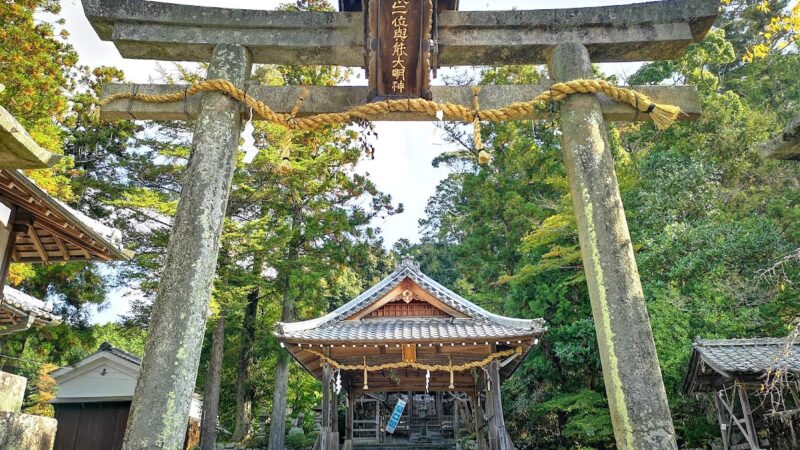
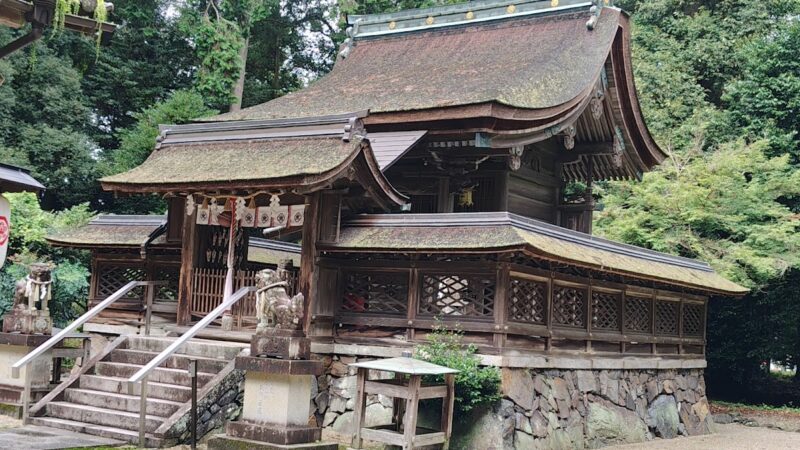
The main hall of Okazaki Shrine maintains the beauty of traditional shrine architecture while offering a warm and welcoming atmosphere to worshippers. It enshrines the deities Susanoo-no-Mikoto, Kushinadahime-no-Mikoto, and their eight children (three daughters and five sons), and formal worship takes place here.
In front of the main shrine is an offering box, and worship is conducted using the ritual of two bows, two claps, and one bow. Those praying for safe childbirth or fertility can apply for prayers at the shrine office after praying at the main shrine.
Shrine Office and Amulets
At the shrine office of Okazaki Shrine, adorable amulets, talismans, and votive tablets featuring rabbit motifs are available.
Rabbit Fortune Slip
A fortune slip is contained within a cute ceramic rabbit figurine. After reading the fortune, you can take the rabbit figurine home. There are rabbits of various colors and expressions, making it fun to see which one you get.
Safe Childbirth Amulet/Fertility Amulet
Special amulets for those praying for safe childbirth or fertility are also available. These rabbit-designed amulets are popular due to their convenient size.
Ema (Votive Tablets)
Ema shaped like rabbits are inscribed with wishes for safe childbirth, fertility, and family safety, and are offered at the shrine grounds.
Ame-no-Yashiro (Rain Shrine)
Within the shrine grounds is a subsidiary shrine called Ame-no-Yashiro, which has been worshipped as a god of rain. It is said that in times of prosperity, many worshippers visited to pray for rain during droughts.
Prayers and Rituals
Prayers for Safe Childbirth and Fertility
At Okazaki Shrine, you can receive prayers for safe childbirth and fertility. Reservations are not required; you can apply at the shrine office on the day of your visit.
Prayers for Safe Childbirth
It is common to visit on the Day of the Dog in the fifth month of pregnancy, but it is also acceptable to visit on a different day depending on your physical condition and circumstances. During the prayer, prayers are offered for the health of mother and child and for a safe delivery, and you will be given a safe childbirth amulet and a maternity belt.
Prayer for Conception
This prayer is for couples who wish to have children. By receiving this prayer, you can receive the divine blessing for conception.
Other Prayers
Okazaki Shrine accepts various prayers in addition to prayers for safe childbirth and conception.
- First Shrine Visit (Omiyamairi)
- Shichi-Go-San Ceremony
- Prayer for Protection from Evil
- Prayer for Protection from Misfortune
- Family Safety
- Traffic Safety
- Business Prosperity
Shrine Wedding
Okazaki Shrine offers traditional Shinto wedding ceremonies. A Shinto wedding, held in a solemn atmosphere, is a fitting ceremony for the start of a new life. A wedding ceremony watched over by the rabbit, the divine messenger, will be a special memory filled with wishes for matchmaking and prosperity of descendants.
Off-Site Ceremonies
We also accept off-site ceremonies such as ground-breaking ceremonies and purification ceremonies. For new constructions, a Shinto priest will travel to perform ground-breaking ceremonies and building purification rituals.
Access Information
Location
51 Okazaki Higashi Tennocho, Sakyo-ku, Kyoto City, Kyoto Prefecture 606-8332
Access by Train
If using Keihan Railway
Approximately 15 minutes on foot from Jingu-Marutamachi Station
If using City Bus
- Immediately after alighting at “Okazaki Jinja-mae” bus stop
- Approximately 3 minutes on foot from “Higashi Tennocho” bus stop
From Kyoto Station, City Bus routes 5, 32, and 100 are convenient.
Access by Car
Approximately 20 minutes from the Meishin Expressway “Kyoto Higashi IC”
Parking: Free parking for visitors is available on the shrine grounds (limited spaces available)
Visiting Hours
While worship is possible all day, the shrine office is generally open from 9:00 to 17:00. Please visit the shrine office during its opening hours for prayers and the purchase of sacred items.
Nearby Tourist Attractions
Okazaki Shrine is located in the Okazaki area, a cultural zone of Kyoto, and there are many tourist attractions nearby.
Heian Jingu Shrine
Heian Jingu Shrine, located about a 10-minute walk from Okazaki Shrine, is a magnificent shrine built to commemorate the 1100th anniversary of the transfer of the capital to Heian-kyo (Kyoto). Its vast gardens and vermilion-lacquered shrine buildings are beautiful, making it one of Kyoto’s representative tourist attractions.
Kyoto City Zoo
This is the second oldest zoo in Japan, located about an 8-minute walk from Okazaki Shrine. Despite its compact size, it houses a diverse range of animals and is a popular spot for families.
Kyoto National Museum of Modern Art
Located within Okazaki Park, this museum boasts an excellent collection of modern and contemporary art. It also features numerous special exhibitions, making it a must-see for art lovers.
Nanzenji Temple
Nanzenji Temple is the head temple of the Nanzenji branch of the Rinzai school of Zen Buddhism, located about a 15-minute walk from Okazaki Shrine. With many attractions such as the Sanmon Gate and the Suirakaku Aqueduct, it is known as one of Kyoto’s representative Zen temples.
Philosopher’s Path
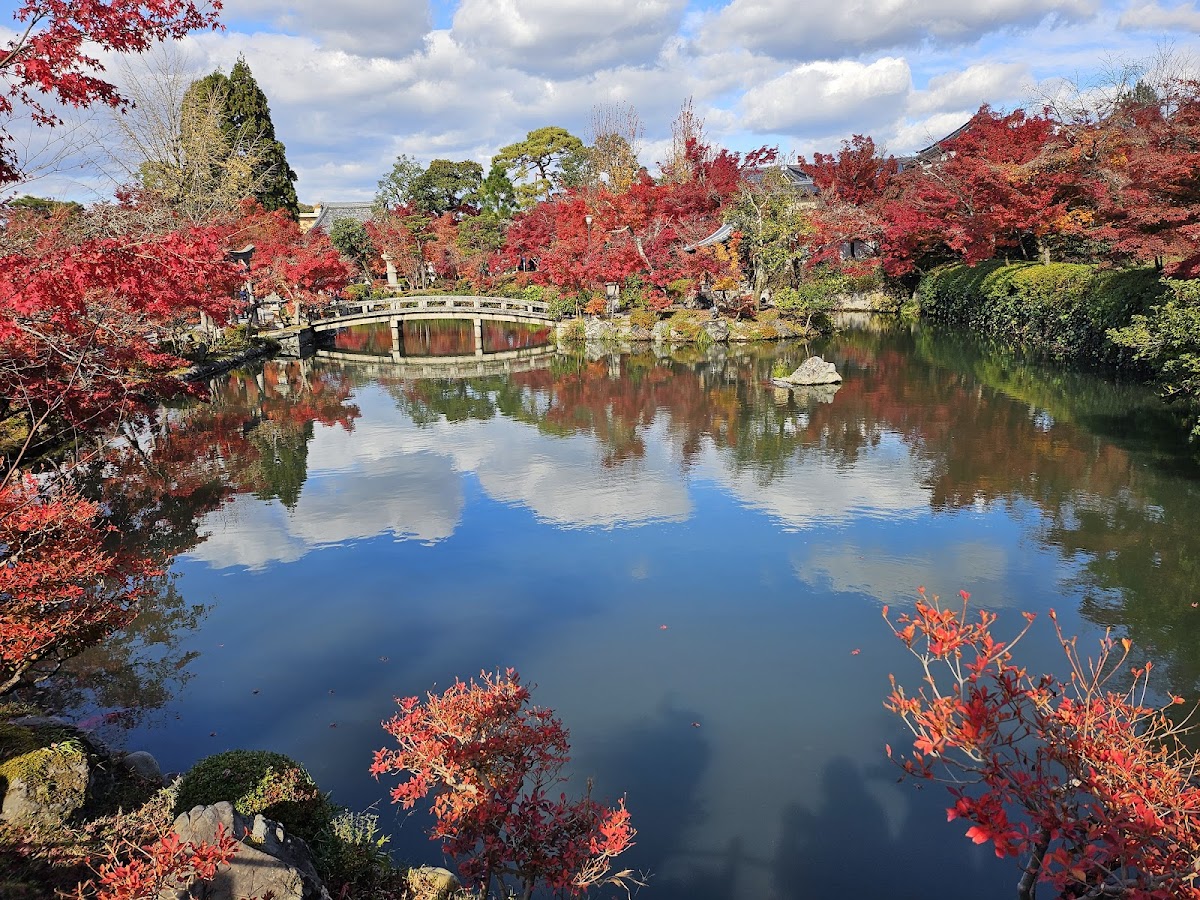
This walking path, which stretches from Nanzenji Temple to Ginkakuji Temple, is famous for its cherry blossoms and autumn leaves. It’s also within walking distance of Okazaki Shrine, allowing visitors to enjoy beautiful scenery throughout the seasons.
Annual Events and Festivals
Okazaki Shrine holds various festivals throughout the year.
Annual Festival
The annual festival, held every October, is the most important festival at Okazaki Shrine. Traditional Shinto rituals, such as the portable shrine procession and the dedication of Kagura (sacred dance), are performed.
New Year’s Visit
The shrine is bustling with many visitors during the New Year’s period. Visitors come seeking blessings for safe childbirth and fertility, as well as those praying for protection from evil and misfortune.
Setsubun Festival
The Setsubun Festival is held in February, attracting many visitors praying for protection from evil.
Manners and Points for Visiting a Shrine
Basic Worship Etiquette
- Bow before passing through the torii gate.
- Cleanse your hands and mouth at the water basin.
- Bow twice, clap twice, and bow once in front of the main shrine.
- Visit the rabbit statues on the shrine grounds.
- Pour water over the fertility rabbit and stroke its belly.
- Obtain amulets and fortune slips at the shrine office.
Photography
Photography is generally permitted on the shrine grounds, but consideration should be given to avoid disturbing those receiving prayers or other worshippers. The rabbit statues are a popular photo spot, but please be considerate of others during crowded times.
Clothing
There are no specific dress code requirements for regular visits, but if receiving prayers, somewhat formal attire is desirable. For prayers for safe childbirth, please prioritize the pregnant woman’s comfort and wear comfortable clothing.
To fully enjoy the charm of Okazaki Shrine
Recommended visiting times
Weekday mornings are relatively uncrowded, allowing for a leisurely visit. Weekends and the Day of the Dog (Inu no Hi) tend to be crowded, so it’s recommended to visit with plenty of time to spare.
Enjoying the shrine in each season
Spring
Cherry blossoms bloom in the shrine grounds, creating a beautiful collaboration between the rabbit statues and the blossoms.
Summer
The fresh greenery is beautiful, allowing for a peaceful visit in the cool shrine grounds.
Autumn
Autumn leaves color the shrine grounds, creating picturesque photos of the rabbit statues and autumn foliage.
Winter
If it snows, the snow-covered rabbit statues create a fantastical atmosphere.
Combination plans with surrounding areas
A half-day to full-day course starting from Okazaki Shrine, visiting cultural facilities in the Okazaki area, Nanzenji Temple, and the Philosopher’s Path, is recommended. Combined with a visit to Heian Jingu Shrine, you can fully enjoy Kyoto’s history and culture.
Summary
Okazaki Shrine boasts a history of over 1200 years since the relocation of the capital to Heian-kyo, and is a venerable shrine that has protected the capital of Kyoto as the Eastern Tenno. Known for its rabbit messengers, blessings for safe childbirth and fertility, and miraculous powers for warding off evil and misfortune, it is beloved by a wide range of visitors, from locals to tourists.
The adorable rabbit stone statues scattered throughout the shrine grounds soothe visitors, and the fertility rabbit statue in particular has received the wishes of many. Located in the cultural area of Okazaki Higashi Tenno-cho, Sakyo-ku, Kyoto City, visiting Okazaki Shrine in conjunction with other nearby tourist spots will allow you to enjoy a more fulfilling Kyoto sightseeing experience.
For those praying for safe childbirth and fertility, those seeking protection from evil and misfortune, and those simply looking to be soothed by adorable rabbits, Okazaki Shrine will be a memorable and special place. When you visit Kyoto, be sure to stop by this “Rabbit Shrine.”