Complete Guide to Kaizumi Shrine (Kobukei-cho, Hokkaido) | History, Deities, Access, and Goshuin Information
Kaizumi Shrine, located in Kobukei-cho, Hakodate City, Hokkaido, is a historic shrine founded in 1753 during the mid-Edo period. Dedicated to the god of the sea, it has been a center of faith for the Kobukei district, a thriving fishing town, and has been cherished by the local people for over 270 years. This article comprehensively introduces all the information you need to know before visiting Kaizumi Shrine, including its detailed history, enshrined deities, highlights within the grounds, access methods, and goshuin information.
Basic Information on Kaizumi Shrine
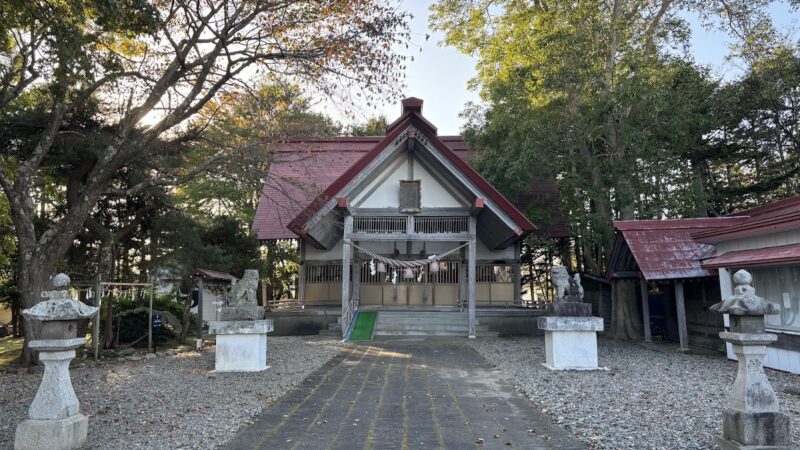
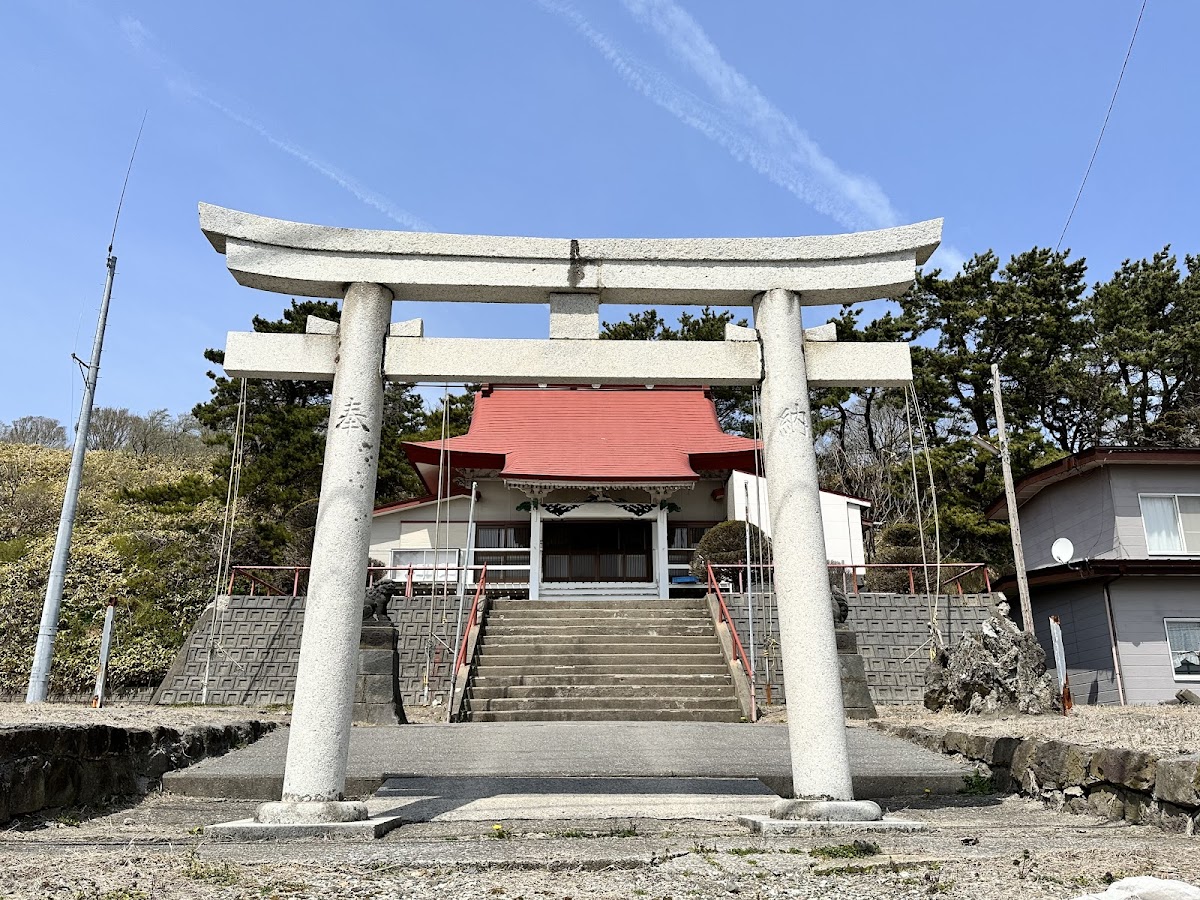
Kaizumi Shrine is located in Kobukei-cho, in the southeastern part of Hakodate City, and belongs to the Hokkaido Shrine Association. It sits on a hill slightly off the national highway, overlooking the Tsugaru Strait in a scenic location.
Location: Kobui-cho, Hakodate City, Hokkaido
Former Shrine Rank: Unranked Shrine
Deities Enshrined: Wadatsumi-no-kami, Ukanomitama-no-mikoto
Shrine Style: Hiyoshi-zukuri
Shrine Area: 23 tsubo
Shrine Grounds Area: 133 tsubo
Number of Parishioners: Approximately 300 households
History and Origin of Kaizumi Shrine
Founded in the Edo Period
The founding date of Kaizumi Shrine dates back to April of the 3rd year of the Hōreki era (1753), during the reign of Emperor Momozono, the 106th emperor. This period was the mid-Edo period, a time when fishing in southern Hokkaido was flourishing under the rule of the Matsumae Domain. Kobui prospered from fishing for kelp and herring, and it is believed that a shrine dedicated to Wadatsumi-no-kami, the god of the sea, was founded to pray for safety at sea and abundant catches.
Shrine Rank and Reconstruction in the Meiji Era
In 1876 (Meiji 9), Kaiseki Shrine was designated a “Mugakusha” (unranked shrine). This rank, under the modern shrine ranking system, was below the ranks of Kanpei-sha (government-supported shrines), Kokuhei-sha (national shrines), Fuken-sha (prefectural shrines), Go-sha (village shrines), and Son-sha (village shrines). It signified recognition as a small but community-based shrine.
On May 20, 1912 (Meiji 45), approximately 160 years after its founding, an application for reconstruction was submitted due to the severe decay and cramped condition of the shrine building. This application was approved on September 17, 1912 (Taisho 1), and the completion of the new shrine building was reported on November 11 of the same year. This reconstruction project, spanning the transition from the Meiji to the Taisho era, speaks to the deep faith of the local residents.
Incorporation in the Showa Era
In 1946 (Showa 21), following procedures based on the Religious Corporations Act, Kaiseki Shrine established itself as a religious corporation. Furthermore, in 1951 (Showa 26), with the enforcement of the new Religious Corporations Act, it was officially registered as a religious corporation.
About the Deity
Wadatsumi-no-kami
The principal deity of Kaiseki Shrine, Wadatsumi-no-kami, is a sea god appearing in Japanese mythology. “Wadatsumi” means “sea god,” and this deity has been worshipped since ancient times as the god who rules the sea and presides over safe voyages and abundant catches.
According to the Kojiki and Nihon Shoki, Watatsumi-no-kami is considered the child deity of Izanagi-no-mikoto and Izanami-no-mikoto, and is also known as the collective name for three deities (Sokotsu-Watatsumi-no-kami, Nakatsu-Watatsumi-no-kami, and Kamitsu-Watatsumi-no-kami) who rule the seabed, the seawater, and the sea surface, respectively.
For the people of Kobukei, whose livelihood is fishing, Watatsumi-no-kami is the most familiar and important deity, and has been deeply revered as an object of prayer for safety at sea and abundant catches.
Ukanomitama-no-mikoto
Ukanomitama-no-mikoto is a deity known as the god of grain and food. “Uka” means food, and this deity is believed to bestow blessings of abundant harvests and business prosperity. This deity is widely worshipped as the principal deity of Inari shrines throughout Japan.
The enshrinement of Ukanomitama-no-Mikoto at Kaizumi Shrine is thought to reflect the lifestyle of the Kobukei district, where both fishing and agriculture were practiced. It can be said that this shrine embodies gratitude and prayer for both the blessings of the sea and the land.
Features of the Shrine Building and Grounds
Hiyoshi-zukuri Style Shrine Building
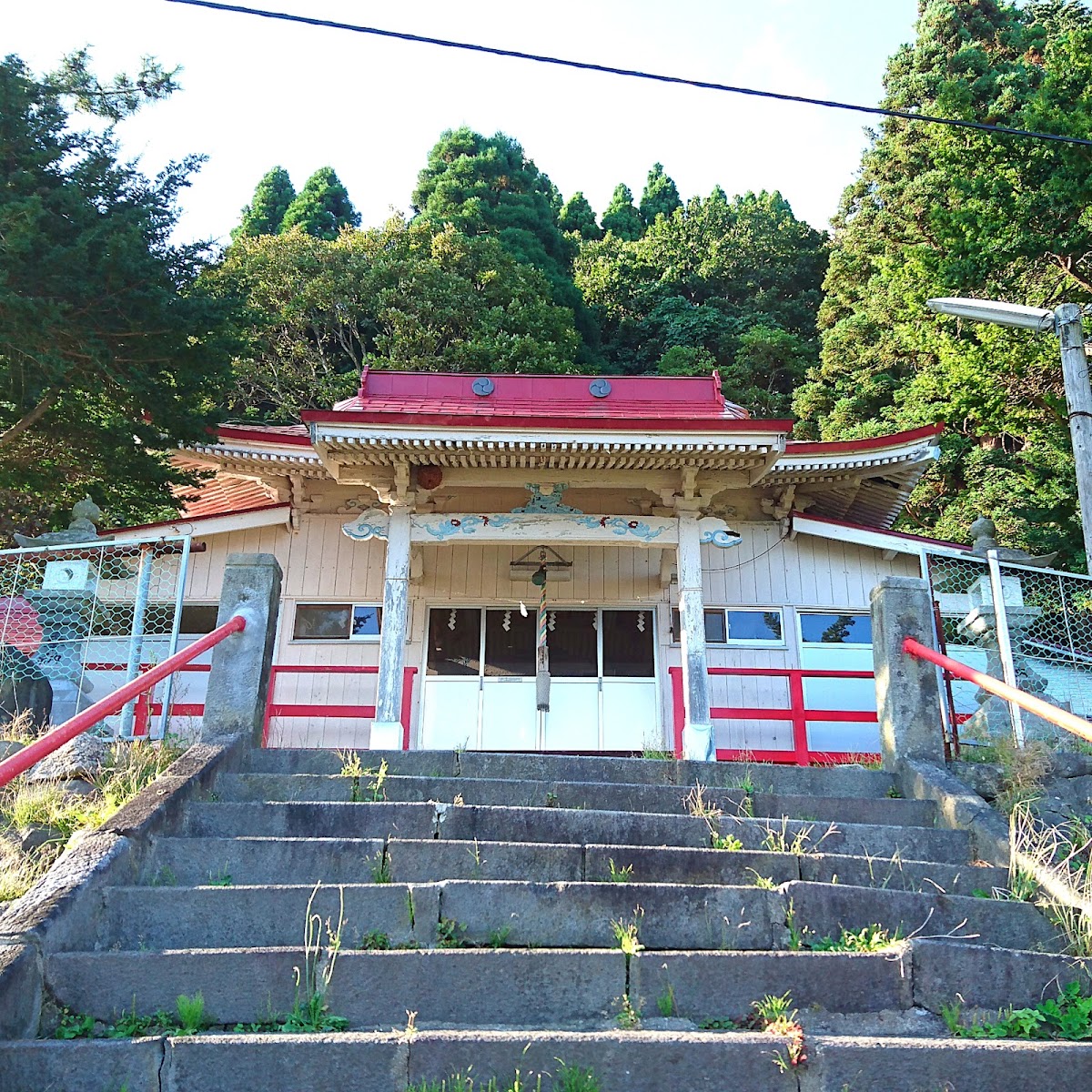
The shrine building of Kaizumi Shrine is constructed in the “Hiyoshi-zukuri” style. Hiyoshi-zukuri is a unique style of shrine architecture, exemplified by Hiyoshi Taisha in Otsu City, Shiga Prefecture, characterized by a structure where the main hall and worship hall are integrated.
The adoption of Hiyoshi-zukuri in Hokkaido shrines is relatively rare, and this style, chosen during the renovation in 1912 (Taisho 1), possesses valuable cultural heritage value, conveying the architectural techniques and aesthetic sensibilities of that time. Although the shrine building is small, at 23 tsubo (approximately 76 square meters), it is carefully maintained.
Grounds Located on a Hill
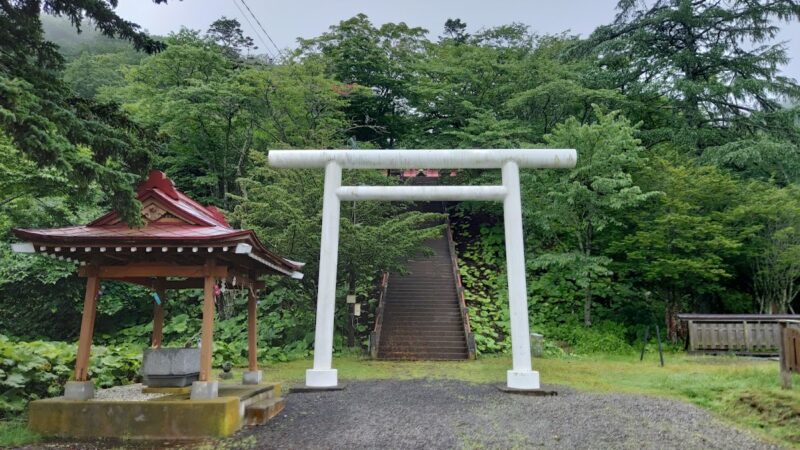
Kaizumi Shrine is situated on a hill slightly off the national highway, and its grounds cover 133 tsubo (approximately 440 square meters). The road leading to the shrine is narrow, requiring caution when visiting by car. However, the elevated location offers a view of the Tsugaru Strait, making it a fitting location for a shrine dedicated to the god of the sea.
The shrine grounds are enveloped in a quiet and peaceful atmosphere, a space where one can feel the history and faith of Kobukai. There are a few parking spaces in front of the shrine for visitors.
The Tradition of Matsumae Kagura
At Kaizumi Shrine, the traditional Hokkaido performing art of “Matsumae Kagura” is preserved. Matsumae Kagura is a form of kagura that developed in the castle town of the Matsumae Domain and is a valuable traditional culture designated as an Intangible Folk Cultural Property of Hokkaido.
Kagura is a dance and music performed in Shinto rituals to appease the gods and pray for a bountiful harvest, a good catch of fish, and peace in the region. The preservation of Matsumae Kagura at Kaizumi Shrine is an important activity that continues to protect the region’s cultural identity.
During Shinto rituals such as the annual festival, the Matsumae Kagura dance is performed, playing a role in preserving tradition and strengthening community bonds.
Access Methods
Access by Public Transportation
Using Hakodate Bus:
- Take the Hakodate Bus “Shimo-kaigan Line” from Hakodate Station
- Travel time: Approximately 1 hour 20 minutes
- Get off at the “Kobukei Fisheries Cooperative” bus stop
- Approximately 3 minutes on foot from the bus stop
Although it is a bit far from the center of Hakodate city, you can enjoy the beautiful scenery along the Tsugaru Strait from the bus window. Since the number of buses is limited, it is recommended to check the timetable in advance.
Access by Car
From the center of Hakodate city, head southeast on National Route 278 towards Kobukei. The travel time from Hakodate Station is approximately 50 minutes.
The road leading to the shrine is narrow, so please drive carefully, paying attention to oncoming traffic. There is parking space in front of the shrine, but the number of spaces is limited, so please use it with consideration for others during busy times.
About Goshuin (Shrine Seals)
Since there is no resident priest at Kaizumi Shrine, the goshuin (shrine seal) can be obtained at the affiliated shrine, Shirikishinai Hachiman Shrine.
Shirikishinai Hachiman Shrine:
- Location: Shirikishinai-cho, Hakodate City, Hokkaido
- Distance from Kaizumi Shrine: Approximately 10 minutes by car
At Shirikishinai Hachiman Shrine, there is information posted about the goshuin of Kaizumi Shrine. When receiving the goshuin, please ask politely as proof of your visit. Bringing your goshuincho (stamp book) and preparing the offering fee (usually around 300 yen) will make the process smoother.
History of Kobukai Town and Kaizumi Shrine
Kobukai, a Fishing Town
Kobukai Town is located in the southeastern part of Hakodate City and has been a prosperous fishing area since ancient times. The area is particularly known for its thriving kelp fishing industry, producing high-quality true kelp. It also once prospered from herring fishing, and many fishermen prayed at Kaizumi Shrine for safety at sea and a bountiful catch.
Currently, approximately 300 parishioners support Kaizumi Shrine, carefully preserving it as the center of local faith. The fact that a community centered around a shrine is maintained even in a depopulated rural area is noteworthy.
Merger with Hakodate City
Furutakei Town was formerly part of Toi Town, but in 2004, during the “Great Heisei Mergers,” it was incorporated into Hakodate City along with Toi Town, Esan Town, Todohokke Village, and Minamikayabe Town. This merger resulted in Hakodate City becoming a municipality that broadly covers the southeastern part of the Oshima Peninsula.
Nearby Attractions
Shirikishinai Hachiman Shrine
Shirikishinai Hachiman Shrine, a shrine under the jurisdiction of Kaiseki Shrine, is another must-visit, offering Goshuin (shrine stamps). Larger in scale and a central shrine in the region, it attracts many worshippers.
Mount Esan
Mount Esan, an active volcano located about 30 minutes by car from Kobukei-cho, is a representative tourist spot in Hakodate City. Known for its azaleas from late May to early June, the scenery of the mountainside painted red is breathtaking.
Scenic Spots of Todohokke Village
Along the coastline, there are numerous beautiful scenic spots, including the Todohokke area. Driving while enjoying the magnificent view of the Tsugaru Strait is exceptional.
Manners and Etiquette for Visiting a Shrine
Basic Etiquette for Visiting a Shrine
- Bow before the Torii Gate: Before entering the sacred area, bow before the torii gate.
- Purify yourself at the water basin: If there is a water basin, purify your left hand, then your right hand, then your mouth.
- Walk along the edge of the path: The center of the path is considered the path of the gods.
- Two bows, two claps, one bow: In front of the main hall, bow twice, clap twice, and finally bow once.
- Bow before leaving the Torii Gate: When leaving the sacred area, bow once with gratitude.
Considerations Unique to Small Shrines
At small shrines like Kaizumi Shrine, there are often no resident priests, so there are no restrictions on visiting hours. However, it is recommended to avoid visiting early in the morning or late at night, and instead visit during daylight hours.
The cleaning and maintenance of the shrine grounds are carried out by local parishioners. Please observe basic manners, such as not littering the shrine grounds and praying quietly.
Annual Events at Kaizumi Shrine
At Kaizumi Shrine, various Shinto rituals are performed throughout the year by the parishioners and devotees of the Kobukei district.
Annual Festival
The annual festival, held at a fixed time each year, is the most important festival for the shrine. At Kaizumi Shrine’s annual festival, Matsumae Kagura is performed, and local people gather to pray for a bountiful harvest, maritime safety, and regional prosperity.
Monthly Festival
The monthly festival, held every month, is a time for daily gratitude and prayer. Although small in scale, it is an important Shinto ritual that supports the faith of the local community.
Sea God Worship in Hokkaido
In Hokkaido, there are many shrines along the coast that enshrine sea gods, such as Kaizumi Shrine. This reflects Hokkaido’s history of being surrounded by the sea on three sides and developing fishing as its main industry.
The Lineage of Sea God Worship
Wadatsumi-no-kami, also written as 綿津見神, has been worshipped throughout Japan since ancient times. It is especially revered by those involved in fishing and shipping as a god who brings safety at sea and abundant catches.
In Hokkaido, fishing flourished from the Matsumae Domain era, and shrines dedicated to sea gods were built in various locations that prospered from herring, kelp, and salmon fishing. Kaiseki Shrine is one such shrine, and has been a center of devotion for the fishermen of Kobukei.
Points to Note When Visiting
Road Conditions
The road leading to the shrine is narrow and has many curves, so driving requires extreme caution. Especially in winter, there is a possibility of snow and ice, so snow tires are essential.
Visiting Hours
While the shrine grounds are generally open for free worship, there are no resident priests. Therefore, if you require a Goshuin (shrine stamp) or amulet, you will need to visit during the opening hours of the Shirikishinai Hachiman Shrine office (usually 9:00 AM to 5:00 PM).
Clothing and Items to Bring
Located on a hill overlooking the sea, it can be windy on some days. Especially from autumn to spring, be sure to dress warmly. Also, since some parts of the approach and grounds are unpaved, comfortable walking shoes are recommended.
Summary: The Charm of Kaizumi Shrine
Located in Kobui-cho, Hakodate City, Hokkaido, Kaizumi Shrine is a historic shrine that has attracted the faith of local people for over 270 years since its founding in 1753. With Kaizumi-no-kami and Ukanomitama-no-mikoto as its enshrined deities, it has served as a spiritual pillar for the fishing town of Kobui, praying for safety at sea, abundant catches, and bountiful harvests.
The Hiyoshi-style shrine buildings, the tradition of Matsumae Kagura dance, and the beautiful location overlooking the Tsugaru Strait are all unique charms of Kaiseki Shrine. While it’s a bit of a distance from the center of Hakodate city, it’s a valuable shrine where you can feel the history of maritime worship in Hokkaido, making it well worth a visit.
Since you can receive a Goshuin (shrine stamp) at Shirikishinai Hachiman Shrine, a visit to both shrines is also recommended. Why not take some time to quietly pray while experiencing the rich nature and history of Kobukei?