Itsukushima Shrine (Esan-cho, Hokkaido) Complete Guide | History, Goshuin (Shrine Seal), and Access Information
Itsukushima Shrine, located in Esan-cho, Hakodate City, Hokkaido, is a historical shrine founded during the Horeki era in the mid-Edo period. It received a divided spirit from Itsukushima Shrine in Aki Province (present-day Hiroshima Prefecture) and has continuously watched over the maritime safety and prosperity of the region. This article provides a detailed introduction to the history of Esan Itsukushima Shrine, its enshrined deities, goshuin information, access methods, and nearby attractions.
Basic Information on Itsukushima Shrine (Esan-cho)
Location and Access
Address: Esan-cho, Hakodate City, Hokkaido
Shrine Rank: Former Unranked Shrine (Ranked in 1876)
Enshrined Deity: Ichikishima-hime no Mikoto
Esan Itsukushima Shrine is located in the Esan district, in the eastern part of Hakodate City. Esan is known as an active volcano and is an area with attractive hot springs and natural scenery. The shrine is located within the Esan district settlement and is cherished as a center of faith for the local residents.
Access by Car
From Hakodate city center, head east on National Route 278 for approximately 50km, a drive of about 1 hour and 15 minutes. Upon entering the Esan district, you will see signs, and the shrine is located along the road within the settlement. Parking for visitors is limited, so it is recommended to use nearby public parking spaces.
Access by Public Transportation
Take a Hakodate Bus bound for Esan. Board at Hakodate Station or the Goryokaku area, and get off at the Esan Branch Office or Esan district bus stop. It’s a few minutes’ walk from there. However, bus service is limited, so it’s important to check the timetable in advance. Especially during winter, service is reduced, so caution is advised.
History and Origins of Itsukushima Shrine
Circumstances of its Founding
The founding of Ezan Itsukushima Shrine is said to date back to September of the first year of the Hōreki era (1751), during the reign of Emperor Momozono, the 106th emperor. At that time, the Ezan region (formerly Ezan Village) saw an increase in people migrating from Honshu (mainland Japan) after the Kyōhō era (1716-1736), and a settlement centered on fishing was formed.
In April of the third year of the Hōreki era (1753), after deliberation among the villagers, a divided spirit was invited from Itsukushima Shrine in Miyajima, Aki Province, and enshrined on Bentenjima Island. This marked the beginning of the shrine. It was founded as a place of worship to pray for maritime safety and the prosperity of fishing in the Ezan region, which is surrounded by the sea.
History Since the Meiji Era
1876 (Meiji 9): Designated as an unranked shrine
September 30, 1901 (Meiji 34): Shrine building damaged by a storm
Since the Taisho Era: Faith continues alongside regional development
With the establishment of the shrine system during the Meiji era, Ezan Itsukushima Shrine was officially recognized as an unranked shrine. However, it has a history of being maintained in harsh natural environments, including suffering significant damage to its building from a storm in 1901. Despite this, the shrine has been continuously repaired and maintained thanks to the deep faith of the local residents.
About the Deity
The main deity is Ichikishima-hime no Mikoto. She is one of the three Munakata goddesses, the guardian deity of maritime traffic, and also worshipped as a goddess of performing arts and wealth, syncretized with Benzaiten.
Because it enshrines the same deity as Itsukushima Shrine in Hiroshima Prefecture, it is a valuable example demonstrating how the Itsukushima faith of Honshu spread to Hokkaido. In the Esan region, where fishing was once thriving, it has been revered as a god protecting safety at sea.
About Goshuin (Shrine Seals)
How to Obtain a Goshuin
Goshuin for Esan Itsukushima Shrine are not available at the shrine itself; they can be obtained by receiving a paper copy at Shirikishinai Hachiman Shrine in Hakodate City. Shirikishinai Hachiman Shrine is located in an area adjacent to the Esan district and manages the goshuin for several shrines.
Notes on Receiving a Goshuin (Shrine Seal)
- Since the seal is received at Shirikishinai Hachiman Shrine, it is recommended to check the visiting hours in advance.
- The seal will be given as a pre-written slip (on paper).
- The offering fee is generally around 300 to 500 yen (this may change, so confirmation is recommended).
- Direct inscription in the Goshuincho (seal book) is often not available, so the pre-written seal will be pasted into your Goshuincho.
Access to Shirikishinai Hachiman Shrine
Shirikishinai Hachiman Shrine is located in the Shirikishinai area along National Route 278, about 15 minutes by car from Esan Itsukushima Shrine. It is about 40 minutes by car from Hakodate city center. For those receiving a Goshuin, visiting Shirikishinai Hachiman Shrine after visiting Esan Itsukushima Shrine is an efficient route.
Highlights of the Shrine Grounds
Features of the Shrine Building
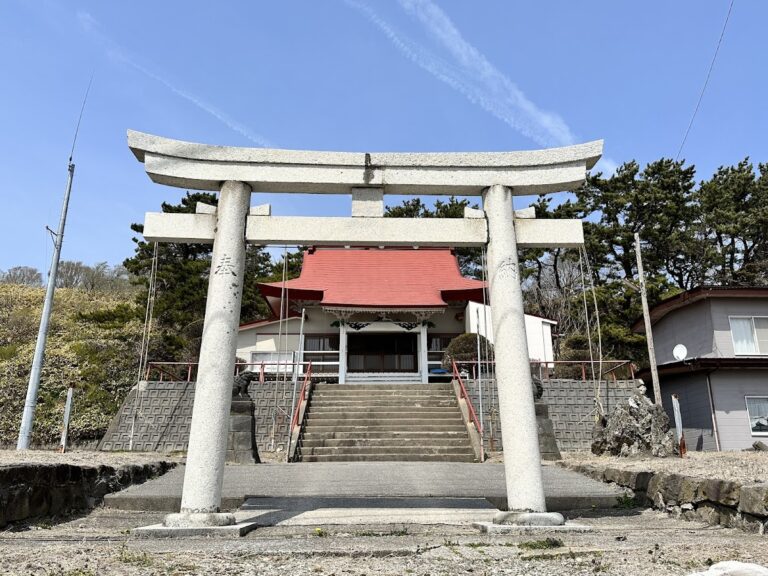
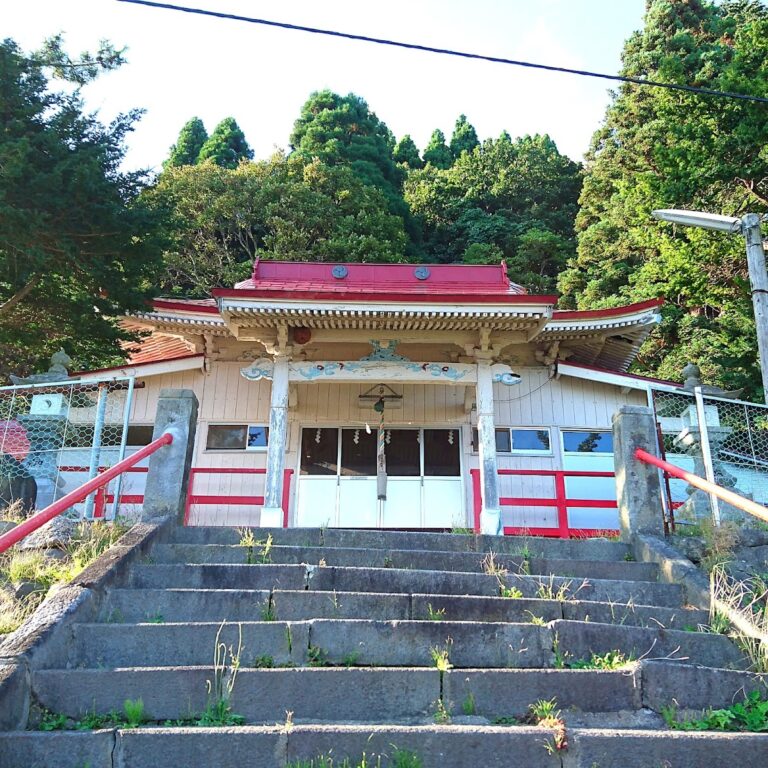
The shrine building of Ezan Itsukushima Shrine is characterized by its sturdy and robust construction, built to withstand Hokkaido’s harsh climate. It is believed to have been rebuilt after damage from a storm in 1901 (Meiji 34), and exudes a simple yet solemn atmosphere.
The worship hall is designed for worship from the front, and the surrounding area is a quiet environment surrounded by nature. While the grounds are not vast, they are well-maintained, creating a space where one can feel the deep faith of the local people.
Relationship with Bentenjima Island
Records indicate that at the time of its founding, the divided spirit was enshrined on “Bentenjima Island.” This is thought to refer to a small island or cape near the coast of the Ezan region. This is an important historical document illustrating a unique form of faith specific to Hokkaido, where Benzaiten worship and Itsukushima worship are intertwined.
It is unclear when the shrine was moved to its current location, but it is possible that it was relocated to a safer place as a response to the development of the settlement or natural disasters.
Etiquette for Visiting a Shrine
Follow the general etiquette for visiting a shrine:
- Bow before passing through the torii gate
- If there is a water basin, purify your hands and mouth
- Offer your donation in front of the main hall
- Bow twice, clap twice, and bow once
- When leaving the shrine grounds, turn back to the torii gate and bow once more
The quiet environment allows for a calm and peaceful visit.
History and Culture of the Esan Region
Overview of Esan Town
Esan Town was an independent municipality until its merger with Hakodate City on December 1, 2004 (Heisei 16). Centered around the active volcano Esan, its main industries are hot springs, fishing, and tourism.
From the Edo period to the Meiji era, it prospered from herring and kelp fishing, attracting many people from Honshu. The founding of Itsukushima Shrine can be seen as a manifestation of the faith of these migrants.
Nature and Faith of Mount Esan
Mount Esan is an active volcano with an elevation of 618m, and fumarolic activity can still be observed today. The smell of sulfur permeates the air, and the rugged mountainside creates a unique landscape. For the people living amidst this natural awe and blessing, shrines have played an important role as spiritual anchors.
Hot springs gush forth around Mount Esan, and it has been used as a therapeutic hot spring resort since ancient times. The presence of shrines, intertwined with nature worship, is an integral part of the region’s cultural identity.
Nearby Tourist Attractions
Mount Esan
The entrance to the Mount Esan hiking trail is approximately a 10-minute drive from the shrine. Enjoy the desolate landscape unique to an active volcano, the fumaroles, and the smell of sulfur—a natural experience unlike any other. From late May to early June, the foothills are covered in blooming Ezo azaleas and Enkianthus campanulatus, and the “Mount Esan Azalea Festival” is held.
While there are hiking trails suitable for beginners, caution is advised for those with volcanic gases, especially those feeling unwell or with heart or respiratory conditions.
Esan Onsenkyo (Esan Hot Spring Village)
The Esan area boasts several hot spring facilities. Many offer day-use bathing, making it a great place to refresh yourself after visiting the temple. The springs are primarily sulfurous, said to be effective for neuralgia and muscle pain.
Minami Kaigan Onsen (Minami Beach Hot Spring)
Located about 20 minutes by car from Esan, this is a rare open-air beach bath in the Todohokke area. Bathing is only possible at low tide, offering a special experience while gazing at the Pacific Ocean. It’s free to use, but facilities such as changing rooms are basic.
Esan Cape Lighthouse & Esan Cape Observatory
Situated at the tip of the Esan Peninsula, it offers panoramic views of the Pacific Ocean. On clear days, you can even see the Shimokita Peninsula. A walking path is maintained around the lighthouse, allowing for enjoyable coastal strolls.
Shirikishinai Hachiman Shrine
As mentioned earlier, this shrine offers Goshuin (temple/shrine stamps), but it’s also a valuable place to visit as a place of worship. It’s a historic shrine that tells the history of the region, and visiting it along with Esan Itsukushima Shrine will give you a deeper understanding of the region’s religious culture.
Best Seasons and Times to Visit Esan Itsukushima Shrine
Spring (April-June)
The best time to visit is during the Esan Azalea Festival from late May to early June. The approximately 600,000 azaleas adorning the mountainside are breathtaking, attracting many tourists. You can create an itinerary that combines shrine visits with nature appreciation.
The temperature is mild, making it a pleasant season. However, it can get chilly in the mornings and evenings, so it’s a good idea to bring a jacket.
Summer (July-August)
This is the time to fully enjoy Hokkaido’s short summer. Seafood is abundant, and you can enjoy fresh seafood such as sea urchin and squid. This season is ideal for nature walks around Mount Esan, and hiking and coastal drives are enjoyable.
Due to the tourist season, accommodations and restaurants may be crowded. Advance reservations are recommended.
Autumn (September-November)
This is the season of autumn leaves, and the mountains around Mount Esan are ablaze with color. There are fewer tourists compared to summer, making it a quiet time for worship. You can also enjoy seasonal seafood, such as autumn salmon.
From October onwards, temperatures begin to drop, so warm clothing is necessary.
Winter (December-March)
This season brings snowfall, and road conditions become difficult. While worship is possible, winter tires or chains are essential. Public transportation services are also reduced, so caution is needed when accessing the shrine.
On the other hand, the shrine amidst the snowy landscape has a mystical atmosphere, allowing you to experience the unique tranquility of winter. Hot spring facilities are open year-round, so combining a winter trip with a hot spring tour is also recommended.
Differences from Other Itsukushima Shrines in Hakodate
There are several Itsukushima Shrines in Hakodate City. The most famous is the Itsukushima Shrine in Benten-cho, Hakodate City (near the Hakodate Dock tram stop), which is said to have been founded in the early Edo period and is known as a tourist spot in downtown Hakodate.
Characteristics of the Itsukushima Shrine in Esan-cho:
- Founded during the Horeki era (mid-18th century)
- Located in the naturally rich Esan area
- Center of faith for a fishing village
- Quiet atmosphere, not commercialized for tourism
Characteristics of the Itsukushima Shrine in Benten-cho:
- Older founding (early Edo period)
- Near the center of downtown Hakodate
- Convenient access by tram
- Visited by many tourists
Both shrines enshrine Ichikishimahime-no-Mikoto and are rooted in the belief in maritime safety, but their locations and atmospheres differ significantly. Visiting both and comparing them during your Hakodate sightseeing trip would be an interesting experience.
Precautions and Manners for Visiting the Shrine
Clothing and Items to Bring
- Appropriate clothing for visiting the shrine (clean clothing with minimal exposure)
- Seasonal cold and heat protection measures
- Comfortable walking shoes (some areas within and around the shrine grounds are unpaved)
- Camera (Photography is permitted, but please be considerate of other visitors)
Manners for Visiting the Shrine
- Be quiet within the shrine grounds
- Take your trash with you
- Do not enter restricted areas
- Avoid entering shrine buildings and sacred places without permission
- Photography is permitted, but photography may be prohibited inside the main hall, etc.
Parking
Since there may not be a dedicated parking lot, please avoid parking on the street and park in a place that does not inconvenience the neighbors. Please be considerate as these are also local roads used by residents.
Esan Itsukushima Shrine and the Local Community
The Esan area is experiencing population decline, but the shrine remains an important presence for the local residents. Annual festivals and cleaning activities also play a role in maintaining community bonds.
When visiting as a worshipper, it’s important to understand that the shrine exists not just as a tourist attraction, but as an integral part of the local culture and lifestyle, and to treat it with respect.
Summary: The Charm of Visiting Esan Itsukushima Shrine
Itsukushima Shrine in Esan-cho, Hakodate City, Hokkaido, is a historical shrine founded during the Horeki era. It enshrines a divided spirit invited from Itsukushima Shrine in Hiroshima and has continuously watched over maritime safety and the prosperity of the region.
In a quiet environment untouched by tourism, it’s a valuable spot where you can feel the history of faith during Hokkaido’s pioneering era. Combining a visit with Esan’s magnificent nature, hot springs, and fresh seafood will allow you to discover a different side of Hokkaido’s charm compared to Hakodate city.
While the Goshuin (shrine stamp) is received at Shirikishinai Hachiman Shrine, this is also part of the enjoyment of visiting local shrines. When sightseeing in Hakodate, why not extend your trip a little and visit the Esan area and pay your respects at Itsukushima Shrine? The quiet time away from the hustle and bustle of the city will surely become a memorable part of your trip.