Complete Guide to Neppu Shrine | History and Visiting Information in Kuromatsunai Town, Hokkaido
Neppu Shrine, located in Kuromatsunai Town, Suttsu District, Hokkaido, is a historic shrine that has been revered by local residents since the pioneering era. This article provides a detailed explanation of Neppu Shrine’s history, access methods, festivals, and role in the community.
What is Neppu Shrine?
Neppu Shrine is a religious corporation belonging to the Hokkaido Shrine Association, located at 8-142 Shiraikawa, Kuromatsunai Town, Suttsu District, Hokkaido. The place name “Neppu” is difficult to pronounce and is read as “Neppu.” This shrine has long been the center of faith for local residents, serving as the guardian deity of the Shiraikawa area of Kuromatsunai Town.
Deities and Beliefs
Netsufu Shrine was established as a shrine enshrining multiple deities, stemming from the integration of the guardian deities worshipped by the various groups of people who migrated to the area during the pioneering period. It continues to receive fervent devotion from local residents as a place to pray for the safety and prosperity of the region and for a bountiful harvest.
History of Netsufu Shrine
Beliefs and the Origins of the Shrine During the Pioneering Period
During the Meiji era, when the development of Hokkaido intensified, groups of people migrated from various parts of Honshu to the Shiraikawa district of Kuromatsunai Town. They brought with them the deities they worshipped in their respective hometowns, and erected small shrines and temples in various locations.
During the pioneering days, the Shiraigawa area was dotted with the following shrines:
- Shiraigawa Inari Shrine: Deity of business prosperity and abundant harvests
- Kakuju Shrine: Guardian deity of the pioneers
- Akaigawa Shrine: Shrine praying for the safety of the region
- Kyoshin Shrine: Shrine symbolizing the unity of the community
- Ooyachi Shrine: Guardian deity of agriculture
These shrines were worshipped in each respective settlement and region, serving as a spiritual anchor for the pioneers.
Consolidation in 1921
In 1921 (Taisho 10), considering the development of the region and the convenience of the residents, the above-mentioned shrines were consolidated. This marked the beginning of the current Netsubu Shrine. The consolidation brought together the scattered places of worship into one, marking a new beginning as the guardian deity of the entire region.
Initially, the consolidated shrine was enshrined behind the current Kuromatsunai Junior High School. However, this location suffered from poor transportation access, and problems such as bridges being washed away frequently occurred, especially during the spring snowmelt.
Relocation in 1924
In 1924 (Taisho 13), to alleviate these inconveniences, the shrine was relocated to its current location at 8-142 Shiraigawa, along National Route 5. This location offers convenient transportation access, making it easily accessible for worshippers. Its location, approximately 500 meters east of the “Kuromatsunai” roadside station, provides easy access for both local residents and passersby.
Reconstruction of the Shrine Building in 1938 (Showa 13)
In 1938 (Showa 13), the aging shrine building was reconstructed. This reconstruction improved the shrine’s facilities, resulting in a more magnificent building. Although this period marked Japan’s transition to a wartime system, the fact that the reconstruction was realized through the enthusiasm of local residents speaks volumes about the deep faith in Neppu Shrine.
Movement for Village Shrine Status and War
Around 1942, a movement began among local residents to elevate Neppu Shrine to village shrine status. This would have increased the shrine’s prestige and become a source of local pride. However, the intensification of the Pacific War forced the movement to cease.
During the war, many young men went to the battlefield, making the maintenance of the shrine difficult. However, through the efforts of those who remained, Neppu Shrine continued to serve as a spiritual pillar for the community.
Post-War Development and Religious Corporation Status
In 1947, under the new post-war legal system, Neppu Shrine was officially recognized as a religious corporation. This established its legal foundation as a shrine, and it continues to operate as a unit religious corporation under the jurisdiction of the Hokkaido Governor to this day.
On October 5, 2015, it was issued a corporate number by the National Tax Agency, establishing a modern corporate structure.
Festivals and Odoriyama at Neppu Shrine
History of the Grand Festival
Since its consolidation, Neppu Shrine has designated September 15th as the day of its annual grand festival, with various Shinto rituals and events taking place. This festival is one of the most important events of the year for the local residents and attracts many worshippers.
The Tradition of Odoriyama
In 1950 (Showa 25), a major turning point occurred in the festivals of Neppu Shrine. Mr. Morita from Kuromatsunai was invited to provide instruction in “Odoriyama.” Odoriyama is one of Hokkaido’s traditional festival performing arts, a lively festival centered around portable shrines and floats.
Started under Mr. Morita’s guidance, Odoriyama grew in popularity year after year and became established as an important cultural tradition of the region. This Odoriyama is still carried on today and is the highlight of Neppu Shrine’s grand festival.
Many residents, from young people to the elderly, participate in the preparation and execution of the Odoriyama (dance festival), making it a place for intergenerational exchange. The preservation of this traditional performing art plays a crucial role in strengthening community bonds in rural areas facing depopulation.
Access to Neppu Shrine
Location Information
Address: 8-142 Shiraikawa, Kuromatsunai-cho, Suttsu-gun, Hokkaido
Transportation Access
Access by Train
The nearest station to Neppu Shrine is Neppu Station on the JR Hakodate Main Line. The station name is pronounced “Neppu,” the same as the shrine’s name. The shrine is within walking distance from Neppu Station, allowing visitors to stroll through the quiet surroundings on their way to worship.
Access by Car
Located along National Route 5, it is very convenient to access by car. It is approximately 500 meters east of the “Kuromatsunai” roadside station, making it easily accessible from both Sapporo and Hakodate.
- From Sapporo: Take National Route 5 south, approximately 2 hours and 30 minutes.
- From Hakodate: Take National Route 5 north, approximately 2 hours.
- From Niseko: Take National Route 5, approximately 40 minutes.
Parking is available within or around the shrine grounds, but congestion is expected during events such as the annual festival, so it is recommended to allow ample time for your visit.
Characteristics of Kuromatsunai Town and the Neppu Area
About Kuromatsunai Town
Kuromatsunai Town is located in Suttsu District, under the jurisdiction of the Shiribeshi General Subprefectural Bureau of Hokkaido, and is known as the northernmost limit of beech tree growth. Blessed with a rich natural environment, agriculture and tourism are the main industries.
Within the town, there are tourist hubs such as the “Towa Vert” hot spring accommodation facility and the “Kuromatsunai” roadside station, which can be visited in conjunction with a visit to Neppu Shrine.
History of the Neppu District
The name Neppu is believed to originate from the Ainu word “nep” (meaning river). This area, through which the Shirai River flows, has long been blessed with water, and during the pioneering era, it attracted many settlers due to its suitability for agriculture.
While the Neppu district is currently a quiet rural area, it once enjoyed a certain level of activity due to the presence of a Hakodate Main Line station. Neppu Shrine is an important cultural asset that conveys the history of this region.
Shrine Culture in Hokkaido and Neppu Shrine
Characteristics of Shrines in Hokkaido
Shrines in Hokkaido have characteristics that differ from those in Honshu and further south. Many were founded during the pioneering period after the Meiji Restoration, so their history is relatively recent, but they strongly reflect the faith and feelings of the pioneers towards their communities.
Shrines like Neppu Shrine, formed by the integration of several smaller shrines, are common in Hokkaido. This reflects the history of how, in the early stages of pioneering, each settlement had its own place of worship, which were then integrated as the region developed. ### Relationship with the Hokkaido Association of Shinto Shrines
Netsufu Shrine belongs to the Hokkaido Association of Shinto Shrines and is under the jurisdiction of the Association of Shinto Shrines. The Hokkaido Association of Shinto Shrines is an organization that oversees shrines in Hokkaido, providing support for the operation of each shrine, training Shinto priests, and promoting Shinto culture.
The Hokkaido Association of Shinto Shrines’ website publishes information on shrines in Hokkaido, including Netsufu Shrine, making it a useful source of information for visitors.
Netsufu Shrine Grounds and Facilities
Grounds
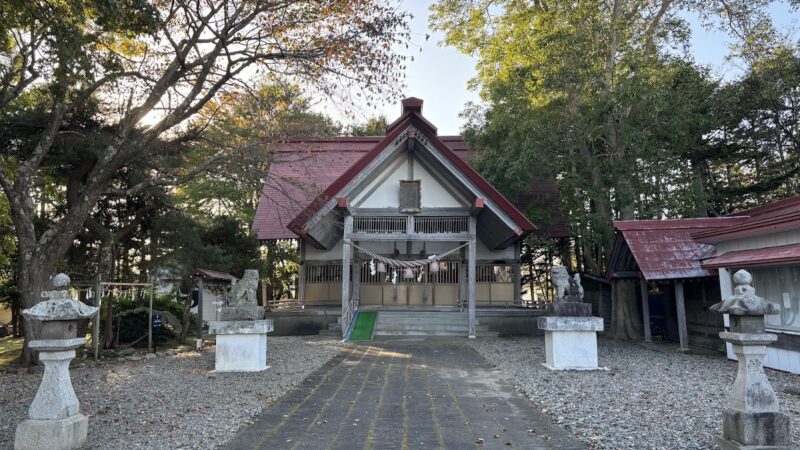
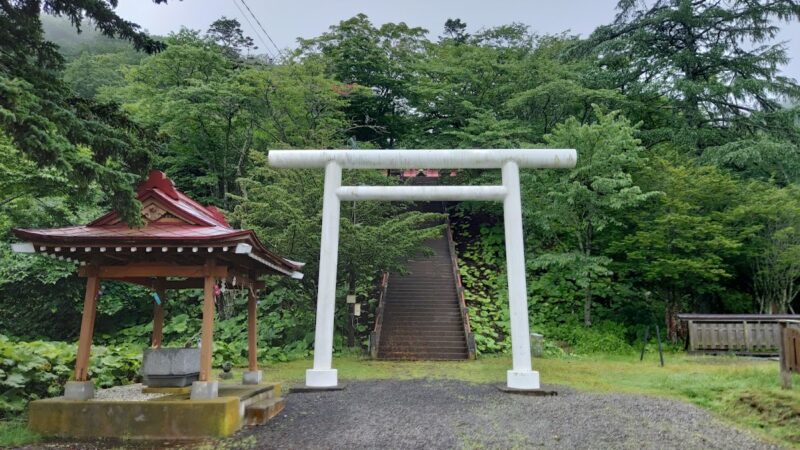
At the entrance to the grounds of Netsufu Shrine, located along National Route 5, stands a signpost inscribed with “Netsufu Shrine.” The grounds are well-maintained and kept clean.
It possesses a simple yet dignified appearance characteristic of Hokkaido shrines, and a tranquil atmosphere harmonizing with the surrounding natural environment welcomes visitors.
Shrine Building
The shrine building, rebuilt in 1938 (Showa 13), is sturdily constructed to withstand Hokkaido’s harsh climate. While maintaining the style of traditional shrine architecture, the design prioritizes practicality.
Manners and Etiquette for Visiting a Shrine
Basic Etiquette for Visiting a Shrine
When visiting Neppu Shrine, please observe the following basic etiquette:
- Bow before the Torii Gate: Before entering the shrine grounds, bow before the torii gate.
- Purify yourself at the water basin: If there is a water basin, purify your hands and mouth.
- Walking along the approach: The center of the approach is considered the path of the gods, so walk along the sides.
- Worship at the main hall: Worship using the two bows, two claps, and one bow method.
- Bow upon leaving: When leaving the shrine grounds, turn around and bow after passing through the torii gate.
Participation in the Annual Festival
The annual festival, held around September 15th, features traditional events such as the Odoriyama (dance parade). While participation and viewing are often possible for those from outside the region, it is recommended to check details in advance. ## Attractions Around Neppu Shrine
Roadside Station “Kuromatsunai”
Located approximately 500 meters west of Neppu Shrine, the roadside station “Kuromatsunai” sells local specialties and fresh agricultural products. A stop before or after your visit to the shrine allows you to experience the charm of Kuromatsunai Town.
The Northernmost Limit of Beech Trees
Kuromatsunai Town is known as the “Northernmost Limit of Beech Trees,” and the Utasai Beech Forest is designated a national natural monument. Combined with a visit to Neppu Shrine, you can experience the rich nature of Hokkaido.
Nature of the Shirai River
The Shirai River, which flows near the shrine, is known for its clear waters and offers beautiful scenery throughout the seasons. The autumn foliage season is particularly spectacular, and a visit combining shrine worship with a nature walk is highly recommended.
The Present and Future of Neppu Shrine
As the Center of the Local Community
Currently, Neppu Shrine serves as the center of faith for local residents and a symbol of community unity. In rural areas facing depopulation, shrines play a crucial role in preserving local identity, going beyond mere religious institutions.
Inheritance of Tradition
The continuation of traditional events, including the Odoriyama festival, holds significant importance in transmitting culture to younger generations. Local schools and youth associations are working together to pass on these traditions to future generations.
Potential as a Tourism Resource
Among tourists visiting Hokkaido, an increasing number are interested in local history and culture. Neppu Shrine, as a valuable cultural heritage site that conveys the history of Hokkaido from the pioneering era, has the potential to attract even more attention in the future.
Summary
Neppu Shrine, located in the Shiraikawa district of Kuromatsunai Town, Hokkaido, is a shrine that conveys the history of the pioneering era. With a history spanning over 100 years since its consolidation in 1921 (Taisho 10), Neppu Shrine has long been revered as the guardian deity of the region.
Conveniently located along National Route 5, it is easily accessible from Neppu Station on the JR Hakodate Main Line. The annual festival, held around September 15th each year, features the traditional Odoriyama dance, a tradition dating back to 1950 (Showa 25), making it an important cultural event for the community.
For those interested in the history of Hokkaido’s pioneering, those seeking to experience local traditional culture, and those wishing to visit in a peaceful environment, Neppu Shrine is a worthwhile place to visit. Why not reflect on the faith of the pioneers and the history of the region amidst the rich natural environment of Kuromatsunai Town?
Visiting Neppu Shrine in conjunction with nearby tourist attractions such as the “Kuromatsunai” roadside station and the northernmost beech forest will enhance your Hokkaido trip. Neppu Shrine is a special place where you can feel the history and culture of Hokkaido, as well as the warmth of the local community.