Onnebetsu Shrine Complete Guide | A Thorough Explanation of History, Deities, Goshuin (Shrine Seals), and Access Information
Onnebetsu Shrine, located in Onnebetsu-cho, Shibetsu City, Hokkaido, is a historic shrine that has attracted the faith of local people since the pioneering era of the Meiji period. This article provides detailed information useful for those considering visiting Onnebetsu Shrine, including its history from its founding to the present day, its enshrined deities, the appearance of the shrine grounds, information on goshuin (shrine seals), and access methods.
Basic Information on Onnebetsu Shrine
Location and Contact Information
Location: Ibun, Onnebetsu-cho, Shibetsu City, Hokkaido
Onnebetsu Shrine is located in a hilly area away from the center of Shibetsu City, in a quiet environment surrounded by abundant nature. Although it is currently an unmanned shrine, the shrine buildings and grounds are carefully maintained by local residents.
About Concurrent Shrine Management
Onnebetsu Shrine is a concurrent shrine of Shibetsu Shrine, and its rituals and festivals are conducted by the chief priest of Shibetsu Shrine. For inquiries regarding Goshuin (temple/shrine stamps) or various prayers, please contact Shibetsu Shrine.
Annual Festival
The annual festival of Onnebetsu Shrine is held every year on September 15th. On this day, parishioners and local residents gather, and traditional Shinto rituals are solemnly performed.
History of Onnebetsu Shrine
Founding and Development in the Meiji Era
The history of Onnebetsu Shrine dates back to around 1903 (Meiji 36), during the Hokkaido pioneering period. At that time, when the number of settlers in the Onnebetsu area began to increase, the pioneers built a small shrine at the northern foot of what is now Shrine Mountain.
The enshrinement of Amaterasu Omikami in this shrine is considered the beginning of Onnebetsu Shrine. Amidst the harsh pioneering life, the settlers found solace in prayer to the gods, helping each other and building a foundation for their lives in this new land.
The development of Hokkaido in the Meiji era was a national project, and many people migrated from various parts of Honshu. As part of this development, the Onnebetsu area also underwent progress, and a settlement centered on agriculture was formed.
Separation of Village and Development of the Shrine in 1927
In 1927 (Showa 2), the Onnebetsu area separated from Kenbuchi Village and started anew as Onnebetsu Village. This separation was driven by regional development and population growth, and was a major turning point for Onnebetsu Shrine.
The independence of the village signified the establishment of a regional identity, and the shrine’s role as its spiritual center became even stronger.
Construction of the Shrine Buildings and Relocation in 1934 (Showa 9)
In 1934 (Showa 9), Onnebetsu Shrine underwent significant development. In this year, a Shinmei-zukuri style main hall and a Nagare-zukuri style worship hall were newly constructed, and the deity was relocated.
Shinmei-zukuri is an ancient Japanese architectural style, exemplified by Ise Grand Shrine, and is a dignified style befitting a shrine dedicated to Amaterasu Omikami. The Nagare-zukuri style worship hall is a practical structure designed to allow worshippers to pray while sheltered from the elements.
The construction of this shrine was realized through the combined donations and labor of local residents, demonstrating the deep faith of the people of Onnebetsu Village.
Ranking as a Shrine Receiving Offerings of Sacred Food and Cloth
Onnebetsu Shrine was subsequently ranked as a Shrine Receiving Offerings of Sacred Food and Cloth. This means that the shrine was recognized as one that receives offerings of sacred food (offerings to the gods) and cloth (cloths offered to the gods) from the national and local governments.
This ranking was an important event that demonstrated Onnebetsu Shrine’s official recognition as a central shrine in the region. Ranking as a Shrine Receiving Offerings of Sacred Food and Cloth is an indicator of the shrine’s status and importance in the region.
From the Post-War Period to the Present
Throughout the post-war Showa era, Onnebetsu Shrine continued to function as a spiritual pillar of the region. However, due to the outflow of population to urban areas since the period of rapid economic growth, the population of the Onnebetsu district has also been declining.
Although it is currently an unmanned shrine, it is carefully preserved by parishioners and local residents, and is properly maintained throughout the year. The grounds and shrine buildings are kept in relatively good condition, providing visitors with a tranquil space for worship.
About the Deity
Amaterasu Omikami
The deity enshrined at Onnebetsu Shrine is Amaterasu Omikami. Amaterasu Omikami is the goddess of the sun, considered the supreme deity in Japanese mythology, and is also revered as the ancestral deity of the Imperial family.
Amaterasu Omikami is believed to possess the following divine virtues:
- National Peace and Abundant Harvest: As the sun goddess, she protects agriculture.
- Good Fortune and Prosperity: Brings all kinds of good fortune.
- Protection from Evil: Protects people from disaster.
- Family Safety: Peace and prosperity for the family.
In the harsh environment of the pioneering era, settlers prayed for the protection of Amaterasu Omikami, seeking abundant harvests and a safe life. Even today, many people visit the shrine seeking these divine virtues.
Shrine Grounds and Highlights
Features of the Shrine Buildings
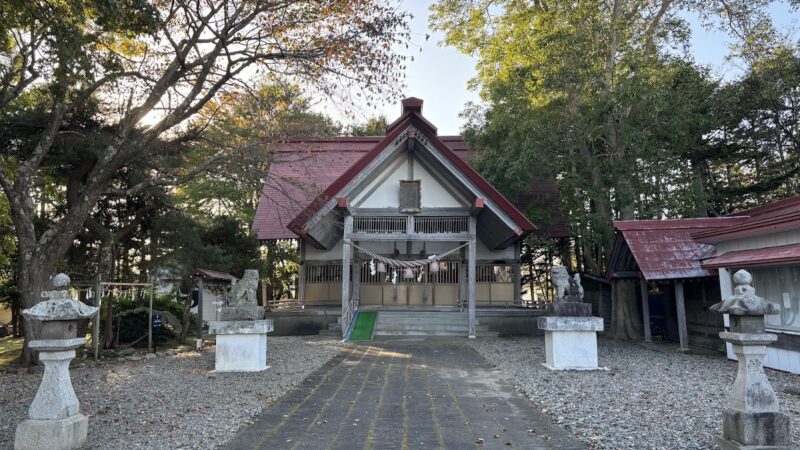
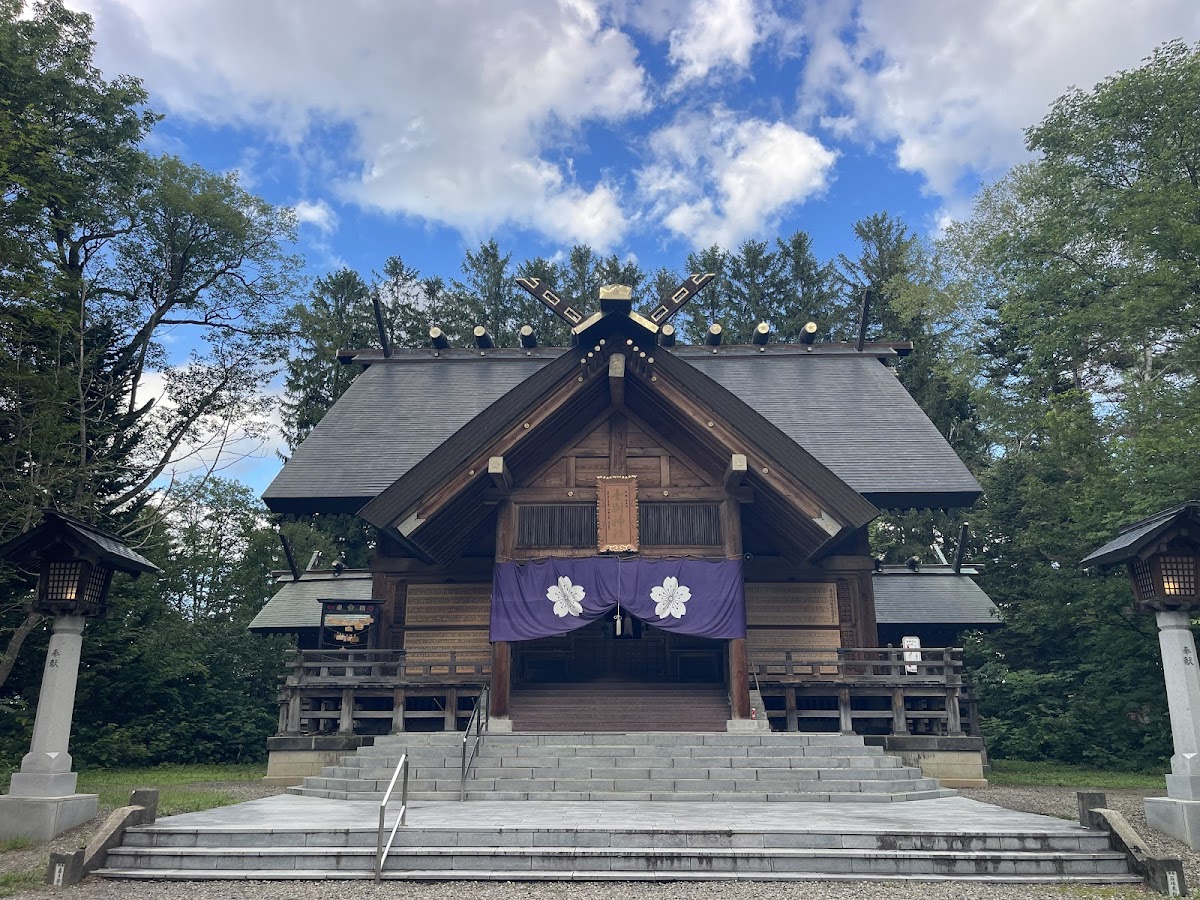
The shrine buildings of Onnebetsu Shrine consist of a Shinmei-zukuri style main hall and a Nagare-zukuri style worship hall, both built in 1934 (Showa 9).
The Shinmei-zukuri style main hall features a gabled roof and a flat entrance, characterized by its simple yet dignified appearance. The understated beauty of the shrine, devoid of ornamentation, creates a sacred atmosphere befitting the worship of Amaterasu Omikami.
The Nagare-zukuri style worship hall is characterized by its roof that flows outwards when viewed from the front, a practical structure that protects worshippers from rain and snow. This design can be seen as a consideration of Hokkaido’s harsh climate.
Shrine Grounds
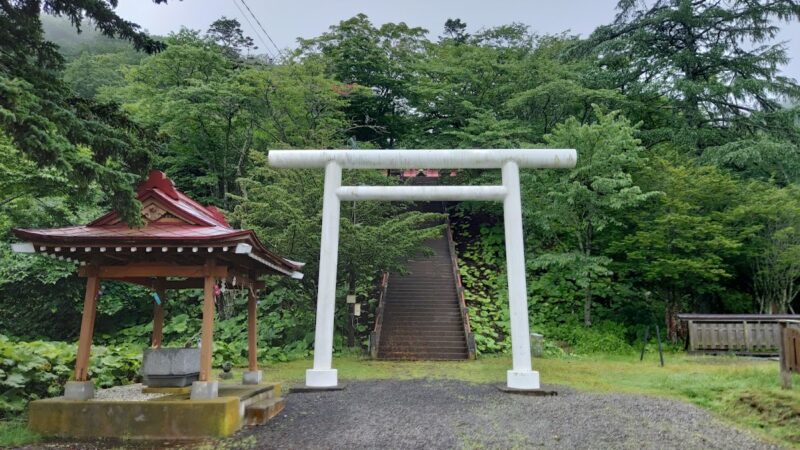
Onnebetsu Shrine is located on a hill, offering panoramic views of the surrounding countryside. From spring to summer, lush greenery unfolds, followed by autumn foliage and winter snowscapes, allowing visitors to enjoy the beauty of nature throughout the seasons.
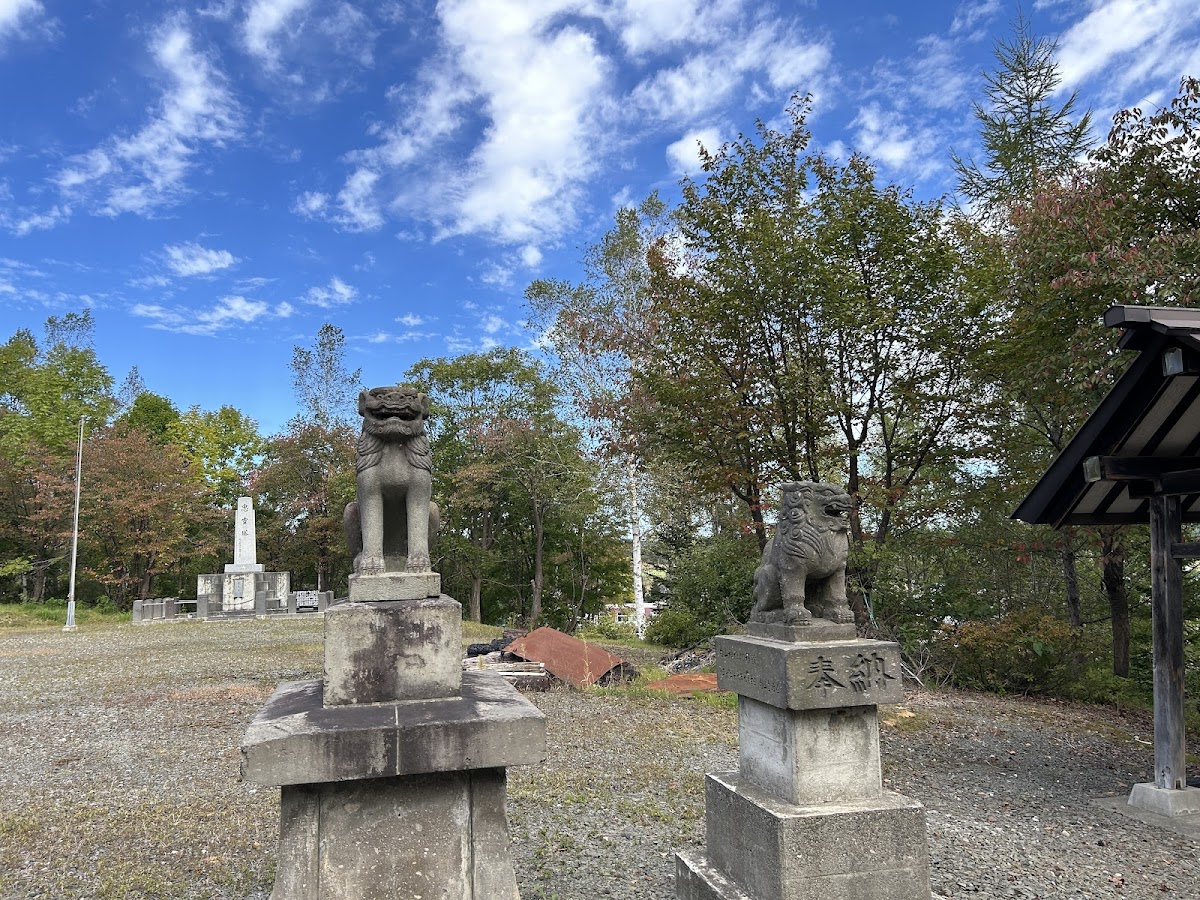
Although it is an unmanned shrine, the grounds are regularly cleaned, creating a welcoming environment for worshippers. Visitors can worship in a quiet and peaceful atmosphere.
Shrine Building and Grounds Area
Details regarding the size of Onnebetsu Shrine’s facilities are recorded in the records of the Hokkaido Shrine Association. It is a standard size for a local shrine, appropriately sized for the number of parishioners.
The shrine grounds occupy a corner of the shrine mountain, arranged in harmony with nature. The space leading from the approach to the shrine building functions as a place where worshippers can escape from their daily lives and purify their minds.
Etiquette and Manners for Visiting a Shrine
Basic Method of Visiting a Shrine
When visiting Onnebetsu Shrine, follow the general etiquette for visiting a shrine:
- Bow before the Torii Gate: Before entering the sacred area, bow before the torii gate.
- Walking along the Path: The center of the path is considered the path of the gods, so walk along the sides.
- Watering Procedure: If there is a watering basin, cleanse your left hand, then your right hand, then your mouth.
- Worship at the Main Hall: Worship using the two bows, two claps, and one bow method.
- Bow deeply twice.
- Clap your hands twice at chest height.
- Pray with sincerity.
- Finally, bow deeply once.
Points to Note at an Unmanned Shrine
Onnebetsu Shrine is an unmanned shrine, but please observe the following points when visiting:
- Be Quiet: Be considerate not to disturb the surrounding tranquility.
- Be Clean: Please take your trash with you.
- Photography: Please refrain from taking photos in sacred areas such as the interior of the main shrine.
- Offerings: If an offering box is provided, please offer your donation with gratitude.
About Goshuin (Shrine Seals)
How to Obtain a Goshuin
Onnebetsu Shrine is an unmanned shrine, so goshuin are not directly given out on the grounds. If you wish to obtain a goshuin, please contact Shibetsu Shrine, which is managed by the same shrine.
Shibetsu Shrine may also be able to provide the goshuin for Onnebetsu Shrine. However, it is recommended to contact them in advance to confirm.
About Goshuincho (Shrine Seal Books)
If you collect goshuin, please bring your own goshuincho. A goshuin is not just a stamp; it is a heartfelt inscription written by a Shinto priest as proof of your visit. Please store and treat it with care.
Access Information
Access by Car
The most convenient way to access Onnebetsu Shrine is by car.
From Sapporo:
- Take the Hokkaido Expressway and exit at Shibetsu-Kenbuchi IC.
- Head north on National Route 40 towards Onnebetsu.
- Travel time: Approximately 2 hours 30 minutes
From Asahikawa:
- Head north on National Route 40.
- Pass through Shibetsu town center towards Onnebetsu.
- Travel time: Approximately 1 hour
The shrine is located on a hill, so it is recommended to check the location in advance using a car navigation system or map app before visiting. Winter tires are essential due to snowfall in winter.
Access by Public Transportation
When using public transportation:
- The nearest station is JR Soya Main Line “Shibetsu Station”.
- From Shibetsu Station, take a local bus or taxi.
- Since it is a distance to the Onnebetsu area, it is recommended to check transportation options in advance.
The Onnebetsu area is far from the town center, so public transportation is limited. When planning your visit, you may want to consider renting a car.
Parking Information
Onnebetsu Shrine has parking spaces for visitors, but it is not a large parking lot. During events such as the annual festival, please follow the instructions of local residents regarding parking.
Annual Events and the Annual Festival
Annual Festival (September 15th)
The annual festival, the most important religious ceremony at Onnebetsu Shrine, is held every year on September 15th. On this day, parishioners and local residents gather to express gratitude for the past year and pray for peace and prosperity in the future.
The following rituals are performed during the annual festival:
- Offering of Food and Drink: Offering of food and drink to the gods
- Recitation of Prayers: The Shinto priest recites prayers
- Offering of Tamagushi: Attendees offer tamagushi (sacred branches)
- Post-Festival Gathering: Attendees share a meal after the rituals
Other Annual Events
At Onnebetsu Shrine, various rituals are performed throughout the year in addition to the annual festival:
- New Year’s Day Festival (January 1st): Praying for peace and prosperity throughout the year at the start of the new year
- Spring Festival: Praying for a bountiful harvest at the start of agricultural work
- Autumn Grand Festival: A festival of gratitude for the harvest
For details on these events, please contact Shibetsu Shrine.
Onnebetsu Shrine and the Local Community
Parishioner Organization and Local Community
Onnebetsu Shrine has functioned as a central presence in the local community. While the number of parishioners has changed over time, the shrine remains carefully preserved by the local community.
The shrine’s maintenance is primarily handled by the parishioners’ organization, and various activities such as cleaning the grounds, repairing the shrine buildings, and preparing for the annual festival maintain community bonds.
A Place to Tell the History of Settlement
Onnebetsu Shrine, a historical building dating back to the Meiji era’s settlement period, is a valuable presence that conveys the history of the region. The shrine’s history and architectural style tell the story of the hardships and faith of the ancestors.
For local children, the shrine serves as a living teaching tool for learning about local history, playing an important role in the formation of their regional identity.
Depopulation and the Future of the Shrine
Like many rural areas in Hokkaido, the Onnebetsu district faces the challenge of population decline. However, thanks to the efforts of the parishioners and local residents, Onnebetsu Shrine has been preserved to this day.
In recent years, the shrine has attracted visitors from urban areas and people interested in history, increasing interest from outside the region. It is hoped that these new connections will become a force supporting the future of the shrine.
Nearby Tourist Attractions
Highlights of Shibetsu City
When visiting Onnebetsu Shrine, we recommend also visiting other tourist attractions in Shibetsu City:
Shibetsu Shrine: The main shrine of Onnebetsu Shrine, with a larger shrine building and more extensive facilities. Goshuin (shrine stamps) are also available here.
Sheep and Clouds Hill: A representative tourist attraction in Shibetsu City, where you can enjoy the sight of sheep grazing and beautiful scenery.
Tsukumoyama Mountain: A mountain suitable for hiking and nature observation, where you can enjoy the beauty of nature throughout the seasons.
Shrine Pilgrimage in Northern Hokkaido
If you’re interested in visiting shrines, why not explore other shrines in the northern Hokkaido area?
- Kenbuchi Shrine: The shrine of Kenbuchi Village, which was formerly part of Onnebetsu Village.
- Nayoro Shrine: One of the central shrines in the northern Hokkaido region.
- Wassamu Shrine: Known as a historical shrine.
Visiting these shrines will allow you to gain a deeper understanding of the history of Hokkaido’s pioneering era and the local religious culture.
Clothing and Items to Bring When Visiting
Recommended Clothing
Onnebetsu Shrine is located on a hill and has few obstructions, making it susceptible to weather changes. Please refer to the following for clothing recommendations when visiting:
Spring/Autumn: Layering is recommended to cope with temperature changes. A windbreaker is useful as it can be windy.
Summer: The sun is strong, so bring a hat and sunscreen. However, it is considered good manners to remove your hat at the shrine.
Winter: Winters in Hokkaido are extremely cold and snowy. Warm clothing, gloves, a hat, and winter boots are essential.
Useful Items to Bring
- Camera: You can take pictures of the beautiful shrine grounds and surrounding scenery.
- Goshuincho (Shrine Stamp Book): Necessary if you wish to receive a Goshuin (shrine stamp) at Shibetsu Shrine.
- Drinks: Hydration is especially important during the summer.
- Map/GPS: For location confirmation.
About the Hokkaido Shrine Association
Role of the Hokkaido Shrine Association
Onnebetsu Shrine belongs to the Hokkaido Shrine Association. The Hokkaido Shrine Association is an organization that oversees shrines throughout Hokkaido and has the following roles:
- Support for the maintenance and management of shrines
- Training and education of Shinto priests
- Provision of information about shrines
- Promotion of Shinto culture
- Coordination and support of annual events
Services of the Shrine Association
The Hokkaido Shrine Association website allows you to search for information on shrines throughout Hokkaido. Basic information about Onnebetsu Shrine, such as its location, festival dates, and history, is also included.
If you have any questions about visiting the shrine or its rituals, you can obtain appropriate information by contacting the Association of Shinto Shrines.
Significance of Visiting Onnebetsu Shrine
Dialogue with History
Visiting Onnebetsu Shrine provides an opportunity to confront the history of Hokkaido’s development, which began in the Meiji era. You can reflect on the hardships and faith of the pioneers who, with hope, pioneered this new land amidst a harsh natural environment.
The passage of time etched into the shrine buildings and grounds teaches us much. You will feel a sense of responsibility to pass on the faith and culture that our ancestors have preserved and handed down to the next generation.
Seeking Peace of Mind
Located in a quiet environment away from the hustle and bustle of urban areas, Onnebetsu Shrine is an ideal place for those seeking peace of mind. In the shrine grounds surrounded by abundant nature, you can be freed from daily worries and stress and purify your heart.
Because it is an unmanned shrine, you can visit at your own pace and have time for introspection. Through dialogue with the gods, you may gain new insights and guidance for your life.
Understanding Local Culture
Visiting Onnebetsu Shrine is a valuable opportunity to understand the local culture of Hokkaido. You can learn about the unique historical background of Hokkaido, which differs from shrines on Honshu, and the nature of faith during the pioneering era.
By participating in local festivals and annual events, you can deepen your connection with the local community and have a richer pilgrimage experience.
Future Prospects for Onnebetsu Shrine
Value as a Cultural Property
The shrine building of Onnebetsu Shrine, built in 1934, is nearly 90 years old, and its value as a historical building is increasing. There is a possibility that its protection and utilization as a cultural property will be considered in the future.
It is important to preserve this valuable building for future generations through proper maintenance and necessary repairs.
Attracting New Visitors
In recent years, interest in shrine visits has been increasing, due to the popularity of collecting Goshuin (shrine stamps) and visiting power spots. Onnebetsu Shrine has the potential to attract new visitors by highlighting its historical value and the beauty of its natural environment.
Strengthening information dissemination through social media and websites will allow more people to learn about the charm of Onnebetsu Shrine.
Collaboration with Regional Development
Onnebetsu Shrine can also be utilized as a resource for regional development. Developing tourist routes centered around the shrine and promoting events such as the annual festival as local events can contribute to the revitalization of the entire region.
Positioning the shrine as a place for exchange between urban and rural areas can also be expected to foster the formation of new communities.
Summary
Onnebetsu Shrine is a historical shrine that has attracted the faith of local people since the Meiji era, the pioneering period of Hokkaido. It enshrines Amaterasu Omikami as its main deity, and the Shinto-style main hall and the Nagare-zukuri style worship hall, built in 1934, have been carefully preserved to this day.
Although the shrine is currently unmanned, the grounds are kept in good condition thanks to the efforts of parishioners and local residents. Located on a hilltop, Onnebetsu Shrine offers beautiful natural scenery throughout the seasons and provides a quiet and peaceful environment for worship.
Although it is located a little distance from the center of Shibetsu City, it is easily accessible by car. Those wishing to receive a Goshuin (shrine stamp) should contact Shibetsu Shrine, which is also managed by Onnebetsu Shrine.
A visit to Onnebetsu Shrine is a valuable opportunity to learn about the history of Hokkaido’s development and find peace of mind. Why not spend some time purifying your soul in the tranquil grounds, reflecting on the faith of our ancestors?
When you visit Hokkaido, we hope you will stop by Onnebetsu Shrine and experience its history and charm firsthand. You too will have a special experience at this place of worship that has been carefully preserved by the local people.