Complete Guide to Shibetsu Shrine | A Famous Cherry Blossom and Autumn Foliage Spot in Shibetsu City, Hokkaido: History and Visiting Information
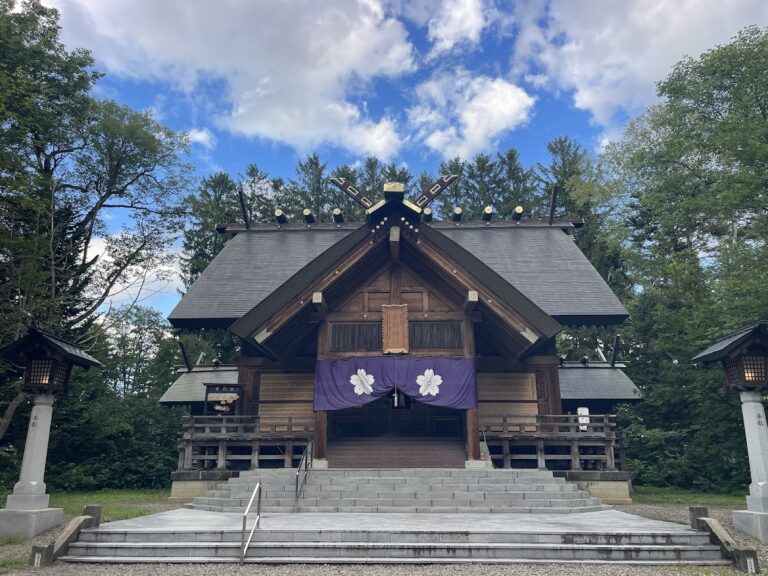
Shibetsu Shrine, nestled on Mt. Tsukumo in Shibetsu City, Hokkaido, is a historic shrine that has a long history, dating back to the Meiji era when Tondenhei (frontier soldiers) settled in the area. Boasting the largest cherry blossom viewing spot in northern Hokkaido, and selected as one of Hokkaido’s 100 Natural Wonders, its beautiful grounds captivate visitors with their seasonal beauty. This article provides a detailed overview of Shibetsu Shrine, including its history, highlights, annual events, and access information.
About Shibetsu Shrine
Shibetsu Shrine is located at Higashi 1-jo Kita 17-chome, Shibetsu City, Hokkaido. It enshrines Amaterasu Omikami as its main deity, with Soma Okami as a secondary deity. As a former village shrine, it has been revered as the guardian deity of Shibetsu City and has played an important role as a spiritual pillar of the region.
The shrine grounds, situated atop Mount Tsukumo, boast the largest area in northern Hokkaido and are designated as a Hokkaido Environmental Green Space Protection Area and one of Hokkaido’s 100 Natural Wonders. It is particularly famous for the beauty of its cherry blossoms in spring and autumn foliage, making it a popular spot attracting many worshippers and tourists from both within and outside Hokkaido.
Main Deity and Divine Virtues
Main Deity:
- Amaterasu Omikami
Enshrined Deities:
- Soma Omikami
Amaterasu Omikami is the supreme deity in Japanese mythology, a goddess symbolizing the sun, and is believed to bestow divine virtues such as national peace, abundant harvests, and good fortune. Soma Omikami is thought to have been enshrined alongside Amaterasu Omikami because many of the Tondenhei (frontier soldiers) were settlers from the Soma region of Fukushima Prefecture.
History of Shibetsu Shrine
Founding and the Tondenhei (frontier soldiers)
The history of Shibetsu Shrine is closely intertwined with the history of Shibetsu’s development. On July 15, 1899 (Meiji 32), 99 households (99 families) of the 5th Company, 3rd Battalion of the Tondenhei settled in Shibetsu. On this day, a monument commemorating the settlement was erected in a corner of the training ground, Amaterasu Omikami was enshrined, and an induction ceremony was held. This marked the founding of Shibetsu and the establishment of Shibetsu Shrine. Since then, July 15th has been designated as the annual festival day.
The Tondenhei system was a Meiji government policy that combined the development of Hokkaido with national defense, and the role that the Tondenhei played in the development of Shibetsu is immeasurable. The number of settlers, 99, later became the origin of the place name Tsukumoyama (99 Mountains).
Construction and Development of the Shrine
In 1902 (Meiji 35), following the independence of Shibetsu Village, Captain Gengoro Nagoshi proposed the construction of a shrine to the Tondenhei (frontier soldiers). Through collaborative work, a shrine was erected on the present-day Tsukumoyama mountain, and the enshrinement ceremony was held on July 15th of the same year.
In 1912 (Meiji 45), a hall for worshipping Emperor Meiji was built, and it has been used as a worship hall ever since. The worship hall and main shrine, which utilize the natural wood grain, present a magnificent and imposing presence, and continue to welcome worshippers today.
Throughout the Taisho, Showa, and Heisei eras, the shrine grounds were improved, and numerous subsidiary shrines were built. Thanks to the service and dedication of the local residents, Shibetsu Shrine has grown into one of the leading shrines in northern Hokkaido.
Tsukumoyama, a Famous Cherry Blossom Spot
One of Hokkaido’s Top Cherry Blossom Spots
Tsukumoyama, where Shibetsu Shrine is located, is known both within and outside Hokkaido as a “famous cherry blossom spot.” Approximately 3,000 Ezo cherry trees are planted on the shrine grounds, reaching full bloom from mid- to late May each year.
During cherry blossom season, it’s a popular spot attracting visitors not only from within Hokkaido but also from as far away as Sendai and other parts of Honshu. The sight of the vast grounds dyed pink is breathtaking, and well-maintained walking paths allow visitors to enjoy the blossoms at their leisure.
The Beauty of Autumn Foliage
The autumn foliage is also a major attraction of Shibetsu Shrine. From late September to early October, maple and rowan trees change color, enveloping the grounds in vibrant reds and yellows. Similar to the cherry blossom season, many visitors come during the autumn foliage season to enjoy the natural beauty and sacred atmosphere.
Nature Through the Seasons
Beyond the cherry blossoms of spring and the autumn leaves, the Tsukumo Mountains display beautiful scenery throughout the year, from the fresh greenery of summer to the snowy landscapes of winter. Although it’s a snow-covered region in winter, the approach to the shrine is cleared, and visiting the shrine grounds in the tranquil snow is a truly special experience.
Highlights of the Shrine Grounds
Main Hall and Worship Hall
The main hall and worship hall, utilizing the natural wood grain, are robust structures that have withstood Hokkaido’s harsh natural environment. Their majestic presence conveys the pioneering spirit of the Tondenhei (frontier soldiers). Inside the worship hall, you can pray in a sacred atmosphere, offering a peaceful and serene experience.
Subsidiary Shrines
Several subsidiary shrines are enshrined within the grounds of Shibetsu Shrine. Each has a different divine virtue, attracting visitors with various wishes. Visiting each shrine while exploring the grounds is one of the pleasures of visiting Shibetsu Shrine.
Approach and Walking Paths
The shrine grounds are very spacious, with well-maintained approach paths and walking paths winding through them. The path from the parking lot to the main shrine is a ramp rather than stairs, allowing for a leisurely visit. However, caution is needed during snowy seasons. There is also a wider, easier-to-walk route if you proceed along the road from the north entrance, which is cleared of snow.
Archery Range
An archery range is also located on the shrine grounds, where events such as the first archery competition of the year are held. It is also used as a venue for local cultural activities.
Annual Events and Festivals
First Shrine Visit of the New Year / New Year’s Day Festival
The first shrine visit of the new year is a lively event at Shibetsu Shrine, attracting many worshippers. From midnight on New Year’s Day, a performance of “Tsukumo Taiko” drums is held on the outdoor stage in front of the shrine office, celebrating the start of the new year.
Main Events on New Year’s Day:
- Tsukumo Taiko Drum Performance (12:00 AM onwards, Outdoor Stage in front of the Shrine Office)
- Gakufukai Japan Poetry Recitation First Performance of the Year (11:00 AM onwards, Dedicated at the Main Hall)
- Kyudo First Shooting Competition (1:00 PM onwards, Archery Range on the Shrine Grounds)
- New Year’s Day Festival (10:00 AM onwards)
Fortune slips, protective arrows, votive tablets, rakes, and various amulets are available at the New Year’s Day distribution area or the shrine office. New Year’s Day purification and prayers are also accepted.
Annual Grand Festival (Shibetsu Festival)
The most important festival of Shibetsu Shrine is the Annual Grand Festival, held annually on July 15th and 16th. This festival, commemorating the founding of Shibetsu and the establishment of the shrine, is also known as the “Shibetsu Festival” and is celebrated by the entire community.
The festival features a portable shrine procession, stalls, and various dedication ceremonies, making it the largest festival in Shibetsu City and attracting many participants. It’s also an important opportunity to pass on the region’s traditional culture to the next generation.
20th Birthday Celebration
The 20th Birthday Celebration, marking the coming of age for young people, is also held at Shibetsu Shrine. It’s a meaningful ceremony where young people make vows before the gods at this milestone in their lives, renewing their sense of responsibility as adults.
Matsunosai (Dondoyaki)
The Matsunosai (Dondoyaki), where New Year’s decorations and amulets are burned, is also held. This traditional event, deeply rooted in the community, is a prayer for good health and protection from illness throughout the year.
Exorcism and Prayer Ceremonies
Exorcisms for those in their unlucky years and various prayer ceremonies are held as needed. These ceremonies address a variety of wishes, including family safety, business prosperity, traffic safety, and success in examinations.
Shichi-Go-San (7-5-3 Festival)
In autumn, many families visit the shrine to celebrate Shichi-Go-San. They express gratitude to the gods for their children’s growth and pray for their continued healthy development. Reservations may be required, so it is recommended to contact the shrine office in advance.
Prayers and Gifts
About Prayers
Shibetsu Shrine accepts various prayers. The Shinto priests will respectfully perform prayers according to life milestones and wishes.
Main Prayers:
- First Shrine Visit (Omiyamairi)
- Shichi-Go-San
- Exorcism
- Safe Childbirth Prayer
- Family Safety
- Business Prosperity
- Traffic Safety
- Success in Examinations Prayer
- Recovery from Illness
- Groundbreaking Ceremony
- Ridgepole Raising Ceremony
If you wish to have a prayer performed, it is recommended to contact the shrine office in advance to make a reservation. You can also inquire about the prayer fee, duration, and necessary items.
Items Offered
The shrine office offers various amulets, talismans, fortune slips, protective arrows, votive tablets, and rakes. You can choose items according to your wishes and purposes.
Goshuin (shrine stamps) are also available, and many people receive them as a memento of their visit. You can bring your own goshuincho (stamp book) or purchase one at the shrine office.
Access Information
Location
Address: 17-chome, Higashi 1-jo Kita, Shibetsu City, Hokkaido (Tsukumoyama)
Transportation Access
Train/Bus:
- Approximately 10 minutes by bus from JR Shibetsu Station, get off at “Jinja-mae” (Shrine Front) bus stop
- Approximately 30 minutes on foot from JR Shibetsu Station
Car:
- Approximately 10 minutes from Shibetsu-Kenbuchi IC on the Hokkaido Expressway
- Approximately 50 minutes from Asahikawa city center via National Route 40
- Approximately 30 minutes from Nayoro city center via National Route 40
Parking
Free parking is available on the shrine grounds. Temporary parking is also provided during periods of expected crowds, such as the annual festival and cherry blossom season.
Visiting Hours
The shrine grounds are generally open for free visits. The shrine office is generally open from 9:00 AM to around 5:00 PM, but this may vary depending on events and seasons. It is recommended to check in advance if you wish to receive prayers or receive amulets. Contact Information for the Shrine Office: This can be found on the Shibetsu Shrine official website or the Hokkaido Shrine Association website.
Manners and Points for Visiting a Shrine
Etiquette for Visiting a Shrine
- Bow before passing through the torii gate.
- Avoid walking in the center of the path. (The center is the path for the gods.)
- Purify your body and mind at the water basin.
- Hold the ladle in your right hand and purify your left hand.
- Switch the ladle to your left hand and purify your right hand.
- Switch the ladle back to your right hand, receive water in your left hand, and rinse your mouth.
- Finally, hold the ladle upright and purify the handle.
- Two bows, two claps, and one bow in front of the main hall.
- Place your offering in the offering box.
- Ring the bell.
- Bow deeply twice.
- Clap your hands twice.
- Recite your wish silently.
- Bow deeply once.
Attire
For regular visits, no special attire is required. However, if you are receiving a prayer, formal attire or something similar is desirable.
Photography
Photography is generally permitted within the shrine grounds, but please refrain from taking photos inside the main hall or in sacred areas, or obtain permission beforehand. Remember to be considerate of other visitors.
Visiting in Winter
Shibetsu is a particularly snowy region in Hokkaido. If visiting in winter, please wear warm clothing and non-slip shoes. While the approach to the shrine is cleared of snow, it may be icy, so caution is advised.
Nearby Tourist Information
Attractions in Shibetsu City
When visiting Shibetsu Shrine, consider exploring the surrounding tourist spots.
Sheep and Clouds Hill:
Shibetsu City is known as the “City of Sheep,” and at Sheep and Clouds Hill, you can see sheep grazing. The sight of sheep grazing in vast pastures is a quintessential Hokkaido pastoral scene.
World Sheep Museum:
This facility exhibits rare sheep breeds from around the world, allowing you to learn about sheep.
Shibetsu City Museum:
The museum exhibits the history and nature of Shibetsu, as well as materials related to the Tondenhei (frontier soldiers), which helps in gaining a deeper understanding of the historical background of Shibetsu Shrine.
Mount Teshio:
Mount Teshio, popular with mountain climbing enthusiasts, is a famous peak in Hokkaido located in the eastern part of Shibetsu City.
Gourmet Information
Shibetsu is famous as a production area for Suffolk lamb (lamb meat). There are many restaurants in the city that serve lamb dishes, where you can enjoy fresh lamb dishes such as Jingisukan (grilled lamb) and lamb steak.
Summary of the Charms of Shibetsu Shrine
Shibetsu Shrine is a representative shrine of northern Hokkaido, possessing both historical value that conveys the history of Hokkaido’s development and natural beauty as a famous spot for cherry blossoms and autumn leaves.
As a guardian shrine that has walked hand in hand with the history of Shibetsu, which began with the arrival of Tondenhei in 1899, it is deeply loved by the local residents. The vast grounds of the shrine on Tsukumoyama Mountain are a naturally rich environment designated as a Hokkaido Environmental Green Space Protection Area and one of Hokkaido’s 100 Natural Wonders, where you can enjoy the beauty of the four seasons. Especially in spring, the cherry blossoms attract many tourists from both within and outside Hokkaido, and the sight of approximately 3,000 Ezo cherry trees in full bloom is breathtaking. The autumn foliage is also magnificent, and the shrine grounds, where nature and history harmonize, continue to fascinate visitors.
Throughout the year, various festivals and events are held, contributing to the preservation and development of local culture. From the lively New Year’s visits and the grandeur of the annual festival to the heartwarming scenes of Shichi-Go-San (a traditional Japanese rite of passage for children), the shrine serves as a spiritual pillar for the citizens of Shibetsu, accompanying them through important life events.
When visiting Shibetsu, be sure to pay your respects at Shibetsu Shrine and spend some peaceful time in the beautiful natural surroundings, reflecting on the history of Hokkaido’s development. In this sacred place where the pioneering spirit of the Tondenhei (frontier soldiers) lives on, you are sure to gain new insights and healing.
With the largest grounds in northern Hokkaido, Shibetsu Shrine is a renowned shrine that continues to pray for the peace and happiness of each and every visitor, a source of pride for Hokkaido.