Complete Guide to Engaru Shrine | A Thorough Explanation of History, Deities, Goshuin (Shrine Seals), and Access Information
About Engaru Shrine
Engaru Shrine is a shrine located at 2-30 Miyamae-cho, Engaru-cho, Monbetsu-gun, Hokkaido. Formerly a village shrine, it has been a spiritual center for local residents for over 100 years.
Engaru-cho is an area that was developed in the late Meiji period, and Engaru Shrine is closely linked to its development history. Starting with prayers for victory in the Russo-Japanese War, prayers for the recovery of Emperor Meiji, and continuing alongside the development of the region, it remains a historical shrine visited by many worshippers today.
Historical Background of Engaru-cho
In 1893 (Meiji 26), the Yubetsu Plain was opened up, and farmers began to settle there. In 1902 (Meiji 35), the town was established by the Hokkaido Comrades Education Association with the aim of creating a private university, making it a region where education and development progressed in conjunction.
The name Engaru is said to originate from the Ainu word “Ingarushi” (to see/place), and was named after the beautiful view from Ganbo-iwa (a rock formation).
History of Engaru Shrine
From Founding to the Present
1904 (Meiji 37)
In the year the Russo-Japanese War broke out, a wooden monument made of oak was erected within the current shrine grounds, and the deity of Sapporo Shrine (now Hokkaido Shrine), a central shrine for the development of Hokkaido, was enshrined. Engaru Shrine began as a place to pray for the development of the region, the health of the residents, and victory in the war.
Meiji 45 (1912)
In July, following instructions from the village office, prayers were offered for the recovery of Emperor Meiji from illness. However, Emperor Meiji passed away on July 30th. In response, a wooden monument dedicated to Emperor Meiji was erected behind the current shrine, serving as a place of worship from afar.
Taisho 5 (1916)
A Shinto shrine building of 3.3 square meters (approximately 1 tsubo) was constructed, and the current enshrined deities were formally worshipped. This year is considered the official founding year of Engaru Shrine.
Subsequent Development
Since then, with the development of the region, the shrine buildings have been improved, and the grounds have been expanded. From the Showa to the Heisei and Reiwa eras, supported by the deep faith of the local residents, it has continued to be a representative shrine of Engaru Town.
Enshrined Deities
Engaru Shrine enshrines four deities.
Amaterasu Omikami
The supreme deity in Japanese mythology, a goddess who personifies the sun. She is considered the ancestral deity of the Imperial family and revered as the tutelary deity of all Japanese people. She is also enshrined in the Inner Shrine of Ise Grand Shrine.
Takehayasusano-no-Mikoto
The younger brother of Amaterasu Omikami, known as a brave and courageous god. Famous for the myth of slaying the Yamata no Orochi (eight-headed serpent), he is worshipped as a god of protection against evil and disease.
Hondawake-no-Mikoto
The 15th Emperor Ojin, enshrined as Hachiman-sama in Hachiman shrines throughout Japan. Revered as a god of military fortune and national protection, he is also worshipped as the founder of education.
Takemikazuchi-no-Mikoto
A war god known as the god of thunder and sword. The principal deity of Kashima Shrine in Ibaraki Prefecture is a god who played an active role in the myth of the transfer of the land. He is worshipped as the god of victory and martial arts.
These four deities were chosen to pray for the development of Engaru Town, a pioneering settlement, the peace and well-being of its residents, and the security of the nation.
Annual Festival and Other Annual Events
Annual Festival Date
The annual festival of Engaru Shrine is held on September 18th. The annual festival is the most important ritual at the shrine, a day once a year to express gratitude to the enshrined deities.
During the festival, Shinto rituals are solemnly performed, and local residents attend to express gratitude to the gods and pray for the prosperity of the region. In some years, a portable shrine procession takes place, with the Engaru Shrine Portable Shrine Association “Hyotan” playing a central role in enlivening the festival.
Other Annual Events
New Year’s Day Festival (January 1st)
This festival celebrates the New Year and prays for peace throughout the year. It is bustling with many visitors for the New Year’s pilgrimage.
Setsubun Festival (around February 3rd)
A ceremony where beans are scattered to ward off evil and invite good fortune.
Spring Festival
Celebrating the arrival of spring and praying for a bountiful harvest.
Shichi-Go-San (around November 15th)
Celebrating the growth of children and praying for their healthy development.
Great Purification Ceremony (June 30th and December 31st)
A Shinto ritual to purify and cleanse away the sins and impurities accumulated over the past six months.
As is unique to shrines in Hokkaido, there is a tendency to place particular emphasis on ceremonies that celebrate the arrival of spring after enduring the harsh winter.
Goshuin Information
You can receive a Goshuin (shrine stamp) at Engaru Shrine.
Features of the Goshuin
The Goshuin at Engaru Shrine has the shrine name written in ink and stamped with the shrine’s seal. Characterized by its simple yet powerful calligraphy, this goshuin (temple/shrine stamp) is a popular souvenir for many visitors.
Regarding the Issuance of Goshuin
- Location of Issuance: Shrine Office
- Hours of Issuance: During visiting hours (prior phone confirmation is recommended)
- Donation Fee: Generally around 300-500 yen
- Phone Number: 0158-42-2774
You can bring your own goshuincho (stamp book) or receive a pre-printed goshuin. However, depending on the size of the shrine and the priest’s presence, issuance may not always be possible. Therefore, if you want to be sure to receive a goshuin, it is recommended to call in advance to confirm.
Manners for Receiving a Goshuin (Shrine Stamp)
- Receive the stamp after completing your prayers
- Use polite language
- Prepare the exact amount of the offering (hatsuhoryo) so that no change is needed
- Open your goshuincho (stamp book) and hand it over
- Don’t forget to express your gratitude
Highlights of the Shrine Grounds
Shrine Building
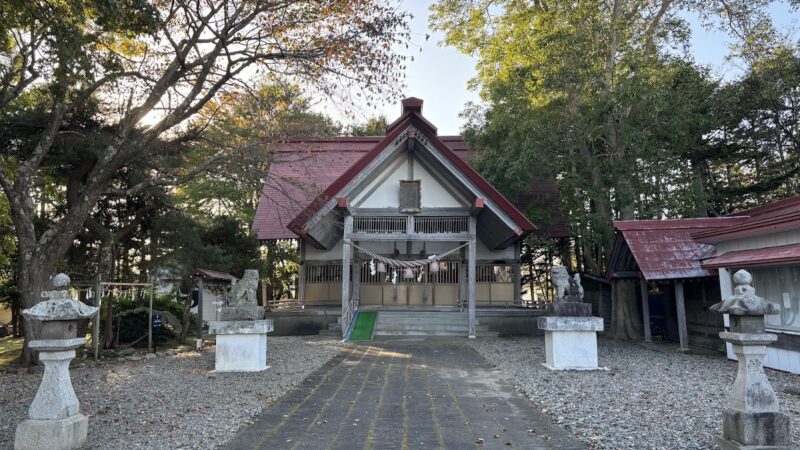
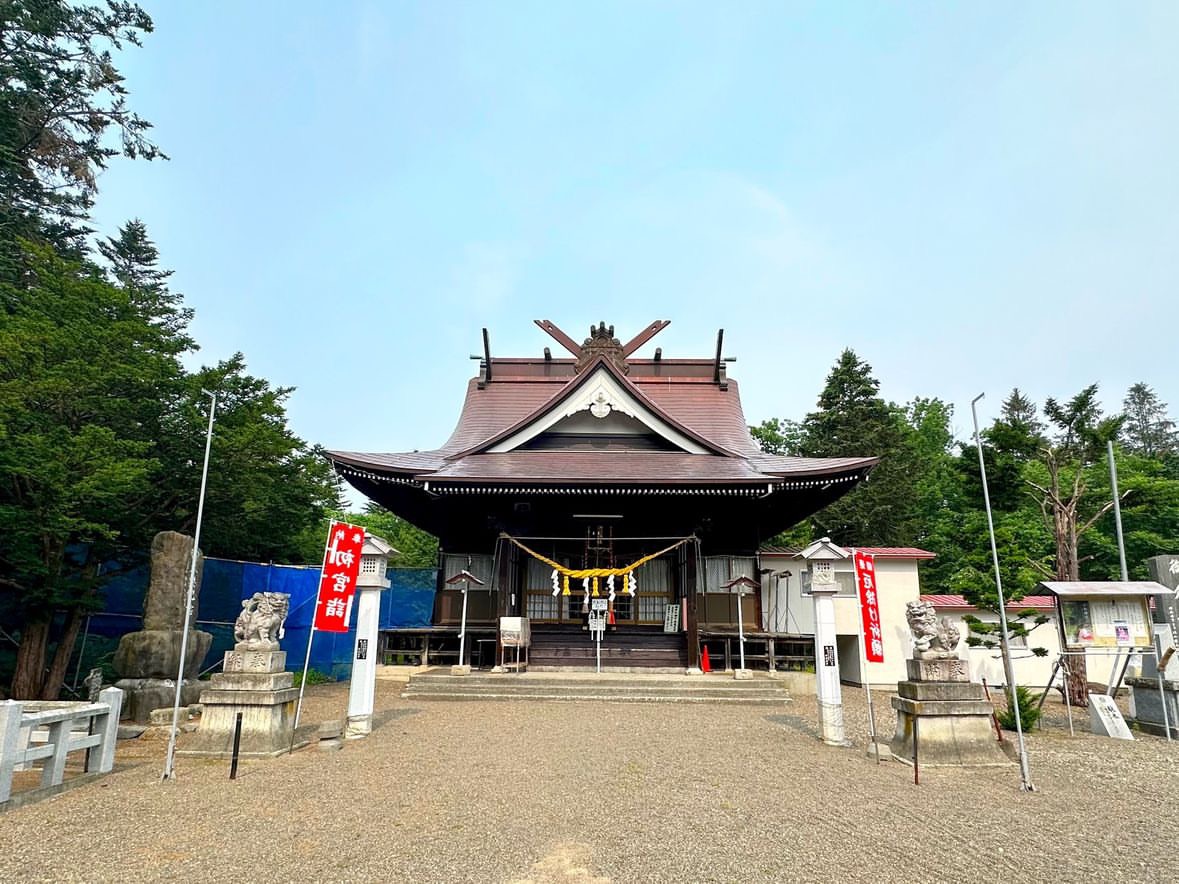
The Shinto shrine building, built in the Shinmei-zukuri style, has a simple yet solemn atmosphere. It has undergone several repairs since its founding in 1916 (Taisho 5), resulting in its current form.
Site of the Meiji Emperor’s Remote Worship Place
Behind the shrine remains the site of a wooden monument erected in 1912 (Meiji 45) to enshrine Emperor Meiji. This is an important place in the history of Engaru Shrine.
Nature on the Shrine Grounds
The shrine grounds are planted with trees typical of Hokkaido, displaying different expressions throughout the seasons. The fresh green season and the autumn foliage season are particularly beautiful, allowing visitors to enjoy nature along with their prayers.
Mikoshi Storage
This storage building houses the mikoshi (portable shrine) managed by the Engaru Shrine Mikoshi Association “Hyotan”. The mikoshi, carried during festivals and other events, are valuable cultural assets that convey the region’s traditions to the present day.
Access Information
Location
2-30 Miyamae-cho, Engaru-cho, Monbetsu-gun, Hokkaido 099-0406
Access by Train
From JR Sekihoku Main Line Engaru Station
- Walking: Approximately 9 minutes (approximately 700m)
- Taxi: Approximately 3 minutes
Engaru Station is a major station where express trains also stop, and is accessible from Asahikawa and Abashiri.
Access by Car
From Asahikawa
Approximately 2 hours northeast on National Route 333
From Abashiri
Approximately 1 hour 30 minutes via National Route 238 and National Route 242
From Kitami
Approximately 40 minutes southwest on National Route 242
Parking
There is parking space for visitors on the shrine grounds. It can get crowded during events such as festivals, so it is recommended to allow ample time for your visit.
Nearby Tourist Attractions
Ganbo-iwa (Viewpoint Rock)
A symbol of Engaru Town, this is a massive rock formation approximately 78 meters high. From the summit, you can enjoy a panoramic view of Engaru town, and it is the origin of the name Engaru. Approximately 5 minutes by car from Engaru Shrine.
Taiyo-no-Oka Engaru Park
A park with a vast area where seasonal flowers bloom, especially famous for its moss phlox and cosmos. Approximately 10 minutes by car from Engaru Shrine. Chacha World Wooden Toy Museum
A facility exhibiting and selling wooden toys, enjoyable for both children and adults. Approximately 5 minutes by car from Engaru Shrine.
Etiquette for Visiting a Shrine
We will introduce the basic etiquette for visiting a shrine.
How to Pass Through the Torii Gate
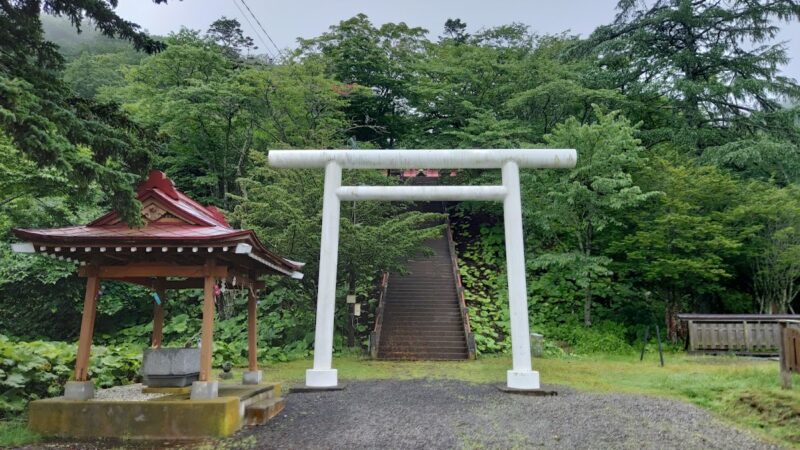
The torii gate is the entrance to the sacred area. Bow before passing through, and walk along the side of the path, as the center of the path is considered the path of the gods.
Proper Ritual for Washing Hands
- Take the ladle with your right hand and wash your left hand.
- Switch the ladle to your left hand and wash your right hand.
- Switch the ladle back to your right hand, receive water in your left hand, and rinse your mouth.
- Wash your left hand once more.
- Stand the ladle upright, wash the handle, and return it to its original place.
Proper Ritual for Worship
- Stand in front of the offering box and bow slightly.
- Gently place your offering in the box.
- If there is a bell, ring it.
- Two bows, two claps, one bow.
- Bow deeply twice.
- Clap your hands twice at chest height.
- Pray with all your heart.
- Bow deeply once.
Engaru Shrine and the Local Community
Activities of the Mikoshi Association “Hyotan”
The Engaru Shrine Mikoshi Association “Hyotan” is an organization that primarily focuses on the procession of the portable shrine during the annual festival. A wide range of age groups, from young people to the elderly, participate, playing a role in preserving traditional culture and deepening community ties.
Their activities are shared on their Instagram account (@engaru_hyotan), allowing you to learn about everything from the festival preparations to the day itself.
As a Guardian Deity of the Region
Engaru Shrine has been a source of spiritual support for local residents since the pioneering era. It is visited at various milestones in life, such as a baby’s first shrine visit, Shichi-Go-San (a traditional rite of passage for children), exorcism, and prayers for success in exams, making it a central presence in the community.
Especially given the region’s thriving agriculture, many visitors pray for a bountiful harvest and express gratitude for the harvest, deeply connecting the shrine to local industries.
Relationship with the Hokkaido Association of Shinto Shrines
Engaru Shrine belongs to the Hokkaido Association of Shinto Shrines. The Hokkaido Association of Shinto Shrines is an organization that encompasses shrines throughout Hokkaido, providing support for shrine management, training Shinto priests, and promoting Shinto culture.
The official website of the Hokkaido Shrine Association provides basic information and history about Engaru Shrine, which can be used as reference information when visiting shrines in Hokkaido.
Characteristics of Hokkaido Shrines
Many shrines in Hokkaido were founded during the Meiji era and alongside the development of the region, giving them a different historical background from shrines on Honshu. They embody gratitude to the pioneers who overcame the hardships of development and a desire for prosperity in the new land.
Engaru Shrine is one such example, having played an important role as a spiritual anchor for the pioneers and as a spiritual pillar for regional development.
Best Time to Visit
Spring (April-June)
Spring in Hokkaido, arriving with the melting snow, is a beautiful season of fresh greenery and ideal for visiting shrines. Cherry blossoms bloom later than in Honshu, with the best time to see them being around early May.
Summer (July-August)
Summer in Hokkaido has a cool and pleasant climate. It is a suitable time to visit shrines in conjunction with sightseeing in the surrounding area, such as the cosmos flowers at Taiyo-no-Oka Engaru Park.
Engaru Shrine ### Autumn (September-November)
September, when the annual festival is held, is the busiest time at Engaru Shrine. The autumn foliage is beautiful, allowing visitors to enjoy the autumnal atmosphere while praying.
Winter (December-March)
Visiting the shrine in the harsh cold is a special experience, but the shrine amidst the snow offers a unique charm. You can also experience winter-specific events such as Hatsumode (first shrine visit of the year) and Oharai (Great Purification Ceremony). Be sure to dress warmly.
Summary
Engaru Shrine is a historic shrine founded during the Russo-Japanese War in the Meiji era, and has watched over Engaru town and its residents for over 100 years. It enshrines four deities: Amaterasu Omikami, Takehaya Susanoo-no-Mikoto, Hondawake-no-Mikoto, and Takemikazuchi-no-Mikoto, and is cherished as a place to pray for the development of the region and the peace and well-being of its residents.
At the annual festival on September 18th, a portable shrine procession takes place, with the Engaru Shrine Mikoshi Association “Hyotan” (gourd) leading the way, and the entire community coming together to make the festival a great success. Goshuin (stamped seals) are also available, which can be received as a memento of your visit.
The shrine is easily accessible, about a 9-minute walk from JR Engaru Station, and can be visited in conjunction with nearby tourist attractions such as Kanbo-iwa Rock and Taiyo-no-Oka Engaru Park.
Please do visit Engaru Shrine, where you can experience the history of Hokkaido’s pioneering firsthand.