Complete Guide to Kamiyubetsu Shrine | The Charm and Visiting Information of a Historic Shrine in Yubetsu Town, Hokkaido, Dedicating the Three Deities of Pioneer Development
Kamiyubetsu Shrine, located in Yubetsu Town, Monbetsu District, Hokkaido, is a historic shrine that has watched over the region since the pioneering era of the Meiji period. It enshrines the three deities of pioneer development and, formerly a village shrine, has been revered by local residents. This article comprehensively introduces useful information for visiting Kamiyubetsu Shrine, including its history, enshrined deities, annual festivals, highlights of the grounds, information on Goshuin (shrine stamps), and access methods.
Basic Information on Kamiyubetsu Shrine
Kamiyubetsu Shrine is located at 10 Kamiyubetsu Tonden, Yubetsu Town, Monbetsu District, Hokkaido, and belongs to the Hokkaido Shrine Association. It boasts a vast grounds area of 16,000 tsubo (approximately 53,000 square meters) and a shrine building area of 66 tsubo (approximately 218 square meters). The current number of parishioners is approximately 2,400 households, and the number of worshippers is 6,800, playing an important role as the center of faith in the Kamiyubetsu district of Yubetsu Town.
Location: 10 Kamiyubetsu Tonden, Yubetsu Town, Monbetsu District, Hokkaido
Telephone Number: 01586-2-2564
Former Shrine Rank: Village Shrine
Shrine Style: Nagare-zukuri (stream-style)
Annual Festival Date: September 29th
Deities and Divine Virtues of Kamiyubetsu Shrine
Kamiyubetsu Shrine enshrines three deities known as the Three Gods of Development.
Okunitama-no-kami
Okunitama-no-kami is a deity revered as the guardian deity of the land. It is a deified representation of the earth itself, and is believed to bestow divine virtues of land development, abundant harvests, and industrial development. During the pioneering era of Hokkaido, these deities were particularly important to the settlers who were clearing the undeveloped land, as they were revered for the blessings of the land and for their safety.
Ōnamuchi-no-kami
Ōnamuchi-no-kami is another name for Ōkuninushi-no-mikoto and is known as the god of nation-building. He also has aspects as the god of medicine, agriculture, and commerce, and is believed to bestow blessings such as matchmaking, healing from illness, and business prosperity. He is a symbolic figure representing the unity and prosperity of the community in the pioneering lands.
Sukunahikona-no-kami
Sukunahikona-no-kami is a god who worked with Ōnamuchi-no-kami in nation-building and is worshipped as the god of medicine, hot springs, and incantations. He is believed to bestow blessings such as healing illnesses, promoting health, and academic success, and was considered important as a god who protected health in the harsh environment of the pioneering era.
These three deities are enshrined in many shrines throughout Hokkaido as the “Three Gods of Development,” and are considered the spiritual pillars of Hokkaido’s development. Following this tradition, Kamiyubetsu Shrine has functioned as a place to pray for the development of the region and the peace and well-being of its residents.
History and Founding of Kamiyubetsu Shrine
The history of Kamiyubetsu Shrine is closely intertwined with the history of Hokkaido’s development. During the Meiji era, the government introduced the Tondenhei (frontier soldier) system to promote the development of Hokkaido, and many settlers were sent to the Yubetsu region.
Tondenhei and Shrine Founding
In the Meiji era, Tondenhei settled in the Kamiyubetsu area, clearing the undeveloped land. The Tondenhei were unique pioneers, possessing both agricultural and military training, and they built their livelihoods in a harsh natural environment. In this context, the creation of a shrine as a spiritual anchor became necessary.
In Tondenhei settlements, it was customary to establish shrines or altars from the beginning of settlement, and it is believed that a shrine was founded in Kamiyubetsu at an early stage. By enshrining the three pioneering deities, prayers were offered for the safety of the land, abundant harvests, and prosperity of the community, providing a spiritual pillar to overcome the harsh realities of pioneering life.
Promotion to Village Shrine and Development
After its founding, Kamiyubetsu Shrine expanded in size along with the development of the region, and was elevated to the status of a village shrine during the late Meiji and Taisho periods. This elevation to village shrine indicated that the shrine was a publicly recognized center of faith within the community, leading to improvements in the shrine buildings and the enrichment of festivals.
In the Showa era, with the population increase and industrial development of the Kamiyubetsu area, the number of parishioners also increased. Renovations to the shrine buildings and improvements to the grounds progressed, resulting in its current form.
Merger of Suiten-gu Shrine
In 1963 (Showa 38), Suiten-gu Shrine, which was then located in Kitahyomura 1-ku, was merged with Kamiyubetsu Shrine. Suiten-gu Shrine is a shrine worshipped as a guardian deity against water-related disasters. This merger means that Kami-Yubetsu Shrine now also possesses the divine virtues of protection against water-related disasters and maritime safety.
According to local legend, “Because Kami-Yubetsu Shrine enshrines a water deity, it often rains on festival days,” indicating that the influence of the Suiten-gu Shrine merger is deeply rooted in the local faith.
The Origins of Yubetsu Town and Kami-Yubetsu Shrine
The current Yubetsu Town was formed in 2009 (Heisei 21) through the merger of the former Yubetsu Town and the former Kami-Yubetsu Town. This merger resulted in multiple shrines existing in Yubetsu Town, each carrying on the region’s history and culture.
History of the Former Kami-Yubetsu Town
The former Kami-Yubetsu Town was an agricultural town located in the upper reaches of the Yubetsu River. It was developed as a settlement for Tondenhei (frontier soldiers), and rice and field crops were primarily cultivated. Kamiyubetsu Shrine has served as the central shrine of this region, a place where prayers for agricultural prosperity and the safety of residents are offered.
Relationship with Yubetsu Shrine
In addition to Kamiyubetsu Shrine, there is also Yubetsu Shrine, located in the center of the former Yubetsu town. Yubetsu Shrine is located at 51 Midori-cho, Yubetsu-cho, Monbetsu-gun, Hokkaido. It enshrines Okuninushi-no-Mikoto and Kotoshironushi-no-Mikoto, and its annual festival is held on September 15th.
Both shrines developed as centers of faith in different regions, but even after the town merger, they remain important institutions supporting the spiritual culture of Yubetsu town as a whole, while maintaining the identity of each region. Kamiyubetsu Shrine and Yubetsu Shrine are approximately 2 hours and 54 minutes (9.1 km) apart on foot, and festivals and events reflecting the unique characteristics of each region are still passed down.
Annual Festival and Other Annual Events
Annual Festival (September 29th)
The annual festival of Kamiyubetsu Shrine is held every year on September 29th. This is the most important festival for the shrine, a Shinto ritual in which gratitude for the past year is offered to the gods and prayers are offered for the prosperity and safety of the community.
On the day of the festival, a solemn ceremony is conducted by Shinto priests, and parishioners and devotees attend. A portable shrine procession and offering ceremonies may also take place, with local residents coming together to make the festival a success. As mentioned earlier, since the enshrinement of Suiten-gu Shrine, there has been a saying that “it often rains on the day of the festival,” which is also a characteristic of the Kamiyubetsu Shrine’s annual festival.
Other Annual Events
In addition to the annual festival, Kamiyubetsu Shrine also holds the following annual events:
New Year’s Day Festival (January 1st): A festival to celebrate the New Year and pray for peace throughout the year. Many worshippers visit for their first shrine visit of the year.
Setsubun Festival (around February 3rd): A ceremony to ward off evil spirits and invite good fortune through bean-throwing and other rituals.
Spring Festival: Celebrating the arrival of spring and praying for safety in agricultural work and a bountiful harvest.
Summer Purification Ceremony (June 30th): A Shinto ritual to cleanse away the sins and impurities accumulated over the past six months.
Autumn Festival (September 29th): The largest festival of the year.
Year-End Purification Ceremony (December 31st): A Shinto ritual to cleanse away the sins and impurities accumulated over the past year and welcome the new year with a pure heart.
These events are conducted in accordance with traditional Japanese annual events, adapted to the climate and natural features of Hokkaido.
Highlights of the Shrine Grounds
Shrine Architecture
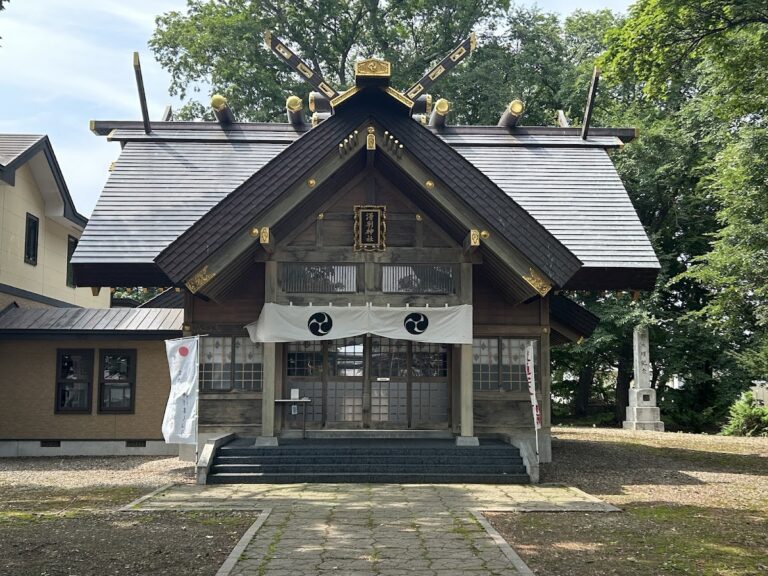
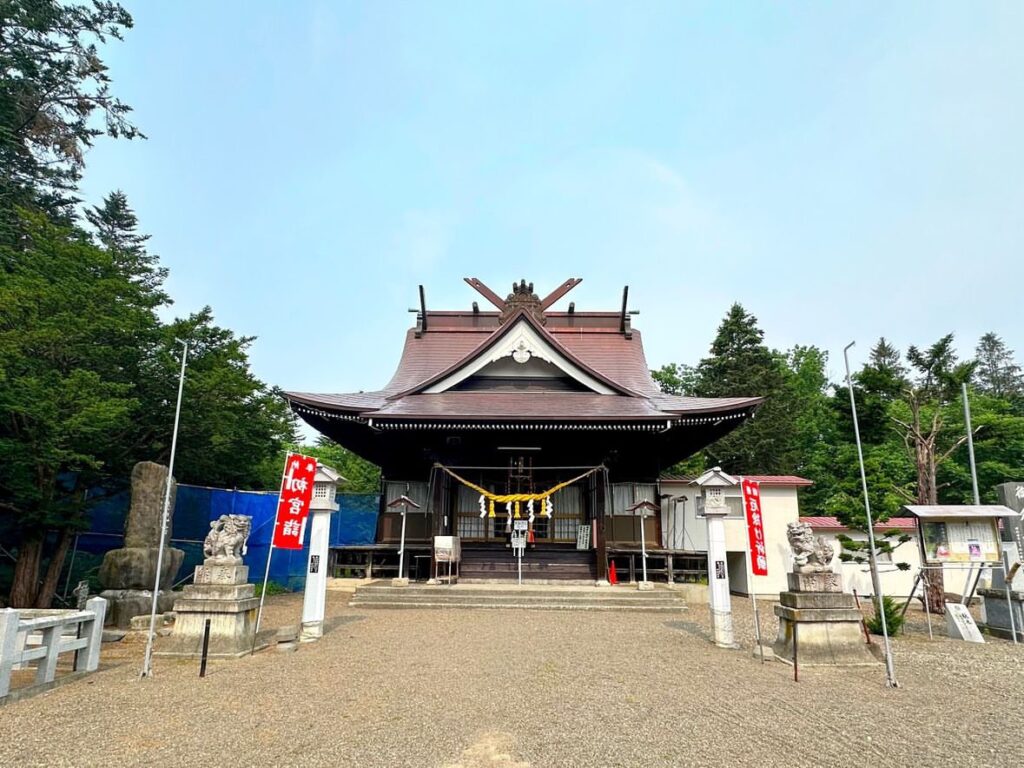
The shrine building of Kamiyubetsu Shrine is constructed in the Nagare-zukuri style. The Nagare-zukuri style is one of the most common styles of Japanese shrine architecture, characterized by a long, extended roof that covers the front of the porch (kohai). This style is elegant and stable, and its structure is built to withstand Hokkaido’s harsh climate.
The shrine building itself, at 66 tsubo (approximately 218 square meters), is a standard size for a local village shrine, but its meticulous construction and maintenance maintain a solemn atmosphere.
Vast Grounds
The vast grounds of Kamiyubetsu Shrine, spanning 16,000 tsubo (approximately 53,000 square meters), are a major feature. Trees are planted throughout the spacious grounds, allowing visitors to experience the changing seasons. In particular, the lush greenery during Hokkaido’s short summer, the beautiful autumn foliage, and the dignified shrine standing amidst the snowy winter landscape are all striking.
The tranquil atmosphere of the grounds provides visitors with peace of mind, offering a time to escape the hustle and bustle of everyday life and connect with the divine.
Stone Monuments and Shrines Related to Suiten-gu Shrine
There is a possibility that stone monuments and shrines related to Suiten-gu Shrine, which was merged with other shrines in 1963 (Showa 38), remain on the shrine grounds. These are valuable cultural assets that tell the history of the belief in protection against water-related disasters in the Kami-Yubetsu area.
Goshuin (Shrine Seal) Information
In recent years, collecting goshuin has become a popular pastime for shrine visits. While it may be possible to obtain a goshuin at Kami-Yubetsu Shrine, there may not be a resident priest, or the chief priest may also serve at other shrines.
Those wishing to obtain a goshuin are advised to confirm in advance by phone (01586-2-2564). Also, since goshuin are available at Yubetsu Shrine in Yubetsu Town, visiting both shrines would be a pleasant experience.
A goshuin is not merely a commemorative stamp, but a sacred item bestowed by the shrine as proof of worship. It is important to respectfully request one after completing your prayers.
Etiquette and Manners for Visiting a Shrine
When visiting a shrine, observing basic etiquette will allow for a more sincere visit.
How to Pass Through the Torii Gate
The torii gate, the entrance to a shrine, is the boundary separating the sacred realm from the secular world. Before passing through the torii gate, bow once and pass on either the left or right side, avoiding the center (the center is considered the path of the gods).
How to Wash Your Hands at the Water Basin
Purify your body and mind at the water basin.
- Take the ladle with your right hand and wash your left hand.
- Switch the ladle to your left hand and wash your right hand.
- Switch the ladle back to your right hand, receive water in your left hand, and rinse your mouth.
- Wash your left hand once more.
- Hold the ladle upright, let the water flow down the handle, and return it to its original place.
How to Bow
The basic bowing ritual before the shrine is “two bows, two claps, one bow.”
- Bow deeply twice.
- Clap your hands twice at chest height.
- Pray with your hands clasped together.
- Finally, bow deeply once more.
It is considered polite to gently place your offering into the offering box rather than throwing it.
Access and Surrounding Information
Access by Car
Kamiyubetsu Shrine is easily accessible by car.
From Asahikawa: Approximately 2 hours 30 minutes via National Route 39 and National Route 242
From Monbetsu City: Approximately 30 minutes via National Route 238 and Prefectural Route 1024
From Kitami City: Approximately 1 hour 30 minutes via National Route 242
There is parking space for visitors on the shrine grounds, but congestion is expected during events such as festivals, so it is recommended to visit with plenty of time to spare.
Access by Public Transportation
Due to limited public transportation in rural Hokkaido, access to Kamiyubetsu Shrine by public transport is not easy. It is also a considerable distance from the nearest bus stop, so we recommend renting a car or checking transportation options at a local tourist information center.
Nearby Tourist Attractions
Besides Kamiyubetsu Shrine, Yubetsu Town has other attractive tourist spots.
Tulip Park: Yubetsu Town is one of Japan’s leading tulip producing areas, and in spring, the vast tulip fields create a magnificent landscape.
Lake Saroma: This brackish lake boasts the third largest area in Japan, and visitors can enjoy beautiful sunsets and fresh seafood.
Yubetsu Shrine: Located in the center of the former Yubetsu Town, it is recommended to visit it along with Kamiyubetsu Shrine.
Kamiyubetsu Shrine and the Local Community
Kamiyubetsu Shrine is not merely a religious facility; it also plays a central role in the local community. Annual events, including the annual festival, provide valuable opportunities for local residents to gather and interact, fostering bonds across generations.
Especially in the rural areas of Hokkaido, where depopulation is progressing, shrines are important centers for maintaining regional identity and passing on traditional culture to future generations. Thanks to the dedicated efforts of parishioners and devotees, Kamiyubetsu Shrine has been carefully preserved to this day.
Hokkaido’s Shrine Culture and the Three Deities of Development
Shrines in Hokkaido have a different historical background than those south of Honshu. The full-scale development of Hokkaido began after the Meiji era, and many shrines were founded during this period.
The Three Deities of Development (Ōkunitama-no-kami, Ōnamuchi-no-kami, and Sukunahikona-no-kami) are enshrined in shrines throughout Hokkaido, including Hokkaido Shrine in Sapporo. This reflects the wishes of our ancestors who sought the protection of the gods to safeguard the land, develop industries, and protect the health of the people during the unprecedented undertaking of Hokkaido’s development.
Following this tradition, Kamiyubetsu Shrine enshrines the three pioneering deities, making it an important cultural heritage site that conveys the history and spirit of Hokkaido’s development to the present day.
Attire and Items to Bring When Visiting
While there are no specific dress code requirements for visiting the shrine, clean and neat attire that is respectful to the deities is desirable. Especially when making a formal visit or receiving prayers, avoid overly casual clothing.
Hokkaido’s climate differs significantly from that of Honshu, and winters are particularly harsh. If visiting in winter, be sure to take thorough precautions against the cold. Conversely, even in summer, mornings and evenings can be chilly, so bringing a jacket is recommended.
Items to bring include a goshuincho (stamp book) (if you wish to receive a goshuin stamp), offerings, and a camera (if photography is permitted).
Summary: The Significance of Visiting Kamiyubetsu Shrine
Kamiyubetsu Shrine is a valuable shrine that conveys the history of Hokkaido’s development to the present day. It enshrines the three pioneering deities and has functioned as a spiritual center for local residents since the Meiji era. The vast grounds, the beautiful Nagare-zukuri style shrine buildings, and the locally rooted festivals deeply impress visitors.
In modern society, while material wealth is abundant, there is a growing need for spiritual peace and connection with traditional culture. A visit to Kamiyubetsu Shrine offers a precious opportunity to escape the hustle and bustle of everyday life, connect with nature, and reflect on the struggles and faith of our ancestors.
When visiting Yubetsu Town, be sure to visit Kamiyubetsu Shrine and experience the history and culture of Hokkaido, as well as the tranquil atmosphere of the sacred grounds. Through the divine blessings of the three pioneering deities, you will feel cleansed in both mind and body, and gain renewed vitality.
Kamiyubetsu Shrine, belonging to the Hokkaido Shrine Association, is a vital presence that continues to protect the region’s faith and culture. We sincerely hope that it will continue to be loved by many people and passed down to future generations.