Complete Guide to Kanki-ji Temple (Atsuta Ward, Nagoya City, Aichi Prefecture) | History and Access Information for Shinshu Otani-ha Temple
Located in Aoike-cho, Atsuta Ward, Nagoya City, Kanki-ji Temple is a historic temple belonging to the Shinshu Otani-ha sect. Situated in a residential area close to Atsuta Shrine, it has long been a cherished center of faith for the local community. This article comprehensively introduces useful information for visitors, from detailed information about Kanki-ji Temple to points of interest for worshippers and nearby attractions.
Basic Information about Kanki-ji Temple
Kanki-ji Temple is a Shinshu Otani-ha temple located at 1-6 Aoike-cho, Atsuta Ward, Nagoya City, Aichi Prefecture. The Shinshu Otani-ha sect is one of the Jodo Shinshu sects, founded by Shinran Shonin, and its head temple is Higashi Hongan-ji Temple (Shinshu Honbyo) in Kyoto.
Location and Contact Information
- Address: 1-6 Aoike-cho, Atsuta-ku, Nagoya City, Aichi Prefecture 456-0075
- Phone Number: 052-671-8284 (Some sources also list 052-571-8284)
- Sect: Shinshu Otani-ha (Higashi Honganji-ha)
- Chief Priest: Kei Hisada
How to Access Kanki-ji Temple
Kanki-ji Temple is located in an area of Nagoya City with a well-developed transportation network and can be accessed using multiple public transportation options.
Access by Train
Nearest Stations (Multiple Stations Available):
- Nagoya Municipal Subway Meiko Line “Hibino Station”: Approximately 7 minutes on foot (closest station)
- Nagoya Municipal Subway Meijo Line “Nishitakakura Station”: Approximately 10 minutes on foot
- JR Tokaido Main Line “Otobashi Station”: Approximately 15 minutes on foot
Access from Hibino Station is the most convenient. Exit the station and head southwest to reach Aoike-cho. The Nagoya Municipal Subway offers easy transfers from various locations in the city, making it a convenient mode of transportation for tourists.
Access by Bus
- Nearest Bus Stop: Approximately 1 minute on foot from “Nodate Elementary School” bus stop
If using the city bus, the Nodate Elementary School bus stop is the closest, and the temple is very close. Nagoya Municipal Buses have extensive routes and are used as a daily mode of transportation by local residents.
Access by Car
There is information that Kankiji Temple does not have its own parking lot. If you are visiting by car, we recommend using a nearby coin-operated parking lot or public transportation. Atsuta Ward is a densely populated residential area, so please be careful not to park on the street, as this will inconvenience the neighbors.
Origin and Historical Background of the Place Name Aoike-cho
The place name “Aoike-cho,” where Kankiji Temple is located, has an interesting origin. Historically, agriculture flourished in this area, and in the past, numerous reservoirs were scattered throughout. It is said that the word “tameike” (reservoir) became corrupted over time, resulting in the place name “Aoike” (blue pond).
History and Culture of Atsuta Ward
Atsuta Ward is one of the 16 wards that make up Nagoya City, and is a historically important area that houses Atsuta Shrine, one of Japan’s three major shrines. It has flourished since ancient times as a post town on the Tokaido road and has developed as a transportation hub.
Since the Meiji era, it has also developed as an industrial zone, and industries have thrived, taking advantage of its location near Nagoya Port. Even today, this region is a blend of tradition and modernity, with numerous temples and shrines alongside contemporary facilities.
About the Shinshu Otani School
The Shinshu Otani School, to which Kanki-ji Temple belongs, is one of the major sects of Jodo Shinshu Buddhism. Founded by Shinran Shonin (1173-1263), it teaches that all people can be equally saved by chanting the Nembutsu, “Namu Amida Butsu.”
Characteristics of the Shinshu Otani School
- Head Temple: Shinshu Honbyo (Higashi Honganji, Shimogyo-ku, Kyoto)
- Principal Image: Amida Buddha
- Doctrine: Faith in absolute reliance on Amida Buddha, doctrine of salvation even for wicked people
- Characteristics: Marriage of monks is permitted, emphasis on faith over precepts
The Shinshu Otani School has approximately 8,700 temples nationwide and a large number of followers. Numerous Shinshu Otani-ha temples exist within Aichi Prefecture, and they are deeply rooted in the local community.
How to Worship at Kanki-ji Temple
At Kanki-ji Temple, a Shinshu Otani-ha temple, worship is primarily conducted according to the customs of Jodo Shinshu Buddhism.
Basic Etiquette for Visiting a Temple
- Bow at the Temple Gate: When entering a temple, bow at the temple gate before entering the grounds.
- Visiting the Main Hall: Join your hands in prayer in front of the main hall and silently chant “Namu Amida Butsu” (Homage to Amida Buddha).
- Offering Money: In Jodo Shinshu Buddhism, this is strongly associated with “donations,” and there are no set amounts.
- Joining Hands in Prayer: In Jodo Shinshu Buddhism, do not clap your hands; simply join your hands quietly.
- Bow Upon Exit: Bow at the temple gate when leaving the grounds.
Points to Note When Visiting a Temple
- Dress Code: There are no specific rules, but clean and subdued attire is desirable.
- Photography: Photography is generally permitted on the temple grounds, but check beforehand regarding the interior of the main hall, etc.
- Silence: Temples are places of training and prayer, so please visit quietly.
Main Events Held at Kanki-ji Temple
Shinshu Otani sect temples hold various Buddhist services and events throughout the year. Kanki-ji Temple may also hold the following events:
Major Buddhist Services throughout the Year
- Shushōe: January 1st, a service to welcome the New Year
- Nehane: February 15th, a service to commemorate the passing of Buddha
- Spring Equinox Service: A seven-day service centered around the spring equinox
- Birth Day Service: April 8th, a service celebrating the birth of Buddha
- Obon Festival: August 13th-15th, a service for honoring ancestors
- Autumn Equinox Service: A seven-day service centered around the autumn equinox
- Hōonkō: A memorial service for Shinran Shōnin (late November)
- Joya-e: December 31st: A memorial service marking the end of the year.
For specific dates and details, we recommend contacting the temple directly.
Attractions around Kanki-ji Temple
Atsuta Ward, where Kanki-ji Temple is located, boasts numerous historically and culturally valuable facilities and tourist spots.
Atsuta Shrine
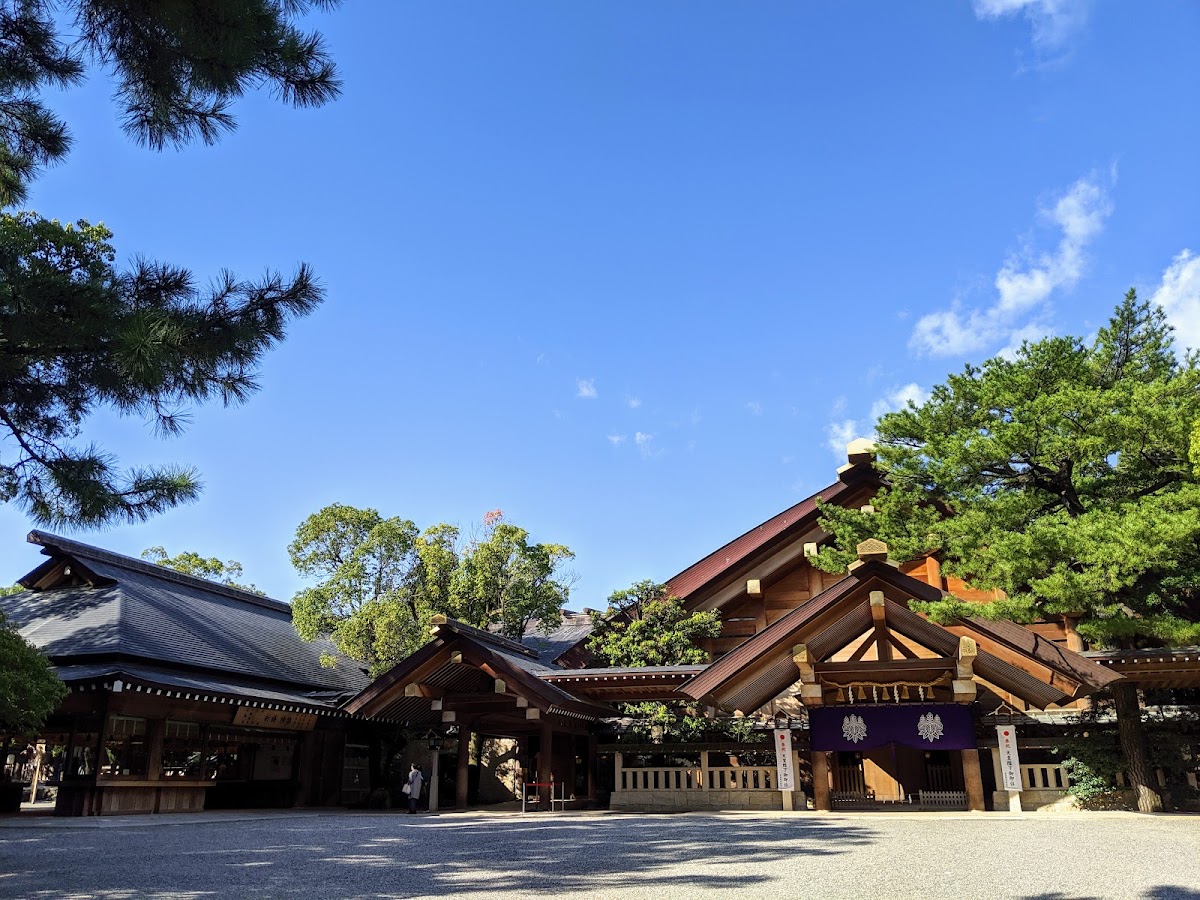
Atsuta Shrine, within walking distance of Kanki-ji Temple, is a venerable shrine dedicated to the Kusanagi-no-Tsurugi (Grass-Cutting Sword), one of the Three Sacred Treasures of Japan. It is a representative tourist spot in Aichi Prefecture, attracting approximately 7 million visitors annually.
- Distance: Approximately 15-20 minutes on foot from Kanki-ji Temple
- Features: Vast grounds, camphor trees over 1,000 years old, treasure hall
- Annual Events: New Year’s visit, annual festival (June 5th), etc.
Shiratori Garden
This is one of the largest Japanese gardens in the Chubu region, where you can enjoy the beauty of nature throughout the seasons. Designed as a pond-centered strolling garden, it features a design that mimics the topography of the Chubu region.
- Distance: Approximately 10-15 minutes on foot from Kanki-ji Temple
- Admission Fee: 300 yen for adults
- Features: Tea house, waterfall, pond, famous for its autumn foliage
Other Temples and Shrines in Atsuta Ward
Atsuta Ward has many temples and shrines in addition to Kanki-ji Temple.
- Seigan-ji Temple: A temple of the Shinshu Otani sect
- Hoji-ji Temple: A temple of the Nichiren sect
- Takaza Musubi Mikoshi Shrine: A subsidiary shrine of Atsuta Jingu Shrine
- Seidaihi-ji Temple: A temple of the Tendai sect
Visiting these temples and shrines is one way to deeply appreciate the charm of Atsuta Ward.
About Funerals and Memorial Services at Kanki-ji Temple
Kanki-ji Temple also conducts funerals and memorial services for its parishioners. As a temple of the Shinshu Otani sect, funeral rites are conducted based on the doctrines of Jodo Shinshu Buddhism.
Characteristics of Shinshu Otani Sect Funerals
- Consideration of Tomobiki: In Shinshu Buddhism, funerals can be held without regard to Tomobiki.
- Purifying Salt: In Shinshu Buddhism, purifying salt is not used (as death is not considered defilement).
- Incense Offering: Incense is offered only once, without touching the forehead.
- Prayer Beads: A unique Shinshu Otani sect prayer bead (Monto prayer beads) is used.
About Memorial Services
In Buddhism, memorial services are held on the anniversary of the deceased’s death. In Shinshu Otani Buddhism, the following annual memorial services are common.
- First seven days, forty-ninth day, hundredth day
- First anniversary, third anniversary, seventh anniversary, thirteenth anniversary
- Seventeenth anniversary, twenty-third anniversary, twenty-seventh anniversary, thirty-third anniversary
- Fiftieth anniversary
It is important to consult with the temple in advance regarding the date and preparations for memorial services.
How to contact Kanki-ji Temple
You can contact or consult with Kanki-ji Temple using the following methods:
Inquiry by phone
- Phone number: 052-671-8284
- Example of inquiry content: Consultation about memorial services, confirmation of visiting hours, event dates, etc.
Direct visit
When visiting the temple in person, it is recommended to contact them by phone in advance. This is because the head priest may be absent or unable to assist you due to memorial services or other events.
Points to Note When Making Inquiries
- Avoid contacting us early in the morning or late at night.
- Please organize your specific inquiry before contacting us.
- Please use polite language.
Shinshu Otani-ha Temple Network in Atsuta Ward, Nagoya City
Numerous Shinshu Otani-ha temples exist in Aichi Prefecture, especially in Nagoya City. Kanki-ji Temple is part of this temple network, supporting the local Buddhist culture.
Characteristics of Shinshu Otani-ha in Aichi Prefecture
Aichi Prefecture is sometimes called a “Shinshu Kingdom,” with a very large number of Shinshu temples. This is due to the strong influence of Hongan-ji Temple during the Sengoku period and the widespread dissemination of Shinshu teachings among the common people due to the development of commerce and industry since the Edo period.
Nearby Shinshu Otani-ha Temples
In addition to Kanki-ji Temple, there are many other Shinshu Otani-ha temples in Atsuta Ward and the surrounding areas. These temples cooperate with each other, sometimes jointly holding memorial services and training sessions.
Recommended Spots After Visiting Kanki-ji Temple
Here are some recommended spots in the area to visit after your visit to Kanki-ji Temple.
Gourmet Spots
Kishimen and Hitsumabushi Around Atsuta Shrine
Many restaurants serving Nagoya specialties are concentrated around Atsuta Shrine. “Miya Kishimen” and long-established hitsumabushi restaurants are particularly popular with tourists.
Local Restaurants Around Aoike-cho
You can experience Nagoya’s everyday food culture at local restaurants and cafes. Many cafes offer morning service.
Cultural Facilities
Atsuta Shrine Treasure Museum
This treasure museum boasts a collection of approximately 6,000 items, including national treasures and important cultural properties. You can learn about Japanese history and culture here.
Nagoya City Museum
Located in an area adjacent to Atsuta Ward, it comprehensively exhibits the history and culture of Nagoya.
Shopping
AEON Mall Atsuta
A large shopping mall where you can enjoy shopping, dining, movies, and more.
Seasonal Highlights When Visiting Kankiji Temple
Spring (March-May)
Spring is cherry blossom season. You can enjoy beautiful cherry blossoms at Atsuta Shrine and Shiratori Garden. Cherry trees also bloom profusely in the residential areas around Kankiji Temple.
Summer (June-August)
The Atsuta Festival (Atsuta Shrine Annual Festival) on June 5th is known as the “Atsuta Matsuri,” with many stalls and a fireworks display. Summer in Atsuta is full of energy.
Autumn (September-November)
Autumn is the season for autumn leaves. The autumn leaves at Shiratori Garden are particularly beautiful, attracting many tourists. The weather is pleasant, making it the perfect season for visiting temples and shrines.
Winter (December to February)
During the New Year’s pilgrimage season, many worshippers visit Atsuta Shrine. Kankiji Temple also holds New Year’s services, allowing visitors to welcome the new year in a tranquil atmosphere.
Kankiji Temple and the Local Community
Kankiji Temple is not merely a religious institution; it functions as an important part of the local community.
Connection with the Community
Temples have traditionally served as community gathering places. Through memorial services and funerals, local people gather and deepen their bonds.
The Danka System
Many Japanese temples are supported by the Danka system. A Danka is a family that provides economic and spiritual support to a specific temple, and the temple performs ancestral memorial services and funerals for the Danka.
The Role of Temples in Modern Society
In modern society, temples play a variety of roles, including:
- A Place of Support: A place for people to seek advice and support from those struggling with worries and anxieties.
- Cultural Preservation: Preservation and transmission of traditional events and Buddhist culture.
- A Place of Education: Human education through Buddhist teachings.
- A Community Hub: A place for interaction among local residents.
Checklist of Items to Bring When Visiting Kanki-ji Temple
This is a list of items that are useful to bring when visiting Kanki-ji Temple.
Basic Items to Bring
- Prayer Beads: Jodo Shinshu prayer beads (if you have them)
- Offering Money: It’s convenient to have small change ready
- Handkerchief/Tissues: For use after purifying your hands
- Camera: For taking photos on the temple grounds (check if photography is permitted)
For Attending a Memorial Service
- Condolence Money: A condolence envelope with black and white or yellow and white mizuhiki (decorative cord)
- Prayer Beads: Essential
- Mourning Clothes or Semi-Formal Clothes: Depending on the formality of the memorial service
- Socks: Necessary when entering the main hall
Summary: The Charm of Kanki-ji Temple
Kanki-ji Temple, located in Aoike-cho, Atsuta-ku, Nagoya City, is a historic temple that continues to uphold the teachings of the Shinshu Otani sect. It boasts excellent transportation access, being just a 7-minute walk from Hibino Station, making it easily accessible not only for local residents but also for visitors from afar.
The area surrounding Kanki-ji Temple boasts many of Nagoya’s most representative tourist attractions, such as Atsuta Shrine and Shiratori Garden. Visiting Kanki-ji Temple as part of a temple and shrine tour allows you to delve deeper into the history and culture of Atsuta Ward.
As a temple of the Shinshu Otani sect, Kanki-ji Temple continues to uphold the teachings of Shinran Shonin that “all people will be saved equally.” Within its tranquil atmosphere, one can feel the history of its long history as a spiritual haven for the local people.
When visiting Atsuta Ward in Nagoya City, be sure to visit Kanki-ji Temple. Away from the hustle and bustle of everyday life, the time spent quietly offering prayers will bring peace to your heart.
Access Map to Kanki-ji Temple
Finally, for those planning a visit to Kanki-ji Temple, here is a summary of the distances and travel times from major nearby facilities.
Travel Time from Major Stations
- From Nagoya Station: Approximately 15 minutes by subway + 7 minutes on foot (via Hibino Station)
- From Kanayama Station: Approximately 5 minutes by subway + 7 minutes on foot (via Hibino Station)
- From Sakae Station: Approximately 20 minutes by subway + 7 minutes on foot (via Hibino Station)
Distance from Nearby Facilities
- Atsuta Shrine: Approximately 15-20 minutes on foot, approximately 1.2 km
- Shiratori Garden: Approximately 10-15 minutes on foot, approximately 800 m
- AEON Mall Atsuta: Approximately 20 minutes on foot, approximately 1.5 km
Kankiji Temple in Atsuta Ward, Nagoya City, Aichi Prefecture, is a community-based temple that continues to uphold the teachings of the Shinshu Otani sect. Please visit it for worship, memorial services, or as part of your historical exploration of Atsuta Ward.