
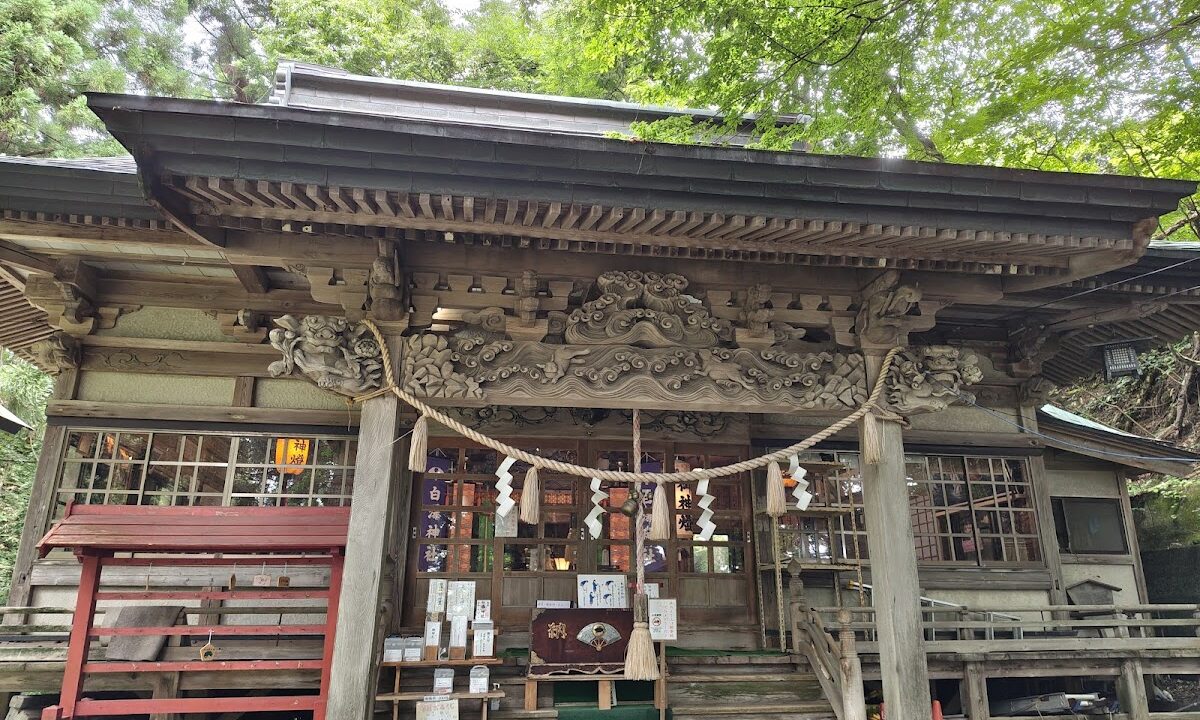
Shirataki Shrine (Akita Prefecture) Complete Guide | A Thorough Explanation from the Mikoshi Waterfall Bath to Goshuin Stamps and Access
Shirataki Shrine, located in Happo-cho, Yamamoto-gun, Akita Prefecture, is a rare shrine in Japan that boasts a 17-meter-high Shirataki waterfall behind its grounds. Every year on August 1st, the magnificent annual festival, “Mikoshi Waterfall Bath,” takes place, in which the portable shrine enters the waterfall basin. This festival has even been featured in the American magazine “LIFE.” This article comprehensively introduces all the information you need to know before visiting Shirataki Shrine, including its history, highlights, festivals, and access methods.
History and Origins of Shirataki Shrine
Founded by Jikaku Daishi Ennin
Shirataki Shrine is said to have been founded over 1100 years ago, in the third year of Ninju (853 AD) during the Heian period, by Jikaku Daishi Ennin. During his travels, Master Ennin visited this area and was deeply impressed by the purity of the waterfall at Hachimoriyama and the clear, serene mountain scenery. He stayed there for a period of prayer. Declaring that “such a waterfall is unparalleled and a sacred place,” he carved a statue of Fudo Myoo (Acala) and placed it on a rock north of the waterfall, praying for national security. This is considered the founding of the shrine.
History from the Medieval to Early Modern Periods
In the medieval period, during the reign of Emperor Montoku, Akita Jōnosuke held the shrine in high esteem, making donations of land and other contributions. During the Edo period, Sugae Masumi, a renowned travel writer, also visited Shirataki Shrine, and his travelogue records his visit. At that time, influenced by the syncretism of Shinto and Buddhism, it was worshipped as a Fudo Myoo shrine.
Following the Meiji-era separation of Shinto and Buddhism, the shrine was formalized and designated a local shrine in 1873 (Meiji 6). It is believed that the current name, Shirataki Shrine, was officially established around this time.
Connection to Hachimori Town
The origins of Matsugen-in Temple, a Soto Zen Buddhist temple in Hachimori Town, are said to be the same as those of Shirataki Shrine, preserving the remnants of the era of syncretism between Shinto and Buddhism. Furthermore, the Hachiman Shrine within the temple grounds enshrines Takeda Shigezaemon, the lord of Honkan Castle who was killed in the Hachimori Honkan Rebellion, and is deeply connected to the history of the region.
Deities and Divine Virtues
The following five deities are enshrined at Shirataki Shrine:
- Homusubi-no-kami: As the god of fire, bestows blessings of protection against fire and industrial development.
- Haniyama-hime-no-kami: As the goddess of earth, bestows blessings of abundant harvests and family safety.
- Amaterasu-Omikami: As the sun goddess, bestows blessings of national peace and good fortune.
- Oyamatsumi-himeko-no-kami: As the goddess of mountains, bestows blessings of mountain safety and business prosperity.
- Takehayasusano-no-Mikoto: Bestows blessings of protection against misfortune, matchmaking, and healing from illness.
These gods are believed to bestow a wide range of blessings, including national safety, abundant harvests, family safety, and business prosperity.
Highlights of the Shrine Grounds
Shirataki Waterfall (Male and Female Waterfalls)
The greatest highlight of Shirataki Shrine is the Shirataki Waterfall, which cascades down behind the shrine grounds. The 17-meter-high waterfall splits into two streams, the male and female waterfalls, creating a refreshing space at the foot of the Shirakami Mountains. The steam rising from the waterfall creates a mist, making the area cool and mystical even in summer.
On the rocks above the waterfall is a statue of Fudo Myoo, said to have been hand-carved by Jikaku Daishi Ennin, preserving the shrine’s sacred status. The waterfall’s water is pure and has been revered as sacred water since ancient times.
Shrines within the Grounds
The following shrines are located within the grounds of Shirataki Shrine:
Hachiman Shrine
This shrine is dedicated to Takeda Shigezaemon, the lord of Honkan Castle. It is an important historical site related to the Hachimori Honkan Rebellion, a historical event in the region. It is believed to bestow divine blessings for long-lasting military fortune and improved luck in competitions.
Sugawara Shrine
This shrine is dedicated to Sugawara no Michizane, known as the god of learning. Many worshippers visit to pray for success in examinations and academic achievement.
Karamatsu Shrine
This shrine has been worshipped since ancient times as the guardian deity of the region, and is believed to bestow divine blessings for family safety and community safety.
These three shrines are located within the grounds of Shirataki Shrine and can be visited together with the main shrine.
Shrine Building and Worship Hall
The shrine building of Shirataki Shrine is built in the traditional shrine architectural style using Akita cedar. From the worship hall, you can enjoy the lush green scenery of the shrine grounds and appreciate the beauty of nature throughout the seasons. Especially during the seasons of fresh greenery and autumn leaves, the entire shrine grounds are enveloped in beautiful colors.
Shirataki Shrine Annual Festival: “Waterfall Bathing with the Portable Shrine”
A Unique Ritual Nationwide
The most famous event at Shirataki Shrine is the annual festival, “Waterfall Bathing with the Portable Shrine,” held every August 1st. This ritual, in which the portable shrine is carried into the waterfall basin, is extremely rare nationwide and is said to be unique to Shirataki Shrine.
Festival Flow
The annual festival begins in the morning and proceeds as follows:
- Morning Ritual: A ritual is performed at the shrine, and the divine spirit is transferred to the portable shrine.
- Procession Through the Town: The portable shrine parades through the town of Hachimori, taking breaks at various points as it tours the area.
- Movement to the Waterfall: In the afternoon, while the bearers’ enthusiasm is still high, the portable shrine heads towards the waterfall.
- Waterfall Bath with the Portable Shrine: At the climax, the men, still carrying the portable shrine, enter the waterfall basin. The magnificent sight of the cold water spray and the shouts of the bearers is breathtaking.
- Return: After bathing in the waterfall, the portable shrine returns to the shrine, concluding the ritual.
Popular as a Photo Spot
Hundreds of spectators gather around the waterfall every year to photograph this unique ritual. Having been featured in the American magazine “LIFE,” it has become a festival attracting attention both domestically and internationally. ### The Challenge of a Shortage of Bearers
In recent years, the combination of an aging population and population decline has led to a serious shortage of bearers for the portable shrine. To preserve tradition, the community is undertaking various initiatives, including accepting participants from outside the town.
Goshuin (Shrine Seals) and Amulets
Goshuin (Shrine Seals)
At Shirataki Shrine, you can receive a goshuin as proof of your visit. It is available at the shrine office, and the offering fee is the same as for most shrines. The goshuin will have the words “Shirataki Shrine” written in ink and stamped with the shrine’s seal. Special commemorative seals may be available on the day of the annual festival.
Amulets and Souvenirs
Shirataki Shrine offers various amulets and souvenirs. Particularly popular are the purification amulet, inspired by the pure water of the waterfall, and the amulet for a bountiful harvest. Also, the local specialty sake, “Shirataki,” is brewed using the shrine’s famous water and may be available for purchase as a souvenir.
Shirataki Shrine and Shirakami Mountains
Shirataki Shrine is located at the foot of the Shirakami Mountains, a World Natural Heritage site. The Shirakami Mountains are a precious natural environment with pristine beech forests untouched by human hands, and are home to diverse flora and fauna.
It is also designated as one of the sightseeing spots in the Akita Prefecture Happo Shirakami Geopark, and its geological value, shaped by the long-term flow of water from Shirataki Falls, is recognized. When visiting Shirataki Shrine, you can also enjoy the natural beauty of the Shirakami Mountains.
Etiquette and Manners for Worship
Basic Worship Etiquette
Worship at Shirataki Shrine follows the same etiquette as at any other shrine.
- Bow before passing through the torii gate: As a sign of respect before entering the sacred area, bow before the torii gate.
- Purify yourself at the water basin: Purify your hands and mouth at the water basin.
- Avoid walking in the center of the approach: The center of the approach is considered the path of the gods.
- Worship at the main hall: Worship using the two bows, two claps, and one bow ritual.
- Visit the subsidiary shrines: If time permits, also visit the Hachiman Shrine, Sugawara Shrine, and Karamatsu Shrine.
Manners around the waterfall
Shirabaku is a sacred area and a holy place. Please observe the following manners.
- Please refrain from making loud noises.
- Please take all your trash with you.
- Please refrain from entering the waterfall basin without permission.
- Please be considerate of other visitors when taking photographs.
Access Methods
Access by Public Transportation
Using the JR Gonō Line
- Get off at Higashi-Hachimori Station on the JR Gonō Line, then walk for approximately 10-20 minutes.
- The path from the station to the shrine is flat and well-marked.
From Akita City
- Take the JR Ōu Main Line from Akita Station to Higashi-Noshiro Station (approximately 1 hour).
- Transfer to the JR Gonō Line at Higashi-Noshiro Station and go to Higashi-Hachimori Station (approximately 40 minutes).
Access by Car
Using the Akita Expressway
- Approximately 50 minutes from Noshiro-Minami IC on the Akita Expressway via National Route 101.
- Approximately 1 hour 30 minutes from Akita City via National Routes 7 and 101.
From Ōdate-Noshiro Airport
- Approximately 1 hour from the airport via National Routes 7 and 101
- Renting a car is convenient.
Parking Information
Shirataka Shrine has a parking lot for visitors. While there is usually ample parking space, it becomes extremely crowded on August 1st, the day of the annual festival, so early arrival is recommended. Parking is free.
Nearby Tourist Attractions
Highlights of Happo Town
When visiting Shirataka Shrine, be sure to explore other tourist spots in Happo Town.
Hachimori Isaribi Onsen Hatahata-kan
This hot spring facility offers panoramic views of the Sea of Japan and serves dishes made with local seafood. It’s perfect for relaxing after visiting Shirataka Shrine.
Akita Shirakami Station (JR Gonō Line)
This station serves as a gateway to the Shirakami Mountains, and there are facilities nearby where you can learn about the nature of the Shirakami Mountains.
Hachimori Coast
This coastline offers beautiful views of the Sea of Japan and is also known as a famous spot for sunsets. ### Shirakami Mountains Walking Tour
From Shirataki Shrine, you can access walking trails in the Shirakami Mountains by car. The trekking courses through the beech forest are well-maintained and enjoyable for beginners to advanced hikers.
Best Time to Visit
Charms of Each Season
Spring (April-June)
The fresh greenery is beautiful, and the waterfall has abundant water. The trees in the shrine grounds are budding, and the air is refreshing.
Summer (July-August)
The highlight is the annual festival on August 1st, “Mikoshi Waterfall Bathing.” The mist from the waterfall provides coolness, making it a comfortable summer retreat.
Autumn (September-November)
The shrine grounds are vividly colored during the autumn foliage season. The contrast between Shirataki Waterfall and the autumn leaves is a spectacular sight.
Winter (December-March)
Shirataki Waterfall amidst the snowscape is breathtakingly beautiful. However, please note that heavy snowfall may make visiting the shrine difficult, so prior confirmation is necessary.
Visiting the Grand Festival
If you plan to visit the Grand Festival on August 1st, please note the following:
- This festival lasts all day, from early morning until evening.
- The area around the waterfall gets very crowded, so be sure to arrive early to secure a spot.
- It’s the hot summer season, so don’t forget to take precautions against heatstroke.
- The area around the waterfall has uneven footing in some places, so wear comfortable shoes.
Basic Information about Shirataki Shrine
Location
10 Tate, Hachimori, Happo-cho, Yamamoto-gun, Akita Prefecture 018-2500
Main Deities
Homusubi-no-kami, Haniyama-hime-no-kami, Amaterasu-Omikami, Oyamatsumi-no-kami, Takehaya Susanoo-no-Mikoto
Founded
853 AD
Annual Festival Date
August 1st
Shrine Rank
Former Village Shrine
Visiting Hours
Grounds are freely accessible (Shrine office hours may be limited)
Admission Fee
Free
Inquiries
Akita Prefecture Shrine Association or Happo Town Tourism Association
Summary
Shirataka Shrine in Happo-cho, Akita Prefecture, boasts a history of over 1100 years and is a rare shrine in Japan, featuring a 17-meter-high Shirataki waterfall behind its grounds. Since its founding by Jikaku Daishi Ennin, it has been a place of worship for the region, praying for national security and abundant harvests.
The annual festival, “Mikoshi no Takibai” (Waterfall Bathing of the Portable Shrine), held on August 1st, is widely known as the only Shinto ritual in Japan where the portable shrine enters the waterfall basin, attracting many spectators. Located at the foot of the Shirakami Mountains, the mystical space created by the male and female waterfalls deeply moves visitors.
Its convenient access, within walking distance of Higashi-Hachimori Station on the JR Gonō Line, is another attractive feature. When visiting Akita Prefecture, be sure to visit Shirataka Shrine and experience its history, natural beauty, and unique rituals. Visiting the subsidiary shrines within the grounds—Hachiman Shrine, Sugawara Shrine, and Karamatsu Shrine—will make for an even more fulfilling experience. Shirataki Shrine, nestled in harmony with the natural beauty of the Shirakami Mountains, is a sacred site that Akita Prefecture is proud of. It continues to be cherished by many worshippers as a place to purify both mind and body.


