Kurita Shrine (Akita Prefecture) Complete Guide | History and Visiting Information for the Benefactor of Sand-Breaking Forests
Kurita Shrine, located in Araya Kurita-cho, Akita City, Akita Prefecture, is a shrine dedicated to Kurita Sadanojō Yukishige, a samurai of the Akita Domain who saved the region from the damage caused by drifting sands. It is a valuable site that conveys the history of the region’s sand-breaking projects in the late Edo period, and is cherished by the local people.
This article comprehensively introduces the historical background of Kurita Shrine, the achievements of the enshrined deity, the appearance of the shrine grounds, access methods, and information on Goshuin (shrine stamps), providing all the necessary information for visiting.
History and Founding Background of Kurita Shrine
The Threat of Drifting Sands that Struck Araya Village
In the Edo period, Araya Village (present-day Araya district of Akita City) was a vast sandy area facing the Sea of Japan. Almost no vegetation grew, and every time the northwest winds blew in winter, sand blown in from the coast buried houses and caused immense damage to crops. This sand damage was so severe that it threatened the very existence of the village, and the residents suffered for many years.
Kurita Sadanojō’s Sand Control Project
During the Bunka era (1804-1818), Kurita Sadanojō Yukimochi (1768-1827), a samurai of the Akita domain, was commissioned by the domain to undertake a sand control project. Kurita Sadanojō promoted the cultivation of sand-preventing forests along the coast for a long period of 18 years.
Although it was an extremely difficult project, Kurita Sadanojō’s persistent efforts and technical ingenuity finally succeeded in cultivating the sand-preventing forests. As a result, Araya Village was freed from the damage caused by sand blowing, and the lives of the residents dramatically improved. The achievements of Sadanojō Kurita extend far beyond mere erosion control projects; his great deeds are recounted as a monumental contribution to the entire community.
History of the Shrine’s Founding
After Sadanojō Kurita’s death, the villagers, deeply grateful for his benevolent contributions, decided to enshrine him as a deity to ensure his legacy would be passed down to future generations. In 1857 (Ansei 4), the villagers petitioned the Akita Domain, and the Kurita Shrine was officially established. For approximately 170 years since its founding, it has been carefully preserved by the local people.
About the Deity Enshrined: Kurita Sadanojō Yukishige
Detailed Information on the Deity Enshrined
Deity Enshrined: Kurita Sadanojō Yukishige
Birth and Death Dates: 1768 (Meiwa 5) – 1827 (Bunsei 10)
Status: Samurai of the Akita Domain
Profile and Achievements of Kurita Sadanojō
Kurita Sadanojō was not merely a samurai, but a practical individual well-versed in civil engineering and afforestation techniques. He established his own unique methods through trial and error in the challenging and unprecedented task of sand drift prevention.
His sand dune forest development project can be considered a pioneering effort in modern environmental conservation. His success is highly regarded for his comprehensive approach, including the selection of appropriate tree species, innovative planting methods, and the establishment of a continuous management system.
The achievements of Sadanojō Kurita had a significant impact not only on Araya Village but also on the entire coastal forest development project in Akita Prefecture, becoming a model case for later erosion control projects.
Shrine Grounds and Highlights
Features of the Shrine and Grounds
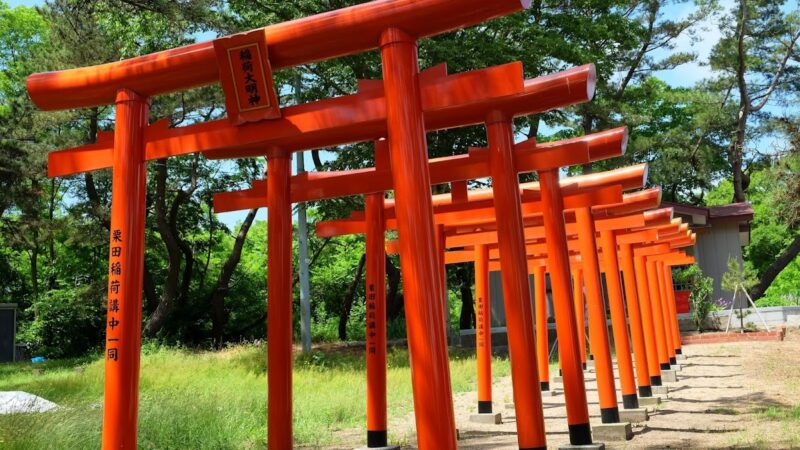
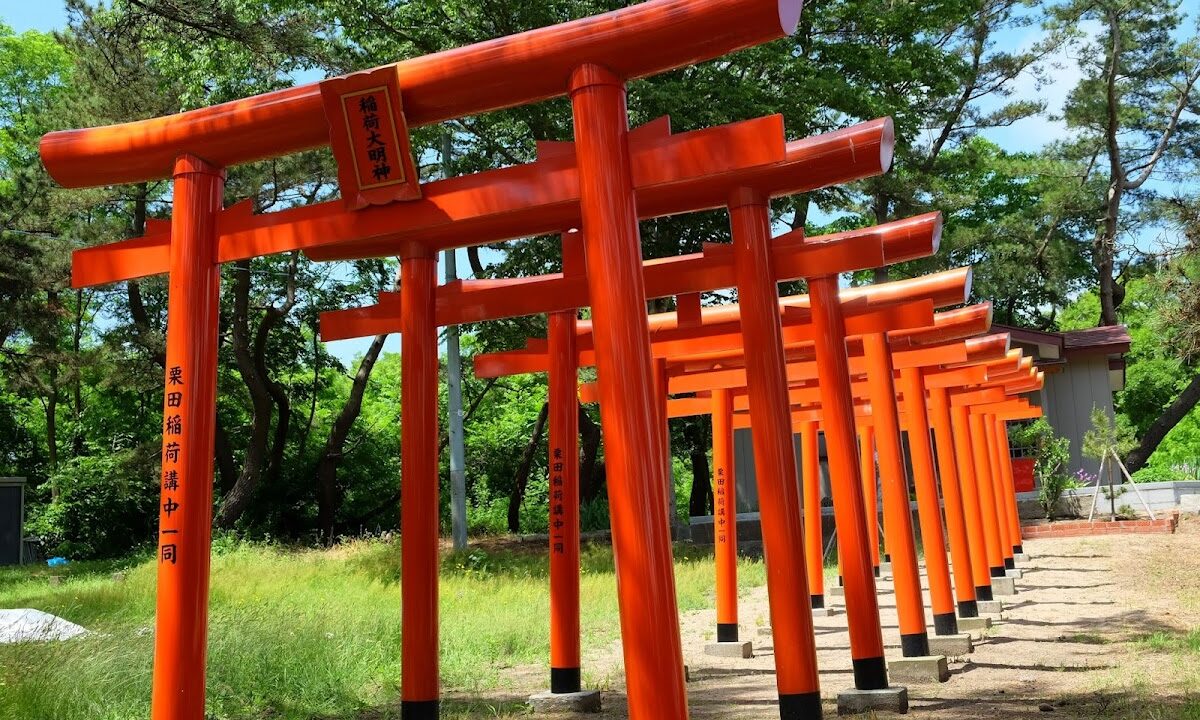
Kurita Shrine is located on a sand dune near the Omono River embankment. The sight of the shrine quietly situated amidst lush trees on land once plagued by sand drift speaks volumes about the success of Sadanojō Kurita’s project.
The shrine grounds are located somewhat outside the Araya district, within a scattered residential area, making it a small, community-oriented shrine. While not flashy, it possesses a warm atmosphere, cherished by the local people.
Photo Spots
The trees surrounding the shrine grounds can be seen as a continuation of the sand-damping forest cultivated by Sadanojō Kurita. The natural scenery within the shrine grounds, which changes its appearance with each season, is ideal for photography, and you can enjoy particularly beautiful views during the fresh green season and the autumn foliage season.
The simple appearance of the shrine buildings and the contrast with the surrounding greenery give visitors a quiet sense of awe.
How to Access Kurita Shrine
Basic Information
Location: 1-28, Kurita-cho, Araya, Akita City, Akita Prefecture 010-1621
Google Maps: Searchable by “Kurita Shrine Akita City”
Access from Nearest Station/Line
Nearest Station: Araya Station, JR Uetsu Main Line
Distance from Station: Approximately 21 minutes on foot (approximately 1.7 km)
Araya Station is located about 15 minutes from Akita Station on the Uetsu Main Line. While walking is the primary way to access the shrine from the station, taxis are also available (approximately 5 minutes).
Access by Car
From central Akita City, head south on National Route 7 towards Araya. The route from Araya town towards Omonogawa is the easiest to follow. Setting “Kurita Shrine” or the address in your car navigation system or smartphone map app will provide accurate directions.
Regarding parking, as it is a small shrine, it is recommended to check in advance whether there is a dedicated parking lot.
Nearest Bus Stop and Route
Access by bus is also possible, but the number of services may be limited. Take a local bus operating within Akita City towards Araya, and then walk from the nearest bus stop. For detailed timetables and route information, please check the Akita City public transportation information.
Practical Information Regarding Visiting
Visiting Hours and Admission Fee
Kurita Shrine is an outdoor shrine, so it is generally open for worship 24 hours a day. However, for safety reasons, it is recommended to visit during daylight hours rather than at night.
Admission is free.
About Goshuin (Shrine Seals)
Regarding the issuance of Goshuin at Kurita Shrine, there may not be a permanently staffed shrine office. Those wishing to receive a Goshuin are advised to inquire in advance with the Akita Prefectural Shrine Association or a local shrine official.
Those on a Goshuin pilgrimage within Akita Prefecture may want to plan their visit to include other shrines in Akita City (such as Taiheizan Miyoshi Shrine and Yataka Shrine).
Festivals and Events
Kurita Shrine holds festivals throughout the year organized by local residents. For specific festival dates, please check local information or the official information from the Akita Prefectural Shrine Association.
The annual grand festival includes a Shinto ritual commemorating the achievements of Kurita Sadanojō and praying for the peace and prosperity of the region.
Combination Plans with Nearby Tourist Spots
Highlights of the Araya District
When visiting Kurita Shrine, we recommend also visiting other spots in the Araya district.
Japan Sea Coast: The coastline where Sadanosuke Kurita cultivated windbreak forests is now an area where you can enjoy beautiful coastal scenery. It is also known as a famous spot for sunsets.
Omono River Estuary: The estuary where the Omono River flows into the Japan Sea is a popular spot for bird watching.
Visiting Shrines and Temples in Akita City
There are many other shrines and temples in Akita City.
- Taiheizan Miyoshi Shrine: A representative shrine of Akita City, known as the god of victory.
- Yataka Shrine: A shrine associated with the Satake clan, the lords of the Akita domain.
- Kubota Castle Ruins (Senshu Park): The site of the Akita domain’s castle, ideal for historical walks.
By combining shrine visits, you can spend a day experiencing the history and culture of Akita City.
Cultural and Historical Significance of Kurita Shrine
Importance in Local History
Kurita Shrine is not merely a religious site, but also a cultural asset that conveys the history of the region. It is historically valuable as a successful example of flood and erosion control projects during the Edo period, and as an example of folk belief where local residents enshrined their benefactor as a deity.
Lessons for the Modern Age
Kurita Sadanojō’s erosion control projects contain lessons that are still relevant to modern environmental conservation and disaster prevention projects. His project methods, including long-term planning, a scientific approach, and cooperation with local residents, offer many valuable insights even today.
Visiting Kurita Shrine will be more than just sightseeing or worship; it will be an opportunity to reflect on the wisdom and efforts of our predecessors.
Manners and Precautions When Visiting a Shrine
Basic Manners for Visiting a Shrine
- When passing through the torii gate: Bow before entering the shrine grounds.
- Walking along the approach to the shrine: The center is considered the path of the gods, so it is polite to walk along the sides.
- Procedure for purifying oneself at the water basin: If there is a water basin, purify your left hand, then your right hand, then your mouth.
- Worship at the main hall: Two bows, two claps, and one bow is the basic procedure.
Considerations When Taking Photos
Photography is generally permitted on the shrine grounds, but please consider the following:
- Do not disturb other worshippers.
- Act with awareness that this is a sacred place.
- Be careful when handling location information when posting on social media.
Considerations Unique to Small Shrines
Kurita Shrine is a small, community-oriented shrine. Unlike large tourist shrines, please understand that it is located within the living area of local residents and worship quietly. Particular attention should be paid to noise, as it is close to a residential area.
Other Shrines Dedicated to Historical Figures in Akita Prefecture
Akita Prefecture has other shrines dedicated to specific historical figures, similar to Kurita Shrine.
Yataka Shrine: A shrine dedicated to Satake Yoshitaka, the lord of the Akita domain, located in Akita City.
Saga Shrine: Shrines dedicated to various historical figures are scattered throughout Akita Prefecture.
Visiting these shrines will allow you to gain a deeper understanding of Akita’s history and the achievements of its ancestors.
How to Enjoy Visiting Kurita Shrine
As a Historical Exploration
When visiting Kurita Shrine, researching the achievements of Kurita Sadanojō and the history of the Araya area beforehand will make your visit more meaningful. Viewing related materials at local libraries and museums is also recommended.
Seasonal Expressions
The grounds of Kurita Shrine show different expressions depending on the season.
- Spring: Beautiful fresh greenery and refreshing air.
- Summer: The trees are lush green, and the cool shade is pleasant.
- Autumn: Autumn leaves adorn the shrine grounds.
- Winter: The tranquil atmosphere created by the snow-covered grounds is captivating.
Interacting with the Community
If you have the opportunity to converse with locals during your visit, you may hear about local legends related to Kurita Sadanojō and stories about the maintenance of the shrine. Such interactions are a unique pleasure of visiting a small, local shrine.
Summary: The Local Memories Presented by Kurita Shrine
Kurita Shrine is a historic shrine located in Araya Kurita-cho, Akita City, Akita Prefecture, dedicated to a local benefactor. The achievements of Kurita Sadanojō, who saved the village from sandstorms, are still recounted by local people nearly 170 years later.
While not flashy, Kurita Shrine, steeped in local history and the gratitude of its people, is a must-visit spot when you’re in Akita. In its tranquil grounds, you can reflect on the achievements of past generations and spend a precious time experiencing the region’s history.
Access is a bit of a distance, about a 21-minute walk from Araya Station, but the journey itself offers a pleasant stroll through the Araya district. Please use a map app to find your way.
We hope that your visit to Kurita Shrine will help you gain a deeper understanding of Akita’s history and culture.