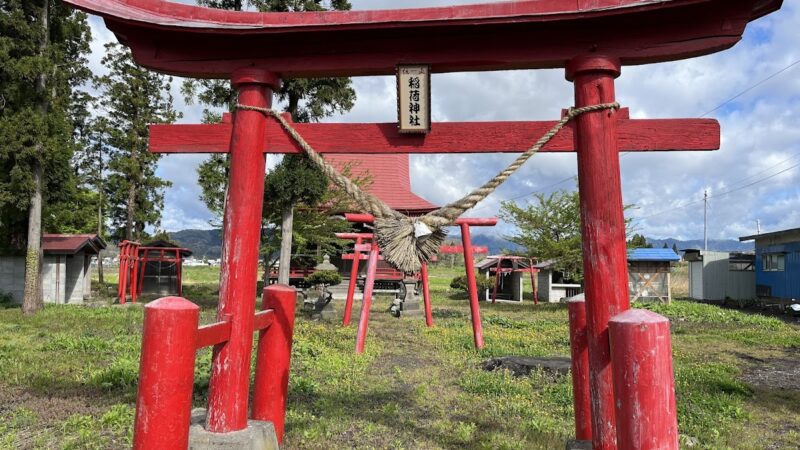
Inari Shrine (56 Iegoshi, Shimodaino, Odate City, Akita Prefecture) Complete Guide
The Inari Shrine, located at 56 Iegoshi, Shimodaino, Odate City, Akita Prefecture, is a historic shrine that attracts the faith of the local community. Among the approximately 2,655 Inari shrines nationwide, it is situated in Odate City, the central city of northern Akita Prefecture, and has long been cherished as a spiritual pillar for the local residents. This article provides a comprehensive explanation of the Inari Shrine, including its detailed information, historical background, enshrined deities, access methods, and the shrine culture of Odate City.
Basic Information on the Inari Shrine
Location and Corporate Information
Official Address:
56 Iegoshi, Shimodaino, Odate City, Akita Prefecture 017-0034
Corporate Code:
6410005003001
This corporate code is proof of official registration as a religious corporation and is listed in the Agency for Cultural Affairs’ Religious Corporation Database. Odate City has a total of 83 shrines, and Inari shrines hold an important position among them.
Position of Inari Shrines Nationwide
Inari shrines are the second most numerous type of shrine in Japan, with approximately 2,655 shrines located throughout the country. Inari worship is one of the most widespread beliefs in Japanese Shinto, and has been revered since ancient times as the guardian deity of agriculture, commerce, and industry.
The Inari Shrine in Shimodaino, Odate City, also plays a part in this vast Inari worship network, functioning as a place to pray for abundant harvests and business prosperity in the region.
Deities and Beliefs of Inari Shrines
Inari Okami (Ukanomitama-no-kami)
The deity enshrined at Inari shrines is generally considered to be Ukanomitama-no-kami. This deity, who appears in the Kojiki and Nihon Shoki, is a god who presides over food and grains. A strong theory suggests that the name “Inari” originated from “Inenari” (rice harvest).
Characteristics of Inari Worship
Inari worship has the following characteristics:
- Aspect as an agricultural god: Prayers for abundant harvests and bountiful harvests
- Aspect as a commercial god: Business prosperity and success
- Aspect as an industrial god: Industrial development and technological advancement
- Family safety: Health and safety of the family
Odate City is known as a production area for Akita cedar, and forestry and timber processing industries were thriving. Therefore, it is believed that local Inari shrines played an important role not only in agriculture but also as places to pray for the development of forestry and commerce.
Foxes as Divine Messengers
A distinctive element of Inari shrines is the fact that foxes are considered divine messengers. Many Inari shrines have stone statues of foxes on their grounds, welcoming visitors. Foxes are considered messengers of Inari Okami (the Inari deity), playing a role in conveying people’s wishes to the gods.
History and Culture of Shimodaino District, Odate City
Geographical Characteristics of Shimodaino District
Shimodaino is a residential area close to the center of Odate City. Odate City is located in the northern part of Akita Prefecture, near the border with Aomori Prefecture, and has developed as a transportation hub since ancient times.
Historical Background of Odate City
During the Edo period, Odate City flourished as a castle town of Odate Castle and was an important base for the Akita Domain. After the Meiji era, mining and forestry developed, and it became known as a center for the collection and distribution of Akita cedar. Currently, it is also famous as the birthplace of “Hachiko, the loyal dog,” and is attracting attention as a tourist resource.
The Role of Shrines in the Community
In the past, shrines in Japanese communities functioned not merely as religious facilities, but as the center of the local community. Festivals and annual events served as gathering places for residents, deepening community bonds. It is presumed that the Inari Shrine in Shimodaino also played an important role as a place for community interaction.
Shrine Culture in Odate City, Akita Prefecture
Total Number and Distribution of Shrines in Odate City
There are 83 shrines in Odate City, Akita Prefecture. This is a relatively large number compared to other municipalities in Akita Prefecture, indicating the depth of local faith.
The main shrines in Odate City include the following:
- Odate Shinmei Shrine – A major shrine located in the city center
- Iwase District Inari Shrine – Located in Inaridai, Iwase
- Various Shrines in Hinai Town – Numerous shrines in the former Hinai Town area
- Hayaguchi District Inari Shrine – Located in Deguchi, Hayaguchi
- Kita-Shinmei Town Inari Shrine – Located in the city center
Shrine Statistics for Akita Prefecture
There are approximately 1,138 shrines in Akita Prefecture. Based on statistical indicators such as the number of shrines per capita and the number of shrines per area, Akita Prefecture has one of the highest shrine densities in Japan.
In the ranking of the number of shrines by prefecture, Akita Prefecture ranks high even within the Tohoku region, indicating that ancient Shinto beliefs remain deeply rooted in the area.
Inari Shrines in Odate City
Besides the Inari Shrine in Shimodaino, there are several other Inari shrines in Odate City:
- Inari Shrine in Iegoyamane, Ogatsu, Hinai-cho (〒018-5851)
- Inari Shrine in Inaridai, Iwase (Iwase area)
- Inari Shrine in Kitashinmei-cho (〒017-0866)
- Inari Shrine in Deguchi, Hayakuchi (〒018-3505)
These Inari shrines are located in different areas and function as guardian deities for their respective regions.
How to Access Inari Shrine
Address and Postal Code
56 Iego, Shimodaino, Odate City, Akita Prefecture 017-0034
Access by Public Transportation
Nearest Station:
JR Ou Main Line “Odate Station”
From Odate Station to the Shimodaino area, you can access the shrine in the following ways:
- By Local Bus: Take the Shuhoku Bus from Odate Station
- By Taxi: Approximately 10-15 minutes from Odate Station
- On Foot: Approximately 2-3 km from Odate Station (approximately 30-40 minutes on foot)
Access by Car
Access from Major Roads:
- From Akita Expressway “Odate Kita IC”: Approximately 10 minutes
- From National Route 7: Towards Odate city center
- From National Route 103: Accessible
Parking Information: Depending on the size of the shrine, there may not be a dedicated parking lot, so it is recommended to check for available parking spaces in the surrounding area before visiting.
Landmarks in the Surrounding Area
The Shimodaino area is located in a residential area of Odate City. The surrounding area consists of scattered houses and small shops, creating a quiet environment that blends into the local community.
Manners and Etiquette for Visiting a Shrine
Basic Etiquette for Visiting a Shrine
There are certain manners to follow when visiting a shrine. Following the steps below will allow for a more respectful visit:
- Bow Before Passing Through the Torii Gate
As a sign of respect before entering the sacred area, bow before the torii gate.
- How to Walk Along the Approach to the Shrine
The center of the approach is considered the path of the gods, so it is considered best to walk along the sides.
- Purification at the Water Basin
If there is a water basin, purify yourself in the following order:
- Hold the ladle in your right hand and purify your left hand.
- Switch the ladle to your left hand and purify your right hand.
- Switch the ladle back to your right hand, receive water in your left hand, and rinse your mouth.
- Purify your left hand once more.
- Hold the ladle upright and purify the handle.
- Worship at the Main Hall
The general etiquette of “two bows, two claps, one bow”:
- Place your offering in the offering box.
- Ring the bell if there is one.
- Bow deeply twice.
- Clap your hands twice.
- Join your hands and pray.
- Finally, bow deeply once.
- Departure
After leaving the torii gate, turn around and bow towards the shrine.
Customs Unique to Inari Shrines
While you can worship at Inari shrines using the same customs as other shrines, some regions have a tradition of offering aburaage (deep-fried tofu) or inari sushi (rice wrapped in fried tofu). This stems from the legend that foxes, the messengers of the gods, are fond of aburaage.
Annual Events and Festivals
General Annual Events at Inari Shrines
Inari shrines hold various events throughout the year:
Hatsuumasai (First Horse Day Festival):
The largest festival at Inari shrines, held on the first Horse Day of February. Prayers are offered for a bountiful harvest and business prosperity.
Reitaisai (Annual Grand Festival):
The date varies by shrine, but it is the most important festival held once a year. A portable shrine procession and offering ceremonies may also take place.
Autumn Grand Festival:
A festival to give thanks for the harvest. New grains are offered, and gratitude is given for a good harvest.
Tsukimisai (Monthly Festival):
A festival held regularly every month. ### Local Festival Culture
In Odate City, each shrine holds its own unique festival. Akita Prefecture’s festival culture is distinctive even within the Tohoku region, with some areas preserving traditional performing arts such as portable shrine processions, lion dances, and Kagura (sacred music and dance).
Nearby Shrines and Temples
Major Shrines in Odate City
Here are some nearby shrines you can visit when you come to the Inari Shrine in Shimodaino:
Odate Shinmei Shrine:
A major shrine located in the center of Odate City. It enshrines Amaterasu Omikami and is revered by the citizens.
Hachiman Shrine:
A shrine dedicated to Hachiman, the god of military fortune. Several Hachiman shrines exist within Odate City.
Yama Shrine:
A shrine dedicated to the mountain god. In Odate City, where forestry was once thriving, mountain god worship remains strong.
Shrines in Neighboring Municipalities
Shrines in Kitaakita City: Kitaakita City, located south of Odate City, also has numerous shrines.
Shrines in Kosaka Town: Kosaka Town, located northeast of Odate City, was once a prosperous mining town and possesses a unique shrine culture.
Shrines in Kazuno City: Kazuno City, located east of Odate City, has ancient ruins such as the Oyu Stone Circles, preserving traces of long-standing faith.
Shrine Culture and Characteristics of Akita Prefecture
Shrines in Akita Prefecture within the Tohoku Region
Akita Prefecture’s shrine culture has unique characteristics within the Tohoku region:
Influence of Shinto-Buddhist Syncretism: Before the separation of Shinto and Buddhism in the Meiji era, many shrines were integrated with temples. Remnants of this can sometimes be seen in architectural styles and festivals.
Mountain Worship: Akita Prefecture has a mountainous terrain, and mountain worship is prevalent. Many mountain shrines and shrines related to Shugendo (mountain asceticism) exist. Agricultural Beliefs: In Akita Prefecture, a major rice-producing region, faith in agricultural deities who pray for bountiful harvests remains particularly strong.
Comparison with Shrines in Neighboring Prefectures
Aomori Prefecture: There are approximately 1,100 shrines, with distinct shrine cultures developed in the Tsugaru and Nanbu regions.
Iwate Prefecture: There are approximately 900 shrines, with large-scale shrines such as Morioka Hachimangu Shrine being well-known.
Yamagata Prefecture: The center of the Dewa Sanzan faith, with particularly strong mountain worship.
Miyagi Prefecture: A city-type shrine culture has developed, centered around Sendai, with approximately 950 shrines.
Social Role of Inari Shrines
Center of the Local Community
Even in modern times, shrines remain important centers of local communities:
- Community interaction through festivals
- A place for community activities such as cleaning activities
- A place for the transmission of traditional culture
- Function as a spiritual anchor
Value as Cultural Assets
Old shrines possess the following cultural asset values:
- Architectural Structures: Traditional shrine architectural styles
- Stone Structures: Torii gates, guardian lion-dogs, stone monuments, etc.
- Documents: Ancient documents and ridgepole inscriptions
- Festivals: Traditional events as intangible cultural assets
Aspects as a Tourism Resource
In recent years, shrine pilgrimages and collecting Goshuin (shrine stamps) have become popular, and shrines are attracting attention as a tourism resource. For tourists visiting Odate City, visiting local shrines is a valuable opportunity to learn about the history and culture of the area.
Odate City Tourist Information
Major Tourist Spots in Odate City
Odate City Tourist Spots to Visit in Conjunction with Inari Shrine:
Akita Dog Village: A facility unique to Odate City, the birthplace of Hachiko, the loyal dog. It features exhibits about Akita dogs and allows visitors to interact with them.
Odate Jukai Dome: One of the world’s largest wooden dome structures. Famous for its extensive use of Akita cedar.
Odate Local History Museum: A museum where you can learn about the history and culture of Odate City.
Birthplace of Kiritanpo: Odate City is considered the birthplace of “kiritanpo,” a local Akita dish. Many kiritanpo restaurants can be found in the city.
Specialty Products of Odate City
- Akita Cedar Crafts: Traditional crafts such as bentwood boxes
- Kiritanpo: A representative local dish of Akita
- Hinai Chicken: One of Japan’s three major breeds of chicken
- Tonburi: A specialty product known as “caviar of the field”
The Significance and Modern Value of Shrine Visits
Spiritual Significance
Shrine visits are not merely sightseeing; they have the following spiritual significance:
Purification of the Mind:
It allows you to escape the hustle and bustle of everyday life and have time to calm your mind in a tranquil space.
Gratitude:
It provides an opportunity to reaffirm gratitude for daily life.
Making Wishes:
By praying for the happiness of yourself and your family, you can cultivate a positive attitude.
Connection with Tradition:
By being in a place of worship with a long history, you can feel a connection to history and tradition.
The Role of Shrines in Modern Society
In modern society, shrines play the following roles:
- A Space for Healing: A place of mental rest in a stressful society
- Preservation of Traditional Culture: The transmission of traditional Japanese values and culture
- Regional Identity: A symbol representing the history and characteristics of the region
- Environmental Conservation: Protection of the natural environment as a guardian forest
Summary
The Inari Shrine located at 56 Iego, Shimodaino, Odate City, Akita Prefecture, is one of approximately 2,655 Inari shrines nationwide and is an important shrine that attracts the faith of the local community. As a formal religious corporation with corporate code 6410005003001, it welcomes worshippers seeking blessings for abundant harvests, business prosperity, and family safety.
Odate City has 83 shrines, each reflecting the history and culture of the region. Akita Prefecture as a whole has approximately 1,138 shrines, and is known as a region with a high density of shrines within the Tohoku region.
Visiting an Inari shrine is more than just sightseeing; it’s a valuable opportunity to experience traditional Japanese culture, learn about local history, and find inner peace. When you visit Odate City, we highly recommend visiting the Inari Shrine in Shimodaino and spending some time in its tranquil setting to calm your mind.
Near the natural environment of Odate City, surrounded by Akita cedar forests, this Inari shrine has watched over the region for centuries. Its history and traditions will undoubtedly continue to be cherished and preserved by the local people.