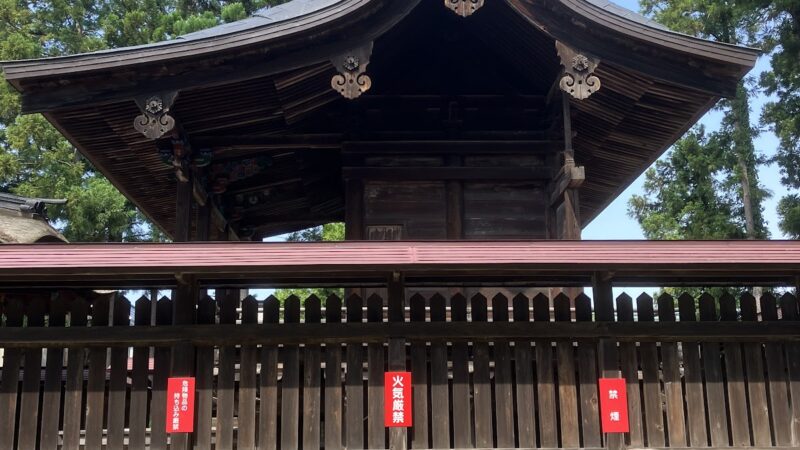
Hachimangu Shrine (Yamabuki, Fujinai-cho, Hirosaki City, Aomori Prefecture) Complete Guide: History, Benefits, and Access
Hachimangu Shrine, located in Yamabuki, Fujinai-cho, Hirosaki City, Aomori Prefecture, is a historical shrine deeply rooted in the local community. This article provides a detailed explanation of the shrine’s historical background, enshrined deities, benefits, highlights of the grounds, access methods, and annual events.
Basic Information about Hachimangu Shrine
Location and Overview
Location: Yamabuki, Fujinai-cho, Hirosaki City, Aomori Prefecture
Fujinai-cho in Hirosaki City is located on the outskirts of Hirosaki City, surrounded by a rich natural environment. Hachimangu Shrine has long been revered by local people as the guardian deity of this region.
What is Hachimangu Shrine?
Hachimangu Shrine is one of approximately 44,000 Hachiman shrines nationwide, and its main enshrined deity is Hachiman-sama (Emperor Ojin). It is widely worshipped as a god of war and as the guardian deity of agriculture and fishing.
Historical Background
Origin of Founding
Regarding the founding date of the Hachiman Shrine in Fujinai-cho, Hirosaki City, information is limited based on local oral traditions and records. However, it is believed to have been enshrined as a local guardian deity during the Edo period or earlier, along with the spread of Hachiman worship in the Tsugaru region.
Tsugaru Region and Hachiman Worship
In the Tsugaru region, Hachiman worship flourished from the time of the Hirosaki Domain. The Tsugaru clan, the feudal lords, also revered Hachiman, and Hachiman shrines were built throughout their territory. The Hachiman Shrine in Fujinai-cho also developed as a central presence in the local community within this historical context.
Connection with the Community
Fujinai-cho is a region that has developed as a settlement centered on agriculture. The Hachiman Shrine has been closely intertwined with the lives of the residents, serving as a place to pray for a bountiful harvest and for the safety and prosperity of the region.
Deities and Benefits
Main Deity: Emperor Ōjin (Homudawake-no-Mikoto)
The main deity enshrined at Hachiman Shrine is Emperor Ōjin, also known as Homudawake-no-Mikoto. Known as the 15th Emperor, he is revered as a god of exceptional martial prowess.
Enshrined Deities
Many Hachiman shrines enshrine the following deities alongside Emperor Ōjin:
- Empress Jingū: Mother of Emperor Ōjin
- Hime Ōkami: Goddess considered the wife of Hachiman
Main Benefits
The following are some of the benefits that can be obtained at Hachiman shrines:
- Long-lasting military fortune and success in competitions: Due to his nature as a war god, success in competitions and contests
- Protection from evil and disaster: Driving away evil spirits and protecting from disaster
- Family safety: Health and safety of the family
- Abundant harvest: Prosperity and bountiful harvests in agriculture
- Traffic safety: Safe travels and protection from traffic accidents
- Child-rearing and safe childbirth: From the legend of Empress Jingū going into battle while pregnant
- Academic success: From the perspective of an emperor who promoted cultural development
Highlights of the Shrine Grounds
Shrine Buildings
The Hachiman Shrine in Fujinai-cho has simple yet carefully maintained shrine buildings, befitting a local shrine. It is cherished and protected by local parishioners, who regularly clean and repair it.
Torii Gate and Approach
A torii gate stands at the entrance to the shrine, and from there, an approach leads to the main hall. The quiet environment surrounded by nature brings peace of mind to visitors.
Nature within the Shrine Grounds
Located in the rich natural environment of Aomori Prefecture, Hachimangu Shrine offers beautiful scenery throughout the seasons:
- Spring: Season of fresh greenery and cherry blossoms
- Summer: Shrine grounds enveloped in deep green
- Autumn: Beautiful scenery of autumn leaves
- Winter: A tranquil landscape covered in snow
Komainu (Guardian Dogs) and Stone Monuments
The shrine grounds may contain guardian dogs (komainu) and monuments, which are valuable historical materials that tell the story of the region’s history and the depth of its faith.
Annual Events and Festivals
Annual Grand Festival
Many Hachimangu Shrines hold an annual grand festival. At the Hachimangu Shrine in Fujinai-cho, an annual grand festival is held as an important local event, and there is a possibility of a portable shrine procession and dedication ceremonies.
New Year’s Visit
At the start of the new year, local people visit the shrine for their first shrine visit of the year, praying for safety and happiness throughout the year. As a community-oriented shrine, it has a warm atmosphere where parishioners who know each other gather.
Other Annual Events
- Spring Festival: A spring festival praying for a bountiful harvest.
- Autumn Festival: An autumn festival giving thanks for the harvest.
- Monthly Festival: Regular monthly festivals.
Etiquette for Worship
Basic Worship Method
Here’s a basic guide to worshipping at Hachimangu Shrine:
- Bow before passing through the torii gate.
- Avoid walking in the center of the approach to the shrine. (The center is the path for the gods.)
- Purify your body and mind at the water basin.
- Hold the ladle in your right hand and purify your left hand.
- Switch the ladle to your left hand and purify your right hand.
- Hold the ladle in your right hand again, receive water in your left hand, and rinse your mouth.
- Finally, stand the ladle upright and purify the handle.
- Bow in front of the main hall.
- Put in your offering.
- Ring the bell. (If there is one)
- Two Bows, Two Claps, One Bow
- Bow deeply twice
- Clap twice
- Bow deeply once
- Bow once after leaving the torii gate
Etiquette for Visiting a Shrine
- Remove your hat in front of the shrine
- Worship quietly and with reverence
- Take photos sparingly; permission may be required in some cases
- Take your trash with you
Access Information
Location Details
Address: Yamabuki, Fujinai-cho, Hirosaki City, Aomori Prefecture
Access by Car
Access to Fujinai-cho from central Hirosaki is convenient by car:
- From Hirosaki city center: Approximately 15-20 minutes
- From Tohoku Expressway Owani-Hirosaki IC: Approximately 20-30 minutes
Since Fujinai-cho is located in a quiet suburban area, we recommend searching for “Yamabuki, Fujinai-cho, Hirosaki City” on your car navigation system or smartphone map app.
Access by Public Transportation
When using public transportation:
- From JR Hirosaki Station: Use local buses such as Konan Bus.
- Walk from the nearest bus stop:
*Since Fujinai-cho is in the suburbs, the number of buses may be limited. We recommend checking the Konan Bus timetable in advance.
Parking
As this is a small local shrine, we recommend checking in advance whether there is a dedicated parking lot. Temporary parking may be provided during festivals.
Nearby Tourist Attractions
Major Tourist Attractions in Hirosaki City
When visiting Hachimangu Shrine in Fujinai-cho, why not also visit other tourist attractions in Hirosaki City?
Hirosaki Castle and Hirosaki Park
Hirosaki Castle is known as one of Japan’s leading cherry blossom viewing spots. It is one of the 12 remaining castle keeps, and approximately 2,600 cherry trees bloom there in spring.
Iwaki-yama Shrine
An ancient shrine located at the foot of Mt. Iwaki, also known as Tsugaru Fuji. It’s also popular as a power spot.
Saishoin Five-Storied Pagoda
A beautiful five-storied pagoda designated as a National Important Cultural Property. It is the only five-storied pagoda in the Tohoku region.
Fujita Memorial Garden
A Japanese garden located in the heart of Hirosaki City. Enjoy the beautiful scenery of each season.
Nature of Tsugaru
The area around Fujinai Town is rich in nature. You can enjoy the rural landscape with apple orchards and the majestic view of Mount Iwaki.
Culture of Hirosaki City and the Tsugaru Region
History of Tsugaru
The Tsugaru region has a history of being ruled by the Tsugaru clan and has fostered its own unique culture. The castle town that developed around Hirosaki Castle still retains its historical streetscape.
Traditional Culture of Tsugaru
- Tsugaru Shamisen: A folk art characterized by its powerful sound.
- Tsugaru Lacquerware: A traditional craft of lacquerware.
- Neputa Festival: A magnificent festival that is a summer tradition.
- Kogin Embroidery: A traditional embroidery technique of the Tsugaru region.
Apple Producing Area
Hirosaki City is one of Japan’s leading apple producing areas. In autumn, bright red apples are harvested, and various apple products are sold.
Significance of Visiting Hachimangu Shrine
Center of the Local Community
Hachimangu Shrine in Fujinai-cho is not merely a religious facility, but also a place that deepens the bonds of the local community. Through festivals and cleaning activities, interaction among residents is fostered.
A Place of Spiritual Support
In modern society, shrines are precious places where one can find peace of mind. By praying in the quiet grounds, one can escape the hustle and bustle of everyday life and have time to reflect on oneself. ### Preserving Traditional Culture
Protecting and visiting local shrines contributes to passing on Japan’s traditional culture to future generations.
Points to Note When Visiting
Attire
- Please wear clean clothing when visiting.
- Avoid overly revealing clothing.
- Take adequate precautions against the cold during winter.
Manners
- Please be quiet within the shrine grounds.
- Smoking and eating are permitted only in designated areas.
- Please check in advance whether pets are allowed.
- Please be considerate of other visitors.
Photography
- Photography is generally prohibited inside the main hall.
- Please keep photography within the shrine grounds to a minimum.
- Please be considerate of other visitors when taking photos.
Social Role of Hachiman Shrine
Prayers for Regional Safety
Hachiman Shrine serves as a place to pray for the safety and prosperity of the region, and is a place for various prayers, including prayers for traffic safety, family safety, and business prosperity.
Places for Life Rituals
- Hatsumiyamairi (First Shrine Visit): Reporting the birth of a baby
- Shichi-Go-San (Seven-Five-Three Festival): Celebrating a child’s growth
- Yakubarai (Exorcism): Protection from misfortune during the unlucky year
- Wedding Ceremony: Shinto wedding ceremony
Hub for Community Events
Functions as a hub where local people gather for festivals, cleaning activities, and other events.
Hachiman Shrine Culture in Aomori Prefecture
Major Hachiman Shrines in the Prefecture
Aomori Prefecture has many Hachiman shrines, each attracting local faith:
- Kushihiki Hachiman Shrine (Hachinohe City): A prestigious shrine housing national treasures
- Iwakiyama Shrine (Hirosaki City): The guardian shrine of Tsugaru
- In addition, there are many other Hachiman shrines rooted in various regions.
Shrine Culture of Tsugaru
In the Tsugaru region, shrines have played an important role as the spiritual pillars of the community. In a harsh natural environment, people have offered prayers to the gods and strengthened the bonds of their community.
Summary
Hachimangu Shrine, located in Yamabuki, Fujinai-cho, Hirosaki City, Aomori Prefecture, is a historical shrine deeply rooted in the community. It enshrines Emperor Ojin, the god of war, and is believed to offer blessings for good fortune in competitions, protection from evil, family safety, and abundant harvests.
Surrounded by a rich natural environment, visitors can enjoy the beautiful scenery of each season while praying. When visiting Hirosaki City, why not visit this local shrine in addition to the city’s tourist attractions?
Spending time quietly praying at Hachimangu Shrine, which has been carefully preserved by the local people, will surely be a memorable experience. When visiting, we recommend respecting the tranquil atmosphere of the shrine and observing proper etiquette.
We hope that Hachimangu Shrine in Fujinai-cho, Hirosaki City, will continue to be a spiritual haven for the local people and a place of peace for visitors for many years to come.