Ten’eki Shrine (Shindoji, Kokura Minami-ku, Kitakyushu City, Fukuoka Prefecture) Complete Guide | History, Access, and Highlights Explained in Detail
Nearly nestled in Shindoji, Kokura Minami-ku, Kitakyushu City, Fukuoka Prefecture, is the guardian deity of the area, situated between rural landscapes and residential areas. This article comprehensively introduces useful information for those actually visiting Ten’eki Shrine, from its historical background to its highlights and detailed access methods.
Basic Information on Ten’eki Shrine
Location and Contact Information
Address: 476 Shindoji, Kokura Minami-ku, Kitakyushu City, Fukuoka Prefecture 803-0186 (Idenomoto area)
Ten’eki Shrine is located in the area called “Idenomoto” in the Shindoji district. This place name indicates the location of a water source (ide) since ancient times, and a naturally rich environment with a small stream flowing around the shrine is still preserved.
Deities and the Nature of the Shrine
Ten’eki Shrine is a shrine whose primary divine virtues are protection from epidemics and prayers for good health. As the name “Ten’eki” (meaning “heavenly epidemic”) suggests, it has played a role in protecting local residents from epidemics since ancient times. There are several Ten’eki Shrines in Kitakyushu City, each independently worshipped as the tutelary deity of its region.
Main Divine Virtues:
- Protection from epidemics and good health
- Health and longevity
- Regional peace and security
- Abundant harvests
Historical Background of Ten’eki Shrine
Belief in Protection from Epidemics and Ten’eki Shrine
Although there are no clear records of the founding date of Ten’eki Shrine, it is believed to have originated when local residents prayed for protection from epidemics during the Edo and Meiji periods when epidemics were rampant in various regions.
In particular, the Shindoji district was a settlement centered on agriculture, and Ten’eki Shrine was cherished as a deity protecting the lives and health of its people. The presence of a stream flowing around the shrine and the abundance of water suggest that this was once a suitable place for people to settle and live.
History of the Shindoji District and the Role of the Shrine
The name Shindoji is said to originate from the fact that there was once a temple in this area. During the era of syncretism of Shinto and Buddhism, the temple and shrine coexisted, serving as the spiritual pillar of the community. Even after the Meiji-era separation of Shinto and Buddhism, Ten’eki Shrine has continued to attract worshippers as the local tutelary deity.
The Idenomoto district is one of the oldest settlements in Shindoji, and Ten’eki Shrine has functioned as the central place of worship in this district. It is still carefully maintained by local residents.
Highlights and Features of the Shrine Grounds
Atmosphere of the Shrine Building and Grounds
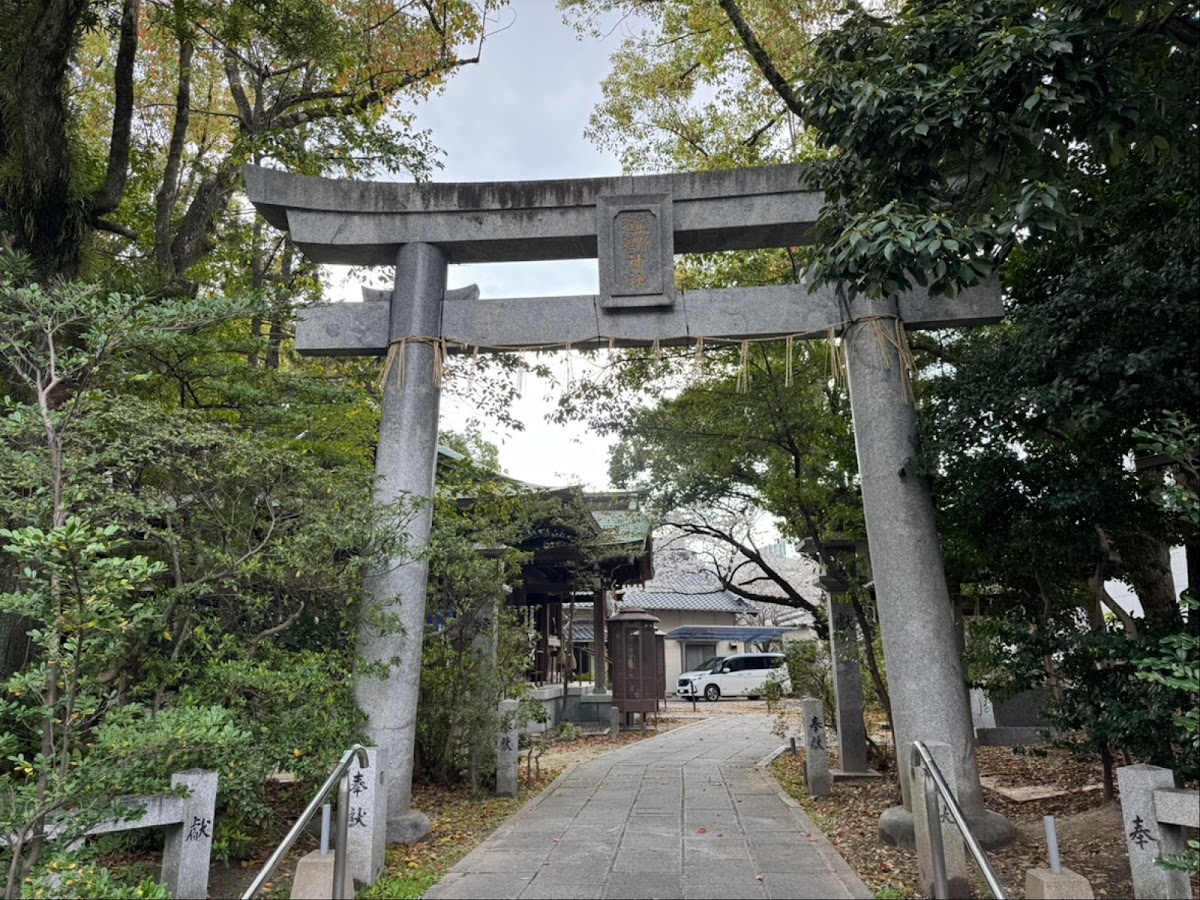
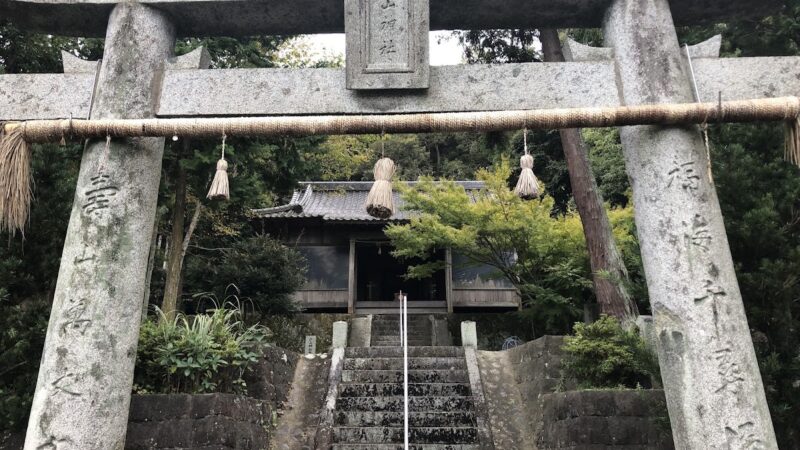
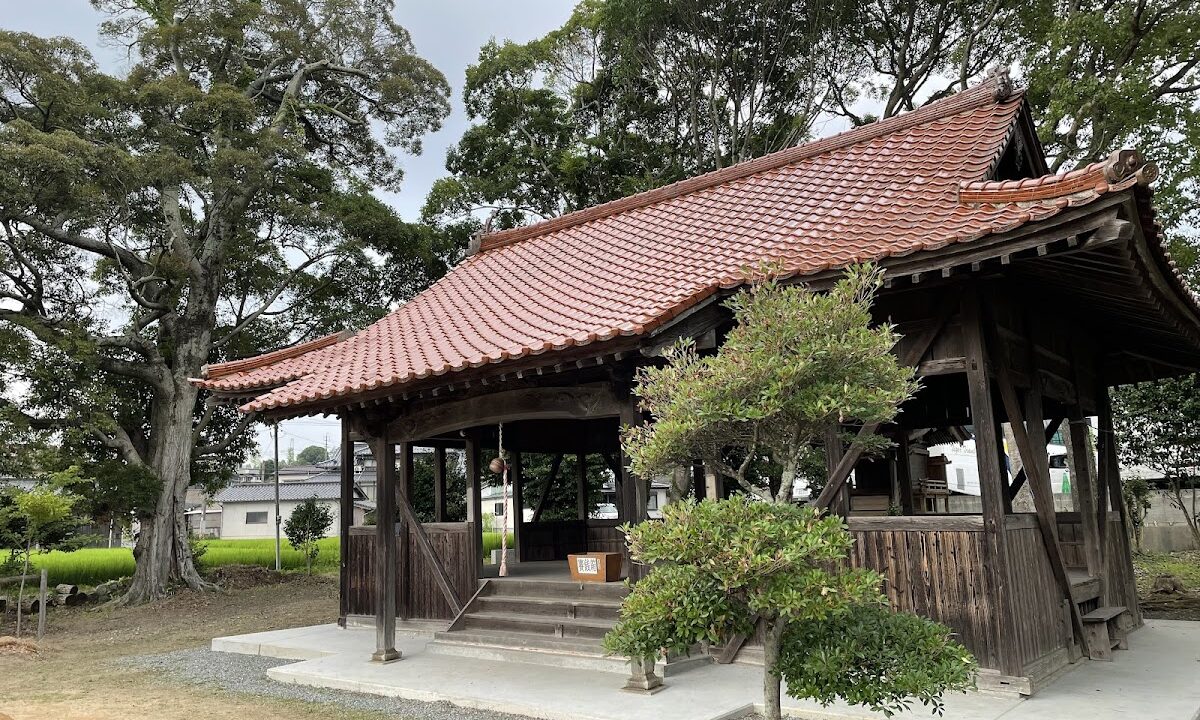
Ten’eki Shrine’s grounds are characterized by their unique location, standing alone amidst rice paddies and residential areas. Although small in scale, the meticulously maintained grounds reflect the deep faith of the local people.
Main Shrine: The small, wooden shrine building exhibits a style typical of regional shrines in northern Kyushu. It exudes a simple yet sacred atmosphere.
Shrine Grounds: A small stream flows beside the shrine, creating a peaceful and soothing space. Combined with the surrounding rural landscape, it presents a valuable scene that conveys the traditional Japanese rural landscape.
Cultural Value of Kanmon-Kitakyushu Style Komainu
Beside the main shrine of Ten’eki Shrine sits a distinctive pair of komainu (guardian lion-dogs) known as the “Kanmon-Kitakyushu style.” These komainu were created using stonemasonry techniques unique to the Kitakyushu and Shimonoseki regions, and possess cultural value as a regional asset.
Characteristics of the Kanmon-Kitakyushu Style Komainu (Guardian Lion-Dogs):
- Stocky build
- Rounded facial features
- Unique expression and form
- Crafted by local stonemasons
These Komainu are not merely decorative objects, but also important historical artifacts that convey the local stonemasonry culture. When you visit, be sure to observe the details carefully.
Seasonal Scenery of the Shrine Grounds
Ten’eki Shrine is surrounded by farmland, so it shows different scenery with each season.
Spring: The surrounding rice paddies are filled with water, and it is a beautiful season of fresh greenery.
Summer: The rice grows lush and green, and it is a lively time filled with the sound of cicadas.
Autumn: The harmony between the golden rice stalks and the shrine creates a magnificent landscape.
Winter: The shrine grounds, enveloped in silence, exude an even more sacred atmosphere.
How to Access Ten’eki Shrine
Access by Public Transportation
Ten’eki Shrine is located between residential and agricultural areas, making access by public transportation somewhat inconvenient. Walking is required from the nearest bus stop or train station.
Nearest Station: JR Nippo Main Line “Shimosone Station” or Kitakyushu Monorail “Keibajo-mae Station”
- From Shimosone Station: Approximately 10 minutes by taxi, approximately 30 minutes on foot
- From Keibajo-mae Station: Approximately 20-25 minutes on foot
Route Bus: Get off at Nishitetsu Bus “Shindoji” bus stop, approximately 5-10 minutes on foot
Access by Car and Parking
Access by Car:
- Approximately 15 minutes from Kyushu Expressway “Kokura Minami IC”
- Accessible via National Route 10 and Prefectural Route 28
Parking Information:
Ten’eki Shrine does not have its own dedicated parking lot, but there is parking space for 1-2 cars on the side of the road in front of the shrine grounds. However, since the surrounding area is a residential street, consideration must be given to avoiding disturbing nearby residents. Please keep your visit brief and avoid long-term parking.
How to Search Using Car Navigation/Map Apps
When searching using car navigation or map apps, it is helpful to enter the following information:
- Address: “476 Shindoji, Kokuraminami-ku, Kitakyushu City”
- Facility Name: “Ten’eki Shrine Shindoji”
- Landmark: Located within a residential area and rural area in the Shindoji district
Since you will need to navigate narrow roads between residential areas and rice fields, it is recommended to check the detailed map on your map app if you are visiting for the first time.
Etiquette and Manners for Worship
Basic Worship Method
Ten’eki Shrine is a small local shrine, but the basic worship etiquette is the same as for other shrines.
- Bow before the torii gate: Bow before entering the shrine grounds.
- Purify yourself at the water basin: If there is a water basin, purify your hands and mouth.
- Worship at the main shrine: Worship using the two bows, two claps, and one bow ritual.
- Bow upon leaving: Turn around and bow when leaving the shrine grounds.
Considerations specific to local shrines
Ten’eki Shrine is a local guardian shrine located within the living area of local residents. Please be mindful of the following points when visiting:
- Quiet worship: Refrain from loud conversations and noise.
- Photography: Photography is permitted on the shrine grounds, but please be considerate of the privacy of nearby residents.
- Take your trash with you: There are no trash cans on the shrine grounds. Please take your trash with you.
- Parking Manners: Please be careful not to obstruct the passage of nearby residents.
- Entry onto Private Property: Please refrain from entering surrounding farmland or private property outside the shrine grounds.
About Goshuin (Shrine Seals) and Other Items
Goshuin Availability
Ten’eki Shrine (Shindoji) is an unmanned shrine with no resident priests. Therefore, goshuin are not issued on-site.
In recent years, there are services that allow you to obtain Ten’eki Shrine’s goshuin through electronic goshuin services, but these are for personal use as a memento of your visit. If you wish to obtain an official goshuin, we recommend contacting the shrine in charge or the Fukuoka Prefectural Shrine Association.
About Items and Amulets
Because there are no resident priests, amulets and talismans are not always available. They may be issued on a limited basis during local festivals, but please contact the local community association or parishioner organization for details.
Nearby Attractions and Tourist Information
Historical Walk in the Shindoji Area
When visiting Ten’eki Shrine, we recommend taking a stroll through the historical atmosphere of the Shindoji area. It’s a quiet area with sprawling rural landscapes, retaining the charm of a traditional farming village.
Major Shrines in the Kitakyushu Area
Besides Ten’eki Shrine, many other historical shrines are scattered around the Kokura Minami Ward of Kitakyushu City. For those who enjoy visiting shrines, the following shrines are also recommended:
Major Shrines in Kokura Minami Ward:
- Ten’eki Shrine (Shimojono): 1-7-11 Kitagata, Kokura Minami Ward, Kitakyushu City, 802-0841 (A different shrine with the same name)
- Taga Shrine: 354 Shii, Kokura Minami Ward, Kitakyushu City, 802-0985
- Munakata Shrine: 5-8-16 Kamisone, Kokura Minami Ward, Kitakyushu City, 800-0213
- Tsuda Hachiman Shrine: 3-2-18 Tsuda, Kokura Minami Ward, Kitakyushu City, 800-0226
Major Shrines in Kokura Kita Ward:
- Misoya Shrine: 17-2 Myokenmachi, Kokura Kita Ward, Kitakyushu City, 802-0045
- Shinozaki Hachiman Shrine: 802-0023 1-7-1 Shinozaki, Kokurakita-ku, Kitakyushu City
- Itozu Hachiman Shrine: 1-8 Kami-Itozu, Kokurakita-ku, Kitakyushu City, Fukuoka Prefecture 803-0846
Visiting these shrines will allow you to gain a deeper understanding of the shrine culture in the Kitakyushu area.
Nearby Tourist Spots
Hiraodai: One of Japan’s leading karst plateaus, located about 20 minutes away by car. Enjoy nature walks and visits to limestone caves.
Kokura Racecourse: A representative Kitakyushu racecourse that is bustling with many people on race days.
Sone Tidal Flat: A valuable natural environment known as a stopover point for migratory birds. Ideal for birdwatching.
Annual Events and Festivals of Ten’eki Shrine
Local Festivals
Ten’eki Shrine holds festivals throughout the year by local parishioners. The main events are as follows:
Spring Festival: A festival is held in early spring to pray for a bountiful harvest.
Summer Purification Ceremony: A Shinto ritual may be held from the end of June to the beginning of July to purify oneself of the impurities accumulated over the past six months.
Autumn Festival: A grand autumn festival to give thanks for the harvest. Local residents gather to discuss the maintenance and management of the shrine.
New Year’s Eve and New Year’s Day: Visitors come for their first shrine visit of the year.
Specific dates may vary from year to year, so please check local bulletin boards or contact your local community association for details.
Precautions when visiting Ten’eki Shrine
Seasonal Precautions
Spring and Summer: The surrounding area has many farmlands, and it is a season with many insects. We recommend carrying insect repellent spray.
Rainy Season: Some parts of the roads around the shrine are unpaved, and the ground can become muddy in rainy weather. Wearing boots or waterproof shoes is recommended for your visit.
Summer: There is little shade, so please bring a hat, parasol, and plenty of water.
Winter: Strong northerly winds can blow in Kitakyushu during winter. Please take thorough precautions against the cold.
Safety Considerations
- Road Conditions: The area around the shrine consists of residential streets, and some sections are narrow. Please be careful of oncoming traffic when visiting by car.
- Footing: The shrine grounds are well-maintained, but some areas can be slippery after rain.
- Nighttime Visits: Due to the lack of streetlights in the area, it is recommended to avoid nighttime visits and visit during daylight hours.
The Charm and Significance of Visiting Ten’eki Shrine
A Place of Worship Rooted in the Community
The greatest charm of Ten’eki Shrine lies in its preservation as a simple, unspoiled local shrine, untouched by commercialization. While it lacks the grandeur of a large shrine, the history carefully preserved by local residents and its quiet, peaceful atmosphere soothe the hearts of visitors.
Standing alone amidst rice paddies and houses, it truly embodies the quintessential Japanese landscape. Visiting while listening to the gentle murmur of the nearby stream will be a precious experience that allows you to forget the hustle and bustle of city life.
Passing on the Prayers for the Eradication of Epidemics
In the modern era, having experienced the COVID-19 pandemic, the significance of Ten’eki Shrine, which prays for the eradication of epidemics, is once again attracting attention. Since ancient times, people have fought against epidemics and offered prayers to gods and Buddhas. Ten’eki Shrine is a precious place of faith that conveys this history to the present day.
As a place to express gratitude for health and peaceful daily life, and to pray for protection from epidemics, Ten’eki Shrine continues to play an important role in modern times.
A Silent Space Evokes a Sense of History
The environment, which makes you think, “People must have lived here in the past, and it must have been a comfortable place to live,” tells the story of how this land has been a place of human habitation since ancient times. A land rich in water and suitable for agriculture, and the Ten’eki Shrine, which has watched over the people who live here. Visiting the shrine while feeling the weight of its history will surely be a deeper experience than mere sightseeing.
Summary: The Value of Visiting Ten’eki Shrine
Ten’eki Shrine in Shindoji, Kokuraminami-ku, Kitakyushu City, Fukuoka Prefecture, is small in scale, but it is a valuable shrine that conveys the history and faith of the region to the present day. It possesses divine power for warding off epidemics and praying for good health, and has been carefully preserved by the local residents.
Its simple appearance nestled in the rural landscape, the babbling of the stream flowing beside it, and the distinctive Kanmon-Kitakyushu style guardian lion-dogs—it is full of sights worth seeing. Access is somewhat inconvenient, but that is precisely why the silence and sacred atmosphere that is preserved will offer visitors a special experience.
As part of a tour of shrines in the Kitakyushu area, or if you’re seeking a quintessential Japanese landscape, please do visit Ten’eki Shrine. It will be a valuable opportunity to experience deeply rooted local faith and traditional Japanese rural scenery.
When visiting, please remember to be considerate of the local residents and offer your prayers quietly and sincerely. This will allow you to truly appreciate the great value of this small shrine. Enjoy your visit to Ten’eki Shrine, expressing gratitude for health and peaceful days.