Kibune Shrine (Kitakyushu City, Fukuoka Prefecture) | The Guardian Deity of Nagahama with a 400-Year History
Kifune Shrine, located in Nagahama-cho, Kokurakita-ku, Kitakyushu City, Fukuoka Prefecture, is a historical shrine that was relocated to its current location in the early Edo period when Kokura Castle was built. As the name Nagahama, near Kokura Port, suggests, it is located on the coastline formerly known as “Kiku no Nagahama” or “Kiku no Takahama,” and boasts a history of over 400 years, having grown alongside the fishing town.
History and Origins of Kibune Shrine
The Construction of Kokura Castle and the Relocation
An essential part of the history of Kibune Shrine is its relocation in 1602 (Keicho 7). The shrine was originally located in Takara-machi, on the east bank of the Murasaki River, near the current Funaba-machi 1-chome (north of Izutsuya). However, when Hosokawa Tadaoki built Kokura Castle, the shrine, along with the fishing village of Nagahamaura, was moved to its current location in Nagahama-cho as part of the urban development of Kokura.
This relocation was not merely a move of a shrine, but part of a large-scale urban plan that included the development of Kokura Castle and the formation of a castle town. Hosokawa Tadaoki ruled Kokura as the lord of Buzen Province and developed it as a key point for the sankin-kotai (alternate attendance) of various daimyo from Kyushu. During this process, the area around the Murasaki River was redeveloped, and the Kibune Shrine and the fishing village of Nagahama were relocated together.
Historical Background of Kiku no Nagahama/Takahama
The coastline from Kokura to Oosato in Moji has long been known as “Kiku no Nagahama” or “Kiku no Takahama.” This area was known for its beautiful coastline with white sand and scenic spots where pine trees grew in clusters with their roots exposed. There are poems about this area in the Manyoshu (an ancient collection of Japanese poetry), indicating that it was an important place frequented by nobles and border guards since the Manyo period.
During the Edo period, the Nagasaki Highway was developed, making Nagahama a crucial transportation hub connecting to the Osato area via the Mojiguchi Gate and Mojiguchi Bridge. Kibune Shrine, situated in this historically significant area of Nagahama, has watched over the safety of the seas and the lives of fishermen.
Deities and Beliefs
Main Deity and Associated Deities
The deities enshrined at Kibune Shrine are primarily gods associated with water and the sea.
Main Deities:
- Takaokami-no-kami – Dragon god who controls mountain waters
- Kuraokami-no-kami – Dragon god who controls valley waters
- Uwatsutsuno-o-kami – One of the three Sumiyoshi gods
- Nakatsutsuno-o-kami – One of the three Sumiyoshi gods
- Kotoshironushi-no-kami – God of business prosperity, known as Ebisu
- Watatsumi-no-kami – God of the sea
Enshrined alongside:
- Hiruko Shrine
- Sakakihime Shrine
- Hachidai Ryuo Shrine
- En no Gyōja
These enshrined deities strongly reflect the faith of a fishing town, praying for the blessings of water and safety at sea. In particular, Takaokami-no-kami and Kuraokami-no-kami are the same deities enshrined at Kifune Shrine in Kyoto, indicating a lineage of water deity worship.
Guardian Deity of a Fishing Town
Nagahama flourished as a fishing town, and Kifune Shrine was the center of faith for those who made their living from the sea. By enshrining sea gods such as Watatsumi-no-kami and the Sumiyoshi Three Gods, prayers were offered for safe voyages and abundant catches. Furthermore, Kotoshironushi-no-kami (Ebisu) is one of the Seven Lucky Gods and is worshipped as a god of business prosperity, so prayers were offered not only for fishing but also for the prosperity of commerce.
Highlights of the Shrine Grounds
Stone Torii Gate from Enpō 7 (1679)
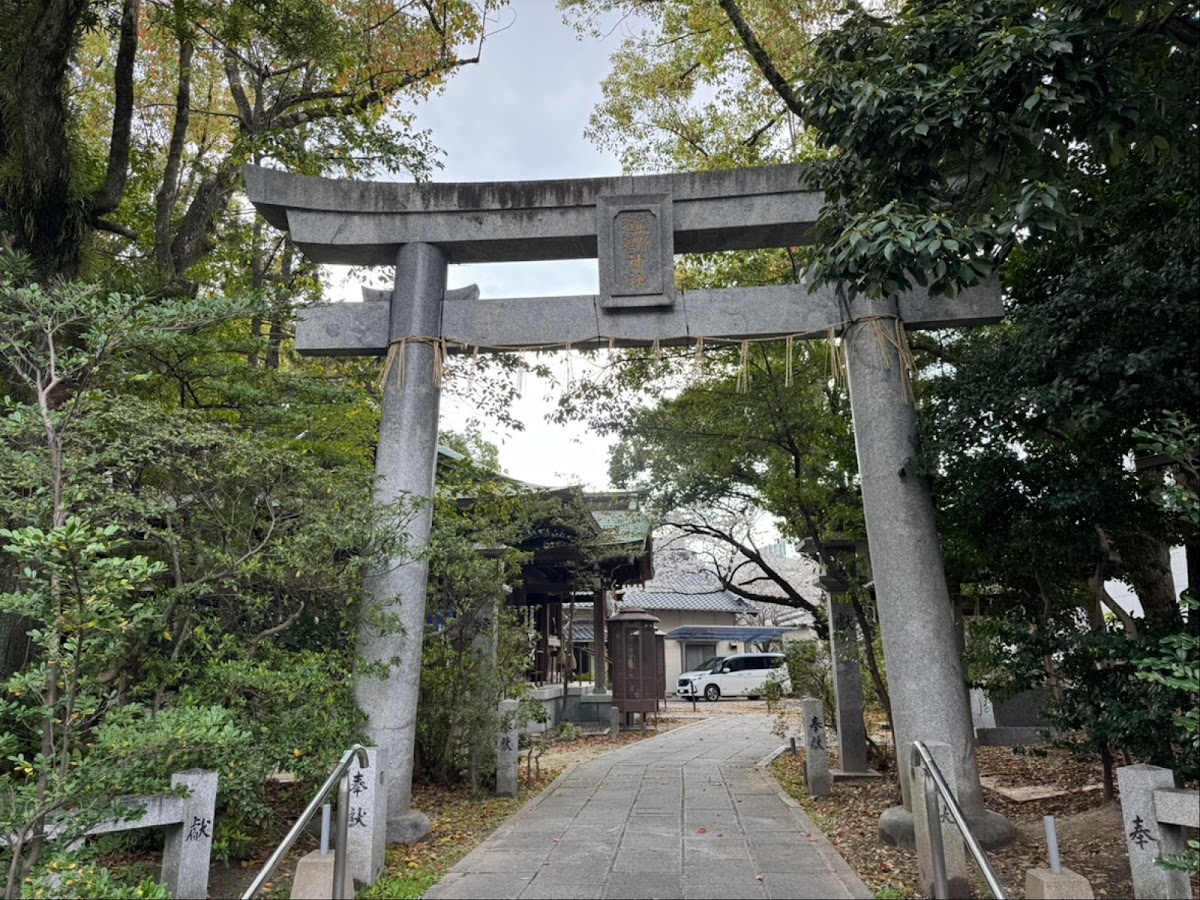
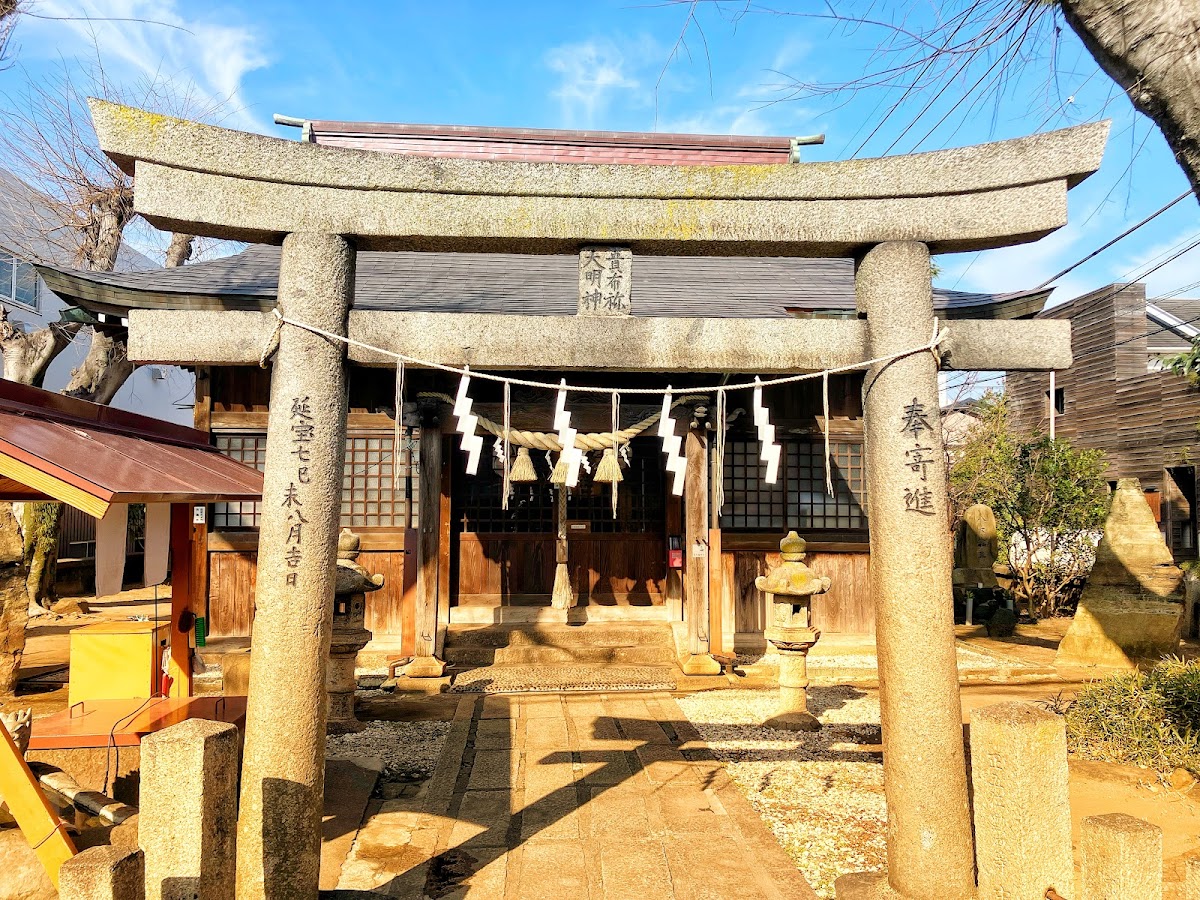
The first thing you see upon entering the shrine grounds is the historically significant stone torii gate. The base of the torii gate is inscribed with “Enpo 7th year, end of August, auspicious day,” indicating that it was erected in Enpo 7 (1679). This was approximately 80 years after the relocation of the shrine, making it a valuable cultural asset that speaks to the prosperity of Nagahama in the mid-Edo period.
The plaque above the gate reads “Kifune Daimyojin,” indicating that the shrine has been affectionately known as “Kifune” since ancient times. The existence of the torii gate is also important evidence in considering the history of religious rites that predate the shrine itself.
Worship Hall and Portable Shrine
The worship hall is a traditional wooden structure, and a magnificent, large portable shrine is enshrined inside. This portable shrine is a valuable artifact with a history of over 400 years, passed down from Hosokawa Tadaoki to the Ogasawara family, and is carefully stored in the portable shrine storage facility at the edge of the shrine grounds.
Votive ema (votive tablets) are also displayed in the worship hall, testifying to the deep faith of the local people. Looking up at the main hall, you can see the chrysanthemum crest, and the decorations indicate the imperial family and high status.
Manyoshu Poetry Monuments and Stone Sculptures
Many stones and stone sculptures are noticeable within the temple grounds. Particularly noteworthy are the stone monuments inscribed with poems from the Manyoshu anthology, which convey the ancient history of Nagahama and Takahama in Kiku. These are valuable cultural assets that allow us to feel the presence of this scenic spot, frequented by people since the Manyo period and celebrated in poetry.
Shrine Grounds and Stone Monuments
To the right of the main hall is a shrine grounds, and nearby are a stone monument and small stone inscribed with “Nagahama Benzaiten.” Benzaiten is worshipped as the goddess of water and performing arts, indicating her connection to the sea of Nagahama.
Next to it is a stone monument of the “Eight Great Dragon Kings,” illustrating the deep-rooted belief in dragon deities. The Eight Great Dragon Kings are dragon deities in Buddhism, revered as beings who preside over rainmaking and the blessing of water.
To the left of the main hall is another shrine, where you’ll notice the symmetrically arranged triple tomoe crest. The triple tomoe crest, representing a swirling vortex of water, is a common emblem used in shrines dedicated to water deities.
If you go behind the main hall and turn to the right, you’ll find even more subsidiary shrines, revealing that a diverse range of deities are enshrined throughout the grounds.
Location and Access
Basic Information
Location: 2-21 Nagahama-cho, Kokurakita-ku, Kitakyushu City, Fukuoka Prefecture
Nearest Station: JR Kagoshima Main Line, Kokura Station
Walking Distance: Approximately 11 minutes on foot from Kokura Station
Parking: Limited space available on the grounds (confirmation required)
Detailed Access
To reach Kibune Shrine from Kokura Station, walk northwest. Walk towards Kokura Port, and the shrine is located in the residential area of Nagahama-cho. Located on the seaside of the Kagoshima Main Line, the shrine is situated near the Ferris wheel of Chacha Town Kokura.
The surrounding area is a quiet neighborhood lined with houses and office buildings, but as the place name Nagahama suggests, it was once a fishing town close to the coastline. While land reclamation has progressed and the former coastline is now inland, the place name and the presence of the shrine convey its history.
About Goshuin (Shrine Seals)
Goshuin (shrine seals) are available at Kibune Shrine. In addition to the regular goshuin, special goshuin for warding off epidemics are sometimes given out. Goshuin are important mementos commemorating the history and faith of the shrine.
When obtaining a goshuin, please note that Gamou Hachiman Shrine (Gamou, Kokura Kita Ward) oversees Kibune Shrine, so depending on the time of your visit, you may be directed to Gamou Hachiman Shrine. We recommend checking in advance.
Annual Events and Festivals
Kifune Shrine, with its history as a thriving fishing town in Nagahama, continues to preserve traditional festivals. Especially during the annual grand festival, a portable shrine with over 400 years of history is carried, attracting local residents.
Festivals are an important opportunity to deepen the bonds of the local community, and traditions dating back to the Edo period have been passed down to the present day. The portable shrine, passed down from the Hosokawa family to the Ogasawara family, is cherished as a cultural asset symbolizing the history of Kokura itself.
Surrounding Historical Background
Kokura Castle and Castle Town
The history of Kibune Shrine is closely intertwined with the history of Kokura Castle. Built in 1602 by Hosokawa Tadaoki, Kokura Castle flourished as the center of Buzen Province. Later, the Ogasawara clan became the feudal lords, and it remained the political, economic, and cultural center of the Kokura Domain until the Meiji Restoration.
The relocation of Kibune Shrine was part of the urban planning accompanying the construction of Kokura Castle, and was linked to flood control of the Murasaki River and the development of the castle town. The fishing village of Nagahama was also systematically relocated and incorporated as part of the new castle town.
Nagasaki Highway and a Transportation Hub
During the Edo period, Kokura played an important role as the starting point of the Nagasaki Highway and as a transit point for the sankin-kotai (alternate attendance) of various daimyo from Kyushu. The highway, which continued towards Osato via Mojiguchi Gate and Mojiguchi Bridge, was a main road where many people and goods passed through.
Nagahama town, where Kibune Shrine is located, was close to this transportation hub and functioned as a junction for maritime and land transport. It has a history of flourishing not only as a fishing town but also as a center for the collection and distribution of goods.
History of Kiku District
The place name “Kiku” has a history dating back to ancient times, and it was a region that flourished as part of Toyokuni (the land of abundance). Kikuno Nagahama and Takahama have been renowned scenic spots since the Manyo period, boasting a beautiful coastline of white sand and green pines.
The Manyoshu (Collection of Ten Thousand Leaves) contains poems about the Kikuno coast, recording the history of visits by border guards and nobles. The Manyoshu poetry monument within the grounds of Kibune Shrine is an important cultural heritage site demonstrating this historical continuity from ancient times.
Relationship with Gamo Hachiman Shrine
Kifune Shrine is one of the shrines under the jurisdiction of Gamo Hachiman Shrine (Gamo, Kokurakita-ku, Kitakyushu City). Gamo Hachiman Shrine is a representative ancient shrine of Kokurakita-ku and oversees several other shrines.
Other shrines under the jurisdiction of Gamo Hachiman Shrine include Gion Shrine (located in Nagao, Kokuraminami-ku). These shrines have historically had deep connections and have cooperated in festivals and religious ceremonies.
Regarding Goshuin (temple/shrine stamps) and prayers, these may be handled at Gamou Hachiman Shrine, so it is recommended to check in advance when planning your visit.
Points to Note When Visiting
How to Enjoy Exploring the Shrine Grounds
When visiting Kibune Shrine, be sure to take your time to leisurely explore the grounds. Paying attention to the following points will allow you to feel the history of the shrine more deeply.
- Stone Torii Gate from Enpo 7 (1679) – A structure from the mid-Edo period, over 340 years old.
- Manyoshu Poetry Monument – A cultural asset demonstrating historical continuity from ancient times.
- Numerous Stone Monuments – Telling the story of deep faith and rich history.
- Portable Shrine in the Worship Hall – A valuable cultural asset with a history of over 400 years.
- Shrine Grounds and Group of Stone Monuments – Representing diverse faiths, including Nagahama Benzaiten and the Eight Great Dragon Kings.
- Three Tomoe Crest – A divine crest symbolizing water deity worship.
- Chrysanthemum Crest in the Worship Hall – Decoration indicating high status.
- Portable Shrine Storage – A facility at the edge of the shrine that preserves tradition.
Notes on Photography
Photography is generally permitted on the shrine grounds, but please note the following:
- Please refrain from taking photos inside the main shrine or worship hall.
- Please be considerate of other worshippers.
- Please show respect for the deity and sacred places.
- Please avoid using flash photography.
Nagahama’s Present and Future
The current town of Nagahama has lost much of its former character as a fishing village, becoming an urban area lined with houses and business buildings. However, the existence of Kibune Shrine conveys over 400 years of history and maintains the region’s identity.
Its location near Kokura Port continues to play an important role as a logistics and industrial hub. With commercial facilities such as Chacha Town Kokura nearby, it is a region where history and modernity coexist.
Amidst these changes, Kibune Shrine continues to exist as a spiritual pillar of the community. The history of the shrine, which has walked alongside the people of Nagahama for over 400 years since its relocation during the Edo period, will undoubtedly continue to be passed down.
Summary
Kifune Shrine, located in Nagahama-cho, Kokurakita-ku, Kitakyushu City, Fukuoka Prefecture, is a historic shrine that was relocated in 1602 (Keicho 7) with the construction of Kokura Castle. The enshrined deities, centered on the gods of water and sea, strongly reflect the faith of Nagahama, which flourished as a fishing town.
Numerous cultural assets remain on the shrine grounds, including a stone torii gate built in 1679 (Enpo 7), a monument inscribed with a poem from the Manyoshu anthology, and a portable shrine with a history of over 400 years. These are not merely historical relics, but living cultural heritage that conveys the local faith and traditions that have continued since the Edo period.
Despite its convenient location just an 11-minute walk from Kokura Station, the shrine grounds offer a quiet and peaceful atmosphere, providing a place to escape the hustle and bustle of the city and find peace of mind. When visiting Kitakyushu City, be sure to visit Kibune Shrine and experience its history and traditions of over 400 years.
From the history of Nagahama and Takahama in Kikyu dating back to the Manyo era, to the construction and relocation of Kokura Castle by Hosokawa Tadaoki, to its development alongside the fishing town during the Edo period, and the lineage of faith that continues to the present day—Kifune Shrine, as a precious cultural heritage embodying the history of Kokura, will continue to watch over the land of Nagahama for generations to come.