Takasumi Shrine (Hikosan, Soeda Town, Fukuoka Prefecture) Complete Guide | A Mysterious Power Spot with Tengu Legends and a Cave
Takasumi Shrine, located on the northeastern slopes of Mt. Hikosan in Soeda Town, Tagawa District, Fukuoka Prefecture, is a mystical shrine unlike any other in Kyushu, with its main hall built inside a massive rock cave. Also known as “Hikosan Buzenbo,” it has long been a sacred site for Shugendo practitioners, as it enshrines Buzenbo Tengu, one of Japan’s eight great Tengu.
This article thoroughly introduces the charm of this sacred shrine, covering its history, enshrined deities, Tengu legends, highlights for visitors, and access methods.
What is Takasumi Shrine? | Buzen Cave, one of Mt. Hikosan’s 49 Caves
Takasumi Shrine was formerly a subsidiary shrine of Hikosan Jingu Shrine, and its former rank was Prefectural Shrine. Mount Hiko is dotted with caves (rock shelters) known as the “Hikosan 49 Caves,” which served as training grounds for Shugendo practitioners. Takasumi Shrine is built in the 18th of these caves, the “Buzen Cave.”
What are the Hikosan 49 Caves?
The Hikosan 49 Caves are a group of sacred rock caves where Shugendo practitioners underwent ascetic training. The most famous is the Tamaya Shrine located in the first cave, the “Hannya Cave,” but the Buzen Cave of Takasumi Shrine also has a shrine built inside a cave, playing an important role in the Hikosan religious sphere.
The structure of shrines built inside caves is a valuable legacy that conveys the “cave culture” of Mount Hikosan, a mountain of Shugendo, and embodies a uniquely Japanese religious view where nature and faith are integrated.
History of Takasumi Shrine | A Faith Continuing from the Reign of Emperor Keitai
Founding History
Takasumi Shrine is said to have been founded by Fujiyama Tsuneo during the reign of Emperor Keitai (early 6th century). Originally, the deity enshrined on Takanosu Mountain was later moved to its current location.
Establishment of Buzenbo
The “Hikosan Ryuki” from Kenpo 1 (1213) records “Buzen Cave” as the 18th of the “49 Caves of Hikosan,” and the temple Buzenbo was built here. Buzenbo functioned as a training ground for Shugendo practitioners, and many Shugendo practitioners underwent rigorous training at this site.
Separation of Shinto and Buddhism and Modern Times
With the abolition of Shugendo due to the Meiji-era separation of Shinto and Buddhism, Buzenbo was reorganized into Takasumi Shrine. It is positioned as a subsidiary shrine of Hikosan Jingu and is ranked as a prefectural shrine.
Deities and Divine Virtues | The Pioneer Gods and Tengu Worship of Buzen and Bungo
Main Deity: Toyohiwake-no-Mikoto
The main deity of Takasumi Shrine is Toyohiwake-no-Mikoto. Toyohiwake-no-Mikoto is the pioneer god of Buzen and Bungo provinces, and has been revered since ancient times as the god of land development, agricultural promotion, and healing from illness.
Enshrined Deities
- Amaterasu-Omikami: The supreme god of Japan
- Hosuseri-no-Mikoto: God of Fire
Along with these deities, Takasumi Shrine is worshipped as a highly efficacious shrine with diverse divine virtues.
Buzenbo Tengu God
Takasumi Shrine is also famous as “Buzenbo Tengu.” Buzenbo Tengu is counted as one of Japan’s eight great tengu, and it is said that for those with a pure heart and faith, he will gather all the tengu, including his eight retainers, to grant their wishes and protect them.
On the other hand, it is also said that a small tengu will appear in the form of a child to deliver a merciful blow to those who are greedy or have evil intentions, making this a shrine where the purity of the believer’s heart is put to the test.
Divine Virtues
- Healing from Illness: Revered since ancient times as a god who relieves people’s suffering from illness.
- Protection from Agriculture: Deeply revered as a guardian deity of farmers, with prayers offered for abundant harvests.
- Safety of Cattle and Horses: The bronze sacred ox on the shrine grounds was dedicated in 1838 (Tenpo 9) to pray for the safety of cattle and horses.
- Family Safety: Protects the peace and happiness of families.
- Good Fortune and Prosperity: Powerful good fortune brought by the spiritual power of the Tengu.
Tengu Legends and the Tengu-Defeating Phenomenon | The Mysteries of Mount Hikosan
Japan’s Eight Great Tengu: “Buzenbo Tengu”
Tengu worship has existed in Japan since ancient times, and many Tengu legends remain, especially in sacred sites of Shugendo (mountain asceticism). The Eight Great Tengu of Japan are powerful tengu said to inhabit sacred mountains throughout Japan, such as Sojobo on Mount Kurama in Kyoto and Hokibo on Mount Oyama in Kanagawa.
Buzenbo Tengu of Mount Hiko is one of them, and is believed to protect the entire Mount Hiko area from its base at Takasumi Shrine. Buzenbo Tengu is considered to possess exceptional spiritual power and has been revered as a guardian deity by Shugendo practitioners.
The Mysterious Phenomenon of “Tengu Falling”
The most famous legend at Takasumi Shrine is “Tengu Falling.” This is a phenomenon where a loud, unexplained noise echoes in the middle of the night, sounding like a giant tree falling, yet the next morning, nothing has fallen.
Tengu Falling is said to occur most often on sunny days, and it is believed to be the sound of a tengu running through the mountains. This phenomenon, which defies scientific explanation, is still recounted as one of the seven mysteries of Mount Hiko.
How to Receive the Spiritual Power of the Tengu
To receive the spiritual power of the Tengu at Takasumi Shrine, having a pure heart and faith is considered paramount. It is said that greed and evil intentions will not grant the protection of the Tengu, and may even result in reprimand.
When visiting, a humble heart and sincere prayer are the keys to receiving the divine blessings of the Tengu.
Highlights of Takasumi Shrine | Shrine Grounds Guide
The Approach and Stone Steps
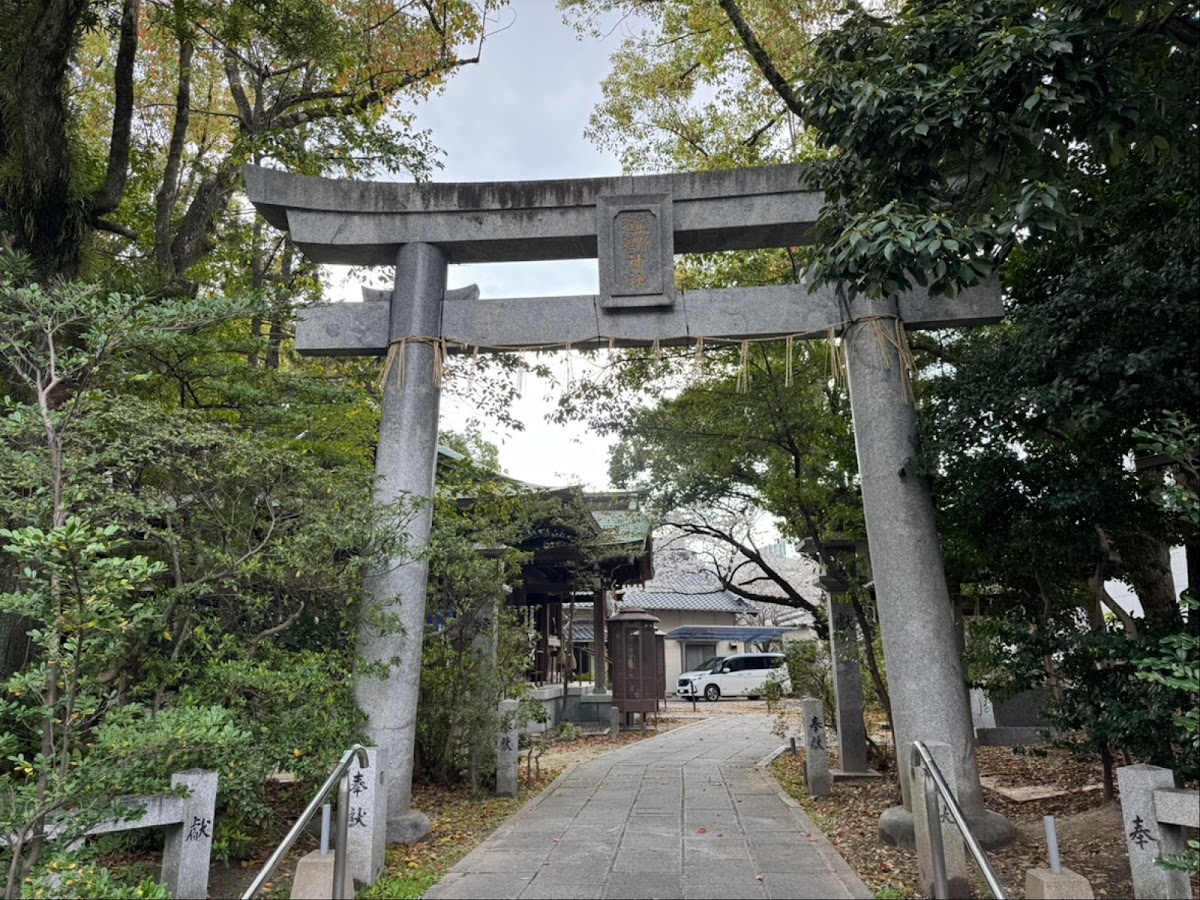
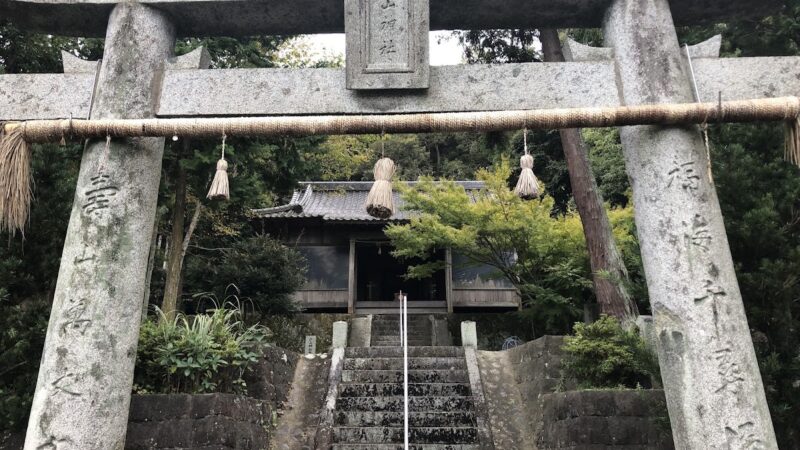
The approach to Takasumi Shrine is filled with a tranquil atmosphere surrounded by trees. The process of climbing the stone steps itself is considered a purification ritual, cleansing the mind and body, and it is said that with each step, the impurities of the secular world are washed away.
The path leading through the deep forest offers stunning views of nature throughout the seasons. Spring brings fresh greenery, summer ushers in deep green, autumn brings vibrant fall foliage, and winter presents a snowy landscape—each season revealing a different face.
Stone Torii Gate (Donated in Genroku 10)
The stone torii gate standing at the entrance to the shrine grounds is a historical structure, donated in Genroku 10 (1697). Having stood for over 300 years, this gate speaks to the long history of faith at this shrine.
Bronze Sacred Ox
Within the shrine grounds is a bronze sacred ox, donated in Tenpo 9 (1838) to pray for a bountiful harvest and the safety of livestock. This sacred ox is revered as a guardian of agriculture and livestock, and many worshippers touch it to receive its blessings.
There is a custom of stroking the body of the sacred ox to pray for healing from illness and the health of livestock, and it is said to be especially effective to stroke the same part of the ox as the part of the body that is ailing.
Cave Shrine | A Sacred Site Integrated with Nature
The most distinctive feature of Takasumi Shrine is the shrine built adjacent to a massive cave. The rock face itself is part of the shrine, and the natural rock and artificial structure are in perfect harmony.
The cave is filled with a mystical atmosphere, and a cool breeze permeates the air. This space itself has been revered as a training ground for Shugendo practitioners and a sacred place where Tengu (mythical mountain spirits) reside.
The ceiling and walls of the cave are natural formations created over many years, and one can feel the origin of ancient Japanese nature worship, where gods are believed to reside.
Fudo Hall and Buddhist Statues
Within the shrine grounds is the Fudo Hall, which houses numerous Buddhist statues. This is a valuable cultural asset that preserves the form of Shugendo faith, a remnant of the era of syncretism between Shinto and Buddhism before their separation.
The various Buddhist deities, including Fudo Myoo, were the objects of prayer for Shugendo practitioners, and speak to the depth of Takasumi Shrine’s history.
Dragon God and Sacred Water
Within the shrine grounds, the Dragon God is enshrined, and visitors can drink the sacred water that springs from it. This sacred water is considered highly miraculous and is believed to bring healing from illness and good health.
The pure water is a blessing from the nature of Mount Hiko, and visitors drink it with gratitude.
Goshuin and Goshuincho | Special Design
Takasumi Shrine’s Goshuin
Takasumi Shrine offers Goshuin (shrine stamps). Along with the characters “Hikosan Buzenbo,” stamps symbolizing tengu (mythical creatures) and caves are imprinted.
Original Goshuincho (Stamp Book)
The original goshuincho at Takasumi Shrine is a special design featuring the cave of the main hall and a tengu (mythical creature). The cave itself is intricately designed, with details of the tengu incorporated into the design. The back features a design of the shrine’s sacred ox, a design unique to Takasumi Shrine.
Many visitors purchase this goshuincho as a memento of their visit and as proof of their faith.
Hikosan Gohoin (Proof of Pilgrimage to Hikosan)
Those who undertake a pilgrimage to the entire Hikosan area can receive a special proof of pilgrimage called the “Hikosan Gohoin.” Takasumi Shrine is one such place, and it is an important point of interest in the pilgrimage to the sacred sites within the Hikosan faith area.
Access to Takasumi Shrine | Location and Directions
Basic Information
- Address: 27 Hikosan, Soeda-machi, Tagawa-gun, Fukuoka Prefecture
- Phone: 0947-85-0001 (Hikosan Jingu Shrine Office)
- Visiting Hours: 8:30 AM – 5:00 PM (Year-round)
- Closed Days: Open all year round
- Parking: Available (Free)
Access by Car
- Approximately 50 minutes from Kokura Minami IC on the Kyushu Expressway
- Approximately 40 minutes from Haki IC on the Oita Expressway
- Approximately 45 minutes from Yukuhashi IC on the Higashi-Kyushu Expressway
When setting your car navigation system, please search for “Takasumi Shrine” or “Hikosan Buzenbo”.
Access by Public Transportation
Public transportation access is limited. The nearest station is Hikosan Station on the JR Hitahikosan Line, but you will need to take a taxi or local bus from there. However, since the number of buses is limited, it is recommended to check the timetable in advance.
Hiking and Walking Courses
A walking course is also available from the Fukuoka Prefectural Hikosan Youth Center to Takasumi Shrine. This hiking course takes approximately 2-3 hours round trip, allowing you to enjoy the nature of Mt. Hikosan while visiting the shrine.
We recommend wearing comfortable clothing and equipment, such as trekking shoes. Especially in winter, there is snow, so adequate equipment is necessary.
Precautions Regarding Snow and Winter
Mt. Hikosan is at a high altitude, and there is snow in winter. The area around Takasumi Shrine can also be covered in snow, so if you are visiting in winter, it is recommended to check the latest snow information on the official blog or other sources before visiting.
Relationship with Hikosan Jingu Shrine | Part of the Hikosan Faith Area
What is Hikosan Jingu Shrine?
Hikosan Jingu Shrine is a prestigious shrine, the only one in Fukuoka Prefecture to hold the title of “Jingu” (Grand Shrine). Takasumi Shrine, dedicated to Ame-no-Oshihomimi-no-Mikoto, a child of Amaterasu-Omikami, has long been a sacred site for Shugendo practitioners and has attracted many worshippers.
Takasumi Shrine: Guardian of the Demon’s Gate of Hikosan Jingu Shrine
Takasumi Shrine is located northeast of Hikosan Jingu Shrine, in the direction of the “demon’s gate.” The demon’s gate is considered a direction where evil spirits easily enter, and Takasumi Shrine, which protects this area, plays an important role as a guardian shrine for Hikosan Jingu.
There is a belief that the entire Hikosan mountain is protected by the spiritual power of Buzenbo Tengu, and Hikosan Jingu Shrine and Takasumi Shrine form a single sphere of worship.
Pilgrimage to the Entire Hikosan Mountain
When visiting Hikosan, it is believed that visiting both Hikosan Jingu Shrine and Takasumi Shrine will bestow deeper divine blessings. If you have time, a pilgrimage to the other caves besides the 49 caves is also recommended.
Points and Mindset for Visiting the Shrine
A Righteous Heart and Faith
To receive the divine blessings of the Tengu at Takasumi Shrine, the most important thing is to “have a righteous heart and faith.” Visiting with a humble and sincere heart, rather than with greedy or wicked desires, is considered the secret to receiving the Tengu’s protection.
Gratitude for Nature
At Takasumi Shrine, surrounded by the rich nature of Mount Hiko, it is also important to have a heart of gratitude for nature. The natural elements such as the caves, springs, and forests are themselves sacred, allowing you to experience a form of faith that is one with nature.
Prayer in Silence
Takasumi Shrine is located in a quiet mountain area, a sacred place far removed from the hustle and bustle of the secular world. By calming your mind in silence and offering deep prayer, you will be able to feel the spiritual power of the Tengu and the protection of the gods more strongly.
Nearby Tourist Attractions
Hikosan Jingu Shrine
If you visit Takasumi Shrine, be sure to also visit Hikosan Jingu Shrine. The stone steps leading to the main hall are beautiful, and you can enjoy the changing seasons.
Tamaya Shrine (Hannya Cave)
Tamaya Shrine, located in Hannya Cave (the first of Hikosan’s 49 caves), is a mystical shrine with its main hall inside a cave, similar to Takasumi Shrine.
Hikosan Slope Car
Enjoy the spectacular views of Hikosan from the convenient slope car that provides easy access to Hikosan Jingu Shrine.
Nature of Soeda Town
Soeda Town is blessed with abundant nature, including Hikosan. You can enjoy hiking, mountain climbing, and nature walks.
Summary | The Hidden Sanctuary of Mt. Hiko, Where the Spiritual Power of Tengu Resides
Takasumi Shrine, located on Mt. Hiko in Soeda Town, Fukuoka Prefecture, is a mystical shrine built within a massive rock cave. It is a sacred site renowned for its miraculous powers, enshrining Buzenbo Tengu, one of Japan’s eight great Tengu.
With Toyohiwake-no-Mikoto as its principal deity, the shrine offers diverse divine blessings, including healing from illness, protection of agriculture, safety of livestock, and family safety, attracting the faith of people from all over Kyushu since ancient times. The mysterious phenomenon of “Tengu-taoshi” (falling over a Tengu) and the Tengu belief that grants wishes to the righteous and warns the greedy continue to attract many visitors.
Takasumi Shrine, as the 18th of the 49 caves of Mt. Hiko, “Buzen Cave,” preserves the history of Shugendo (mountain asceticism). Climbing the tree-lined path and offering prayers at the cave shrine will be a special experience, a departure from everyday life.
As a guardian shrine protecting the northeast direction of Hikosan Jingu Shrine, and a secluded place imbued with the spiritual power of tengu (mythical mountain spirits), Takasumi Shrine is one of Fukuoka Prefecture’s leading power spots. Those who have a sincere heart and faith will receive the blessings of the tengu, along with the healing power of the nature of Hikosan.
We encourage you to visit this mystical shrine and experience the spiritual power of the tengu and the mystery of Hikosan for yourself.