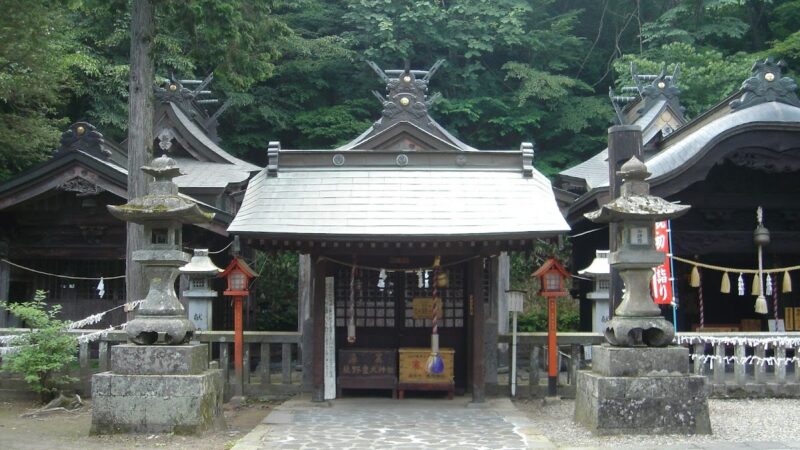
Myogi Shrine (Tomioka City, Gunma Prefecture) Complete Guide | The Magnificent Shrine Buildings and 1500 Years of History (National Important Cultural Property)
Myogi Shrine, located at the foot of Mt. Myogi in Tomioka City, Gunma Prefecture, is an ancient shrine with a history of approximately 1500 years. Its shrine buildings, designated as a National Important Cultural Property and showcasing the pinnacle of Edo period architecture, continue to fascinate visitors. Situated on the slopes of Mt. Shirakumo, this shrine enshrines Yamato Takeru and has long been revered as a god of good fortune, business prosperity, and fire prevention.
History and Origins of Myogi Shrine
From its Founding to Ancient History
Myogi Shrine is said to have been founded in the second year of Emperor Senka’s reign (537 AD), boasting a long history of approximately 1500 years. In ancient times, it was called “Hakoso Shrine,” and its grounds were located at the eastern foot of Mt. Shirakumo, the main peak of Mt. Myogi. This area is a scenic spot on Mount Myogi, famous for its strangely shaped rocks and boulders, and is enveloped in a mystical atmosphere surrounded by lush ancient cedar trees.
From its founding, it has been a center of mountain worship, attracting the faith of the local people. Many famous deities, including Yamato Takeru, are enshrined here, and records show that it was deeply revered by both the imperial court and the common people since ancient times.
Prosperity in the Edo Period and the Patronage of the Tokugawa Shogunate
During the Edo period, Myogi Shrine experienced significant development. Located northwest of Edo, it received the deep faith of the Tokugawa shogunate as the guardian of the Inui (northwest) gate. During this period, it was widely revered as a shrine of syncretism of Shinto and Buddhism and mountain worship, and was bustling with many worshippers.
Before the separation of Shinto and Buddhism in the Meiji era, Ishitōji Temple served as its affiliated temple and flourished as a branch temple of Kan’eiji Temple in Ueno. The shrine buildings constructed during this period are valuable cultural assets that convey the high level of architectural technology and artistry of the Edo period. ### From the Meiji Era to the Present Reiwa Era
Due to the Meiji-era separation of Shinto and Buddhism, Myogi Shrine established itself as an independent Shinto shrine. Even after the war, it continued to serve as a center of local faith and a representative tourist attraction of Gunma Prefecture, welcoming many worshippers and tourists.
In the Reiwa era, the Hakoso Shrine, having undergone major restoration during the Heisei period, was restored to its original magnificent appearance, conveying its former splendor to visitors. Even today, it continues to attract unwavering devotion as a deity of good fortune, business prosperity, fire prevention, academic success, and child protection.
Nationally Designated Important Cultural Property Shrine Buildings
Main Shrine (Main Hall, Offering Hall, Worship Hall)
The main shrine of Myogi Shrine is designated as a National Important Cultural Property, a masterpiece of Edo-period Gongen-zukuri architecture. Its black lacquered exterior is majestic, and the detailed carvings and decorations are simply magnificent.
Gongen-zukuri is an architectural style that connects the main hall and the worship hall with a stone corridor (Heiden), and is a characteristic of Edo period shrine architecture, exemplified by Nikko Toshogu Shrine. Myogi Shrine’s main hall is highly regarded in architectural history as an excellent example of this style.
The carvings throughout the shrine are the work of master craftsmen of the time, beautifully depicting dragons, lions, flowers, and birds. The contrast between the deep black lacquer and the gold leaf decorations creates a solemn and magnificent atmosphere.
The Magnificent Decorations of the Karamon Gate
The Karamon Gate, standing in front of the main hall, is one of Myogi Shrine’s representative structures. Designated as a National Important Cultural Property, this gate is covered in magnificent decorative carvings, captivating the eyes of visitors.
The defining feature of the Karamon Gate is its opulent carvings. The three-dimensional carvings on various parts of the gate demonstrate the pinnacle of craftsmanship, meticulously finished down to the smallest detail. The colors are vibrant, with vermilion and gold harmoniously blended.
The Beauty of the Vermilion Main Gate
As you proceed along the approach to the shrine, the first thing that greets you is the vibrant vermilion main gate. This gate is also designated as a National Important Cultural Property, and it majestically adorns the entrance to Myogi Shrine.
Vermilion is considered a color that symbolizes protection against evil and sanctity in shrine architecture, and its contrast with the surrounding ancient cedar trees creates a beautiful landscape. Passing through the main gate marks the beginning of your journey into the sacred grounds.
Other Important Cultural Property Buildings
In the Reiwa era, four buildings and one bronze torii gate at Myogi Shrine were newly designated as National Important Cultural Properties. This further enhances the cultural value of Myogi Shrine.
The bronze torii gate is a valuable example of a metal torii gate, and its craftsmanship and excellent state of preservation are highly regarded. Many other historically valuable buildings are scattered throughout the shrine grounds, allowing visitors to enjoy architectural appreciation alongside their worship.
Deities and Divine Virtues
Yamato Takeru
The main deity enshrined at Myogi Shrine is Yamato Takeru. Yamato Takeru is a hero from Japanese mythology, and legend says he visited this area during his eastern expedition. He has been revered since ancient times as the god of martial prowess and pioneering.
Other Deities
In addition to Yamato Takeru, many other famous deities are enshrined here, and it is believed that they will grant various prayers through their respective divine virtues. Many worshippers visit the shrine, seeking blessings for a wide range of purposes, including good fortune, business prosperity, fire prevention, academic success, and child protection.
Faith and Prayers
Even today, Myogi Shrine is a place where various prayers are offered for family safety, business prosperity, traffic safety, success in examinations, good relationships, and the fulfillment of wishes. It is particularly known as a god of good fortune and business prosperity, and many business owners and entrepreneurs visit the shrine.
Highlights of the Shrine Grounds
Stone Steps and Ancient Cedar Trees
The approach to Myogi Shrine is a charming path with 165 stone steps. Surrounded by ancient cedar trees, the path is a sacred space that cleanses the mind as one approaches the divine realm.
The sight of the towering cedar trees, some hundreds of years old, is breathtaking, and the light filtering through the trees creates a fantastical atmosphere. As you climb the steps one by one, you will naturally feel your mind calming down.
Weeping Cherry Trees and Yellow Cherry Blossoms
Myogi Shrine is also known as a famous cherry blossom viewing spot. The weeping cherry trees, especially those over 200 years old, along the approach and within the shrine grounds are magnificent, and in spring, the area is bustling with many cherry blossom viewers.
The elegant branches of the weeping cherry trees and the rare color of the yellow cherry blossoms, combined with the vermilion shrine buildings, create a spectacular view. During cherry blossom season, the entire shrine is enveloped in a vibrant atmosphere, reaching its most beautiful time of year.
Famous Autumn Foliage Spot
In autumn, Myogi Shrine attracts many tourists as a famous spot for viewing autumn leaves. As the entire Myogi Mountain range is ablaze with autumn colors, the leaves within the shrine grounds also display their magnificent hues, creating a beautiful landscape in harmony with the vermilion and black lacquer of the shrine buildings.
The autumn foliage around the main gate and along the approach to the shrine is particularly spectacular, attracting many tourists with cameras. The contrast between the strangely shaped rocks and boulders of Myogi Mountain and the autumn leaves is also impressive, allowing visitors to enjoy a landscape where nature and history blend seamlessly.
Treasure Hall and Palace (Former Imperial Palace)
Within the shrine grounds are the Treasure Hall and the Palace (Former Imperial Palace), which can be visited for a fee. The Treasure Hall displays valuable cultural artifacts and historical materials passed down through the shrine, allowing visitors to gain a deeper understanding of Myogi Shrine’s history.
The Former Imperial Palace is a building formerly used by members of the imperial family when they visited the shrine, and it boasts a dignified structure. The interior decorations and furnishings reflect the deep reverence Myogi Shrine has received. Visiting Hours: 9:00 AM – 5:00 PM (Except December 20th – January 10th)
Admission Fee: Adults/Junior High School Students and above: 200 yen (Group rate: 160 yen), Elementary School Students: 100 yen (Group rate: 80 yen)
Access Information
Location
6 Myogi, Myogi-machi, Tomioka City, Gunma Prefecture 379-0201
Phone/Fax: 0274-73-2119
Access by Car
Using the Expressway:
- Approximately 5 minutes from the Matsuida Myogi IC on the Kan-Etsu Expressway/Joshin-Etsu Expressway
- Use the free parking lot at Michi-no-Eki Myogi (Myogi Products Center)
- A short walk from the parking lot to Myogi Shrine
The shrine is conveniently located very close to the expressway interchange. Michi-no-Eki Myogi has a large, free parking lot, making it convenient for visitors arriving by car.
Access by Train
Using the JR Shin’etsu Line:
- From JR Takasaki Station, take the Shin’etsu Line to Matsuida Station, then a taxi for approximately 10 minutes.
- From JR Takasaki Station, take the Shin’etsu Line to Isobe Station, then a taxi for approximately 15 minutes.
If using the train, taking a taxi from the nearest station is convenient. Access by public transport alone is somewhat inconvenient, so we recommend visiting by car.
Nearby Tourist Attractions
Around Myogi Shrine, there are many attractive tourist spots, including Michi-no-Eki Myogi (roadside station), hiking trails on Mt. Myogi, and Tomioka Silk Mill (a World Heritage Site). Visiting these in conjunction with sightseeing in Tomioka City will allow you to enjoy a more fulfilling trip.
Information for Visitors
Visiting Hours
While visiting the shrine grounds is generally free, the shrine office is open from 9:00 AM to 5:00 PM. If you wish to receive a Goshuin (shrine stamp) or amulet, we recommend visiting within these hours.
About Goshuin (Shrine Seals)
Myogi Shrine offers Goshuin. They are available at the shrine office, and many visitors have them inscribed in their Goshuincho (stamp books) as a memento of their visit. The carefully written Goshuin will be a cherished memory of your visit.
Prayers and Amulets
We accept various prayers at any time. We accommodate a wide range of prayers, including those for family safety, business prosperity, traffic safety, success in examinations, and finding a good partner. Calling ahead will allow you to receive prayers smoothly without waiting.
We also offer a variety of amulets, which you can choose according to your purpose, such as good fortune, academic success, and traffic safety.
Annual Events and Festivals
Myogi Shrine holds various festivals throughout the year. The spring and autumn festivals, in particular, are important events that attract many visitors.
Traditional local events are also preserved, including the dedication of Kagura (sacred dance). We recommend checking the official website or calling for festival dates.
Mount Myogi and Myogi Shrine
The Nature of Mount Myogi
Mount Myogi, where Myogi Shrine is located, is a scenic spot counted as one of Japan’s three most spectacular landscapes. Its unique mountain shape, with its series of strangely shaped rocks and boulders, has captivated many people since ancient times.
Mount Myogi, consisting of three peaks—Hakunzan, Kindozan, and Kinkeizan—is also a popular spot for mountain climbing and hiking. After visiting Myogi Shrine, it is recommended to enjoy the nature of Mount Myogi if you have time.
A Sacred Site of Mountain Worship
Mount Myogi has been an object of mountain worship since ancient times. Myogi Shrine, as the center of this faith, has enshrined the mountain gods and prayed for the safety and prosperity of the people.
This unique form of worship, a fusion of mountain worship, Shinto, and Buddhism, is a valuable example of the multi-layered nature of Japanese religious culture.
Tourism in Tomioka City and Myogi Shrine
Touring with the World Heritage Site, Tomioka Silk Mill
Tomioka City is home to the Tomioka Silk Mill, a World Heritage Site, and many tourists visit both Myogi Shrine and the mill together. The charm of Tomioka City lies in the fact that you can enjoy cultural heritage from different eras—a historic shrine and a modern industrial heritage site—all at once.
As a Tourist Hub in Gunma Prefecture
Myogi Shrine is one of Gunma Prefecture’s leading tourist spots, welcoming many visitors from both within and outside the prefecture. It’s easily accessible from the Tokyo metropolitan area, making it a popular destination for day trips.
Myogi Shrine is an essential spot in a trip enjoying Gunma Prefecture’s rich nature, hot springs, and historical culture.
Myogi Shrine as a Photo Spot
Main Gate and Approach
The vermilion main gate is a representative photo spot of Myogi Shrine. The contrast between the green of the ancient cedar trees and the vermilion is beautiful, and it shows different expressions in each of the four seasons.
Carvings on the Karamon Gate
The intricate carvings on the Karamon Gate are a popular spot for architecture photography enthusiasts. The meticulously crafted details offer new discoveries with every viewing.
Cherry Blossom and Autumn Foliage Seasons
The cherry blossom season in spring and the autumn foliage season attract many visitors, especially those taking photographs. The beautiful scenery, a harmonious blend of the shrine buildings and nature, is renowned for its photogenic qualities, perfect for social media.
Summary
Myogi Shrine is an ancient shrine with a history of approximately 1500 years. Its magnificent shrine buildings, designated as a National Important Cultural Property, continue to captivate visitors. Located in the scenic foothills of Mount Myogi in Tomioka City, Gunma Prefecture, it remains a center of worship dedicated to Yamato Takeru, and continues to attract unwavering reverence.
The main shrine, Karamon Gate, and Somon Gate, representing the pinnacle of Edo period architecture, showcase a beautiful contrast of black lacquer and vermilion, and the intricate carvings are breathtaking. Myogi Shrine, where you can enjoy the beauty of nature throughout the seasons, from weeping cherry blossoms in spring to autumn foliage, is a must-visit spot when you’re in Gunma Prefecture.
Why not visit Myogi Shrine, which is said to offer various blessings such as good fortune, business prosperity, fire prevention, and academic success, in peace and quiet, and experience the beauty of traditional Japanese culture and nature?