Complete Guide to Itosaki Shrine (Mihara City, Hiroshima Prefecture) | One of the Oldest Hachiman Shrines in Hiroshima Prefecture with a 1300-Year History
Itosaki Shrine, located in Itosaki, Mihara City, Hiroshima Prefecture, is a venerable shrine boasting a history of approximately 1300 years. Formerly known as Itosaki Hachiman Shrine, it is affectionately called “Hachiman-san” by locals. It is said to have been established in 729 AD (Tenpyo 1) by inviting a deity from Usa Hachiman Shrine in Buzen Province, making it one of the oldest shrines in Hiroshima Prefecture.
This article comprehensively introduces all the information you need to know before visiting Itosaki Shrine, including its history, enshrined deities, highlights within the grounds, access methods, and information on Goshuin (shrine stamps).
Basic Information about Itosaki Shrine
Location: 8-10-1 Itosaki, Mihara City, Hiroshima Prefecture
Phone Number: 0848-68-0102
Shrine Rank: Former Prefectural Shrine
Former Name: Itosaki Hachimangu, Oushimiya
Deities Enshrined: Okinakatsuhiko-no-Mikoto (Emperor Chuai), Homudawake-no-Mikoto (Emperor Ojin), Okinagatarashihime-no-Mikoto (Empress Jingu)
Opening Hours: 9:00 AM – 5:00 PM
Parking: Available (Parking spaces available on the shrine grounds)
Official Website: https://itosakijinja.jp/
Itosaki Shrine is located along National Route 2, on Nagai-no-Ura, a bay facing the Seto Inland Sea. This area is a historical place mentioned in the Manyoshu (an ancient collection of Japanese poetry), and has flourished as a key point for maritime traffic since ancient times.
History and Origins of Itosaki Shrine
Founded in the First Year of the Tenpyo Era
According to shrine tradition, Itosaki Shrine originated in the first year of the Tenpyo era (729 AD) when the first hair of Emperor Ojin was invited from Usa Hachimangu Shrine in Buzen Province (Usa Jingu Shrine in the area corresponding to present-day eastern Fukuoka Prefecture and northern Oita Prefecture). If this founding date is accurate, it would be one of the oldest shrines in Hiroshima Prefecture.
Usa Hachimangu Shrine is the head shrine of all Hachimangu shrines nationwide, and the fact that Itosaki Shrine received a divided spirit from there speaks to its importance in this region.
Status as a Special Shrine, “Oshi-no-miya”
Itosaki Shrine, which has been revered by both the imperial court and the common people since ancient times, was once called “Oshi-no-miya” and was treated as a special shrine with a rank on par with Itsukushima Shrine, the Ichinomiya (first-ranked shrine) of Aki Province. This fact indicates that Itosaki Shrine was not merely a local shrine, but held a special position within Hiroshima Prefecture as a whole.
Positioning in the Modern Shrine Ranking System
Under the modern shrine ranking system of the Meiji era, it was ranked as a former prefectural shrine. Prefectural shrines were given this rank to major shrines in each prefecture, indicating that the historical and religious importance of Itosaki Shrine was recognized even in modern times.
About the Enshrined Deities
Itosaki Shrine enshrines three deities central to Hachiman worship.
Hondawake-no-Mikoto – Emperor Ojin
Emperor Ojin was the 15th Emperor and is enshrined as Hachiman-sama in Hachiman shrines throughout Japan. He is revered as the god of military fortune and national protection, and is also known as the god who brought about industrial development and cultural advancement.
Tarashinakatsuhiko-no-Mikoto – Emperor Chuai
Emperor Chuai was the 14th Emperor and the father of Emperor Ojin. He was the husband of Empress Jingu and is known as an emperor of great military prowess. ### Empress Jingu (Okinagatarashihime-no-Mikoto)
Empress Jingu was the empress of Emperor Chuai and the mother of Emperor Ojin. Known for the legend of her conquest of the Three Kingdoms of Korea, she is revered as a woman of exceptional bravery and wisdom. She is also worshipped as a goddess of safe childbirth and child-rearing.
These three deities are often worshipped together as the “Three Hachiman Gods,” and Itosaki Shrine maintains a form of Hachiman worship centered on Emperor Ojin.
Highlights of the Shrine Grounds
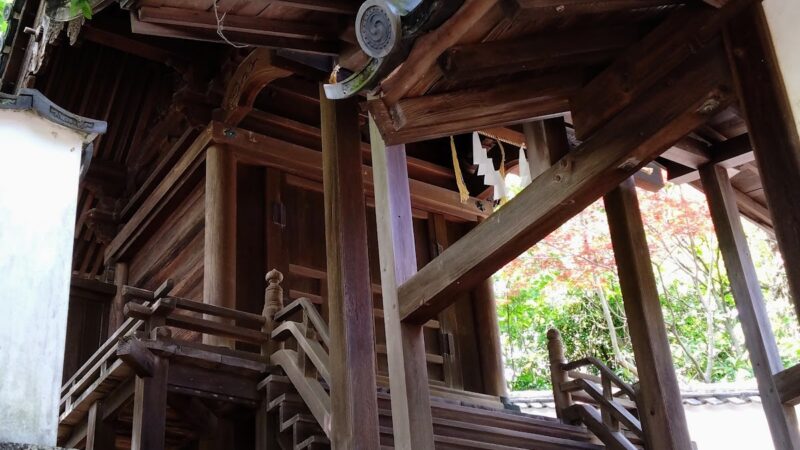
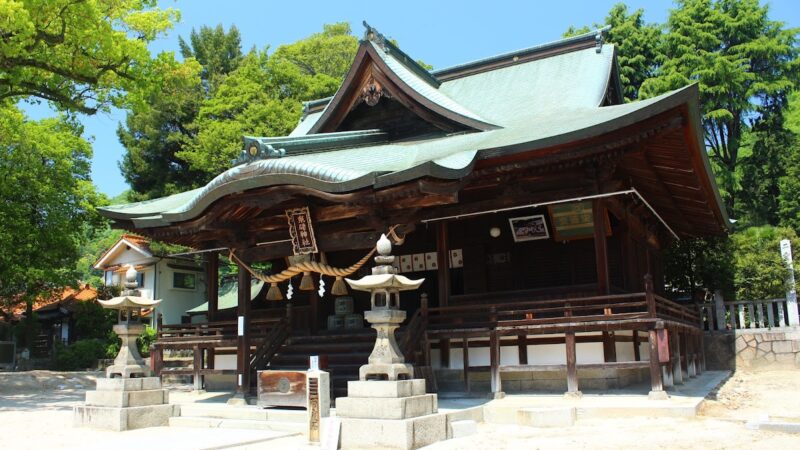
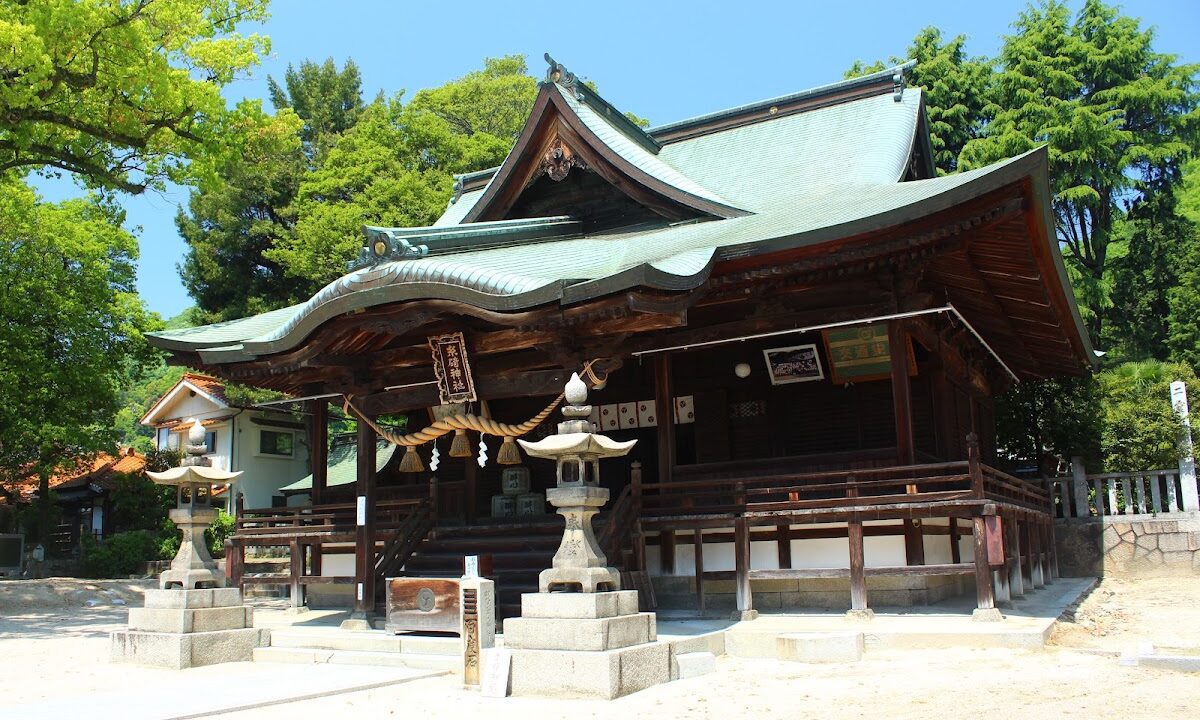
Main Hall and Worship Hall
The shrine buildings of Itosaki Shrine preserve the traditional style of shrine architecture. The layout, from the worship hall to the main hall, guides worshippers into a sacred space.
Sacred Tree
Within the shrine grounds stands a magnificent sacred tree, believed to be several hundred years old, telling a story of long history. Large camphor and pine trees welcome visitors, creating a solemn atmosphere befitting a sacred site.
Views of Nagai Bay and the Seto Inland Sea
Itosaki Shrine is located facing the Seto Inland Sea, offering beautiful ocean views from its grounds. This area, formerly known as “Nagai Bay,” is a historical place celebrated in the Manyoshu (an ancient collection of Japanese poetry) as a port where ships waited for favorable winds.
The gentle waves of the Seto Inland Sea and the scenery of the islands will bring peace to your heart during your visit.
Subsidiary Shrines
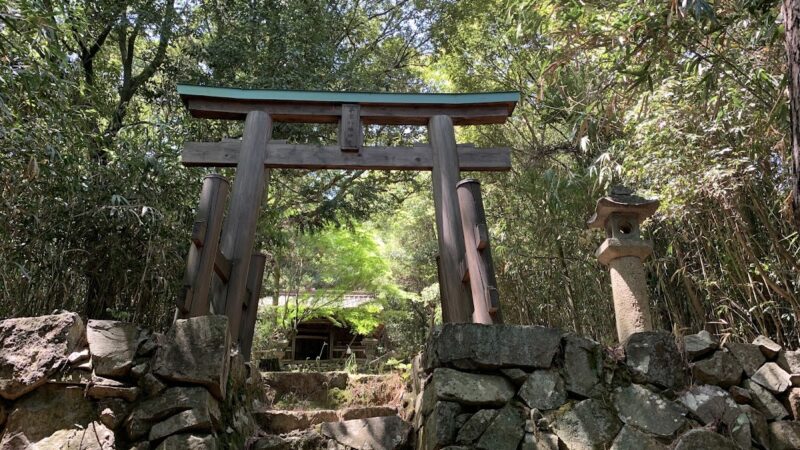
Several subsidiary shrines are enshrined around the main hall. Visiting these subsidiary shrines as well will provide a deeper religious experience.
Access Information
Access by Train
Nearest Station: JR Sanyo Main Line “Itozaki Station”
Travel Time: Approximately 19 minutes on foot from the Itozaki Station exit (approximately 1.5 km)
Itozaki Station is located in the eastern part of Mihara City and is served by local trains on the Sanyo Main Line. The easiest route from the station to the shrine is to head west along National Route 2.
Access by Car
Located along National Route 2, access by car is convenient.
- From Hiroshima: Head east on National Route 2, past Mihara city center to the Itozaki area.
- From Fukuyama/Onomichi: Head west on National Route 2 to the Itozaki area.
- Sanyo Expressway: Approximately 15 minutes from Mihara-Kui Interchange
Parking: Parking is available on the shrine grounds. Free for visitors. Except during peak seasons such as New Year’s, ample parking space is available.
Surrounding Area
Itosaki Shrine is located in the Itosaki district, in the eastern part of Mihara City. Residential areas spread out around the shrine, and commercial facilities are scattered along National Route 2.
Nearby Tourist Attractions:
- Mihara Castle Ruins (approx. 10 minutes by car)
- Buttsuji Temple (approx. 30 minutes by car)
- Onomichi City Center (approx. 20 minutes by car)
Goshuin (Shrine Seal) Information
Itosaki Shrine offers Goshuin (shrine seals).
Reception Hours: 9:00 AM – 5:00 PM (during shrine office hours)
Offering Fee: Similar to other shrines (approx. 300-500 yen)
Goshuin are handled at the shrine office, but staff may be absent. If you wish to be sure to receive one, it is recommended to call in advance.
The Goshuin will have the words “Itosaki Shrine” written in ink and stamped with the shrine’s seal, serving as a memento of your visit. You can bring your own goshuincho (stamp book) or receive a pre-printed goshuin (stamp).
Annual Events and Festivals
Itosaki Shrine holds various festivals throughout the year.
Grand Festival
The Grand Festival, held every autumn, is the most important festival at Itosaki Shrine. Local people gather, and traditional Shinto rituals are performed solemnly.
New Year’s Events
From New Year’s Day to the third day of the year, the shrine is bustling with worshippers for their first shrine visit of the year. Many worshippers visit to pray for good health and safety for their families in the new year.
Other Annual Events
- Setsubun Festival
- Summer Purification Ceremony
- Shichi-Go-San Festival
- Year-End Purification Ceremony
These are just some of the traditional Shinto events that are held.
Faith and Divine Blessings of Itosaki Shrine
Long-lasting Military Fortune and Good Luck in Competitions
Hachiman, the god of war, is known as a god of war and has been worshipped by the samurai class since ancient times. In modern times, worshippers visit to pray for success in “competitive endeavors” such as sports, exams, and business.
National and Regional Protection
Due to its history as a special shrine, “Daiuji-no-miya,” it is also deeply revered as a god protecting the entire region, serving as a place to pray for peace and prosperity in the area.
Safe Childbirth and Child-rearing
As it enshrines Empress Jingu, it is also worshipped for blessings related to safe childbirth and child-rearing. Many pregnant women and families with young children visit the shrine.
Maritime Safety and Navigational Safety
Located on the Seto Inland Sea and situated at a key point of maritime traffic since ancient times, it is also worshipped for maritime safety and navigational safety. It is traditionally visited by people involved in fishing and shipping.
Manners and Etiquette for Visiting a Shrine
Basic Etiquette for Visiting a Shrine
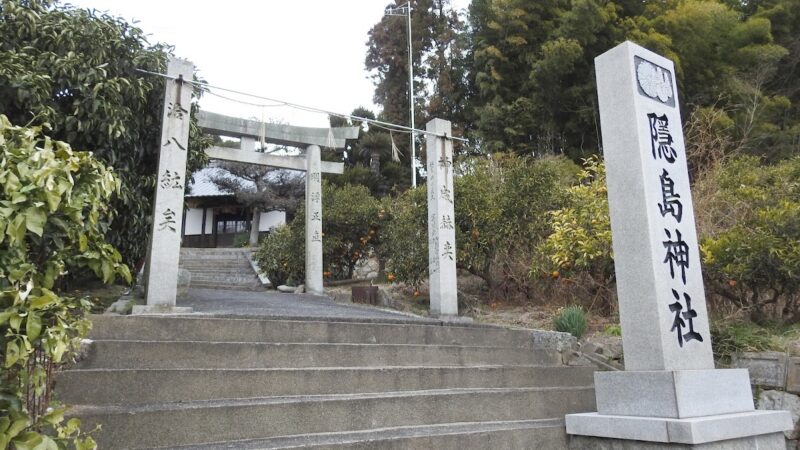
- Bow before passing through the torii gate: This is a courtesy when entering the sacred area.
- Purify yourself at the water basin: Purify your left hand, then your right hand, then your mouth.
- Avoid walking in the center of the path: The center is considered the path of the gods.
- Etiquette in front of the main hall: Two bows, two claps, and one bow are the basic rituals.
Photography
Photography is generally permitted within the shrine grounds, but there are areas where photography is prohibited, such as inside the main hall. Please be considerate of other visitors.
Attire
There are no specific regulations, but it is advisable to wear clothing that reflects the sacred nature of the place. More formal attire is recommended if you are receiving prayers.
Itosaki Shrine and the Manyoshu
Nagai-no-ura, where Itosaki Shrine is located, is a historical place mentioned in the Manyoshu (Collection of Ten Thousand Leaves).
Known since ancient times as a port where ships sailing the Seto Inland Sea would anchor to await favorable winds, this area was also visited by poets of the Manyoshu era, who left behind poems capturing its beautiful scenery.
This historical background further enhances the cultural value of Itosaki Shrine. It is recognized not merely as a religious site, but also as an important location in the history of Japanese literature.
Nearby Shrines and Temples
When visiting Itosaki Shrine, you can also visit the surrounding temples and shrines.
Major Temples and Shrines in Mihara City
- Yoneyama-ji Temple: An ancient temple located in the city center of Mihara
- Seishin-ji Temple: The family temple of the lord of Mihara Castle
- Buttsu-ji Temple: A famous Rinzai Zen temple (approximately 30 minutes by car)
Temples and Shrines in the Nearby Area
- Onomichi’s Ancient Temples: Onomichi City, approximately 20 minutes by car, has many ancient temples, including Senko-ji Temple
- Jodo-ji Temple: A famous temple in Onomichi City with a national treasure building
How to Enjoy Visiting Itosaki Shrine
As a Historical Exploration
Itosaki Shrine, with its 1300-year history, is a valuable place for understanding the ancient history of Hiroshima Prefecture. You can feel the form of faith of ancient people from the shrine’s traditions and the atmosphere of the grounds.
Enjoying the Seto Inland Sea View
The view of the Seto Inland Sea from the shrine grounds shows its beauty in every season. The view of the sea at sunset is especially spectacular.
As part of a Goshuin (temple/shrine stamp) pilgrimage
It can be included in various themed Goshuin pilgrimages, such as visiting shrines in Hiroshima Prefecture, Hachiman shrines, and former prefectural shrines.
Learning about local history and culture
Visiting Itosaki Shrine is meaningful for understanding the history of the Itosaki area and the origins of Mihara City.
Points to note when visiting
Shrine office hours
The office hours are 9:00 to 17:00, but may change during festivals and events. If you wish to receive a Goshuin or prayer, it is recommended to check by phone in advance.
Parking
There is usually ample parking space, but congestion is expected during the first three days of the New Year and the annual festival. Consider using public transportation during peak times.
Weather considerations
Due to its location facing the sea, caution is needed during strong winds and stormy weather. Please consider refraining from visiting the shrine during typhoon approaches.
Inquiries
You can contact Itosaki Shrine using the following methods:
Phone: 0848-68-0102
Operating Hours: 9:00 AM – 5:00 PM
Official Website: https://itosakijinja.jp/
Please feel free to contact us with any questions regarding prayer reservations, confirmation of Goshuin (shrine stamps), or visits.
Summary
Itosaki Shrine is one of the oldest shrines in Hiroshima Prefecture, said to have been founded in 729 AD (Tenpyo 1), and is a venerable Hachiman shrine with a history of approximately 1300 years. As a former prefectural shrine and a special shrine, “Oshi-no-miya,” it has been a center of local faith since ancient times.
With its beautiful location facing the Seto Inland Sea, its historical background mentioned in the Manyoshu (an ancient collection of Japanese poetry), and the deep faith in the three Hachiman deities, it is a shrine with many attractions.
When you visit Mihara City, be sure to visit Itosaki Shrine and experience its long history and sacred atmosphere. You can receive various divine blessings, such as good fortune in battle, protection of the nation, safe childbirth, and safety at sea.
It’s easily accessible along National Route 2, and has ample parking, making it a convenient place to visit. It will be a valuable experience to feel the history and culture of Hiroshima Prefecture.